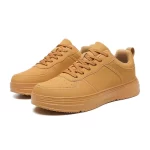
China Jinjiang shoe manufacturer in


Navigating the global footwear market requires a reliable, skilled, and innovative manufacturing base. For decades, China has stood as a pivotal hub, evolving from a center of mass production to a leader in quality, technology, and scalable manufacturing solutions. Partnering with the right Chinese footwear supplier is crucial for brands seeking durability, design versatility, and competitive value. This guide delves into the core strengths, processes, and strategic advantages of sourcing footwear from China’s expert manufacturers, providing the insights needed to generate quality inquiries and build fruitful, long-term partnerships.
[Icon: 🌍] The Evolving Landscape: China’s Footwear Manufacturing Expertise
The Chinese footwear industry is characterized by its profound depth and continuous innovation. It’s built upon integrated supply chains, where every component—from advanced synthetic uppers and high-grade rubber for outsoles to specialized cushioning foams and precision hardware—is often accessible within clustered industrial ecosystems. This vertical integration allows for remarkable control over production timelines, cost efficiency, and material consistency. Modern suppliers are not just factories; they are solution partners equipped with R&D teams that work on material science, such as developing eco-friendly recycled polymers or breathable, waterproof membranes. Their expertise spans across all categories, meaning the same industrial complex that produces durable safety boots for industrial procurement might also house lines for trend-led women’s fashion footwear suppliers, leveraging agile production techniques to switch between product types.
[Icon: 🔧] Core Competencies: Quality, Customization, and Scale
A key strength lies in the ability to masterfully balance scale with customization. Whether you are a startup seeking a low minimum order quantity (MOQ) sneaker manufacturer or a large retailer requiring high-volume production, Chinese suppliers have structured their operations to be flexible. The prototyping process is a testament to this. It involves detailed tech pack analysis, 3D modeling, and sample creation, ensuring every stitch, last shape, and material spec aligns with the designer’s intent. This makes them ideal partners for businesses looking for custom logo athletic shoe OEM partners or brands wanting to develop proprietary sole units.
Quality assurance is systemic, following a tiered inspection protocol. In-line checks monitor cutting, stitching, and assembling phases, while pre-shipment inspections involve rigorous testing against standards for sole adhesion, color fastness, dimensional stability, and wear simulation. Many suppliers now operate laboratories that can test for international regulatory and safety standards, crucial for non-slip work boot suppliers for hazardous environments or phthalate-free children’s school shoe vendors.
[Icon: 📈] Strategic Sourcing: Building a Partnership for Growth
Successful sourcing transcends a single transaction. It’s about building a collaborative partnership. The initial footwear sourcing request for quotation (RFQ) should be detailed, but the dialogue that follows is what separates adequate suppliers from exceptional ones. The best partners engage in value engineering—suggesting alternative materials that maintain performance at a better cost point or recommending construction methods that enhance product longevity. For brands focused on sustainability, seeking out eco-conscious footwear production factories is increasingly feasible. These partners specialize in using recycled polyester yarns, natural rubber, water-based adhesives, and streamlined, low-waste cutting patterns, providing brands with authentic sustainable stories.
The digital infrastructure supporting these suppliers has also advanced. Virtual sampling, real-time production line updates via ERP systems, and secure digital asset management are becoming commonplace, ensuring transparent communication and project management despite geographical distance.
[Icon: ✅] Navigating Your Sourcing Journey
Initiating contact with a clear, professional inquiry is vital. Your communication should specify your product category (e.g., waterproof hiking boot manufacturers, breathable mesh running shoe specialists), target market, quality expectations, and projected volumes. Be clear about certification requirements (e.g., ISO, BSCI, specific safety certifications). A reputable supplier will respond with a structured questionnaire and seek a comprehensive dialogue to provide an accurate quote and viable production timeline. Visiting the factory, either in person or via a detailed virtual tour, remains the gold standard for verifying capabilities, social responsibility practices, and quality control systems before finalizing a partnership.
FAQ: Partnering with Chinese Footwear Suppliers
Q1: What is a typical minimum order quantity (MOQ) for a new brand?
MOQs vary significantly based on shoe complexity, material uniqueness, and factory size. For standard designs with existing material inventories, MOQs can range from 500 to 2,000 pairs per style. For fully customized designs requiring new molds (e.g., a unique sole), MOQs may start at 3,000-5,000 pairs. Always discuss MOQ flexibility upfront.
Q2: How long does the entire process take, from sampling to bulk delivery?
The timeline is project-dependent. Sampling can take 4-8 weeks for 2-3 sample iterations. Once the final sample is approved, bulk production for a standard order of a few thousand pairs typically takes 60-90 days. This excludes shipping transit time. Complex designs or peak season schedules can extend this.
Q3: Can suppliers help with full packaging design and branding?
Yes, most comprehensive suppliers offer end-to-end services. This includes not just footwear manufacturing but also in-house or partnered capabilities for box design, tissue paper, shoelace branding, hangtags, and other packaging elements, ensuring a complete, brand-consistent product.
Q4: How is quality control managed during production?
A robust QC system includes multiple checkpoints: Initial Production Check (IPC) after the first batch comes off the line, During Production Check (DUPRO) at 20-30% completion, and a Final Random Inspection (FRI) where a statistical sample is checked against your AQL standard before shipping. You can also hire a third-party inspection service for the FRI.
Q5: What are the key payment terms typically used?
Standard terms include T/T (Telegraphic Transfer), with a common structure being 30% deposit with order confirmation, 70% balance against copy of the Bill of Lading. Letters of Credit (L/C) are also used for larger orders. Never agree to 100% payment upfront.
Q6: What should we look for to verify a supplier’s legitimacy and capability?
Request their business license, audit reports (like BSCI or SMETA), and certificates for quality management systems (e.g., ISO 9001). Insist on a virtual factory tour, ask for detailed photos of their production lines, lab equipment, and request references from existing long-term clients (which reputable suppliers can often provide with client permission).
By understanding these dynamics and approaching the process with detailed preparation and clear communication, brands can effectively leverage the unparalleled capabilities of China’s footwear manufacturing sector. The goal is to move beyond a simple buyer-supplier dynamic and foster a collaborative partnership that drives quality, innovation, and mutual growth in the competitive global footwear market.


No reply content