
China Surfboard and Snowboard Manufacturer Co., Ltd.
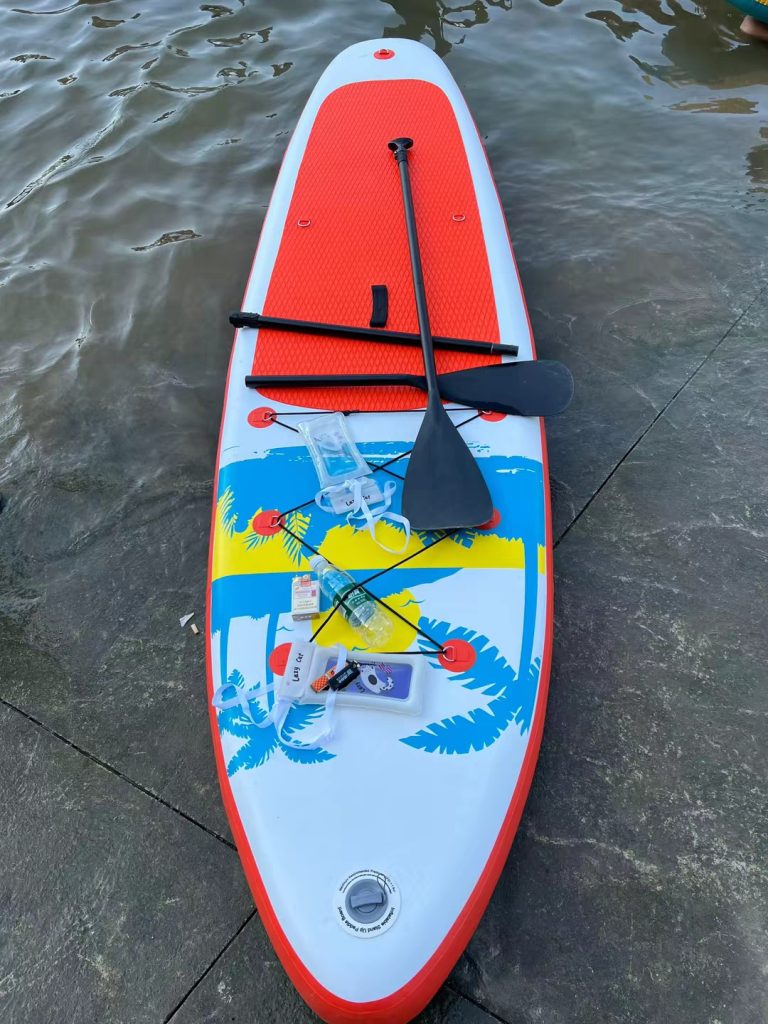
Launching a surfboard brand sounds straightforward until you start discussing the details with a manufacturer.
You may already have a brand name and logo, but a commercial surfboard requires much more than printing a logo on an existing board.
The board shape, dimensions, construction, materials, graphics, deck pad, fins, packaging, labels, and even the way the products are packed for international transportation can all affect the final product.
For this reason, buyers looking for an OEM or private-label surfboard manufacturer should first understand what can actually be customized, what requires new tooling or development, and what should be finalized before mass production.
A good manufacturer should not simply say, “Yes, we can customize it.”
The important question is:
What exactly can be changed, how much will it cost, how long will development take, and how will the approved design be reproduced during mass production?
1. Start With the Board Itself, Not the Logo
The easiest form of private labeling is usually an existing board with a customer’s branding.
This can be suitable for companies testing a new market.
The manufacturer may already have:
-
Existing board shapes
-
Existing molds
-
Standard sizes
-
Standard construction
-
Standard accessories
-
Standard packaging
The buyer then chooses a model and requests changes such as:
-
Logo
-
Color
-
Graphics
-
Deck pad
-
Fins
-
Packaging
-
Labels
This approach normally involves less development work than creating a completely new surfboard.
However, if you want your brand to have a distinctive product rather than another version of an existing factory model, you may need deeper customization.
2. Custom Board Dimensions
Surfboards can be customized in terms of dimensions depending on the manufacturer’s capabilities and the intended construction.
Potential specifications include:
-
Length
-
Width
-
Thickness
-
Volume
-
Tail shape
-
Nose shape
-
Rail profile
-
Rocker
-
Bottom contour
These changes can affect how the board behaves in the water.
For example, changing width or thickness is not simply a cosmetic modification.
It can influence stability, buoyancy, weight distribution, and how the board responds during use.
This is why buyers should avoid sending a manufacturer a rough instruction such as:
“Make it slightly wider.”
Instead, provide technical drawings, dimensions, reference boards, CAD files, or other measurable specifications whenever possible.
3. Custom Shapes May Require New Tooling or Development
If you want a completely original board shape, the manufacturer may need to create new tooling, molds, shaping files, or other production references.
This can increase both development cost and lead time.
Before agreeing to the project, ask:
-
Is the requested shape already available?
-
Can the existing mold be modified?
-
Is a new mold required?
-
Who owns the mold?
-
Can the mold be reused for future orders?
-
Is a separate tooling fee required?
-
What happens if the project is discontinued?
These questions become particularly important for private-label brands investing in a unique product.
Mold ownership should be documented
If you pay for dedicated tooling, do not rely solely on a verbal agreement about ownership.
The commercial agreement should clearly state:
-
Who paid for the tooling
-
Who owns it
-
Where it is stored
-
Whether the manufacturer can use it for other customers
-
What happens if production moves to another factory
This can prevent difficult disputes later.
4. Construction Can Also Be Customized
A surfboard brand may want to offer different construction options depending on its market position.
For example, a brand could focus on:
-
Lightweight performance boards
-
Durable beginner boards
-
Foam boards
-
Epoxy construction
-
Fiberglass construction
-
Boards designed for surf schools
-
Boards designed for rental operations
Construction changes can affect the final product considerably.
Potential variables include:
-
Core material
-
Foam characteristics
-
Fiberglass
-
Resin system
-
Reinforcement
-
Stringer configuration
-
Lamination schedule
-
Surface finishing
The manufacturer should explain which changes are practical within its existing production process.
Do not assume that every manufacturer can reproduce a construction specification simply because it appears in another company’s product.
5. Brand Graphics Are One of the Simplest Customizations
For many new brands, the first customization is visual.
This may include:
-
Brand logo
-
Board graphics
-
Color combinations
-
Patterns
-
Product names
-
Model numbers
-
Serial numbers
-
Technical markings
The manufacturer may request artwork in a particular digital format.
It is important to clarify the artwork requirements before production.
Always approve a visual proof
Do not simply email a logo and assume the factory knows where to put it.
A professional workflow should normally involve an artwork proof showing:
-
Logo size
-
Logo position
-
Graphic placement
-
Colors
-
Orientation
-
Other printed elements
The buyer should approve the final artwork before production.
This creates a clear reference if the finished products later differ from the approved design.
6. Custom Colors Are More Complicated Than They Look
A buyer may request a specific blue, green, orange, black, or another brand color.
But “blue” is not a precise production specification.
For brand consistency, provide a recognized color reference where possible.
Also remember that the final appearance can vary depending on:
-
Printing method
-
Surface material
-
Lamination
-
Lighting
-
Screen settings
-
Production conditions
For this reason, color approval should be based on a physical or agreed digital reference appropriate to the manufacturing process.
If color consistency is important to your brand, document the approved standard.
7. Custom Deck Pads and Accessories
A private-label surfboard does not need to stop at the board graphics.
Brands can potentially customize components such as:
-
Deck pads
-
Fins
-
Leashes
-
Handles
-
Fin boxes
-
Leash plugs
-
Carry bags
-
Board bags
Some components can be customized with branding.
Others may require minimum quantities from component suppliers.
This is where MOQ can increase unexpectedly.
For example, a factory may be able to produce 100 boards but a custom component supplier may require a much larger order.
Therefore, ask for the MOQ for each customized component rather than asking only for the board MOQ.
8. Custom Packaging Is Important for E-Commerce Brands
If you sell surfboards online, packaging becomes part of the customer experience.
Potential customization includes:
-
Printed cartons
-
Brand logo
-
Product labels
-
Barcode
-
Model number
-
Product information
-
Assembly or usage instructions
-
Warranty information
-
Protective packaging
-
Retail packaging
However, packaging should first protect the product.
A beautiful carton that does not protect a long surfboard during international transportation has little commercial value.
The packaging design should consider the actual shipping environment.
9. Product Labels and Compliance Information
Depending on the destination market and product category, brands may need specific product information.
This can include:
-
Manufacturer information
-
Importer information
-
Product model
-
Materials
-
Warnings
-
Usage instructions
-
Country-of-origin information
-
Barcode
-
Batch number
-
Care instructions
The exact requirements depend on the destination country and sales channel.
A manufacturer can help implement labels, but the brand owner should confirm the legal requirements applicable to its market.
Do not assume that the factory automatically knows every labeling requirement in every country.
10. How Does the OEM Sampling Process Usually Work?
A sensible development process might look like this:
Step 1: Define the product
Provide:
-
Board type
-
Dimensions
-
Construction
-
Target weight
-
Graphics
-
Accessories
-
Packaging
-
Target quantity
Step 2: Manufacturer reviews feasibility
The manufacturer confirms:
-
What can be produced
-
What needs modification
-
Whether tooling is required
-
Estimated sample cost
-
Estimated lead time
-
Estimated production cost
Step 3: Prototype or sample
The factory produces the first sample.
Step 4: Buyer inspection
The buyer checks:
-
Dimensions
-
Weight
-
Construction
-
Appearance
-
Graphics
-
Accessories
-
Packaging
Step 5: Revision
If necessary, specifications are changed.
Step 6: Final sample approval
The buyer confirms the production reference.
Step 7: Mass production
The factory begins bulk manufacturing according to the approved specification.
This process may seem slower than immediately placing an order, but it significantly reduces misunderstandings.
11. How Many Samples Should You Request?
There is no universal answer.
For a simple private-label modification, one physical sample may be sufficient for initial approval.
For a new board shape or complicated construction, multiple development rounds may be necessary.
The important point is to avoid approving a large production order based solely on:
-
Product photos
-
Digital drawings
-
A standard factory sample
-
Another customer’s product
The actual customized product should be evaluated before mass production.
12. MOQ Depends on the Type of Customization
MOQ is one of the first questions buyers ask.
But there is no single standard MOQ for OEM surfboards.
A factory may offer a lower MOQ for an existing model with simple branding and a higher MOQ for a completely customized product.
The MOQ may be influenced by:
-
New tooling
-
Custom colors
-
Custom graphics
-
Special materials
-
Custom deck pads
-
Custom fins
-
Custom packaging
-
Special labels
-
Production efficiency
-
Component supplier minimums
For a new brand, ask for two quotations:
Option A: Existing factory model + private label
Option B: Fully customized product
This gives you a realistic comparison between a lower-risk market test and a more distinctive long-term product.
13. Ask About Tooling Costs Before Approving the Design
Tooling can become an unexpected expense.
Depending on the manufacturing method, development may involve:
-
Molds
-
Shaping equipment
-
Cutting files
-
Printing plates
-
Custom fixtures
-
Special packaging tooling
Ask whether these costs are:
-
One-time
-
Included in the unit price
-
Amortized across an order
-
Refundable after reaching a certain quantity
Also ask what happens if you change the design later.
A small design change may be inexpensive.
A fundamental change to the shape may require new tooling.
14. Protect Your Brand and Design Files
Private-label manufacturing involves sharing valuable information.
This may include:
-
Logo files
-
Graphic artwork
-
Product drawings
-
CAD files
-
Board dimensions
-
Packaging designs
-
Product development information
Keep control over these files.
Where appropriate, use written agreements covering confidentiality, intellectual property, tooling ownership, and permitted use of your designs.
This is especially important if you have invested significant time and money developing a unique board.
15. Do Not Assume “OEM” Means Everything Is Exclusive
A factory may describe an existing product as “OEM.”
But there is an important difference between:
Private label
and
Exclusive product development.
Private label can mean your logo is applied to a product that other customers can also purchase.
Exclusive development means the product or design has restrictions on use by other customers.
If exclusivity is important, define exactly what is exclusive.
For example:
-
Exclusive graphics
-
Exclusive color combination
-
Exclusive board shape
-
Exclusive tooling
-
Exclusive design for a specific market
-
Exclusive sales territory
The agreement should specify what the manufacturer is actually restricted from offering to other buyers.
16. Production Inspection Becomes More Important With Customized Products
The more customization you add, the more things can go wrong.
A customized order can have problems involving:
-
Wrong logo
-
Incorrect colors
-
Wrong dimensions
-
Incorrect deck pad
-
Wrong fins
-
Missing accessories
-
Incorrect packaging
-
Wrong labels
-
Mixed models
A final inspection should therefore compare the finished products against the approved specification.
For larger orders, an independent pre-shipment inspection can provide another layer of control.
17. How to Calculate the Real Cost of a Custom Surfboard
Do not look only at the unit price.
A private-label project may include:
Product cost + sample cost + tooling + custom components + packaging + printing + inspection + shipping + import costs
For example, a manufacturer might quote a competitive board price but charge separately for:
-
Custom mold
-
Custom deck pad
-
Custom packaging
-
Special fins
-
Artwork setup
-
Low-volume production
Another manufacturer may have a higher board price but include some of these items.
Therefore, compare the complete project cost.
18. What Should Be Included in an OEM Specification Sheet?
A good specification sheet can include:
Product information
-
Model name
-
Product code
-
Board type
-
Intended use
Dimensions
-
Length
-
Width
-
Thickness
-
Volume where applicable
-
Weight target
Construction
-
Core material
-
Fiberglass
-
Resin
-
Reinforcement
-
Structural components
Appearance
-
Main color
-
Graphics
-
Logo
-
Position
-
Surface finish
Accessories
-
Fins
-
Leash
-
Deck pad
-
Other included items
Packaging
-
Individual packaging
-
Carton specifications
-
Labels
-
Barcodes
-
Outer markings
Quality
-
Dimensional tolerances
-
Weight tolerance
-
Appearance requirements
-
Defect standards
This document becomes the bridge between product development and mass production.
19. What to Ask a Manufacturer Before Starting an OEM Project
Before paying for development, ask:
-
Can you customize the board shape?
-
Can you produce according to drawings?
-
What construction options are available?
-
Can you customize colors and graphics?
-
Can you make custom deck pads?
-
Can you customize fins and accessories?
-
Can you produce custom packaging?
-
Is new tooling required?
-
Who owns the tooling?
-
What is the sample lead time?
-
What is the bulk production lead time?
-
What is the MOQ for each customization?
-
What is the tooling cost?
-
Can the manufacturer provide an artwork proof?
-
Can a pre-shipment inspection be arranged?
A manufacturer that gives clear answers is much easier to work with than one that simply promises that “everything is possible.”
20. The Most Practical OEM Strategy for a New Surf Brand
If you are starting from zero, you do not necessarily need to develop a completely new surfboard immediately.
A lower-risk approach can be:
Stage 1 — Select an existing board
Choose a model that already fits your target market.
Stage 2 — Add your brand
Customize:
-
Logo
-
Graphics
-
Colors
-
Packaging
-
Labels
Stage 3 — Test the market
Sell a limited quantity and collect customer feedback.
Stage 4 — Identify weaknesses
Look at:
-
Durability
-
Weight
-
Performance
-
Appearance
-
Packaging
-
Accessories
-
Customer complaints
Stage 5 — Develop your next generation
Use actual market feedback to decide whether you need:
-
A different shape
-
Different construction
-
Better reinforcement
-
New graphics
-
New accessories
-
Different packaging


No reply content