
What Is OCPP and Why Is It Important for EV Chargers?
OCPP is an important consideration when purchasing network-connected EV chargers for commercial charging projects. It allows charging stations to communicate with a central charging management system and can help charging operators manage multiple chargers from a centralized platform.
For buyers sourcing EV chargers from China, understanding OCPP can help when comparing manufacturers, selecting charging equipment, and planning a scalable charging network.
This guide explains what OCPP is, why it matters, and what international buyers should check before ordering OCPP-compatible EV chargers.
1. What Does OCPP Mean?
OCPP stands for Open Charge Point Protocol.
It is a communication protocol designed to allow EV charging stations and charging management systems to communicate with each other.
In a typical networked charging system, the basic structure may include:
EV → EV Charger → Communication Network → Charging Management Platform
The charger collects information about charging sessions and communicates with the backend platform according to the supported protocol.
For commercial charging operators, this can make it easier to manage multiple charging stations from one system.
2. Why Is OCPP Important?
Without appropriate communication capabilities, a charging station may have limited integration options.
OCPP can help charging operators manage functions such as:
- Starting and stopping charging sessions
- Monitoring charging status
- Receiving charger information
- Monitoring faults
- Managing users
- Collecting charging data
- Remote configuration
- Firmware management, depending on the system
- Integrating charging stations with a backend platform
The exact functions available depend on the OCPP version, charger hardware, firmware, and charging management platform.
3. OCPP for Commercial EV Charging
OCPP is particularly relevant when a project includes multiple charging stations.
For example, a charging operator may install:
- 10 AC chargers
- 20 AC chargers
- 10 DC fast chargers
- 50 or more charging points
Managing every charger individually would become difficult as the network grows.
A compatible communication system can allow operators to monitor and manage charging stations from a centralized platform.
This can be useful for:
- Public charging networks
- Commercial parking
- Hotels
- Shopping centers
- Fleet charging
- Workplace charging
- Apartment charging
- Charging station operators
4. OCPP 1.6 vs. Newer OCPP Versions
Buyers may encounter different OCPP versions when comparing EV charger manufacturers.
OCPP 1.6 has been widely adopted across the EV charging industry and is commonly supported by many charging systems.
Newer OCPP versions provide additional capabilities and are designed to support more advanced charging and network functions.
When purchasing a charger, do not simply ask:
Does the charger support OCPP?
Instead, ask:
Which OCPP version does the charger support?
Also confirm whether the charger has been tested or integrated with the backend platform that will be used for the project.
5. OCPP Does Not Mean Every Platform Is Automatically Compatible
One common misunderstanding is that an OCPP-compatible charger will automatically work with every charging management platform.
This is not necessarily the case.
Compatibility can depend on:
- OCPP version
- Supported messages
- Firmware implementation
- Backend configuration
- Authentication method
- Network connection
- Platform requirements
- Specific charger functions
Therefore, buyers should test compatibility between the charger and the selected backend platform before placing a large commercial order.
6. What Should Buyers Ask an EV Charger Manufacturer?
When evaluating an OCPP-compatible EV charger, ask the manufacturer:
- Which OCPP version is supported?
- Is OCPP enabled by default?
- Which backend platforms have been tested?
- What communication methods are available?
- Does the charger support Ethernet?
- Does it support Wi-Fi?
- Is 4G or another cellular connection available?
- Can the charger be remotely monitored?
- Can firmware be updated remotely?
- Can the charger report faults to the backend?
- Can charging sessions be started and stopped remotely?
- Can the charger be integrated with a third-party platform?
Getting these answers before ordering can prevent compatibility problems later.
7. OCPP and Remote Monitoring
One of the most useful functions of a network-connected EV charger is remote monitoring.
Depending on the charger and software platform, operators may be able to see information such as:
- Online/offline status
- Charging status
- Energy consumption
- Charging session information
- Fault status
- Connector status
- Device alarms
This can reduce the need for operators to physically inspect every charging station.
For a large charging network, remote monitoring can be an important part of daily operations.
8. OCPP and Remote Control
Depending on the implementation, a backend system may be able to send commands to charging stations.
Potential functions include:
- Starting a charging session
- Stopping a charging session
- Resetting a charger
- Changing selected configuration settings
- Managing charging permissions
The exact functions should be confirmed with the manufacturer and software provider.
9. OCPP and Smart Charging
OCPP can also be relevant to smart charging applications.
When multiple vehicles are charging at the same time, the operator may need to manage the total electrical load.
A smart charging system can potentially distribute available power between charging stations based on project requirements.
For example, instead of allowing every charger to operate continuously at maximum power, the charging management system may adjust charging power according to:
- Available grid capacity
- Number of connected vehicles
- Vehicle charging requirements
- Site electricity demand
- Charging priorities
The exact load-management capabilities depend on the charger, backend platform, and overall system design.
10. OCPP for Fleet Charging
Fleet operators can benefit from centralized charger management.
A logistics company, taxi operator, delivery fleet, or bus operator may have multiple vehicles returning to a depot at different times.
The charging system may need to manage:
- Vehicle charging schedules
- Charger availability
- Charging priorities
- Energy consumption
- Peak electricity demand
For fleet projects, buyers should discuss the charging schedule and software requirements with the charger manufacturer before selecting the equipment.
11. OCPP and AC EV Chargers
OCPP is not limited to DC fast chargers.
Network-connected AC chargers can also use OCPP for commercial applications.
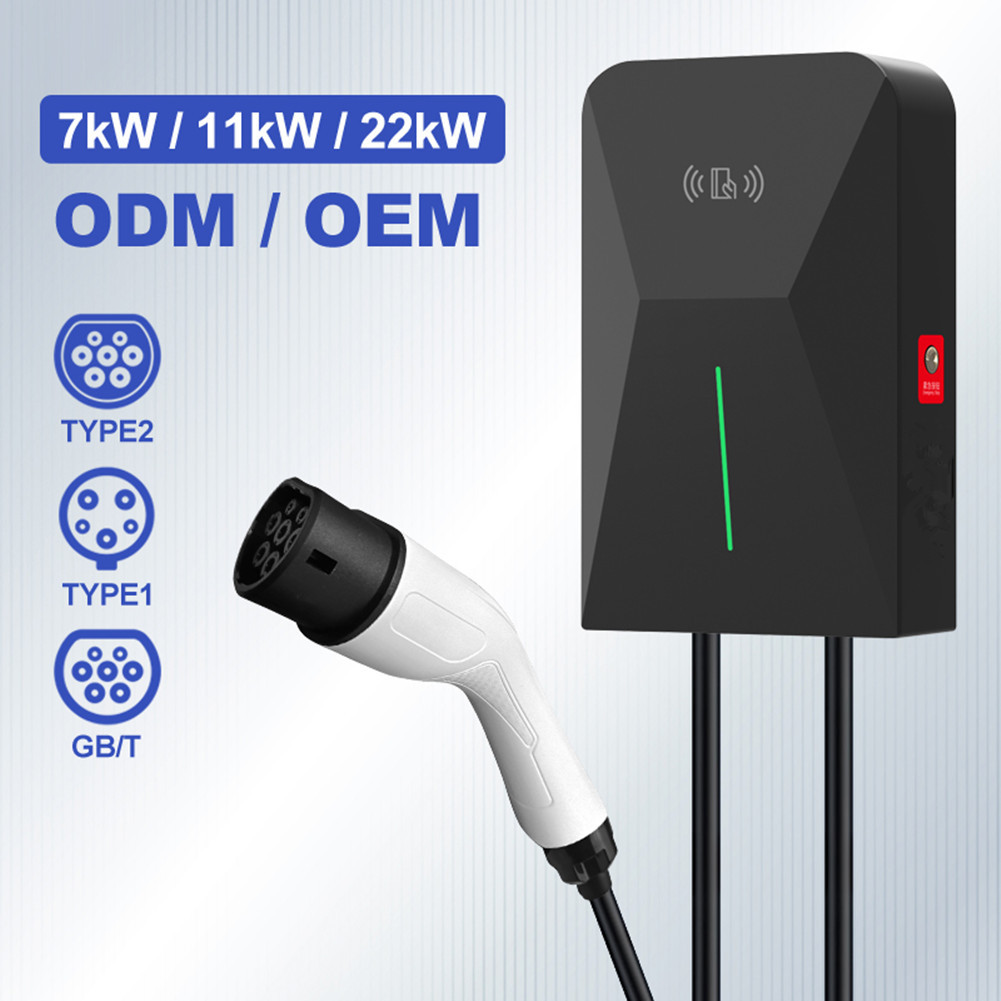
For example, an apartment building may install multiple 7kW, 11kW, or 22kW AC chargers and connect them to a central management platform.
Potential applications include:
- Apartment charging
- Workplace charging
- Hotel charging
- Office parking
- Commercial parking
- Public AC charging
For simple private residential charging, advanced network functionality may not always be necessary.
12. OCPP and DC Fast Chargers
OCPP can be particularly valuable for commercial DC charging networks.
A DC charging station may provide much higher charging power and can represent a significant part of a commercial charging site’s electricity consumption.
Network communication can help operators monitor:
- Charger availability
- Charging sessions
- Energy consumption
- Faults
- Connector status
- Operational performance
For large charging networks, centralized monitoring can simplify equipment management.
13. Network Connectivity Requirements
OCPP communication requires an appropriate network connection between the charger and backend system.
Depending on the charger, communication may use:
- Ethernet
- Wi-Fi
- 4G
- Other supported network technologies
When selecting a charger for an international project, buyers should consider the connectivity available at the installation site.
For outdoor charging stations in locations without reliable wired internet, cellular connectivity may be particularly important.
14. Security Considerations
Network-connected charging stations should be managed with appropriate cybersecurity and access controls.
Buyers should ask manufacturers and software providers about:
- Secure communication
- Authentication
- Access control
- Firmware management
- Password policies
- Network security
- Software updates
The appropriate security requirements depend on the charging network and backend system.
For large commercial projects, cybersecurity should be considered during the equipment selection stage rather than after installation.
15. OCPP and EV Charger OEM Projects
If you are purchasing chargers under your own brand, OCPP requirements should be included in the OEM specification.
For example, an OEM project may require:
- Specific OCPP version
- Custom backend integration
- Network configuration
- Custom user interface
- Branding
- Firmware configuration
- Remote management functions
These requirements should be discussed with the manufacturer before production begins.
Some software or firmware customization may require additional engineering work and testing.
16. How to Test OCPP Compatibility
Before purchasing a large quantity of chargers, buyers can consider testing a sample unit.
A practical test may include:
- Connect the charger to the network.
- Configure the backend platform.
- Confirm that the charger connects successfully.
- Start a charging session.
- Monitor the charging session remotely.
- Stop the charging session.
- Check charging data.
- Test fault reporting.
- Test remote commands where supported.
- Confirm that the system remains stable during operation.
Testing before mass production can help identify integration problems early.
17. Questions to Include in Your RFQ
When requesting a quotation from a China EV charger manufacturer, include your communication requirements.
For example:
Please confirm the supported OCPP version, network communication options, compatible backend platforms, remote monitoring functions, remote control functions, and available firmware customization.
You should also provide:
- Charger type
- Power rating
- Quantity
- Connector type
- Destination market
- Backend platform
- OEM requirements
- Network requirements
A detailed RFQ helps the manufacturer understand the technical requirements of the project.
Frequently Asked Questions
What is OCPP in an EV charger?
OCPP is an open communication protocol that allows EV charging stations to communicate with a charging management system. It can support functions such as monitoring, charging-session management, and remote control, depending on the implementation.
Do all EV chargers need OCPP?
No. A simple private residential charger may not require OCPP. OCPP is generally more relevant to networked commercial, public, workplace, fleet, and multi-charger projects.
Which OCPP version should I choose?
The appropriate version depends on the charging management platform and project requirements. Buyers should confirm compatibility between the charger and backend platform rather than choosing a version based only on the version number.
Can an OCPP charger connect to any charging platform?
Not necessarily. Compatibility depends on the OCPP version, implementation, firmware, supported functions, and backend platform. Testing the actual charger with the intended platform is recommended.
Can AC chargers support OCPP?
Yes. Network-connected AC chargers can support OCPP and can be used for workplace, apartment, hotel, commercial, and public charging applications.
Can DC fast chargers support OCPP?
Yes. OCPP can be used with network-connected DC fast chargers and can support centralized monitoring and management for commercial charging networks.
Conclusion
OCPP can be an important consideration when purchasing network-connected EV chargers for commercial or public charging projects.
The most important point is not simply whether a charger “supports OCPP.” Buyers should confirm the exact OCPP version, communication methods, supported functions, backend compatibility, firmware configuration, and testing requirements.
For international buyers sourcing EV chargers from China, these requirements should be included in the technical specification and RFQ before placing a bulk order.
For AC and DC EV charger supplier information, visit:
China EV Charging Station Manufacturer
When requesting a quotation, provide your required charger power, quantity, connector type, OCPP requirements, destination market, backend platform, and OEM/ODM requirements.


No reply content