
China Umbrella Customization Factory
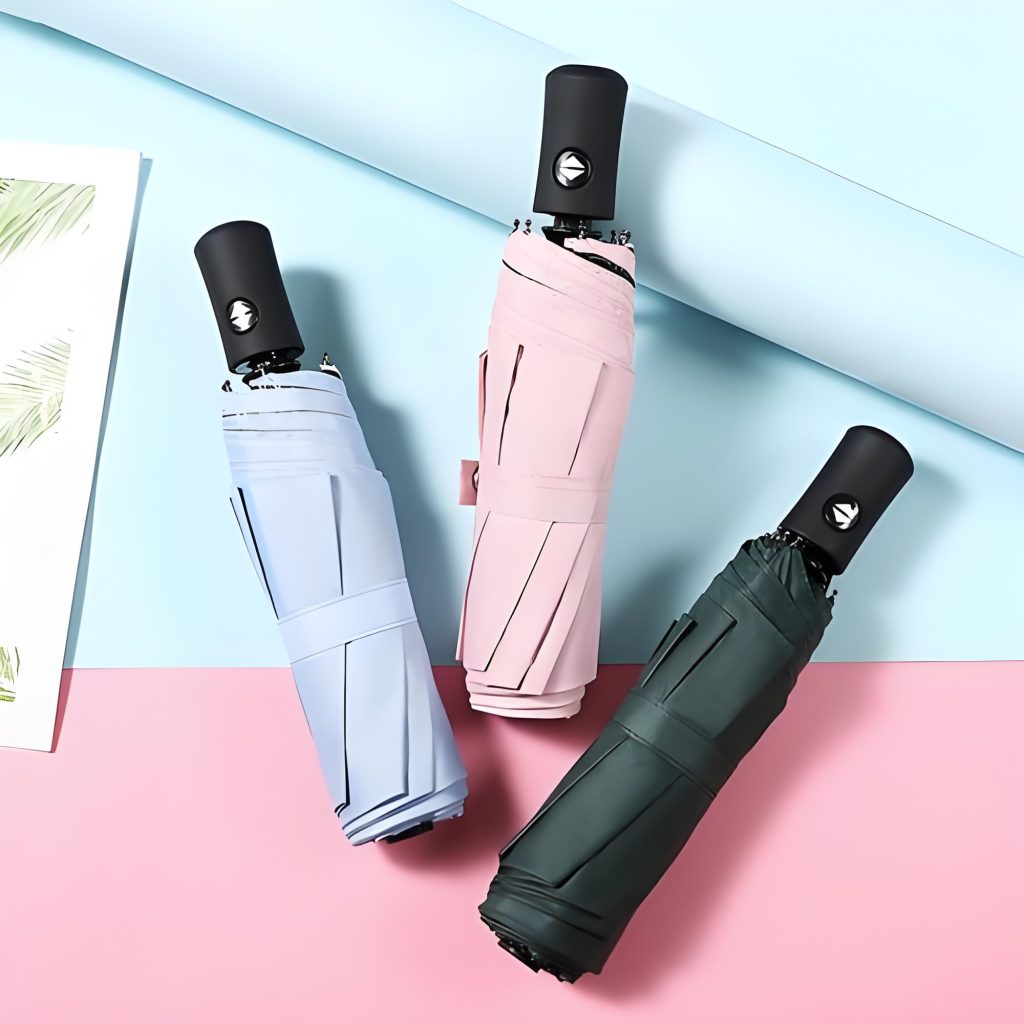
When purchasing custom umbrellas from a manufacturer, two of the most important questions are usually:
What is the minimum order quantity (MOQ)?
and
How long will production take?
These two factors directly affect purchasing costs, inventory planning, product launches, promotional campaigns, and delivery schedules.
However, there is no universal MOQ or production lead time for every umbrella manufacturer. The actual requirements depend on the umbrella model, customization level, materials, order quantity, packaging, production capacity, and current factory workload.
This guide explains how MOQ and lead time work when purchasing customized umbrellas.
1. What Does MOQ Mean?
MOQ stands for Minimum Order Quantity.
It is the minimum number of units that a manufacturer is willing to produce or sell for a particular order.
For example, a manufacturer may have different MOQs for:
-
Standard umbrellas
-
Logo umbrellas
-
Custom-color umbrellas
-
Custom-fabric umbrellas
-
Custom-handle umbrellas
-
OEM umbrellas
-
Private-label packaging
A manufacturer may accept a smaller quantity for an existing product but require a larger quantity for a completely customized product.
2. Why Do Manufacturers Set MOQs?
MOQ exists because manufacturers have fixed production costs.
These may include:
-
Material purchasing
-
Production setup
-
Printing setup
-
Labor
-
Machine preparation
-
Packaging
-
Quality inspection
-
Warehouse handling
-
Product development
If the order quantity is very small, these fixed costs must be distributed across fewer umbrellas, increasing the cost per unit.
MOQ allows manufacturers to maintain a commercially practical production process.
3. Does Every Umbrella Have the Same MOQ?
No.
MOQ can vary significantly depending on the product.
A standard umbrella already produced by the factory may require less customization.
A custom OEM umbrella may require a higher MOQ because it can involve:
-
Special fabric
-
Custom colors
-
New molds
-
Special components
-
Custom packaging
-
Product development
Therefore, buyers should ask for the MOQ for the exact product they want rather than assuming one MOQ applies to all products.
4. Standard Umbrella MOQ
Existing umbrella models normally have the simplest production process.
If the buyer only needs:
-
Existing umbrella design
-
Standard fabric
-
Standard frame
-
Standard handle
-
Simple logo printing
the manufacturer may be able to offer a relatively flexible MOQ.
This can be useful for:
-
New brands
-
Small retailers
-
Promotional campaigns
-
Product testing
-
E-commerce sellers
The actual MOQ should be confirmed directly with the manufacturer.
5. Logo Customization MOQ
Adding a logo can introduce additional setup requirements.
The MOQ may depend on:
-
Printing method
-
Number of colors
-
Printing locations
-
Logo size
-
Artwork complexity
-
Production quantity
A simple one-color logo on an existing umbrella may be easier to produce than a full-color design printed across multiple panels.
When requesting a quotation, provide the logo artwork and expected quantity.
6. Custom Color MOQ
Custom colors may require special material preparation.
For example, a buyer may request:
-
Specific brand colors
-
Two-tone canopy
-
Custom handle color
-
Custom frame color
Standard colors are generally easier to produce.
If the buyer requires a specific color that is not part of the manufacturer’s regular inventory, a larger quantity may be required to justify material preparation.
7. Custom Fabric MOQ
Custom fabric is generally more complex than printing a logo on an existing fabric.
It may involve:
-
Special fabric production
-
Custom patterns
-
Custom colors
-
Special finishing
-
Custom printing
For this reason, custom fabric can require a higher MOQ than a standard umbrella with simple logo printing.
8. Custom Handle MOQ
A new handle design may require a mold.
The manufacturer may need to:
-
Review the design
-
Create engineering drawings
-
Develop the mold
-
Produce samples
-
Test the handle
-
Approve the final version
-
Begin mass production
Because of these additional steps, custom handles may require a higher MOQ and longer development time.
9. Custom Packaging MOQ
Packaging can also have MOQ requirements.
Examples include:
-
Printed boxes
-
Customized sleeves
-
Branded bags
-
Hang tags
-
Product inserts
-
Custom cartons
A packaging supplier may require a minimum quantity even if the umbrella manufacturer can produce a smaller order.
Therefore, confirm packaging MOQ separately when developing a private-label umbrella.
10. What Is Production Lead Time?
Production lead time is the time required by the manufacturer to produce the confirmed order.
It normally begins after the manufacturer has received the required information, such as:
-
Confirmed order
-
Approved artwork
-
Approved sample
-
Final specifications
-
Required deposit or payment according to the contract
The lead time should not automatically be interpreted as the total time from the first inquiry to final delivery.
Design, sampling, shipping, and customs can require additional time.
11. What Factors Affect Production Lead Time?
Important factors include:
-
Product type
-
Order quantity
-
Customization
-
Material availability
-
Printing
-
Packaging
-
Tooling
-
Sample approval
-
Factory workload
-
Production season
-
Quality inspection
A standard umbrella can normally be easier to schedule than a new OEM product.
12. Sample Development Takes Additional Time
If you are developing a customized umbrella, the project may have two separate stages:
Sample development
and
Mass production
Sample development may involve:
-
Artwork preparation
-
Material selection
-
Prototype production
-
Printing
-
Assembly
-
Testing
-
Buyer approval
Mass production normally starts after the sample or final specifications are approved.
Therefore, when planning a launch date, include both stages.
13. Tooling Can Extend the Schedule
If a new mold is required, additional time may be needed.
Possible tooling includes:
-
Handle mold
-
Plastic component mold
-
Special button
-
Custom mechanism component
-
Other structural components
Tooling time depends on the complexity of the design and the manufacturer’s production process.
Ask the manufacturer for a separate tooling schedule when developing a completely new product.
14. Material Availability Matters
Production can be delayed if important materials are not immediately available.
Potentially affected materials include:
-
Fabric
-
Steel
-
Fiberglass
-
Handles
-
Springs
-
Plastic components
-
Packaging materials
Using standard materials that the manufacturer regularly purchases can make production planning easier.
If you require unusual materials, discuss availability before confirming the order.
15. Order Quantity Affects Production Scheduling
A small order and a large commercial order require different production planning.
Large orders may need:
-
Multiple production batches
-
Additional raw materials
-
More quality inspection
-
Longer assembly time
-
Special production scheduling
If the order is very large, ask whether the manufacturer plans to produce everything in one batch or multiple batches.
16. Seasonal Demand Can Affect Lead Time
Umbrella demand may increase during rainy seasons or promotional periods.
During peak production periods, factories can become heavily booked.
This can affect:
-
Production start dates
-
Material procurement
-
Sample scheduling
-
Quality inspection
-
Shipment preparation
If your business depends on seasonal demand, place orders early rather than waiting until the season begins.
17. Why Sample Approval Should Be Done Quickly
Production cannot always proceed until the buyer approves:
-
Sample
-
Logo
-
Color
-
Packaging
-
Artwork
-
Technical specifications
If the buyer takes several weeks to provide feedback, the overall project schedule can move accordingly.
For time-sensitive orders, establish a clear approval process and assign one person to make final decisions.
18. How to Reduce Production Lead Time
Several strategies can help.
Use an existing umbrella model
Avoid unnecessary product development.
Use standard materials
Standard fabrics, handles, and components can be easier to source.
Finalize artwork early
Do not wait until production is scheduled to prepare the logo.
Approve samples quickly
Fast feedback helps the manufacturer move to mass production.
Avoid unnecessary design changes
Changes after production planning can cause rework.
Confirm packaging early
Packaging should be finalized before the production schedule is locked.
Order before peak season
Early purchasing can reduce scheduling pressure.
19. What Should Be Included in the Lead-Time Agreement?
When confirming an order, clarify what the quoted production time includes.
For example:
-
Material procurement
-
Production
-
Printing
-
Packaging
-
Quality inspection
-
Final packing
Also clarify what is excluded.
For example:
-
Sample development
-
Tooling
-
Shipping
-
Customs clearance
-
Destination delivery
A clear definition prevents misunderstandings about the promised delivery date.
20. Production Lead Time vs. Shipping Time
These are two different periods.
Production lead time
Time required for the factory to manufacture the umbrellas.
Shipping time
Time required to transport the finished goods to the destination.
For international orders, the complete timeline may also include:
-
Factory pickup
-
Export procedures
-
Port handling
-
International transportation
-
Import customs
-
Destination delivery
Therefore, buyers should calculate the complete supply-chain timeline rather than relying only on factory production time.
21. Build a Complete Purchasing Timeline
A practical purchasing schedule can include:
Stage 1 — Product selection
Choose the umbrella model.
Stage 2 — Quotation
Confirm specifications and pricing.
Stage 3 — Sample
Produce and inspect a sample.
Stage 4 — Approval
Confirm artwork, materials, colors, and packaging.
Stage 5 — Order confirmation
Finalize quantity and commercial terms.
Stage 6 — Production
Begin mass manufacturing.
Stage 7 — Quality inspection
Inspect finished goods.
Stage 8 — Packing
Prepare cartons for shipment.
Stage 9 — Transportation
Arrange delivery to the destination.
Stage 10 — Receiving
Inspect the shipment after arrival.
22. What Information Should You Give the Manufacturer?
For an accurate MOQ and lead-time quotation, provide:
-
Umbrella type
-
Quantity
-
Canopy size
-
Fabric requirement
-
Frame requirement
-
Handle requirement
-
Opening mechanism
-
Logo
-
Printing method if known
-
Packaging
-
Destination country
-
Required delivery date
The more complete the information, the easier it is for the manufacturer to evaluate the project.
23. Example RFQ for Custom Umbrellas
A buyer can send a request such as:
We are looking for a manufacturer for 5,000 customized folding umbrellas. The umbrellas should have an automatic opening system, customized canopy color, company logo printed on two panels, and individual branded packaging. Please provide your MOQ, sample cost, tooling cost if applicable, production lead time, packing details, and quotation.
This type of inquiry gives the manufacturer enough information to prepare a more useful response.
24. How to Evaluate a Manufacturer’s Lead-Time Promise
Do not evaluate a supplier only by the shortest promised production time.
Consider:
-
Previous production experience
-
Factory capacity
-
Material availability
-
Quality-control process
-
Communication
-
Order history
-
Production planning
An unrealistically short lead time may create quality problems if the factory cannot actually support the schedule.
A reliable and achievable production schedule is more valuable than an aggressive promise that cannot be maintained.
25. What If You Need a Small Quantity?
If your required quantity is below the manufacturer’s standard MOQ, ask whether alternatives are available.
Possible solutions may include:
-
Choosing an existing product
-
Reducing customization
-
Using standard packaging
-
Combining several designs with the same components
-
Increasing the quantity
-
Working with a sourcing partner


No reply content