
China Custom Clothing Manufacturer
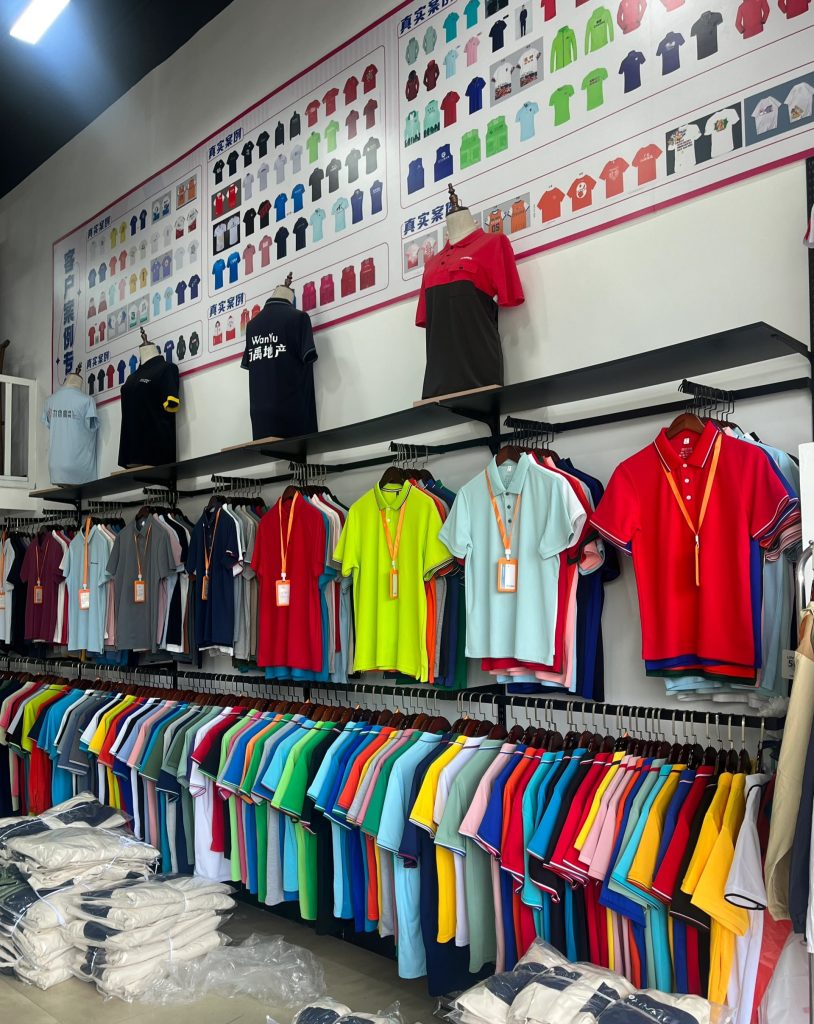
Minimum Order Quantity, commonly known as MOQ, is one of the first questions international buyers ask when working with a clothing manufacturer in China. MOQ determines the minimum number of garments a factory is willing to produce for a specific order, style, color, or size.
Understanding MOQ is important for clothing brands, wholesalers, retailers, importers, and startups because it directly affects production costs, inventory investment, product testing, and cash flow.
What Does MOQ Mean in Clothing Manufacturing?
MOQ means the minimum quantity a manufacturer requires a buyer to order.
For example, if a factory has an MOQ of 300 pieces per style, a buyer may need to order at least 300 pieces of that particular design.
However, clothing MOQ is not always calculated in the same way.
A manufacturer may set MOQ based on:
-
Pieces per style
-
Pieces per color
-
Pieces per fabric
-
Pieces per size
-
Total order quantity
-
Fabric purchase quantity
-
Customization requirements
For example, a factory might accept 500 T-shirts in total but require at least 100 pieces per color.
Therefore, buyers should always ask how the manufacturer’s MOQ is calculated.
Why Do Chinese Clothing Manufacturers Set MOQs?
Clothing production involves many fixed and variable costs.
Before production begins, a factory may need to purchase fabric, prepare patterns, arrange cutting, set up sewing lines, prepare printing or embroidery equipment, and purchase labels and packaging materials.
If the order is extremely small, these setup costs are spread across only a small number of garments.
This can make the production cost per piece too high.
MOQ allows manufacturers to maintain reasonable production efficiency while covering their operating costs.
What Is a Typical MOQ for Custom Clothing in China?
There is no universal MOQ for Chinese clothing manufacturers.
The actual MOQ depends on the factory, garment type, fabric, customization, and production process.
As a general example, you may encounter manufacturers offering:
-
Small-batch production: around 50–200 pieces
-
Standard custom orders: around 200–500 pieces
-
Larger factory orders: 500–1,000+ pieces
-
Large-scale production: several thousand pieces
These numbers are only general examples. A factory specializing in startup-friendly production may accept much smaller quantities, while a large factory may require higher volumes.
The most important point is to ask for the MOQ based on your exact product specifications.
MOQ Can Be Different for Different Clothing Products
Different garments can have significantly different production requirements.
T-Shirts
T-shirts are relatively straightforward to manufacture, so some factories may offer lower MOQs.
However, custom fabric, special washing, printing, embroidery, and custom packaging can increase the MOQ.
Hoodies and Sweatshirts
Hoodies usually require more fabric and additional components such as drawstrings, pockets, ribbing, and hardware.
Their MOQ may therefore be different from basic T-shirts.
Jackets
Jackets can involve zippers, lining, padding, waterproof materials, multiple panels, and specialized sewing processes.
Manufacturers may require higher quantities for customized jacket production.
Sportswear
Sportswear often uses stretch fabrics, specialized stitching, printing, bonding, or performance materials.
MOQ depends heavily on the manufacturing process and fabric requirements.
Denim
Denim production may involve special fabric sourcing, washing, distressing, and finishing.
Small orders can therefore be more difficult or expensive.
MOQ for Custom Fabric Can Be Different
One of the most important factors affecting clothing MOQ is fabric sourcing.
If you choose a standard fabric that the factory already keeps in stock, you may be able to order a smaller quantity.
If you require a completely new fabric specification, the factory may need to purchase a minimum quantity from its fabric supplier.
For example, you might request:
-
A specific GSM
-
A special fabric composition
-
Custom color
-
Special finish
-
Recycled material
-
Organic material
-
Custom pattern
-
Special coating
In these situations, the fabric supplier may have its own MOQ.
Therefore, your clothing manufacturer’s MOQ may be determined partly by the upstream fabric supplier.
MOQ Per Color
Color is another important consideration.
Suppose you want to order 500 T-shirts in five colors.
The factory may not treat the order as simply 500 pieces.
It might require a minimum quantity for each color because different colors may require separate fabric dyeing or material preparation.
For example:
-
Black: 100 pieces
-
White: 100 pieces
-
Blue: 100 pieces
-
Green: 100 pieces
-
Gray: 100 pieces
The exact requirements depend on the manufacturer.
When requesting a quotation, ask:
“Is the MOQ calculated per style, per color, or per total order?”
This simple question can prevent misunderstandings.
MOQ and Custom Printing
Printing can also affect MOQ.
Different printing methods have different setup requirements.
Common options include:
-
Screen printing
-
Digital printing
-
Heat transfer
-
Sublimation
-
Embroidery
-
Puff printing
-
Silicone printing
For a small number of garments, the setup cost can represent a significant portion of the total production cost.
If you want several different designs, ask whether the manufacturer applies MOQ separately to each design.
MOQ and Custom Labels
Private-label clothing often requires custom labels.
These may include:
-
Woven labels
-
Printed neck labels
-
Care labels
-
Size labels
-
Hangtags
-
Brand stickers
The label supplier may also have a minimum order quantity.
If your clothing order is small, ask whether the factory can use standard labels or combine label production with other customers’ orders.
Can You Negotiate MOQ With a Chinese Clothing Manufacturer?
Sometimes.
MOQ is not always completely fixed.
You may be able to negotiate depending on:
-
Product type
-
Fabric availability
-
Production schedule
-
Factory capacity
-
Long-term cooperation
-
Number of styles
-
Total order value
-
Repeat-order potential
For example, a manufacturer may initially quote an MOQ of 500 pieces per style but accept 200 pieces for a first trial order if the product uses standard materials.
However, a lower MOQ may result in a higher unit price.
It is therefore useful to negotiate both MOQ and price together.
How to Get a Lower MOQ
If you are a startup or testing a new clothing product, consider the following strategies.
1. Use Stock Fabrics
Choosing fabrics already available at the factory can reduce material sourcing requirements.
2. Reduce the Number of Colors
Instead of ordering many colors, start with one or two core colors.
3. Simplify the Design
Complex construction, special printing, and unusual materials can increase production difficulty.
4. Use Standard Sizes
Standard size specifications can make production easier than highly customized measurements.
5. Combine Multiple Styles
Some manufacturers may allow several styles to share the same fabric or production materials, depending on their production system.
6. Start With a Trial Order
A small trial order can help you evaluate the factory before committing to larger quantities.
Is a Lower MOQ Always Better?
No.
A lower MOQ can be attractive, but it may also increase the unit cost.
For example:
Option A
MOQ: 100 pieces
Unit price: $12
Option B
MOQ: 500 pieces
Unit price: $8
The second option requires a larger initial investment but may provide a significantly lower cost per garment.
You should therefore consider both the total investment and expected sales volume.
The best MOQ is the quantity that balances production cost, inventory risk, and expected demand.
How MOQ Affects Your Clothing Business
MOQ affects several areas of your business.
Cash Flow
Higher MOQs require more money upfront.
Inventory
If the product does not sell quickly, excess inventory can become a major problem.
Product Testing
Lower MOQs make it easier to test new designs.
Unit Cost
Larger orders often provide better pricing.
Product Variety
Lower MOQs allow brands to launch more styles with less inventory per style.
This is particularly important for fashion businesses where trends and customer preferences can change quickly.
Questions to Ask Before Accepting the MOQ
Before placing an order, ask the manufacturer:
-
What is the MOQ per style?
-
Is MOQ calculated per color?
-
Is MOQ calculated per size?
-
Can different colors be combined?
-
Can different styles share the same fabric?
-
Can you accept a smaller trial order?
-
Will the unit price increase for a smaller quantity?
-
Is there a minimum fabric order?
-
Is there a minimum quantity for custom labels?
-
What is the MOQ for repeat orders?
Getting these details in writing makes the production process much clearer.
MOQ vs. Trial Order
A trial order is often useful for new buyers.
Instead of immediately ordering thousands of garments, you can start with a smaller quantity to evaluate:
-
Product quality
-
Factory communication
-
Production speed
-
Packaging
-
Size consistency
-
Color accuracy
-
Defect rate
If the results are satisfactory, you can increase the order quantity later.
This approach can reduce the risk of committing a large amount of money to an untested supplier.
How to Compare MOQ Between Chinese Clothing Manufacturers
Do not compare MOQ alone.
Consider the entire quotation.
Factor |
Manufacturer A |
Manufacturer B |
|---|---|---|
MOQ |
100 pcs |
500 pcs |
Unit Price |
Higher |
Lower |
Sample Quality |
— |
— |
Fabric Options |
— |
— |
Production Time |
— |
— |
Custom Labels |
— |
— |
Packaging |
— |
— |
Quality Control |
— |
— |


No reply content