
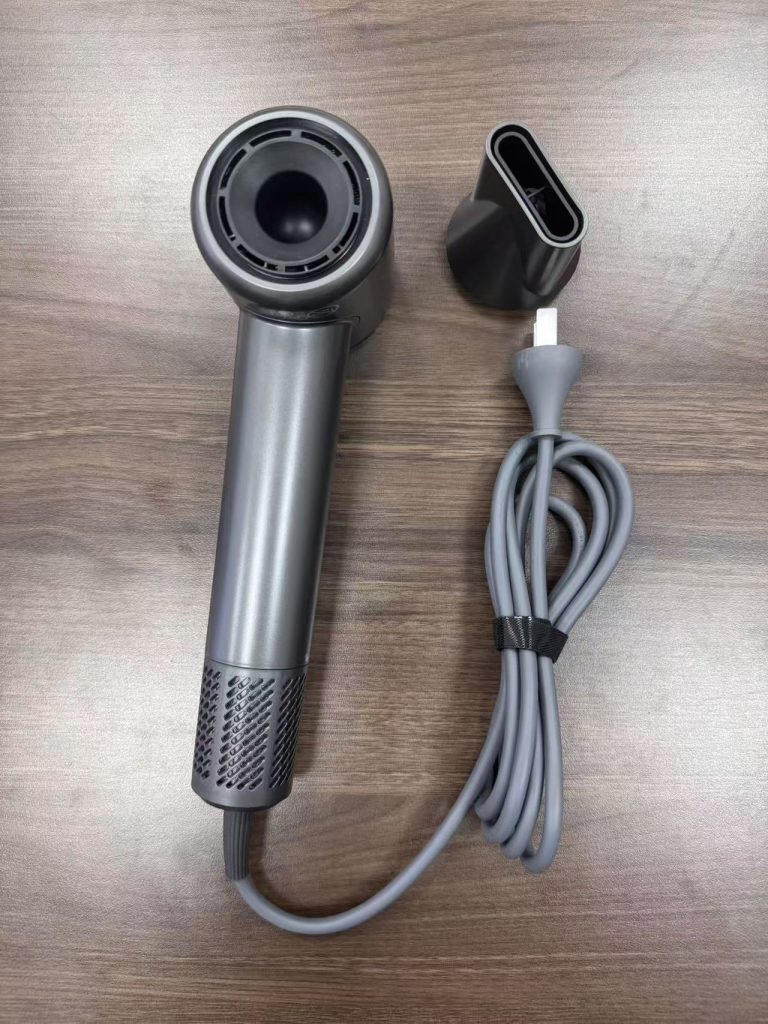
What Should You Ask a Chinese Hair Dryer Factory Before Buying?
Contacting a Chinese hair dryer factory is easy.
Getting useful answers is harder.
Many international buyers begin with a short message:
“Please send me your best price for 1,000 hair dryers.”
The factory may respond with a catalogue and a unit price within minutes.
But that quotation does not tell you whether the product has the right motor, whether the electrical configuration fits your market, whether the factory can handle your branding, or whether the quoted product will be the same one you receive after mass production.
A better sourcing conversation starts with questions.
The purpose is not to send the factory a huge questionnaire. The purpose is to ask the questions that reveal how the product is made, how it can be customized, what the supplier can actually control, and what you will receive for the quoted price.
For brands, distributors, salon suppliers and importers, the following questions can make the difference between a simple quotation and a useful manufacturing proposal.
1. What Exact Hair Dryer Model Are You Quoting?
This should be the first question.
A manufacturer may have dozens of hair dryer models that look similar.
Ask the supplier to identify the exact model number.
For example:
Please confirm the exact model number included in your quotation.
Then request the corresponding specification.
Record:
- Model number
- Product name
- Power
- Voltage
- Frequency
- Motor
- Functions
- Accessories
- Dimensions
- Weight
Without a model number, it can become difficult to determine what you actually purchased.
A product photograph is not enough.
2. Is This a Standard Product or a Customized Product?
Ask the factory directly:
Is this your standard production model, or will it be customized for our order?
This distinction affects:
- MOQ
- Price
- Lead time
- Tooling
- Packaging
- Testing
- Sample requirements
A standard product with a logo is very different from a newly developed hair dryer.
If you need a private-label product, clarify the level of customization before discussing the final price.
For the broader supplier-selection process, see the related guide on choosing a hair dryer manufacturer in China for your brand.
3. Who Actually Manufactures the Product?
If the supplier says it is a factory, ask:
Is this exact model manufactured in your own facility?
If the answer is no, ask:
Which production facility manufactures it?
There is nothing automatically wrong with a supplier working with another manufacturer.
What matters is that you understand the supply chain.
This is particularly important when you need:
- OEM production
- Product modifications
- Long-term supply
- Strict quality control
- Repeat orders
The supplier should be able to explain who controls production.
4. What Motor Is Used?
The motor is one of the questions that should not be skipped.
Ask the manufacturer to specify the motor configuration used in the quoted model.
Depending on the product, you may need to understand:
- Motor type
- Motor supplier
- Motor voltage
- Rated performance
- Expected service life
- Noise characteristics
- Airflow performance
Do not assume that two hair dryers with the same wattage use equivalent motors.
If your brand is positioned around fast drying or professional use, motor performance becomes particularly important.
5. What Is the Heating System?
Ask:
What type of heating system does this model use?
Then ask whether the heating system can be changed.
Depending on the design, the manufacturer may have different options for:
- Heating element
- Temperature control
- Heat settings
- Thermal protection
- Airflow and heating balance
A factory should be able to explain how the heating system works within the product configuration without simply giving you a marketing description.
6. What Voltage and Frequency Can You Produce?
Never leave electrical configuration as an assumption.
Tell the factory your target market and ask them to confirm:
- Voltage
- Frequency
- Plug
- Cable configuration
For example, a buyer may require a product for one market while another customer requires a completely different electrical configuration.
The factory should quote the configuration you actually need.
If you are selling internationally, make the target country clear from the beginning.
7. Which Plug Will Be Supplied?
A simple question can prevent a major mistake:
Which plug is included in the quoted price?
Then confirm whether the plug can be customized.
Also ask whether changing the plug affects:
- Price
- MOQ
- Lead time
- Cable
- Packaging
- Testing
Do not wait until production is finished to discover that the factory prepared the wrong plug.
8. What Functions Are Included?
Do not rely on photographs to determine the functions.
Ask the manufacturer to list them.
For example:
- Speed settings
- Heat settings
- Cool shot
- Ionic function
- Temperature control
- Overheating protection
- Memory function
- Other controls
Then compare those functions with the sample.
A product photograph can make two models look almost identical even when their internal configurations are different.
9. Can the Motor or Heating System Be Customized?
If you are building your own brand, ask this before approving a model.
For example:
Can we use a different motor while keeping the existing housing?
Or:
Can the heating system be modified without developing a completely new product?
The answer tells you something about the manufacturer’s engineering capability.
It also helps you understand the cost of customization.
10. What Can Be Customized Without a New Mold?
This is a particularly useful question for new brands.
Ask the factory to separate customization into two categories.
Possible Without New Tooling
Potentially:
- Logo
- Color
- Packaging
- Label
- Manual
- Accessories
May Require New Tooling or Development
Potentially:
- Housing shape
- Structural dimensions
- Internal mounting points
- Special buttons
- New airflow structure
The exact situation depends on the manufacturer’s existing platform.
This distinction can prevent unexpected development costs.
11. Can You Provide a Sample Before Mass Production?
For most meaningful orders, request a physical sample.
Ask:
Can you provide a sample using the same configuration proposed for mass production?
That last part is important.
A sample made from a completely different configuration may not tell you much about the product you will eventually receive.
Once the sample arrives, compare it against the quotation and technical specification.
12. How Long Will Sample Production Take?
Ask for two separate lead times:
Sample production time
and
Mass-production time
They are not necessarily the same.
A standard sample may be available quickly.
A customized sample may require:
- Logo printing
- New packaging
- Color matching
- Engineering adjustment
- Component preparation
Knowing the sample lead time helps you plan the entire product-launch schedule.
13. What Is the MOQ for My Exact Configuration?
Do not ask simply:
What is your MOQ?
Ask:
What is the MOQ for the exact configuration we are requesting?
For example:
Existing model + logo
may have one MOQ.
Existing model + custom color + custom packaging
may have another.
Modified design + special motor + custom packaging
may require a much larger production quantity.
For more detail, see the related guide on what MOQ to expect when buying hair dryers from a Chinese supplier.
14. What Is Included in the Unit Price?
A unit price is meaningless unless you know what it includes.
Ask the factory to clarify:
- Hair dryer
- Accessories
- Logo
- Packaging
- Manual
- Labels
- Individual box
- Export carton
- Testing
- Special color
- Development cost
For example:
Is the quoted price based on the standard packaging or our custom retail packaging?
This simple question can uncover a significant difference between two quotations.
15. What Packaging Options Are Available?
If you are selling under your own brand, packaging matters.
Ask whether the factory can provide:
- Custom retail box
- Logo printing
- User manual
- Product labels
- Barcode
- Color box
- Inner tray
- Export carton
Also ask about packaging MOQ.
A factory may accept a relatively small product order but require a larger quantity for fully customized packaging.
16. Can You Provide Packaging Samples?
If the packaging is important to your brand, ask for an actual sample.
Check:
- Color
- Printing
- Logo
- Product information
- Barcode
- Language
- Box dimensions
- Material
- Internal protection
The final packaging should be reviewed before mass production.
A product can be manufactured correctly and still arrive with poorly prepared retail packaging.
17. What Quality Tests Are Performed?
Do not ask only:
Do you have QC?
Ask:
What tests are performed on the finished hair dryer?
Depending on the model and market, testing may involve:
- Power
- Current
- Heating
- Airflow
- Temperature
- Switch operation
- Electrical safety
- Thermal protection
- Functional operation
- Appearance
Then ask whether the testing is performed on every unit or according to a sampling procedure.
The appropriate inspection method depends on the product and agreed quality requirements.
18. How Are Incoming Components Checked?
A factory’s finished-product quality depends partly on the components it receives.
Ask how it checks:
- Motors
- Heating elements
- Switches
- Cables
- Plugs
- PCBs
- Plastic housings
- Other electrical components
You do not need the supplier to manufacture every component itself.
What matters is whether it has a process for controlling incoming materials.
19. What Happens if a Component Becomes Unavailable?
This is an excellent question for long-term buyers.
Ask:
If one of the approved components becomes unavailable, will you notify us before replacing it?
For a private-label product, component changes can matter.
A replacement motor, PCB or heating element could affect the product’s performance or documentation.
Establish the change-approval procedure before production.
20. Can You Keep the Same Configuration for Repeat Orders?
Ask the factory:
If we reorder this model six months later, how will you make sure the product remains the same?
Then ask how the manufacturer controls:
- Product version
- Components
- Color
- Packaging
- Logo
- Accessories
- Electrical configuration
This is much more important for a growing brand than simply getting a good first-order price.
21. What Documentation Can You Provide?
Ask the manufacturer to identify the documents available for the exact model.
Depending on your market and product, this could include:
- Technical specification
- Test reports
- User manual
- Product drawings
- Electrical information
- Applicable compliance documentation
- Packaging information
Do not accept a generic statement such as:
“We have all certificates.”
Ask which documents apply to your exact model and configuration.
For more information, see the related article on what certifications a hair dryer manufacturer should provide.
22. Can You Provide the Technical Datasheet?
A proper technical datasheet is useful for both purchasing and future reorders.
It may contain:
- Model
- Rated power
- Voltage
- Frequency
- Motor information
- Dimensions
- Weight
- Functions
- Accessories
- Product material
- Packaging information
Keep the datasheet with your quotation and purchase order.
That creates a clearer record of what was purchased.
23. What Is the Production Lead Time?
Ask for a realistic production schedule.
Instead of:
How fast can you produce?
ask:
What is your normal lead time for this quantity and configuration after sample approval?
Then clarify whether the lead time starts after:
- Deposit
- Artwork approval
- Sample approval
- Packaging approval
- Component confirmation
A factory may quote “20 days” while meaning 20 production days after all materials are ready.
Make sure both sides are using the same definition.
24. Can You Support Larger Repeat Orders?
Your first order may be 500 units.
Your second order could be 2,000.
Later, you may need 10,000.
Ask:
If our demand increases, how much production capacity can you allocate to this model?
Also ask about peak-season capacity.
This can help you avoid choosing a supplier that can handle the first order but struggles with your growth.
25. What Happens if the Order Fails Inspection?
Ask the manufacturer before placing the order:
What is your procedure if finished products do not meet the agreed specification?
The answer should be clear.
Potential outcomes may include:
- Rework
- Replacement
- Sorting
- Repair
- Credit
- Reproduction
The exact commercial solution should be agreed in advance.
For significant orders, buyers may also establish an independent pre-shipment inspection procedure.
26. Can We Use an Approved Sample as the Production Reference?
For customized products, this is one of the most useful questions.
Ask the factory to confirm that the approved sample will be treated as the reference for mass production.
The reference should ideally be supported by a written specification.
That way, you have:
Approved sample
Technical specification
Purchase order
These three elements provide a much stronger basis for production control.
27. How Are Customer Design Files Handled?
If you provide:
- Logo
- Packaging artwork
- Product graphics
- Labels
- Manuals
- Barcodes
ask the manufacturer how these files are handled.
Confirm:
- File format
- Artwork approval
- Revision control
- Printing confirmation
- Final proof
Do not assume that sending an image through a messaging app means the factory will automatically use the correct version.
28. Can You Produce Different Colors?
If your brand plans to sell several colors, ask:
- What colors are available?
- Are standard colors available?
- Can we specify a custom color?
- Is there a minimum quantity per color?
- Is there a color-development fee?
- Can the same color be reproduced in future orders?
Color can become a surprisingly important issue for private-label products.
29. What Accessories Are Included?
Ask the factory to list every accessory included in the quotation.
For example:
- Concentrator nozzle
- Diffuser
- Comb attachment
- Storage bag
- Other accessories
Then make sure the sample contains the same accessories.
This prevents a common purchasing problem where the sample is supplied with several accessories but the production quotation includes only the basic product.
30. What Is the Carton Packing Information?
Before arranging freight, ask for:
- Units per carton
- Carton dimensions
- Net weight
- Gross weight
- Carton quantity
- Pallet information where applicable
This information is useful when calculating shipping costs.
For international buyers, product price is only part of the landed cost.
31. What Information Does the Factory Need From You?
A professional supplier should also ask questions.
You should be prepared to provide:
- Target market
- Quantity
- Voltage
- Frequency
- Plug
- Product functions
- Logo
- Packaging requirements
- Delivery destination
- Target launch date
If you provide more complete information, the factory can generally prepare a more meaningful quotation.
32. Do Not Hide the Target Market
Some buyers hesitate to tell the supplier where they intend to sell.
For technical products, this can make the quotation less accurate.
Tell the manufacturer the destination market.
The supplier may then be able to identify relevant:
- Electrical configuration
- Plug
- Labeling
- Documentation
- Testing requirements
The earlier these issues are discussed, the fewer changes are likely to occur later.
33. Ask for a Complete Quotation Instead of a “Best Price”
A useful RFQ might ask the supplier to provide:
| Item | Supplier Response |
|---|---|
| Model | |
| Motor | |
| Power | |
| Voltage | |
| Frequency | |
| Plug | |
| Functions | |
| Accessories | |
| Logo | |
| Packaging | |
| MOQ | |
| Sample cost | |
| Sample lead time | |
| Unit price | |
| Production lead time | |
| Testing documents | |
| Carton size | |
| Net weight | |
| Gross weight | |
| Payment terms |
This structure makes supplier comparison much easier.
34. Questions for a First Factory Call
If you only have 15–20 minutes with a manufacturer, prioritize these questions:
- What is the exact model?
- Who manufactures it?
- What motor does it use?
- What heating system does it use?
- What voltage and plug configurations are available?
- What can be customized?
- What is the MOQ?
- What is the sample lead time?
- What is the mass-production lead time?
- What testing is performed?
- What documentation is available?
- How are component changes handled?
- Can the approved sample become the production reference?
- What is included in the quoted price?
- Can the factory support repeat orders?
These questions give you a surprisingly detailed picture of the supplier.
35. Questions That Reveal the Difference Between a Sales Pitch and Real Manufacturing Capability
Some questions require the supplier to give specific answers.
Instead of:
“Are your products high quality?”
ask:
“What tests do you perform on finished products?”
Instead of:
“Can you do OEM?”
ask:
“Which parts of this model can you customize without new tooling?”
Instead of:
“Do you have certificates?”
ask:
“Which documents apply to the exact model and electrical configuration you are quoting?”
Instead of:
“Can you produce large quantities?”
ask:
“What quantity can you produce per month for this specific model during peak season?”
Specific questions produce more useful information.
36. When the Factory’s Answers Are Incomplete
Do not immediately reject a supplier because the salesperson cannot answer a technical question during the first conversation.
Ask them to confirm with their engineering or production team.
For example:
Please confirm this specification with your engineering department and include the answer in the revised quotation.
This creates a written record.
It also allows you to see whether the supplier can coordinate internally.
37. Put Important Answers in Writing
If a supplier confirms something important through WhatsApp, email or another messaging system, keep the communication.
Important confirmations can include:
- Motor
- Voltage
- Power
- Plug
- Packaging
- MOQ
- Lead time
- Testing
- Component changes
- Approved sample
- Production requirements
Do not rely on memory after a long negotiation.
38. Turn the Answers Into a Purchase Specification
After the discussions are complete, summarize the agreed requirements.
For example:
Product: Professional Hair Dryer
Model: HD-2026
Power: [Agreed specification]
Voltage: [Agreed specification]
Frequency: [Agreed specification]
Plug: [Agreed specification]
Motor: [Agreed specification]
Functions: [Agreed specification]
Color: [Agreed specification]
Logo: [Approved artwork]
Packaging: [Approved artwork]
Accessories: [Agreed list]
Quantity: [Agreed quantity]
This document becomes the bridge between the sales conversation and production.
39. Questions to Ask Before Paying the Deposit
Before making the deposit, review the following:
- Is the exact model identified?
- Is the specification complete?
- Is the price confirmed?
- Is the MOQ confirmed?
- Is the sample approved?
- Is the packaging approved?
- Is the logo approved?
- Is the production lead time confirmed?
- Is the payment entity correct?
- Are testing and inspection requirements clear?
- Is the procedure for product changes understood?
If important information is still uncertain, resolve it before production begins.
40. The Goal Is Not to Ask the Most Questions
A professional sourcing process is not about sending a manufacturer 100 questions.
It is about asking the right questions at the right time.
Before quotation:
What exactly are you offering?
Before sample:
What exactly will I receive?
Before approval:
Does the sample represent production?
Before payment:
What exactly have we agreed?
Before production:
How will the agreed specification be controlled?
Before shipment:
How will I verify the finished goods?
That sequence is much more effective than asking random questions.
Frequently Asked Questions
What should I ask a Chinese hair dryer manufacturer first?
Start with the exact model, product specification, manufacturing location, standard configuration, target-market requirements, MOQ, sample availability and price.
What information should I provide when asking for a quotation?
Provide the target market, quantity, voltage, frequency, plug, desired functions, branding, packaging and any special requirements.
Should I ask about the motor?
Yes. The motor is an important part of the product configuration, particularly when performance, airflow, noise or professional use matters.
How do I know what is included in the factory’s price?
Ask the supplier to list the product, accessories, logo, packaging, manuals, testing and other customization costs separately or clearly identify what is included.
Should I ask for a sample before ordering?
For a significant order, a representative physical sample is a useful part of the evaluation process. Confirm that the sample represents the intended mass-production configuration.
Can I change the product after approving the sample?
You can request changes, but significant changes may affect the price, MOQ, lead time, testing and production process. Treat major changes as a new specification that needs confirmation.
How can I prevent a factory from changing components without telling me?
Include a written component-change procedure in the purchasing agreement or product specification. Require notification and approval for changes that could affect the agreed product.
What should I do if the factory cannot answer a technical question?
Ask the salesperson to confirm the answer with the engineering or production team and provide the answer in writing.
Final Thoughts
The quality of your supplier conversation depends heavily on the quality of your questions.
A good buyer does not simply ask:
“How much is this hair dryer?”
A better conversation asks:
What exactly is the product?
Who manufactures it?
What components are used?
What can be customized?
What will the sample represent?
How is quality controlled?
What documentation is available?
What happens if something changes?
What exactly is included in the price?
Can the same product be reproduced for the next order?
These questions turn a simple quotation request into a real manufacturing discussion.
For an international brand sourcing hair dryers from China, that extra level of detail can make supplier comparison much easier and can reduce misunderstandings before a large production order begins.


No reply content