China Professional Hair Clipper Manufacturing Co., Ltd.
Buying electric hair clippers wholesale from China can offer competitive pricing and a wide range of product options. However, choosing a product based only on appearance and wholesale price can lead to problems after the shipment arrives.
A professional-looking hair clipper may still have weak battery performance, excessive motor heat, poor blade alignment, short service life, or inconsistent cutting performance.
For distributors, barbershop suppliers, online retailers, and private-label brands, the most important step is to evaluate the actual product before placing a large wholesale order.
Here are the key points you should check.
1. Start With the Motor
The motor is one of the first components to evaluate.
A hair clipper may look attractive, but if the motor cannot maintain stable performance under continuous use, professional customers are unlikely to be satisfied.
Ask the supplier for specific motor information rather than accepting descriptions such as “powerful motor” or “professional motor.”
Check:
-
Motor type
-
Rated operating speed
-
Noise level
-
Vibration
-
Heat generation
-
Cutting performance
-
Continuous operating capability
For professional barber products, test the clipper continuously instead of running it for only a few minutes.
A motor that performs well for five minutes may behave differently after 30 or 60 minutes of operation.
2. Test Cutting Performance
The actual cutting performance matters more than marketing specifications.
During sample testing, evaluate how the clipper performs with different hair conditions.
Test:
-
Fine hair
-
Thick hair
-
Coarse hair
-
Short hair
-
Longer hair
-
Dense hair
Pay attention to whether the clipper:
-
Cuts smoothly
-
Pulls hair
-
Requires repeated passes
-
Slows down under resistance
-
Produces excessive vibration
-
Generates excessive heat
For a professional product, consistent cutting performance is one of the most important purchasing criteria.
3. Inspect the Blades
The blade is directly responsible for cutting performance.
When inspecting a sample, look at the blade carefully.
Check:
-
Blade material
-
Sharpness
-
Alignment
-
Surface finish
-
Adjustment mechanism
-
Corrosion resistance
-
Replacement availability
The moving and stationary blades should work smoothly together.
If the blade alignment is poor, the clipper may pull hair or produce inconsistent results.
For wholesale buyers, also ask whether replacement blades are available.
A product with easily available replacement parts can be more attractive for long-term distribution.
4. Check the Blade Adjustment System
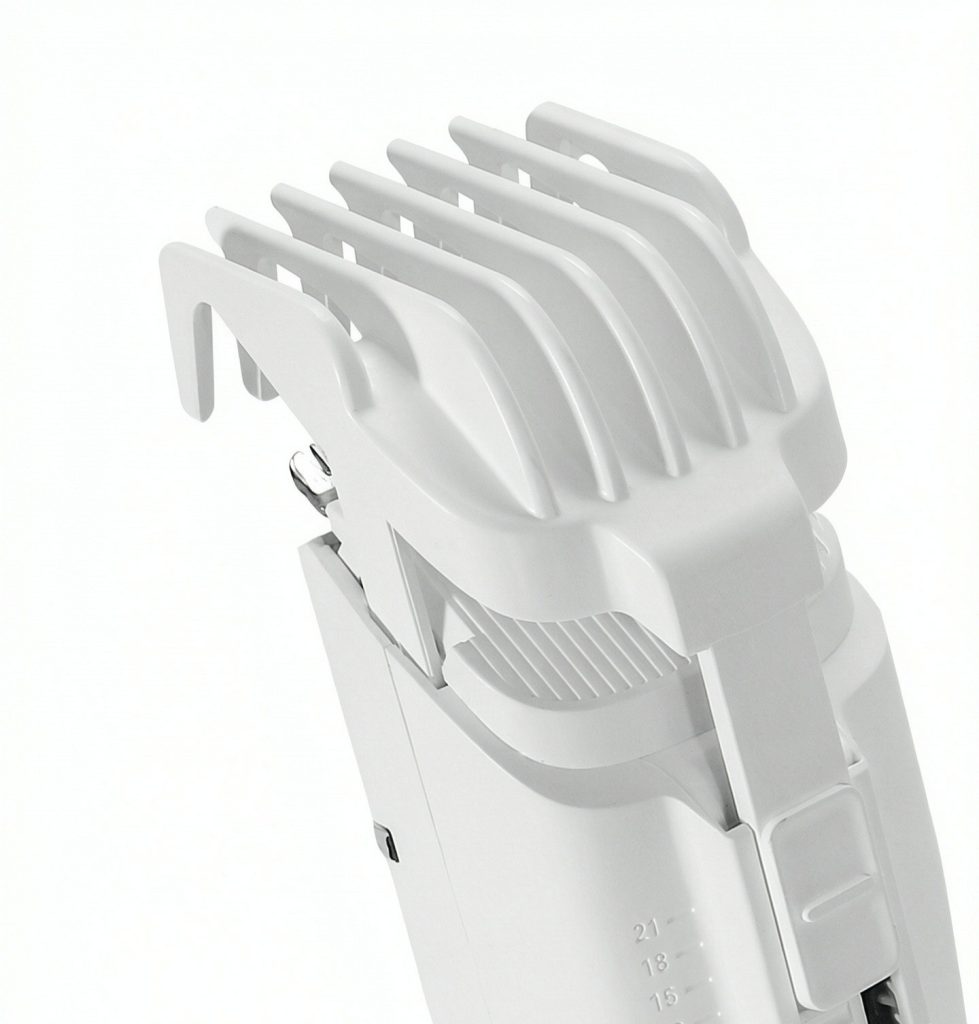
Many professional hair clippers allow users to adjust the cutting length.
The adjustment mechanism should move smoothly and remain stable during use.
Check whether:
-
The lever feels solid
-
The adjustment positions are consistent
-
The mechanism becomes loose after repeated use
-
The blade remains properly aligned
-
The cutting length matches the manufacturer’s specifications
If you are selling to professional barbers, small details such as adjustment stability can have a significant effect on user experience.
5. Verify the Battery Capacity
For cordless electric hair clippers, battery performance deserves special attention.
Do not rely only on the capacity printed on the package.
Ask the supplier for:
-
Battery chemistry
-
Rated capacity
-
Charging time
-
Expected operating time
-
Battery protection system
-
Charging method
-
Battery replacement options
If the supplier states that a clipper can operate for a specific number of hours, test the actual product.
The claimed runtime should be treated as a specification to verify, not simply a marketing statement.
6. Test Real Battery Runtime
A simple battery test can reveal a lot about product quality.
Start with a fully charged clipper and record:
Start time → continuous operation → stop time
Then compare the actual result with the supplier’s specification.
For a wholesale order, test several samples rather than only one.
If one unit operates significantly longer or shorter than the others, ask the supplier about battery consistency.
7. Check Charging Performance
Battery capacity is not the only consideration.
The charging system should also be tested.
Check:
-
Charging time
-
Charging indicator
-
Charging stability
-
Connector quality
-
Cable quality
-
Adapter specifications
-
Whether the clipper can operate while charging, if applicable
For products sold internationally, make sure the charging solution is appropriate for the destination market.
Different markets may have different electrical and plug requirements.
8. Monitor Heat During Continuous Use
Some low-cost clippers perform well initially but become excessively hot during extended operation.
Run the sample continuously and monitor:
-
Motor housing temperature
-
Blade temperature
-
Battery area
-
Charging temperature
Moderate warmth can be normal.
However, excessive heat, unusual smells, performance reduction, or sudden shutdown should be investigated before placing a large order.
For professional barbers, this is particularly important because their clippers may be used repeatedly throughout the day.
9. Check Noise and Vibration
Noise and vibration affect the overall user experience.
During testing, listen for:
-
Unusual motor noise
-
Rattling
-
Grinding sounds
-
Sudden changes in operating sound
Also check whether vibration increases when the blade is under load.
A clipper that feels smooth in the hand generally provides a better professional experience than one with excessive vibration.
10. Inspect the Housing
The external housing should be checked for more than appearance.
Look for:
-
Uneven gaps
-
Loose components
-
Sharp edges
-
Poor button fitting
-
Weak charging-port construction
-
Scratches
-
Surface defects
-
Poor assembly
Press the buttons repeatedly and inspect whether they remain responsive.
Open and close removable components where applicable.
A product should feel solid rather than fragile.
11. Evaluate Weight and Ergonomics
Professional barbers may hold their tools for several hours each day.
Weight and balance therefore matter.
Check:
-
Overall weight
-
Center of gravity
-
Grip size
-
Handle shape
-
Button location
-
Finger position
-
Adjustment lever location
A technically powerful clipper may still receive poor reviews if it is uncomfortable to use for long periods.
When comparing products, do not overlook ergonomics.
12. Check Accessories
Different suppliers may include different accessories.
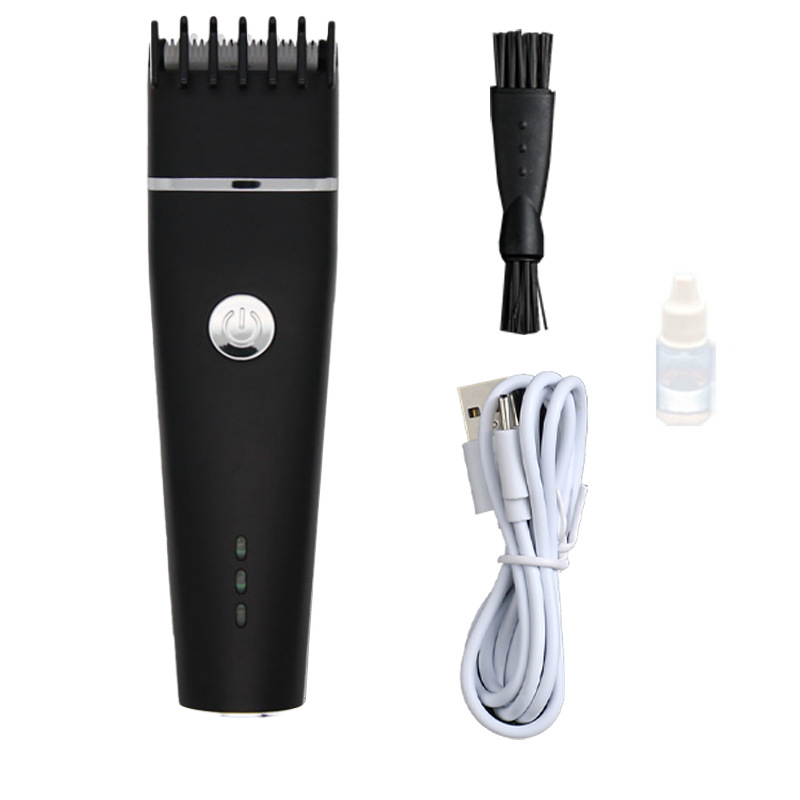
A typical package may include:
-
Guide combs
-
Cleaning brush
-
Lubricating oil
-
Charging cable
-
Power adapter
-
Protective cap
-
Storage case
-
Replacement components
When comparing wholesale quotations, list every included accessory.
Otherwise, a supplier may appear cheaper simply because fewer items are included.
13. Inspect the Packaging
Wholesale products often travel long distances before reaching the final customer.
Check whether the packaging protects the clipper against:
-
Impact
-
Compression
-
Scratches
-
Moisture
-
Movement inside the carton
Ask the supplier for:
-
Individual box dimensions
-
Master carton dimensions
-
Units per carton
-
Gross weight
-
Net weight
-
Packaging materials
Carton size also matters because it can affect international freight costs.
14. Check Product Consistency
One good sample does not guarantee a good wholesale order.
For a large purchase, consistency is critical.
Compare several samples for:
-
Motor performance
-
Battery runtime
-
Blade alignment
-
Weight
-
Noise
-
Vibration
-
Charging
-
Housing quality
If the samples perform consistently, you have more confidence in the supplier’s production process.
15. Ask About Quality Control
Before placing an order, ask how the supplier tests the finished products.
A reasonable quality-control process may include:
Component Inspection
Important components such as motors, batteries, blades, and charging parts should be checked before assembly.
Assembly Inspection
The factory should check whether components are installed correctly.
Functional Testing
Completed clippers should be tested for basic operation.
Charging Testing
Battery-powered products should be checked for charging performance.
Appearance Inspection
The final product should be inspected for visible defects.
For larger orders, consider a pre-shipment inspection before the goods leave the factory.
16. Confirm Battery and Electrical Documentation
If you are importing electric hair clippers internationally, ask the supplier what documentation is available for the product.
Depending on the destination market and product configuration, documentation may include information related to:
-
Battery specifications
-
Electrical safety
-
Product testing
-
Transportation
-
Packaging
-
Applicable market requirements
Do not assume that a document supplied for one market automatically satisfies another market’s requirements.
Tell the supplier your destination country before confirming the order.
17. Check OEM Customization Options
If you plan to sell under your own brand, find out exactly what can be customized.
Possible options may include:
-
Logo
-
Housing color
-
Product design
-
Packaging
-
User manual
-
Accessories
-
Blade configuration
-
Labels
-
Gift box
-
Carrying case
Ask whether the customization is simply a logo application or whether the manufacturer can actually modify the product.
These are very different levels of OEM service.
18. Confirm the MOQ for Each Customization
MOQ can become complicated when multiple custom elements are involved.
Ask whether the MOQ applies to:
-
Each model
-
Each color
-
Each logo
-
Each packaging design
-
Each size or specification
For example, a supplier may accept 500 units for one model but require 500 units for each custom color.
Understanding this before approving the design can prevent unexpected inventory requirements.
19. Compare Wholesale Prices Using the Same Specification
Never compare supplier prices until you confirm that the products are equivalent.
Compare:
Specification |
Supplier A |
Supplier B |
Supplier C |
|---|---|---|---|
Motor |
|||
Battery |
|||
Blade |
|||
Runtime |
|||
Accessories |
|||
Packaging |
|||
MOQ |
|||
Warranty |
|||
Lead time |
A $15 clipper and a $25 clipper cannot be compared fairly if they use different motors, batteries, blades, or accessories.
20. Ask About Warranty and Defective Products
This should be discussed before the order is placed.
Ask:
-
What is the warranty period?
-
What defect rate is acceptable?
-
How are defective products reported?
-
Will defective units be replaced?
-
Who pays replacement shipping?
-
How are repeated quality problems handled?
Put important terms in writing.
Do not wait until a large shipment arrives to discuss warranty conditions.
21. Test the Product Under Real Working Conditions
Laboratory specifications are useful, but practical testing is even more valuable.
If you are selling to barbers, ask an experienced barber to use the sample.
Get feedback about:
-
Cutting smoothness
-
Grip
-
Weight
-
Blade performance
-
Motor response
-
Battery life
-
Heat
-
Noise
-
Vibration
-
Overall comfort
Professional users may notice problems that are difficult to identify during a basic technical inspection.
22. Watch for Common Problems
Before ordering a large quantity, pay particular attention to these warning signs:
-
Motor slows down under normal cutting conditions
-
Battery runtime is significantly below the advertised specification
-
Excessive heat develops during continuous operation
-
Blades pull hair
-
Blade alignment changes
-
Charging is unstable
-
Housing feels fragile
-
Different samples perform differently
-
Accessories are missing
-
Packaging provides inadequate protection
-
Supplier cannot explain product specifications
Any major problem found during sampling should be resolved before mass production.
23. A Practical Pre-Order Checklist
Before placing a wholesale order, review the following:
Item |
What to Check |
|---|---|
Motor |
Power, stability, noise and heat |
Battery |
Capacity and actual runtime |
Charging |
Time, stability and compatibility |
Blade |
Material, sharpness and alignment |
Adjustment |
Smoothness and consistency |
Housing |
Assembly and durability |
Weight |
Comfort during extended use |
Accessories |
Quantity and specifications |
Packaging |
Protection and carton dimensions |
OEM |
Available customization |
MOQ |
Per model/color/customization |
QC |
Factory inspection process |
Documentation |
Destination-market requirements |
Warranty |
Defective-product policy |
Lead time |
Sample and bulk production |


No reply content