
China Surfboard and Snowboard Manufacturer Co., Ltd.
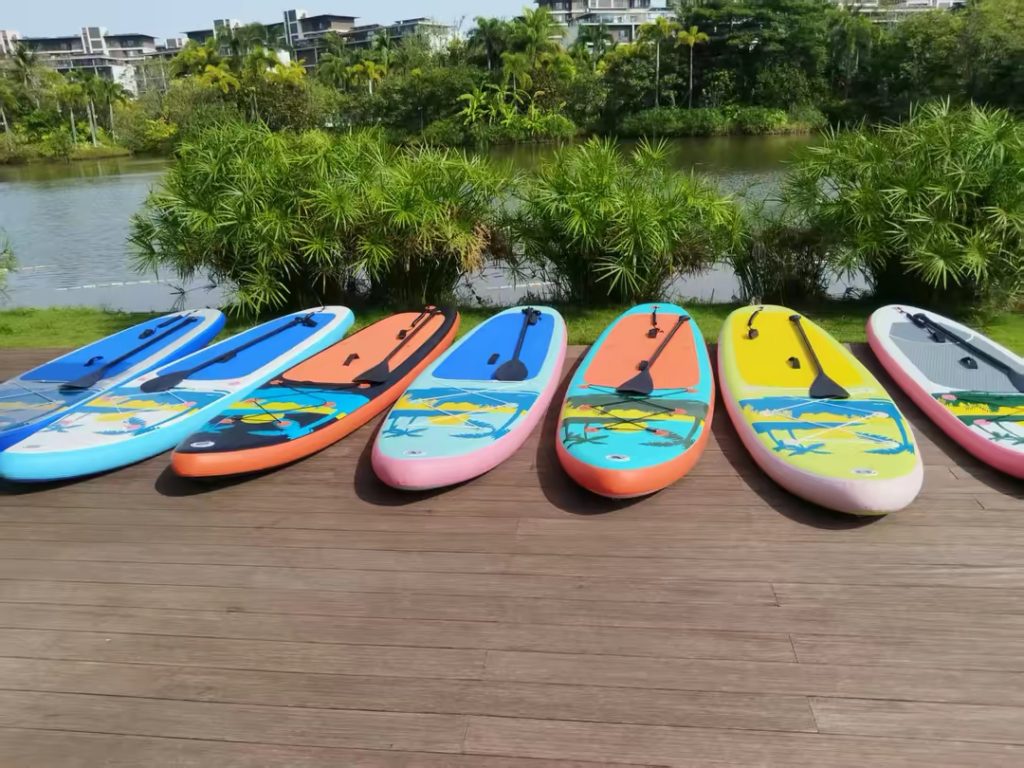
Buying surfboards directly from a Chinese manufacturer can offer competitive pricing, OEM customization, and access to a wide range of product designs.
However, choosing a supplier based only on price or product photos can create significant risks.
Before placing a bulk order, buyers should carefully check the manufacturer’s production capability, materials, board construction, dimensions, quality control, samples, packaging, shipping arrangements, and after-sales policy.
This guide provides a practical checklist for importers, wholesalers, distributors, retailers, surf schools, and private-label brands that are considering purchasing surfboards from China.
1. Check Whether the Supplier Is a Real Manufacturer
The first thing to verify is whether you are dealing with an actual surfboard factory or a trading company.
Ask for:
-
Factory name
-
Factory address
-
Production photos
-
Production videos
-
Manufacturing experience
-
Production capacity
-
Main products
-
OEM experience
For a serious order, request a live video factory inspection.
Ask the supplier to show:
-
Raw-material area
-
Shaping area
-
Lamination area
-
Sanding area
-
Painting and graphics area
-
Quality-control area
-
Packaging area
-
Finished-product warehouse
A supplier that cannot clearly explain where and how the boards are produced deserves additional verification.
2. Check the Manufacturer’s Experience
Ask how long the company has been manufacturing surfboards.
Useful questions include:
How many years have you produced surfboards?
Which surfboard types do you specialize in?
How many boards do you produce each month?
Which countries do you export to?
How many OEM projects have you completed?
Experience does not automatically guarantee quality, but a factory with relevant experience is generally easier to evaluate.
3. Check the Exact Surfboard Type
Do not simply ask for “a high-quality surfboard.”
Specify the product.
For example:
-
Shortboard
-
Longboard
-
Funboard
-
Fish board
-
Foam surfboard
-
Epoxy surfboard
-
Fiberglass surfboard
-
Beginner surfboard
-
Performance surfboard
Different board types have different construction and performance requirements.
4. Check the Board Dimensions
Dimensions should be clearly specified.
Important measurements include:
-
Length
-
Width
-
Thickness
-
Volume
-
Nose width
-
Tail width
For performance boards, also consider:
-
Rocker
-
Rails
-
Bottom contour
-
Tail shape
Ask the manufacturer to provide exact production specifications.
Do not rely only on product photographs.
5. Check the Core Material
The core material has a major influence on the board’s weight, strength, and performance.
Ask whether the board uses:
-
PU
-
EPS
-
Other foam constructions
Also ask about:
-
Foam density
-
Core thickness
-
Stringer
-
Reinforcement
Avoid accepting vague descriptions such as “premium foam” without specifications.
6. Check the Fiberglass
Fiberglass affects the board’s strength and weight.
Ask the manufacturer:
-
What fiberglass specification is used?
-
How many layers are applied?
-
Are different fiberglass options available?
-
Where is reinforcement used?
For OEM production, include the approved fiberglass specification in your product documentation.
7. Check the Resin
Confirm which resin system is used.
Common options include:
-
Polyester resin
-
Epoxy resin
Resin selection affects construction characteristics, cost, and manufacturing processes.
If you are comparing two factories, make sure they are quoting the same resin system before comparing prices.
8. Check the Construction Method
Ask exactly how the board is constructed.
For example:
EPS + epoxy + fiberglass
is different from:
PU + polyester + fiberglass
Even if the finished boards look similar, the construction can affect weight, durability, flex, and price.
Make sure the quotation clearly states the construction method.
9. Check the Board Shape
For custom boards, carefully inspect:
-
Nose
-
Tail
-
Rails
-
Rocker
-
Bottom
-
Deck
-
Overall symmetry
If you have a reference board, provide it to the factory.
You can also provide:
-
CAD drawings
-
Technical drawings
-
Dimension sheets
-
Design files
The manufacturer should produce the sample according to the approved specifications.
10. Check the Weight
Board weight should be measured rather than estimated.
Ask for:
-
Target weight
-
Weight tolerance
-
Finished-board weight
-
Packaging weight
For example, if your specification requires a board weight of 6.5 kg, establish an acceptable tolerance before mass production.
Weight consistency can also help identify changes in construction between production batches.
11. Check Lamination Quality
Lamination is one of the most important manufacturing stages.
Inspect for:
-
Air bubbles
-
Wrinkles
-
Uneven fiberglass
-
Resin defects
-
Poor bonding
-
Delamination
-
Excess resin
-
Dry areas
A board may look attractive from a distance while still having construction problems.
Inspect the surface carefully under good lighting.
12. Check for Surface Defects
Inspect the finished board for:
-
Scratches
-
Dents
-
Pinholes
-
Uneven sanding
-
Uneven paint
-
Resin marks
-
Bubbles
-
Cracks
-
Delamination
-
Surface contamination
Define what constitutes an acceptable and unacceptable defect before production.
13. Check the Rails
Rails can affect how the board interacts with the water.
Check:
-
Symmetry
-
Shape
-
Thickness
-
Finishing
-
Smoothness
For custom boards, compare the rails with the approved sample.
Inconsistent shaping between boards can create differences in performance.
14. Check the Rocker
For performance-oriented surfboards, rocker is an important specification.
The rocker should be consistent with your approved design.
If you provide a custom specification, ask the manufacturer how the factory measures and controls rocker during production.
15. Check the Bottom Contour
The bottom design can influence board performance.
Depending on the product, it may include:
-
Flat bottom
-
Single concave
-
Double concave
-
V-bottom
-
Channels
If the board has a specific bottom contour, make it part of the production specification.
16. Check the Fin Boxes
Fin boxes should be:
-
Correctly positioned
-
Securely installed
-
Properly bonded
-
Compatible with the specified fin system
Check whether fins are included.
Some quotations cover the board only.
Others include:
-
Fins
-
Screws
-
Fin key
-
Other hardware
Make sure this is clearly stated.
17. Check the Leash Plug
Inspect the leash plug carefully.
Check:
-
Position
-
Alignment
-
Bonding
-
Strength
-
Finish
A poorly installed leash plug can create a serious product-quality problem.
18. Check the Traction Pad
If a traction pad is included, check:
-
Adhesion
-
Position
-
Material
-
Shape
-
Surface finish
Confirm whether the traction pad is factory-installed or supplied separately.
19. Check the Graphics
For private-label products, graphics need careful inspection.
Check:
-
Colors
-
Logo size
-
Logo position
-
Artwork
-
Symmetry
-
Print quality
-
Surface finish
Always provide the manufacturer with the final approved artwork.
Do not approve production based on an informal image sent through messaging software.
20. Check Your Logo
Make sure your brand logo appears exactly as approved.
Check:
-
Spelling
-
Size
-
Position
-
Color
-
Orientation
-
Print quality
A simple logo mistake can make hundreds of boards unsellable.
21. Check the Sample Before Mass Production
Never rely solely on photographs.
Order a physical sample whenever possible.
Test:
-
Dimensions
-
Weight
-
Shape
-
Construction
-
Surface
-
Hardware
-
Graphics
-
Packaging
For performance boards, actual water testing can provide additional information.
22. Compare the Production Sample With Your Approved Sample
Once you approve a sample, keep it as a reference.
Before shipment, compare production boards against the approved sample.
Check:
Item |
Approved Sample |
Production |
|---|---|---|
Length |
✓ |
✓ |
Width |
✓ |
✓ |
Thickness |
✓ |
✓ |
Weight |
✓ |
✓ |
Shape |
✓ |
✓ |
Graphics |
✓ |
✓ |
Hardware |
✓ |
✓ |
Finish |
✓ |
✓ |
This helps reduce specification disputes.
23. Check Quality Tolerances
Manufacturing naturally involves some variation.
Instead of saying:
“The dimensions must be perfect.”
define acceptable tolerances.
For example:
-
Length tolerance
-
Width tolerance
-
Thickness tolerance
-
Weight tolerance
-
Graphic-position tolerance
The exact tolerances should be agreed according to the product.
24. Check the MOQ
MOQ means Minimum Order Quantity.
Ask:
-
Standard model MOQ
-
Custom-logo MOQ
-
Custom-color MOQ
-
Custom-graphics MOQ
-
Custom-shape MOQ
-
Custom-packaging MOQ
A factory may have one MOQ for standard products and another for fully customized products.
25. Check the Factory Price
Do not compare prices without comparing specifications.
Make sure all suppliers quote the same:
-
Board type
-
Dimensions
-
Core
-
Resin
-
Fiberglass
-
Construction
-
Hardware
-
Graphics
-
Packaging
Then compare unit prices.
26. Check What Is Included in the Quotation
Ask whether the quoted price includes:
-
Board
-
Fins
-
Leash
-
Traction pad
-
Logo
-
Graphics
-
Board bag
-
Carton
-
Protective materials
A $120 quotation and a $130 quotation may not actually represent the same product.
27. Check Sample and Development Costs
For custom OEM products, ask about:
-
Sample fee
-
Prototype fee
-
Design fee
-
Tooling fee
-
Mold fee where applicable
-
Revision fee
Also ask whether any development fees can be credited toward the bulk order.
28. Check Production Lead Time
Ask the factory for a realistic schedule.
A customized order may involve:
Design → Prototype → Sample → Approval → Material preparation → Production → QC → Packaging
Clarify when production officially starts.
For example, does the lead time begin:
-
After deposit?
-
After artwork approval?
-
After sample approval?
-
After all materials are available?
This prevents misunderstandings.
29. Check Monthly Production Capacity
Ask:
What is your monthly surfboard production capacity?
Also ask whether the factory can handle your expected quantity during peak seasons.
A factory capable of producing 200 boards per month may not be suitable for a business requiring 2,000 boards per month.
30. Check Packaging Carefully
Surfboards are vulnerable to transportation damage.
Packaging should protect:
-
Nose
-
Tail
-
Rails
-
Deck
-
Bottom
-
Fins
-
Hardware
Ask about:
-
Foam protection
-
Bubble wrap
-
Board bags
-
Cartons
-
Corner protection
-
Pallets
31. Check Carton Dimensions
Carton dimensions are important for calculating international freight.
Ask for:
-
Length
-
Width
-
Height
-
Net weight
-
Gross weight
-
Number of boards per carton
Because surfboards are large, transportation costs may be influenced heavily by volume.
32. Calculate Dimensional Shipping Costs
Do not assume freight is calculated only from actual weight.
Depending on the shipping method and carrier, volumetric or dimensional weight may apply.
A common air-freight formula is:
Length × Width × Height ÷ 5000
However, the divisor can vary by carrier and service.
Always ask your freight provider which calculation method applies.
33. Check Import Costs
Your final cost can include:
Product + Packaging + Inland Freight + International Freight + Duties + Taxes + Customs Fees + Local Delivery
Before ordering, calculate the estimated landed cost.
This gives you a more realistic picture of your profit margin.
34. Check Payment Terms
Ask the manufacturer about:
-
Deposit
-
Balance payment
-
Payment methods
-
Payment timing
For example, a common arrangement may involve a deposit before production and the balance before shipment, but actual terms vary by supplier and transaction.
Never assume payment terms without confirming them.
35. Check Warranty Terms
Ask:
-
What defects are covered?
-
How long is the warranty?
-
What evidence is required?
-
Who pays replacement shipping?
-
What happens if products arrive damaged?
-
Are manufacturing defects replaced or repaired?
Get the warranty terms in writing.
36. Check After-Sales Support
A reliable supplier should be able to respond to problems after shipment.
Ask how they handle:
-
Damaged boards
-
Manufacturing defects
-
Missing accessories
-
Wrong graphics
-
Incorrect specifications
-
Replacement products
This is especially important for private-label brands.
37. Check Export Experience
If you are importing surfboards internationally, ask whether the manufacturer has export experience.
Questions include:
-
Which countries do you export to?
-
How do you package boards for international transportation?
-
Can you provide export documentation?
-
What shipping terms do you support?
An experienced exporter may be more familiar with the challenges of shipping large surfboards internationally.
38. Protect Your Brand and Designs
If you provide custom designs, protect:
-
Brand name
-
Logo
-
Graphics
-
Board designs
-
CAD files
-
Packaging artwork
For important OEM projects, establish written agreements regarding confidentiality and intellectual-property ownership.
39. Conduct Pre-Shipment Inspection
For a large order, consider inspecting the products before shipment.
Inspection can verify:
-
Quantity
-
Dimensions
-
Weight
-
Appearance
-
Graphics
-
Hardware
-
Packaging
You can use your approved product specifications as the inspection checklist.
40. Don’t Pay Based Only on Photos
Product photos are useful for initial evaluation, but they cannot prove:
-
Actual construction quality
-
Weight
-
Dimensions
-
Lamination strength
-
Production consistency
For important purchases, use samples and inspection rather than relying entirely on photos.
41. Red Flags to Watch For
Be cautious if a supplier:
1. Offers an Unusually Low Price
A very low price may indicate differences in materials or construction.
2. Refuses to Provide a Sample
This makes product evaluation difficult.
3. Cannot Explain Construction
A professional manufacturer should know its materials and production methods.
4. Changes Specifications Frequently
Important product information should remain consistent.
5. Cannot Show Production Capability
Ask for factory photos, videos, or live inspection.
6. Avoids Written Specifications
Important requirements should be documented.
7. Cannot Explain Quality Control
Ask exactly how finished boards are inspected.
42. A Complete Pre-Order Checklist
Before placing your order, check:
Manufacturer
-
[ ] Factory identity
-
[ ] Factory location
-
[ ] Manufacturing experience
-
[ ] Production capacity
-
[ ] OEM experience
Product
-
[ ] Board type
-
[ ] Length
-
[ ] Width
-
[ ] Thickness
-
[ ] Volume
-
[ ] Weight
-
[ ] Core
-
[ ] Fiberglass
-
[ ] Resin
-
[ ] Construction
Shape
-
[ ] Nose
-
[ ] Tail
-
[ ] Rails
-
[ ] Rocker
-
[ ] Bottom contour
Hardware
-
[ ] Fin boxes
-
[ ] Fins
-
[ ] Leash plug
-
[ ] Traction pad
Branding
-
[ ] Logo
-
[ ] Graphics
-
[ ] Colors
-
[ ] Packaging
-
[ ] Labels
Commercial
-
[ ] MOQ
-
[ ] Unit price
-
[ ] Sample cost
-
[ ] Development cost
-
[ ] Payment terms
-
[ ] Lead time
Logistics
-
[ ] Carton dimensions
-
[ ] Gross weight
-
[ ] Packaging
-
[ ] Shipping method
-
[ ] Freight cost
-
[ ] Import costs
Quality
-
[ ] Approved sample
-
[ ] Quality standard
-
[ ] Tolerances
-
[ ] Inspection
-
[ ] Warranty
43. The Best Way to Evaluate a Chinese Surfboard Manufacturer
A practical evaluation can use five categories:
Category |
Importance |
|---|---|
Product Quality |
Very High |
Manufacturing Capability |
Very High |
Price |
High |
OEM Capability |
High |
Communication & Service |
High |
You can score each factory from 1–10.
For example:
Factory A
Quality: 8/10
Manufacturing: 8/10
Price: 9/10
OEM: 6/10
Service: 7/10
Factory B
Quality: 9/10
Manufacturing: 9/10
Price: 7/10
OEM: 9/10
Service: 9/10
Factory A is cheaper, but Factory B may be a better long-term partner for a private-label brand.
44. Questions to Send Before Buying
You can send this message to potential manufacturers:
Please provide your quotation based on the following specifications:
- Surfboard type
- Length
- Width
- Thickness
- Volume
- Core material
- Fiberglass specification
- Resin system
- Construction method
- Fin system
- Logo and graphics
- Packaging
- Quantity
- MOQ
- Sample cost
- Production lead time
- Monthly capacity
- Warranty terms
- Carton dimensions
- Shipping terms
Please also provide your factory information and relevant OEM production experience.


No reply content