
China Surfboard and Snowboard Manufacturer Co., Ltd.
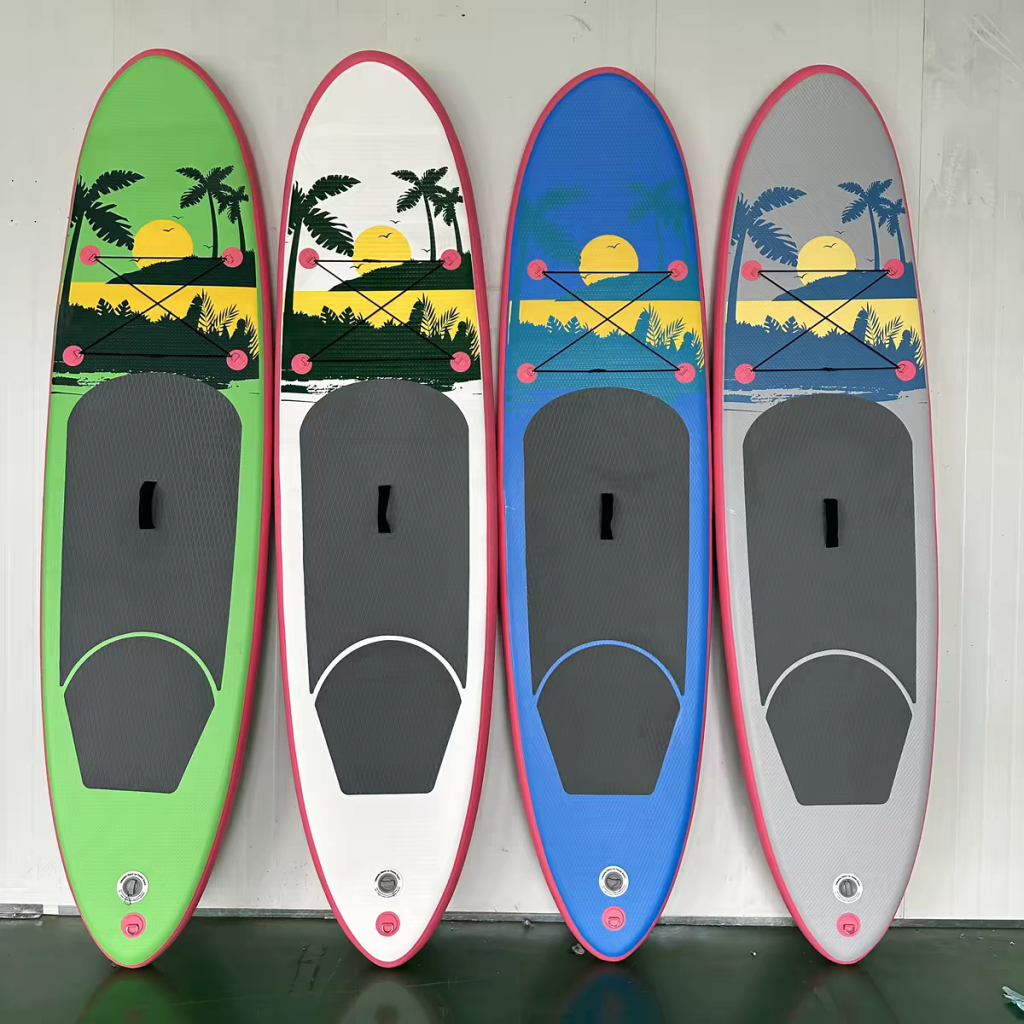


Buying surfboards directly from a Chinese manufacturer can offer wholesalers, distributors, surf shops, online retailers, and private-label brands access to competitive manufacturing costs and customized products.
However, choosing the right surfboard is more complicated than comparing photographs and prices. A surfboard’s construction, dimensions, materials, shaping, weight, finishing, accessories, and packaging can all affect its performance and commercial value.
Before placing a bulk order, buyers should have a clear inspection and purchasing process.
This guide explains the most important things to check before buying surfboards from a Chinese manufacturer.
1. Confirm Exactly What Type of Surfboard You Are Buying
The first step is to identify the intended use.
Common categories include:
-
Shortboards
-
Longboards
-
Funboards
-
Fish boards
-
Foam surfboards
-
Beginner surfboards
-
Performance surfboards
-
Epoxy surfboards
-
Fiberglass surfboards
-
Custom surfboards
Each category has different requirements.
For example, a beginner board normally prioritizes stability and durability, while a performance board may require much more precise shaping and weight control.
Before requesting a quotation, tell the manufacturer who will use the board and what type of surfing it is intended for.
2. Check the Board Dimensions
Dimensions are one of the first things to verify.
Important measurements include:
-
Length
-
Width
-
Thickness
-
Volume
-
Weight
For custom production, these specifications should be written clearly in the purchase order or product specification.
Do not rely only on product names such as “6’6 beginner board.”
Two boards with the same nominal length can have different widths, thicknesses, volumes, and shapes.
These differences can affect how the board behaves in the water.
3. Check the Board Shape
Shape is not simply about appearance.
Pay attention to:
-
Nose shape
-
Tail shape
-
Rails
-
Rocker
-
Bottom contour
-
Width distribution
-
Thickness distribution
If you are purchasing an existing model, ask the manufacturer for detailed specifications.
If you are developing a custom board, provide an approved design or technical drawing whenever possible.
For repeat orders, keep a reference sample or detailed specification so that future production can be compared against the original.
4. Check the Core Material
The core is an important part of the board’s construction.
Depending on the product, manufacturers may use different foam or structural materials.
Ask:
-
What core material is used?
-
What is the core specification?
-
Is the core reinforced?
-
How is the core shaped?
-
Is the material consistent between production batches?
The appropriate core depends on the type of surfboard and its intended performance.
A buyer should not assume that two boards are equivalent simply because they have the same external appearance.
5. Check the Resin and Fiberglass
For fiberglass or epoxy boards, ask the manufacturer about the construction system.
Important questions include:
-
What resin system is used?
-
What fiberglass is used?
-
How many layers are applied?
-
Where is additional reinforcement used?
-
How is lamination controlled?
-
How are air bubbles and weak areas detected?
You do not necessarily need the most expensive construction.
The important point is that the construction matches the product’s intended use and the agreed specification.
6. Inspect the Surface Finish
A finished surfboard should be carefully inspected.
Look for:
-
Cracks
-
Scratches
-
Bubbles
-
Uneven resin
-
Surface waves
-
Poor sanding
-
Uneven paint
-
Color differences
-
Delamination
-
Sharp or poorly finished edges
Small cosmetic imperfections may have different levels of importance depending on the market.
However, structural defects should always receive serious attention.
7. Check the Rails
Rails are particularly important because they are exposed to impact and affect the board’s handling.
Inspect:
-
Symmetry
-
Smoothness
-
Shape
-
Lamination
-
Surface finish
-
Damage protection
For a custom board, the rail shape should correspond to the approved design.
8. Check the Deck
The deck should be inspected for both appearance and construction.
Check:
-
Surface condition
-
Traction pad
-
Adhesion
-
Deck strength
-
Color
-
Logo placement
-
Finishing quality
If the board is supplied without a traction pad, confirm this before ordering rather than assuming it is included.
9. Check the Bottom
Inspect the bottom for:
-
Scratches
-
Uneven finishing
-
Cracks
-
Surface imperfections
-
Structural damage
-
Poorly installed components
The bottom shape should also match the agreed product specification.
10. Check the Fin System
The fin system should be clearly specified.
Confirm:
-
Fin configuration
-
Fin box type
-
Number of fins
-
Fin material
-
Included fins
-
Installation quality
-
Replacement availability
Possible configurations can include single-fin, twin-fin, thruster, or quad setups depending on the board design.
Never assume fins are included unless they are specifically listed in the quotation.
11. Check the Leash and Other Accessories
Ask exactly what comes with the board.
Possible accessories include:
-
Fins
-
Leash
-
Traction pad
-
Board bag
-
Fin key
-
Repair kit
-
Screws
-
Other hardware
A supplier’s quotation should clearly identify included accessories.
This is particularly important when comparing different manufacturers.
12. Check the Actual Weight
Weight can be commercially and practically important.
For performance-oriented boards, weight can influence handling and transportation.
Measure the actual sample and compare it with the manufacturer’s specification.
For bulk production, establish an acceptable weight tolerance if weight is important to your product.
Do not assume that every board from the same model will have exactly the same weight.
13. Check Dimensional Consistency
One sample can look perfect while production consistency is poor.
For larger orders, inspect boards from different cartons or production batches.
Check:
-
Length
-
Width
-
Thickness
-
Weight
-
Shape
-
Fin box position
-
Traction pad position
-
Logo position
Consistent dimensions are particularly important for private-label brands.
14. Check the Manufacturing Quality
Ask the factory how it controls production.
A good process may include:
Incoming Material Inspection
Foam, fiberglass, resin, accessories, and other materials are checked before production.
Shaping Inspection
Dimensions and shape are checked during manufacturing.
Lamination Inspection
The board is checked for construction defects.
Finishing Inspection
Surface appearance and finishing are checked.
Final Inspection
The finished board is inspected before packing.
The exact procedure depends on the factory, but the manufacturer should be able to explain its quality-control system.
15. Ask for a Pre-Production Sample
If the board is customized, request a final sample before mass production.
The sample should represent the actual production configuration.
Confirm:
-
Shape
-
Dimensions
-
Construction
-
Color
-
Graphics
-
Logo
-
Fin system
-
Accessories
-
Packaging
Do not approve mass production based only on a computer rendering.
16. Test the Board in Real Conditions
If possible and appropriate, test the sample in water.
Different board types should be evaluated differently.
Consider:
-
Stability
-
Balance
-
Paddle performance
-
Turning
-
Maneuverability
-
Weight
-
Handling
-
Comfort
-
Overall durability
The test should be performed by someone familiar with the intended use.
For a professional surf product, feedback from an experienced surfer can be especially useful.
17. Check the Packaging
Surfboards are large and relatively vulnerable during transportation.
Inspect the manufacturer’s export packaging.
It should provide protection for:
-
Nose
-
Tail
-
Rails
-
Deck
-
Bottom
-
Fin boxes
Ask how many layers of protection are used and how the boards are placed inside the master carton.
If your products will be shipped internationally, packaging should be evaluated together with the transportation method.
18. Check the Shipping Dimensions
Surfboards can have significant dimensional volume.
This means shipping cost may depend heavily on package dimensions rather than just actual weight.
Before placing an order, ask the manufacturer for:
-
Individual packed dimensions
-
Carton dimensions
-
Number of boards per carton
-
Gross weight
-
Net weight
-
Total carton quantity
This information allows your freight forwarder to estimate the transportation cost more accurately.
19. Confirm MOQ
Before finalizing the supplier, ask about the MOQ for your exact configuration.
MOQ may vary according to:
-
Standard model
-
Custom logo
-
Custom graphics
-
Custom color
-
Custom shape
-
Custom packaging
-
Custom accessories
A factory may accept a small quantity of standard boards but require a larger order for fully customized production.
20. Confirm the Production Lead Time
Ask the manufacturer for a written production schedule.
The lead time may depend on:
-
Product type
-
Quantity
-
Materials
-
Customization
-
Packaging
-
Factory workload
Custom designs may take longer because samples and development work are involved.
Do not plan your sales campaign around an estimated delivery date until the production schedule is confirmed.
21. Verify the Manufacturer
Before making a large payment, verify the supplier.
Useful checks include:
-
Legal company name
-
Factory address
-
Manufacturing capability
-
Production facility
-
Export experience
-
OEM experience
-
Quality-control system
-
Sample quality
For larger projects, consider a factory audit or independent inspection.
22. Check OEM and Private-Label Capability
If you intend to sell the surfboards under your own brand, confirm what can be customized.
Possible options include:
-
Logo
-
Board graphics
-
Colors
-
Board shape
-
Dimensions
-
Packaging
-
Board bags
-
Accessories
Ask which changes are included in the standard OEM price and which require additional costs.
23. Confirm the Total Cost
Do not compare only the factory unit price.
Consider:
Product Price + Packaging + Tooling if required + Inspection + Inland Freight + International Freight + Insurance if applicable + Import Duties/Taxes + Handling Costs
The actual landed cost depends on the destination and shipping arrangement.
A manufacturer with a slightly higher product price may still provide a better total cost if its packaging is stronger or its product has a lower defect rate.
24. Establish Quality Standards Before Production
This is one of the most important steps.
Your specification should clearly define:
-
Dimensions
-
Weight
-
Materials
-
Construction
-
Color
-
Graphics
-
Logo
-
Fin system
-
Accessories
-
Packaging
-
Acceptable defects
For repeat orders, keep the approved sample and specification as a reference.
This reduces the risk of receiving a product that differs from the original sample.
What Should You Check During a Factory Audit?
If you conduct an audit, focus on practical manufacturing capability rather than the appearance of the factory.
Check:
Production Area
Is there enough space and equipment for the order?
Skilled Workers
Does the factory have people experienced in surfboard shaping, lamination, and finishing?
Quality Control
Are products actually inspected?
Raw Materials
Are important materials properly stored?
Production Records
Does the factory have a system for tracking production?
Finished Goods
Are completed boards stored properly before shipment?
Packaging
Does the factory have suitable export packaging capability?
A clean factory is useful, but production control and consistency are more important than appearance alone.
Common Mistakes Buyers Make
Mistake 1: Choosing the Lowest Price
A low price may reflect lower-grade materials or a different construction method.
Mistake 2: Ordering Without a Sample
A photograph cannot reveal every construction problem.
Mistake 3: Not Measuring the Product
Always verify important dimensions.
Mistake 4: Assuming Accessories Are Included
Confirm every accessory in writing.
Mistake 5: Ignoring Shipping Dimensions
Large surfboards can have significant transportation costs.
Mistake 6: Changing Specifications During Production
Late changes can create delays, extra costs, and inconsistent production.
Mistake 7: Not Inspecting a Large Order
A sample cannot guarantee the quality of the entire shipment.
A Practical Pre-Order Checklist
Before placing a commercial surfboard order, make sure you have confirmed:
-
Product type
-
Length
-
Width
-
Thickness
-
Volume
-
Weight
-
Core material
-
Construction
-
Fiberglass/resin specification
-
Shape
-
Fin configuration
-
Accessories
-
Logo
-
Graphics
-
Packaging
-
MOQ
-
Unit price
-
Lead time
-
Quality standards
-
Inspection requirements
-
Warranty or defect policy
-
Shipping dimensions
-
Commercial terms


No reply content