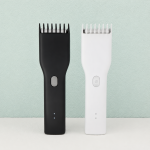
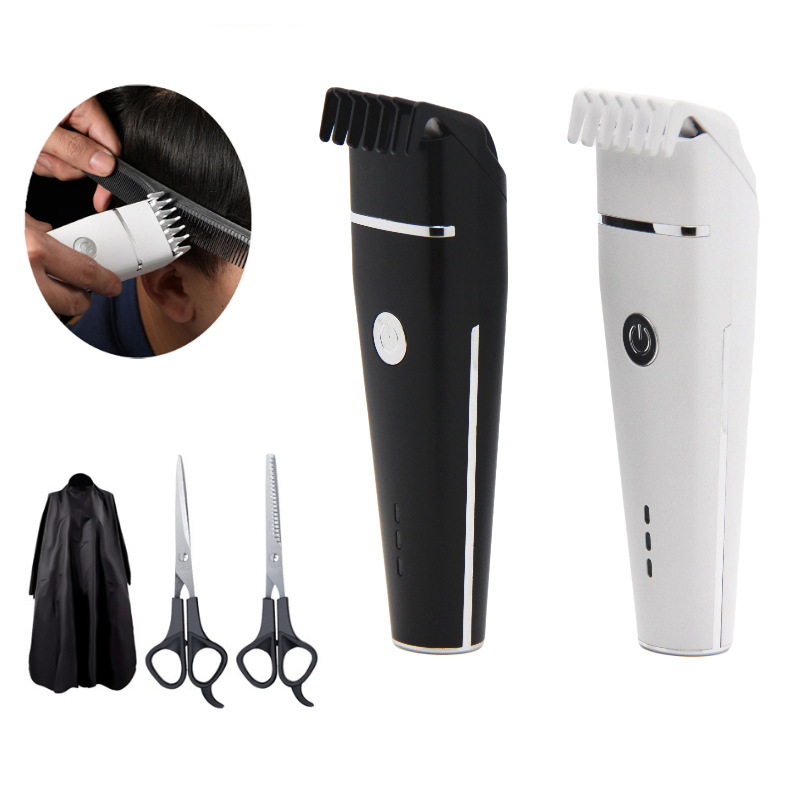
Importing cordless hair clippers from China can be an attractive option for wholesalers, distributors, retailers, barbershop suppliers, e-commerce sellers, and private-label brands. China has a large manufacturing base for electric grooming products, making it possible to source different product specifications, price levels, packaging options, and customization services.
However, buying cordless hair clippers internationally requires more than comparing factory prices.
You need to evaluate the product, battery, motor, blades, supplier capability, certifications, packaging, production quality, shipping requirements, and total landed cost before placing a bulk order.
This guide explains the most important things international buyers should check before importing cordless hair clippers from China.
1. Define Your Target Market First
Before contacting suppliers, determine where you plan to sell the product.
Your target market influences:
- Product specifications
- Charging requirements
- Packaging
- Product labeling
- Compliance documentation
- Consumer expectations
- Shipping arrangements
- Retail price
A budget hair clipper for general household use has different requirements from a professional barber clipper.
For example, professional buyers may prioritize:
- Strong motor
- Long battery life
- Durable blades
- Low vibration
- Ergonomic design
- Fast charging
- Replaceable components
Defining your customer first makes it easier to select the appropriate product.
2. Confirm the Exact Product Specification
Do not place an order based only on a product photograph.
Ask the supplier for a complete specification sheet.
Important specifications include:
| Specification | What to Check |
|---|---|
| Motor | Type, speed, torque, performance |
| Battery | Type, capacity, voltage |
| Charging | Interface, charging time |
| Blade | Material, design, adjustment |
| Working time | Actual expected runtime |
| Weight | Product weight |
| Guide combs | Quantity and cutting lengths |
| Housing | Plastic or metal |
| Dimensions | Product size |
| Accessories | Complete package contents |
Make sure the specifications are written clearly on the quotation or purchase agreement.
3. Test the Sample Before Ordering
A sample is one of the most important steps in international sourcing.
Do not order thousands of units based only on photographs.
Test the sample for:
- Cutting performance
- Motor power
- Battery life
- Charging
- Noise
- Vibration
- Heat
- Blade quality
- Guide comb fit
- Button operation
- Housing quality
- Accessories
- Packaging
If possible, test the clipper on different hair types and lengths.
A product that looks excellent in a photograph may perform differently during actual use.
4. Check the Battery Carefully
Cordless hair clippers normally depend on rechargeable batteries, so battery quality deserves particular attention.
Ask the manufacturer for:
- Battery chemistry
- Capacity
- Voltage
- Charging time
- Operating time
- Protection system
- Battery supplier
- Battery testing procedure
Do not assume that a larger advertised battery capacity automatically means longer operating time.
Actual runtime depends on the motor, electronic control system, battery efficiency, and operating conditions.
For large orders, consider requesting battery-related test documentation appropriate to your target market and transportation method.
5. Check International Battery Shipping Requirements
Rechargeable hair clippers can contain lithium batteries, which may affect international transportation requirements.
Before arranging shipment, confirm:
- Battery type
- Battery capacity
- Battery configuration
- Packaging method
- Transportation method
- Required shipping documentation
- Destination-country requirements
The shipping requirements can vary according to the battery specifications and transportation method.
Your freight forwarder and manufacturer should confirm the applicable requirements before the goods leave the factory.
6. Examine the Motor
The motor determines much of the clipper’s cutting performance.
Ask about:
- Motor type
- RPM
- Torque
- Noise
- Vibration
- Heat
- Continuous operating performance
- Expected service life
A high RPM number alone does not guarantee a high-quality clipper.
The motor should work effectively with the blade and battery system.
For professional products, continuous-use testing is particularly useful.
7. Inspect Blade Quality
Blade performance has a direct effect on customer satisfaction.
Check:
- Blade material
- Sharpness
- Alignment
- Cutting consistency
- Corrosion resistance
- Adjustment mechanism
- Replaceability
- Durability
The blade should cut smoothly without excessive pulling or snagging.
If you plan to sell the product to professional barbers, test it under more demanding conditions.
8. Verify the Guide Combs
Guide combs are small accessories, but poor-quality combs can create customer complaints.
Check:
- Number of combs
- Cutting lengths
- Material
- Attachment strength
- Fit
- Dimensional consistency
Make sure the accessories included in the sample are the same as those specified for the bulk order.
9. Confirm the Charging System
Different markets may have different preferences for charging.
Possible options include:
- USB charging
- USB-C
- Dedicated charging cable
- Charging stand
- Wall charger
Confirm:
- Charging interface
- Charger specifications
- Input voltage
- Charging time
- Cable length
- Compatibility with your target market
If the product uses a separate wall charger, make sure the appropriate charger configuration is supplied for the destination market.
10. Check Product Certifications and Compliance
Compliance requirements depend on the destination country and exact product configuration.
Before importing, identify the applicable requirements for your market.
Potential areas can include:
- Electrical safety
- Electromagnetic compatibility
- Battery requirements
- Product labeling
- Environmental requirements
- Transportation documentation
Do not simply accept a certificate from the supplier without checking what product model it actually covers.
Ask the supplier for the relevant documentation and verify that it matches the product you are purchasing.
11. Verify the Manufacturer
Before placing a large order, investigate the supplier itself.
Check:
- Company information
- Factory location
- Manufacturing experience
- Production capacity
- Main products
- OEM capability
- Quality-control procedures
- Export experience
Ask whether the factory produces the hair clipper itself or sources the product from another manufacturer.
For larger orders, an independent factory inspection can provide additional assurance.
12. Ask About Quality Control
A professional factory should have quality-control procedures throughout production.
A typical process may include:
- Incoming component inspection
- Motor inspection
- Battery inspection
- Assembly inspection
- Functional testing
- Charging testing
- Appearance inspection
- Finished-product testing
- Packaging inspection
- Final random inspection
Ask the supplier what tests are performed and what defect rate they consider acceptable.
For private-label products, it is useful to agree on quality standards before production begins.
13. Check the Product’s Operating Time
Manufacturers may advertise different operating times.
Instead of relying solely on the advertised number, ask:
- How was the runtime measured?
- Under what load?
- At what battery condition?
- What motor configuration was used?
If the manufacturer states a specific runtime, test the sample yourself.
This is particularly important when the operating-time claim will be used in your product listing or packaging.
14. Check Charging Time
Charging time also affects customer satisfaction.
Ask:
- How long does a complete charge take?
- Is fast charging supported?
- Can the clipper be used while charging?
- Is overcharge protection included?
- Does the charger become hot during charging?
If the product supports both cordless and corded operation, confirm the exact operating behavior.
15. Inspect Housing Quality
The housing affects both durability and perceived value.
Check for:
- Surface scratches
- Gaps
- Uneven seams
- Loose components
- Button quality
- Grip
- Material consistency
- Logo quality
For premium products, metal housings or higher-quality plastic can improve the perceived value.
For budget products, a well-designed ABS housing can provide a better balance between cost and durability.
16. Check Packaging
International transportation can involve handling, stacking, vibration, and pressure.
Your packaging should protect the clipper and accessories during shipping.
Check:
- Retail box
- Inner protection
- Product positioning
- Accessories storage
- Outer carton
- Carton strength
- Units per carton
- Carton dimensions
- Gross weight
Ask the manufacturer for final packing information before arranging freight.
17. Calculate Shipping Volume
Shipping costs depend not only on product weight but also on package dimensions.
Ask the manufacturer for:
- Individual package size
- Carton size
- Units per carton
- Gross weight
- Net weight
- Total CBM
For air freight, dimensional weight may also affect the freight charge.
This information should be obtained before finalizing your logistics budget.
18. Calculate the Total Landed Cost
The factory price is not your actual import cost.
A basic calculation is:
Product Cost + Packaging + Inspection + Domestic Transport + International Freight + Customs/Taxes + Destination Delivery = Estimated Landed Cost
For example, if your factory price is US$12 per unit, your final cost per unit will be higher after adding logistics and import-related expenses.
This is why two suppliers with similar factory prices can produce different final costs.
19. Understand MOQ
Ask about MOQ before selecting a product.
Different MOQs may apply to:
- Standard product
- Custom logo
- Custom color
- Custom packaging
- Custom accessories
- Custom housing
- New mold
A standard product may be available at a lower quantity, while a completely customized product can require a much larger production run.
20. Understand Production Lead Time
Typical planning ranges for cordless hair clippers may be:
- Standard product: approximately 7–20 days
- Logo and packaging customization: approximately 15–30 days
- More extensive OEM customization: approximately 30–60+ days
These are general estimates.
Actual lead time depends on order quantity, factory workload, customization, component availability, and tooling requirements.
Always request a confirmed production schedule.
21. Check OEM and Private Label Options
If you want to build your own brand, ask what the factory can customize.
Possible options include:
- Logo
- Color
- Packaging
- User manual
- Labels
- Barcode
- Guide combs
- Accessories
- Housing
- Buttons
- Charging interface
Ask the manufacturer to separate the cost of each customization item.
This makes it easier to control your initial investment.
22. Ask About Spare Parts
Spare parts can become important after your product enters the market.
Ask whether the manufacturer can supply:
- Replacement blades
- Batteries
- Guide combs
- Charging cables
- Chargers
- Motors
- Switches
- Protective caps
A stable spare-parts supply can make after-sales service easier.
23. Check Warranty and Defective Product Policy
Before placing a large order, confirm:
- Warranty period
- Defective-product definition
- Replacement procedure
- Compensation policy
- Return conditions
- Spare-parts support
Make sure these terms are documented rather than relying only on verbal promises.
24. Compare at Least Several Suppliers
Do not select a supplier based on the first quotation.
A useful comparison table is:
| Factor | Supplier A | Supplier B | Supplier C |
|---|---|---|---|
| Factory price | |||
| MOQ | |||
| Sample quality | |||
| Motor | |||
| Battery | |||
| Blade | |||
| Packaging | |||
| OEM capability | |||
| Lead time | |||
| Quality control | |||
| Certifications | |||
| Warranty |
The best supplier is usually the one offering the strongest overall combination of quality, price, reliability, and service.
Typical Factory Price Range
As a general purchasing reference, cordless rechargeable hair clippers from Chinese manufacturers may fall into these ranges:
| Product Level | Approximate Factory Price |
|---|---|
| Basic model | US$5–10 |
| Entry-level professional | US$8–15 |
| Mid-range model | US$10–20 |
| Professional model | US$15–30 |
| Premium model | US$25–50+ |
| Highly customized OEM model | US$30–60+ |
These are indicative ranges only. Actual quotations depend on order quantity, components, customization, packaging, and factory capabilities.
Frequently Asked Questions
Is it safe to import rechargeable hair clippers from China?
It can be, provided that the product, battery, supplier, shipping method, and destination-market requirements are properly checked before shipment.
What should I test before placing a bulk order?
At minimum, test cutting performance, battery runtime, charging, motor noise, vibration, heat, blade quality, guide combs, housing, accessories, and packaging.
How much do cordless hair clippers cost from China?
Many standard products may fall around US$5–30 per unit at factory level. Premium or highly customized models can cost US$30–60+.
What is a normal production time?
A standard model may take around 7–20 days, while customized orders can require approximately 15–60 days or longer.
Can I import hair clippers under my own brand?
Yes. Many manufacturers offer private-label services such as logo printing, custom packaging, colors, manuals, and selected product modifications.
Should I use a freight forwarder?
For international commercial shipments, an experienced freight forwarder can help coordinate pickup, transportation, documentation, customs procedures, and delivery. Battery-containing products should be declared and shipped according to applicable transportation requirements.
Should I inspect the goods before shipment?
For larger orders, pre-shipment inspection can be worthwhile. It allows you to identify quality problems before the goods leave China.
Final Import Checklist
Before placing your purchase order, make sure you have confirmed:
- Product specifications
- Sample performance
- Motor specifications
- Battery specifications
- Blade material
- Operating time
- Charging time
- Accessories
- Packaging
- Carton dimensions
- Gross weight
- MOQ
- Factory price
- Production lead time
- OEM requirements
- Certification requirements
- Battery shipping requirements
- Quality-control standards
- Warranty terms
- Spare-parts availability
- Shipping method
- Total landed cost
Conclusion
Importing cordless hair clippers from China can provide competitive sourcing opportunities, but successful purchasing requires careful evaluation.
Do not focus only on the factory price. Check the motor, battery, blade, charging system, product quality, packaging, compliance documentation, production capability, shipping requirements, and total landed cost.
For first-time buyers, a practical approach is to select several manufacturers, request samples, compare the products under the same conditions, verify supplier capabilities, and begin with a manageable order.
The right preparation can help reduce defective products, unexpected import costs, shipping problems, and after-sales issues while giving your business a more reliable supply of cordless hair clippers.


No reply content