
China Professional Hair Clipper Manufacturing Co., Ltd.
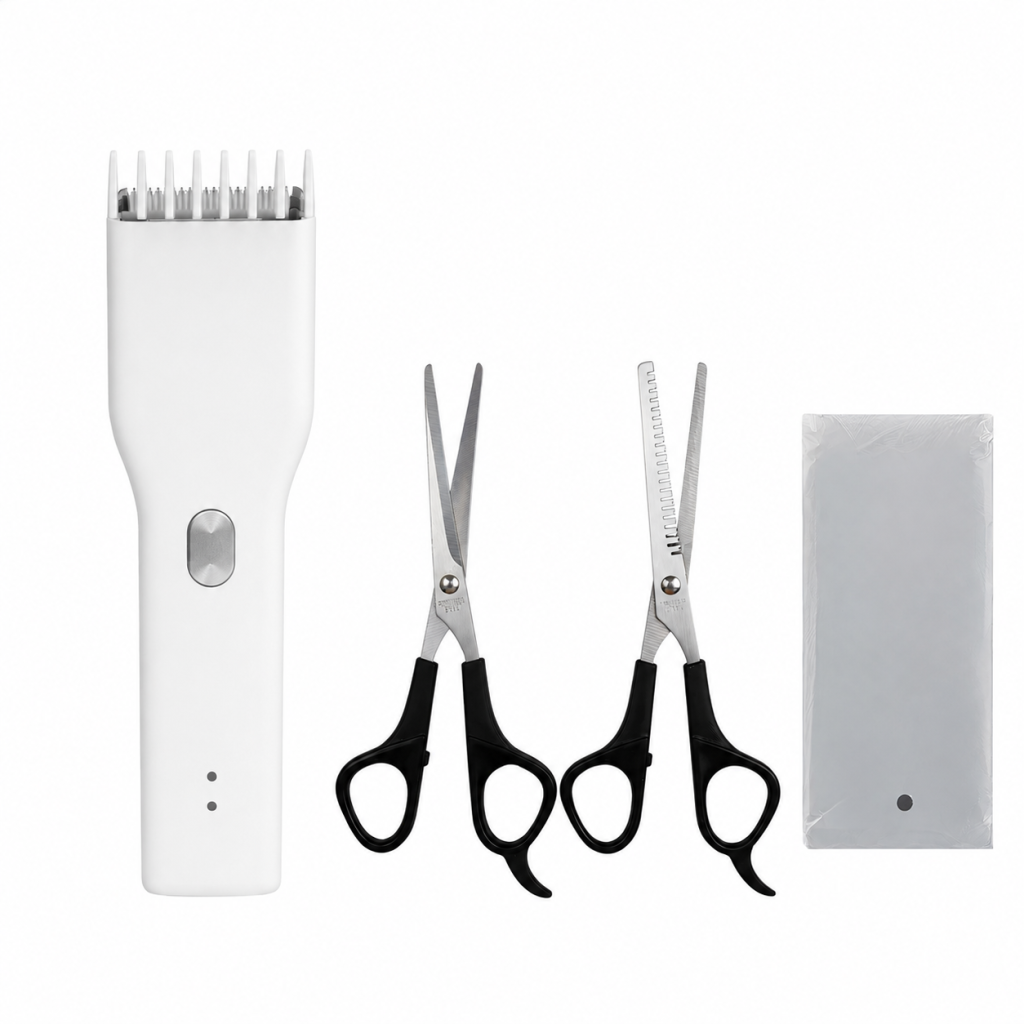
Importing cordless hair clippers from China can be an attractive option for distributors, retailers, barbershop suppliers, e-commerce brands, and private-label businesses. China has a large manufacturing base for rechargeable hair clippers, professional barber clippers, beard trimmers, and other personal grooming products.
However, a successful import is about more than finding a low factory price.
Before placing an order, buyers should evaluate the product specification, battery, motor, blades, supplier, quality control, certifications, packaging, shipping requirements, import costs, and after-sales support.
This guide explains what international buyers should check before importing cordless hair clippers from China.
1. Confirm the Exact Product Specification
The first step is to create a clear product specification.
Do not simply send a supplier a product photo and ask:
“How much?”
Different manufacturers may quote completely different products.
Your specification should include:
-
Product type
-
Motor type
-
Motor speed
-
Battery capacity
-
Battery voltage
-
Charging method
-
Operating time
-
Charging time
-
Blade material
-
Cutting length
-
Product dimensions
-
Product weight
-
Display requirements
-
Accessories
-
Packaging
-
Logo requirements
-
Target market
The more specific the RFQ, the easier it becomes to compare different suppliers.
2. Check Whether the Supplier Is a Factory
Before importing, determine who you are actually purchasing from.
The supplier may be:
-
A manufacturer
-
A trading company
-
An export company
-
A sourcing company
-
A distributor
A trading company is not automatically a bad choice. Some have strong relationships with qualified factories and can provide useful export services.
However, if you want OEM or private-label production, you should understand who manufactures your products and what level of control the supplier has over production.
Ask for:
-
Company information
-
Factory location
-
Manufacturing capabilities
-
Main products
-
Production capacity
-
OEM/ODM experience
-
Quality-control procedures
-
Export experience
3. Test the Hair Clipper Sample
Never rely entirely on photographs, videos, or product descriptions.
Request a sample before placing a large order.
Test the sample under realistic conditions.
Cutting Performance
Test different hair types and different cutting lengths.
Battery
Measure actual operating time and compare it with the manufacturer’s specifications.
Motor
Check power, noise, vibration, and performance during continuous operation.
Heat
Run the clipper for an extended period and check whether the motor or housing becomes excessively hot.
Charging
Check charging stability, charging time, connector quality, and charger compatibility.
Ergonomics
Evaluate:
-
Weight
-
Grip
-
Balance
-
Button position
-
Ease of operation
A professional barber may use the clipper for several hours per day, so ergonomics can be as important as specifications.
4. Pay Special Attention to the Battery
Battery quality is one of the most important considerations when importing cordless hair clippers.
Ask the manufacturer for:
-
Battery chemistry
-
Rated capacity
-
Voltage
-
Charging time
-
Expected runtime
-
Protection functions
-
Battery test information
-
Charger specifications
Do not assume that a higher advertised mAh automatically means better performance.
Actual runtime depends on the battery, motor, electronic control system, operating conditions, and product design.
If the clipper uses a lithium-ion battery, also check the documentation required for transportation and import into your destination market.
5. Check the Motor
The motor determines much of the clipper’s cutting performance.
Ask the manufacturer about:
-
Motor type
-
Speed
-
Torque
-
Continuous operating capability
-
Noise
-
Vibration
-
Heat generation
-
Expected service life
Do not select a motor based only on RPM.
A high-speed motor may not provide the best cutting performance if the blade system, torque, electronics, or overall engineering are poorly matched.
For professional barber products, stable performance during repeated use is especially important.
6. Inspect the Blade
The blade is another critical component.
Check:
-
Blade material
-
Blade hardness
-
Blade coating
-
Cutting precision
-
Adjustable mechanism
-
Alignment
-
Corrosion resistance
-
Replacement availability
Ask whether replacement blades will remain available for future orders.
For a private-label brand, replacement parts can be important because customers may continue using the product for years.
7. Verify Product Quality Control
Before importing a large quantity, understand how the factory controls quality.
A suitable quality-control process may include:
-
Incoming component inspection
-
Battery inspection
-
Motor inspection
-
Blade inspection
-
Assembly inspection
-
Charging test
-
Functional test
-
Appearance inspection
-
Aging or endurance testing
-
Final inspection
-
Packaging inspection
Ask the supplier how many products are tested and what happens when defective products are discovered.
For larger orders, consider arranging an independent pre-shipment inspection.
8. Check Certifications and Compliance Documents
Do not assume that a product is compliant simply because the supplier says:
“CE certified.”
Ask for the actual documents.
Depending on your destination market and product configuration, you may need documentation related to:
-
Electrical safety
-
Electromagnetic compatibility
-
Battery safety
-
Chemical restrictions
-
Charger requirements
-
Product labeling
-
Transportation of lithium batteries
The exact requirements vary by market.
Before production, identify the regulations applicable to your destination country.
Also make sure the certificate or test report corresponds to the actual product model being purchased.
9. Check the Charger and Power Supply
The charger is easy to overlook but can cause problems during importation.
Confirm:
-
Input voltage
-
Output voltage
-
Output current
-
Plug type
-
Charging interface
-
Adapter specifications
-
Applicable electrical requirements
If you are selling in several countries, different plug types or power requirements may need to be considered.
A supplier should confirm which charger configuration will be included with the order.
10. Check Packaging and Product Labels
Before mass production, approve the packaging artwork.
Check:
-
Brand name
-
Product model
-
Product specifications
-
Barcode
-
Country-of-origin information
-
Warning information
-
Battery information
-
Importer information where required
-
User instructions
-
Certification marks where applicable
Do not allow the factory to change important product information without approval.
For private-label products, the packaging should match the approved design.
11. Calculate the Landed Cost
The factory price is only one part of your total cost.
Your landed cost may include:
Product cost + packaging + inspection + domestic transportation + international freight + insurance + customs duties + import taxes + destination charges + warehousing
For example, suppose your factory quotation is:
US$10 per clipper
If you import 1,000 units:
Product value = US$10,000
But the actual cost after freight, taxes, customs clearance, inspection, and other charges may be considerably higher.
Always calculate landed cost before deciding whether the purchase price is competitive.
12. Estimate International Shipping Costs
Cordless hair clippers may contain lithium-ion batteries, so shipping arrangements should be discussed before production.
Ask your freight forwarder or logistics provider about:
-
Shipping method
-
Battery classification
-
Required documentation
-
Packaging requirements
-
Air freight restrictions
-
Sea freight options
-
Transit time
-
Destination customs requirements
Potential shipping methods include:
-
Express
-
Air freight
-
Sea freight
-
Rail or multimodal transportation where suitable
The best method depends on order size, destination, urgency, battery configuration, and total logistics cost.
13. Check Import Duties and Taxes
Import duties and taxes vary by country.
Before ordering, determine:
-
HS classification
-
Customs duty
-
Import VAT/GST
-
Customs clearance fees
-
Other applicable charges
Do not rely entirely on the supplier’s estimate.
For significant orders, confirm the applicable tariff classification and import requirements with your customs broker or relevant authority.
14. Check the MOQ
Minimum order quantity can affect your inventory investment.
A factory may offer different MOQs for:
-
Standard products
-
Logo printing
-
Custom packaging
-
Custom colors
-
Custom molds
-
OEM development
If you are launching a new brand, do not automatically select the factory offering the lowest unit price.
A smaller initial order can reduce inventory risk.
Once sales are proven, larger orders may provide better manufacturing economics.
15. Check Production Lead Time
Ask the supplier for a written production schedule.
It should cover:
-
Sample approval
-
Packaging approval
-
Material preparation
-
Production
-
Quality inspection
-
Packaging
-
Shipment preparation
A simple private-label order may be completed faster than a new OEM product.
As a general planning range:
-
Standard products: around 1–3 weeks
-
Logo/private label: around 2–4 weeks
-
Customized packaging or colors: around 3–6 weeks
-
New OEM development: around 1–4 months or longer
Actual timing depends on the manufacturer and project complexity.
16. Confirm Payment Terms
Before paying the supplier, confirm the commercial terms in writing.
Important items include:
-
Supplier’s legal company name
-
Bank beneficiary
-
Product specifications
-
Quantity
-
Unit price
-
Total value
-
Deposit
-
Balance
-
Production lead time
-
Inspection terms
-
Warranty
-
Shipping terms
Avoid changing the bank account based solely on an unexpected email or message.
For larger transactions, independently verify payment instructions with the supplier.
17. Use a Written Purchase Agreement
Your agreement should clearly define the product.
Include:
-
Model number
-
Product specifications
-
Battery capacity
-
Motor specification
-
Blade specification
-
Accessories
-
Packaging
-
Quantity
-
Unit price
-
Delivery date
-
Inspection standard
-
Defective-product policy
-
Warranty
-
Payment terms
The approved sample can also be identified as the reference standard.
This reduces the risk of receiving a product that differs from the original quotation.
18. Consider Pre-Shipment Inspection
For larger orders, a pre-shipment inspection can be useful.
An inspection can check:
-
Quantity
-
Appearance
-
Product specifications
-
Function
-
Accessories
-
Packaging
-
Labels
-
Carton condition
-
Random sample performance
The inspection standard should be agreed before production.
If the products fail important requirements, you can address the problem before the goods leave China.
19. Check Carton and Pallet Information
International buyers should also collect accurate shipping information.
Ask for:
-
Carton dimensions
-
Gross weight
-
Net weight
-
Units per carton
-
Number of cartons
-
Pallet dimensions if applicable
-
Total volume
-
Total shipment weight
This information allows your freight forwarder to calculate shipping costs more accurately.
For larger orders, incorrect carton information can result in unexpected freight charges.
20. Plan for Spare Parts
A professional importer should think about after-sales service before the first shipment.
Depending on the product, consider ordering:
-
Replacement blades
-
Batteries
-
Charging cables
-
Chargers
-
Guide combs
-
Cleaning brushes
-
Screws
-
Other commonly replaceable parts
The required spare-parts quantity depends on your expected sales volume and warranty policy.
21. Check the Warranty Policy
Ask the factory:
-
What is the warranty period?
-
What defects are covered?
-
How are defective products reported?
-
Are replacement parts available?
-
Does the supplier provide replacement units?
-
Who pays for replacement shipping?
-
How are recurring quality problems handled?
These terms should be agreed before mass production.
22. Consider Your Target Customer
The correct product depends on who will buy it.
Home Users
Priorities may include:
-
Affordable price
-
Simple operation
-
Quiet performance
-
Lightweight design
-
Easy cleaning
Barbershops
Priorities may include:
-
Strong motor
-
Durable blades
-
Long runtime
-
Ergonomic design
-
Reliable continuous operation
Professional Brands
Priorities may include:
-
Premium appearance
-
Custom design
-
High-quality components
-
Consistent production
-
Strong packaging
-
Replacement parts
-
Long-term supplier support
Do not import a product simply because it is popular with another customer group.
23. Avoid Common Importing Mistakes
Mistake 1: Choosing Only by Price
The cheapest product may have lower-quality components.
Mistake 2: Skipping Samples
Photos cannot verify real cutting performance.
Mistake 3: Ignoring Battery Documentation
Battery-powered products may require additional transportation and compliance considerations.
Mistake 4: Ordering Too Much
A lower unit price does not help if the inventory cannot be sold.
Mistake 5: Not Confirming the Final Specification
Always approve the final production specification in writing.
Mistake 6: Not Calculating Landed Cost
Factory price is not the same as final import cost.
Mistake 7: Ignoring Replacement Parts
Your customers may need blades, batteries, chargers, or accessories later.
Importing Checklist
Before placing a purchase order, confirm the following:
-
[ ] Supplier identity verified
-
[ ] Factory capability checked
-
[ ] Product specifications confirmed
-
[ ] Sample tested
-
[ ] Motor checked
-
[ ] Battery specification confirmed
-
[ ] Blade quality checked
-
[ ] Accessories confirmed
-
[ ] Packaging approved
-
[ ] Applicable compliance requirements identified
-
[ ] Certifications/test documents reviewed
-
[ ] MOQ confirmed
-
[ ] Unit price confirmed
-
[ ] Landed cost calculated
-
[ ] Shipping method selected
-
[ ] Customs requirements checked
-
[ ] Production schedule confirmed
-
[ ] Purchase agreement signed
-
[ ] Inspection requirements agreed
-
[ ] Warranty confirmed
-
[ ] Spare parts considered


No reply content