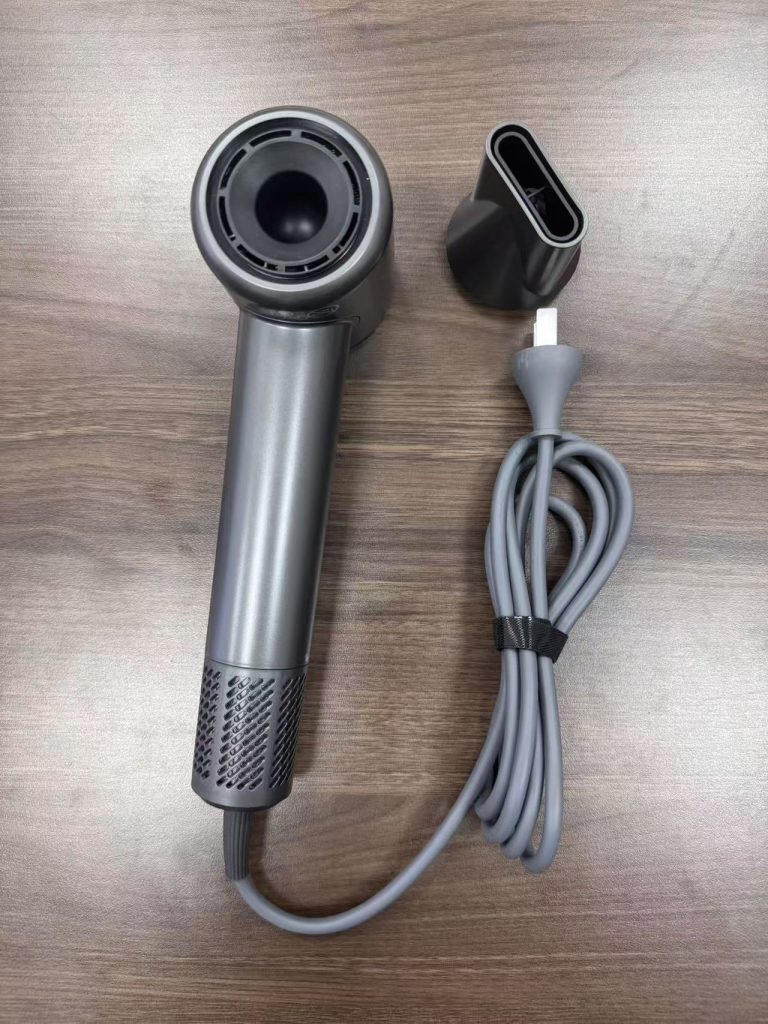
Importing hair dryers from China can look simple when you are only comparing product photos and factory quotations. In reality, the difficult part starts after you decide to buy.
A hair dryer is an electrical appliance with several components working together: motor, heating element, control system, wiring, housing, cable, plug, airflow structure, and thermal protection. A product that looks attractive in a supplier’s catalog may not necessarily be suitable for your market, your customers, or your target price.
Before placing a bulk order, buyers should therefore check the product from several angles instead of asking only, “How much is it?”
This guide explains what international buyers should check before importing hair dryers from China, from the first quotation to sample approval and mass production.
1. Start With the Exact Product Specification
The first mistake many buyers make is asking several suppliers for a “hair dryer price” without providing a clear specification.
Different hair dryers can have completely different internal components, performance, packaging, and production costs even if they look similar.
Before requesting quotations, prepare a basic specification sheet.
It should include:
- Product type
- Intended application
- Target market
- Rated voltage
- Frequency
- Rated power
- Plug type
- Motor type
- Motor speed
- Number of speed settings
- Temperature settings
- Cool-shot function
- Heating system
- Airflow requirements
- Noise expectations
- Cable length
- Product weight
- Accessories
- Packaging requirements
- Logo requirements
- Expected order quantity
This gives suppliers a common specification to quote against.
Without this information, Supplier A may quote one configuration while Supplier B quotes another. The two prices may look comparable, but the products are not actually equivalent.
2. Check Whether the Product Is Suitable for Your Target Market
Electrical specifications should never be treated as a minor detail.
A hair dryer manufactured for one market may require a different electrical configuration for another market.
Before production, confirm:
- Voltage
- Frequency
- Plug
- Power rating
- Cable specification
- Product label
- Packaging label
- User manual
- Required market-specific documentation
For example, if you are selling in multiple countries, do not assume that one electrical configuration is automatically suitable for every destination.
Tell the manufacturer where the product will be sold before the final quotation and sample approval.
This is especially important for private-label buyers because changing electrical components after mass production has started can create additional cost, delays, and quality-control problems.
3. Do Not Judge a Hair Dryer Only by Its Appearance
A common sourcing mistake is choosing the product that looks best in photographs.
The external design is important, but it does not tell you everything about the product.
Two hair dryers can have similar housings while using different:
- Motors
- Heating elements
- Electronic components
- PCBs
- Wiring
- Thermal protection systems
- Bearings
- Internal airflow structures
- Plastic materials
This is why a professional buying process should move from product photos → specification → sample → testing → approved production standard.
The appearance should be evaluated, but it should not be the only evaluation criterion.
4. Pay Particular Attention to the Motor
The motor is one of the most important components of a hair dryer.
Depending on the product design, the manufacturer may offer different motor technologies and performance levels.
Ask the supplier:
- What type of motor is used?
- What is the motor speed?
- What is the expected operating life?
- What airflow performance does the product provide?
- How does the motor perform during continuous operation?
- Is the motor replaceable?
- Is the same motor guaranteed for mass production?
For buyers interested in high-speed models, motor technology can become an important part of product positioning.
You can also compare the technical considerations discussed in your existing article about 110,000 RPM brushless hair dryer motors before deciding whether that type of product fits your market.
The important point is not simply choosing the highest RPM number.
A buyer should consider the motor together with airflow, heating performance, noise, durability, power consumption, control electronics, and the intended retail position.
5. Check the Heating System
The motor is only one part of the product.
The heating system also deserves careful attention because the hair dryer needs to produce heat while maintaining controlled operating temperatures.
Ask the manufacturer about:
- Heating element type
- Temperature settings
- Temperature control
- Thermal protection
- Overheating protection
- Airflow and heat balance
- Cool-shot function
- Continuous operating performance
A hair dryer with strong heating performance but insufficient airflow may not provide a good user experience.
For this reason, buyers should test the complete product rather than evaluating individual specifications separately.
6. Always Order Samples Before a Large Purchase
A sample is not simply something to look at.
It is an opportunity to test whether the manufacturer’s actual product matches the quotation.
During sample evaluation, check:
Appearance
Inspect:
- Housing quality
- Surface finish
- Color consistency
- Logo placement
- Assembly gaps
- Buttons
- Switches
- Air inlet
- Air outlet
Performance
Test:
- Airflow
- Temperature
- Speed settings
- Heat settings
- Cool-shot function
- Noise
- Vibration
- Continuous operation
Handling
Pay attention to:
- Weight
- Grip
- Balance
- Handle shape
- Button position
- Cable flexibility
Accessories
Check:
- Concentrator
- Diffuser
- Storage accessories
- User manual
- Other included components
If the sample is acceptable, keep a documented specification of the approved sample.
The approved sample can then become an important reference when mass production begins.
7. Compare the Supplier’s Quotation With the Sample
A surprisingly common problem in sourcing is that the quotation describes one configuration while the buyer eventually receives another.
After receiving a sample, compare it against the original quotation.
Check:
- Model
- Motor
- Power
- Voltage
- Plug
- Heating system
- Functions
- Accessories
- Cable
- Packaging
- Product dimensions
- Product weight
If anything has changed, ask the supplier to explain the difference before placing the bulk order.
Do not rely on verbal promises alone.
Important specifications should be written into the purchase order, product specification sheet, or other agreed documentation.
8. Check Quality Control Before You Place the Order
Quality control should not begin when the container is already ready for shipment.
Ask the manufacturer how the product is inspected during production.
Depending on the product, quality-control checks may include:
- Appearance inspection
- Power testing
- Voltage testing
- Current testing
- Motor operation
- Heating performance
- Temperature testing
- Switch testing
- Cable inspection
- Plug inspection
- Electrical safety testing
- Thermal protection
- Noise testing
- Assembly inspection
- Aging or endurance testing
The exact testing requirements depend on the product design and destination market.
The important question is whether the manufacturer has a repeatable process rather than checking products only when a buyer complains.
9. Confirm the Production Specification Before Mass Production
Once the sample has been approved, do not assume the factory automatically knows every detail.
Create a final production specification.
It can include:
Product model:
Motor:
Rated voltage:
Frequency:
Rated power:
Plug:
Heating system:
Speed settings:
Temperature settings:
Cool-shot:
Cable length:
Color:
Logo:
Accessories:
Packaging:
User manual:
Carton specification:
Quantity:
This document reduces misunderstandings between the buyer and manufacturer.
It also makes future repeat orders easier because the product requirements are clearly documented.
10. Check MOQ Carefully
MOQ means Minimum Order Quantity, but the number itself is not the only thing you should examine.
Ask why the manufacturer has a particular MOQ.
For a standard existing model, the MOQ may be different from a fully customized OEM product.
Customization can involve:
- Custom color
- Logo printing
- Packaging
- Special accessories
- Custom molds
- Special components
- Product modifications
- Custom labeling
If your first order is relatively small, tell the manufacturer your expected annual purchasing volume.
For example, there is a significant difference between:
“I want to buy 500 units.”
and:
“We expect to purchase 500 units for the first order and approximately 5,000 units annually if the product performs well.”
The second statement gives the manufacturer more information about the potential business relationship.
11. Check Packaging Before You Import
Packaging is often ignored until the products arrive.
For B2B buyers, packaging can affect:
- Product protection
- Retail presentation
- Storage
- Shipping efficiency
- Carton dimensions
- Damage rates
- Branding
Ask for the complete packaging specification.
Check:
- Individual box
- Inner protection
- Outer carton
- Carton dimensions
- Units per carton
- Gross weight
- Net weight
- Shipping marks
- Product labels
- User manual
- Accessories
If you sell through e-commerce, packaging requirements can be different from those for wholesale distribution.
Tell the manufacturer how the product will be sold before finalizing the packaging.
12. Ask About Production Lead Time
Price is not the only factor affecting the total purchasing decision.
A supplier may offer an attractive price but have a production schedule that does not fit your launch date.
Ask:
- How long does sample production take?
- How long does mass production take?
- When does production begin after deposit?
- Is packaging included in the production schedule?
- Are custom molds required?
- Are special components required?
- How long does inspection take?
- When can the goods be ready for shipment?
For a new product, it is better to build some time into the purchasing schedule rather than assuming everything will happen according to the best-case scenario.
13. Check Whether the Manufacturer Can Handle OEM or ODM Requirements
If you are building your own brand, determine whether you need:
OEM
You already have specific product requirements and want the manufacturer to produce according to your specifications.
or:
ODM
You prefer to start from an existing product or manufacturer-developed platform and customize selected elements.
Customization can include:
- Logo
- Color
- Packaging
- Accessories
- Product functions
- Plug
- Cable
- Product labeling
- User manual
- Product appearance
If you need deeper customization, ask whether the manufacturer has engineering and product-development capabilities rather than simply asking whether they “do OEM.”
For a broader explanation of OEM and ODM hair dryer production, your existing Vlefooena page can be used as a supporting internal link.
14. Ask for the Documents Relevant to Your Market
Do not simply ask a supplier:
“Do you have certificates?”
That question is too broad.
Instead, tell the manufacturer your destination market and ask what documentation is available for that specific product configuration.
Depending on the market and product, buyers may need to consider:
- Product specifications
- Test reports
- Electrical safety documentation
- EMC-related documentation
- User manuals
- Labels
- Packaging information
- Other applicable compliance documents
The exact requirements depend on the destination country, product configuration, and applicable regulations.
The important point is to identify these requirements before mass production, not after the goods have already been manufactured.
15. Check Who You Are Actually Buying From
A supplier’s website or product listing does not automatically tell you whether you are dealing directly with a manufacturer.
Ask:
- What products do you manufacture?
- Which parts are produced in-house?
- Which components are sourced externally?
- Where does final assembly take place?
- Can you provide factory information?
- What production capabilities do you have?
- What quality-control process do you use?
- Can you provide a product sample?
- Can you support OEM or ODM?
You do not necessarily need to reject every trading company.
A trading company can sometimes provide useful sourcing and export services.
The more important question is whether the supplier can clearly explain the supply chain and provide the level of product control your project requires.
16. Compare Suppliers Using the Same Specification
Suppose three suppliers give you these prices:
Supplier A: $18
Supplier B: $21
Supplier C: $26
It is tempting to choose Supplier A immediately.
But the correct question is:
Are these three products actually the same?
Compare:
- Motor
- Power
- Heating system
- Electronics
- Housing material
- Functions
- Accessories
- Packaging
- MOQ
- Production time
- Testing
- Warranty terms
- Customization
A cheaper quotation can become more expensive if it requires additional modifications or results in higher defect and return rates.
For this reason, the best comparison method is not “lowest price wins.”
It is same specification + same quality expectations + comparable service + comparable delivery conditions.
17. Calculate the Total Import Cost
The supplier’s unit price is only one part of your purchasing cost.
Your total landed cost may also involve:
- Product cost
- Custom packaging
- Mold cost
- Inspection
- Inland transportation
- Export-related charges
- International freight
- Insurance
- Customs duties
- Taxes
- Destination charges
- Local delivery
- Warehousing
The exact cost structure depends on your shipping method, destination, Incoterms, and local import requirements.
Therefore, when comparing suppliers, calculate the expected total cost rather than looking only at the factory quotation.
18. Create a Pre-Order Checklist
Before confirming the order, ask yourself:
Product
- Is the product specification clear?
- Is the motor confirmed?
- Is the heating system confirmed?
- Are the functions confirmed?
- Are accessories confirmed?
Electrical
- Is voltage confirmed?
- Is frequency confirmed?
- Is plug type confirmed?
- Is cable specification confirmed?
Quality
- Has a sample been tested?
- Has the final sample been approved?
- Are quality standards documented?
- Is the inspection process clear?
Customization
- Is the logo confirmed?
- Is the color confirmed?
- Is packaging confirmed?
- Is the user manual confirmed?
- Are custom components confirmed?
Commercial
- Is MOQ acceptable?
- Is the unit price based on the correct specification?
- Is production lead time acceptable?
- Are payment terms clear?
Import
- Is the target market clear?
- Are required documents identified?
- Has shipping been considered?
- Has the estimated landed cost been calculated?
If several of these questions still have unclear answers, it is probably too early to place the bulk order.
19. What Should You Never Skip?
If you have limited time and cannot perform a long supplier evaluation, at least complete these seven checks:
- Confirm the exact product specification.
- Confirm voltage, frequency, plug, and power.
- Order and test a physical sample.
- Compare the sample with the quotation.
- Confirm quality-control procedures.
- Document the approved production specification.
- Calculate the total import cost.
These seven steps will not eliminate every sourcing risk, but they can prevent many avoidable purchasing mistakes.
20. A Better Way to Import Hair Dryers From China
Successful importing is not simply about finding a cheap supplier.
A better process is:
Define the product → Find suitable suppliers → Compare specifications → Request samples → Test samples → Confirm customization → Confirm documents → Approve production specification → Place order → Inspect production → Arrange shipment.
This process takes more work at the beginning, but it gives the buyer much more control over the final product.
For buyers who are looking for a manufacturer rather than simply comparing product listings, it is also useful to evaluate the manufacturer’s production capabilities, engineering support, quality-control process, and customization options together. Vlefooena’s existing Professional Hair Dryer Factory in China | Custom Hair Dryers page can serve as a related internal resource.
FAQ
What should I check before importing hair dryers from China?
Check the product specification, motor, heating system, voltage, frequency, plug, sample quality, electrical safety requirements, packaging, MOQ, production time, documentation, and total import cost.
Should I order a sample before importing hair dryers in bulk?
Yes. A physical sample allows you to evaluate appearance, airflow, temperature, noise, handling, accessories, electrical configuration, and packaging before committing to a large order.
What electrical specifications should I confirm?
At minimum, confirm rated voltage, frequency, power, plug type, cable specification, labeling, and the requirements applicable to your destination market.
How can I compare hair dryer suppliers in China?
Give each supplier the same product specification and compare the quotations based on motor, heating system, power, functions, materials, accessories, packaging, MOQ, testing, production time, and customization.
Is the cheapest hair dryer supplier the best option?
Not necessarily. A lower quotation may be based on different components or fewer functions. Compare suppliers using the same specifications and consider total purchasing cost rather than unit price alone.
What should I test on a hair dryer sample?
Test airflow, temperature, speed settings, heating settings, cool-shot function, noise, vibration, buttons, cable, plug, accessories, appearance, weight, and continuous operation.
What documents should I request from a Chinese hair dryer manufacturer?
The documents depend on your destination market and product configuration. Ask the manufacturer what relevant product specifications, test reports, safety documentation, labels, manuals, and other applicable compliance documents are available.
How can I reduce problems during mass production?
Approve a detailed sample and document the final specifications before production. The approved sample and specification should provide a clear reference for the mass-produced goods.
What is more important, product price or quality?
Neither should be considered alone. The better purchasing decision balances product quality, specifications, reliability, customization, production capability, delivery time, and total landed cost.
Can I import private-label hair dryers from China?
Yes, depending on the manufacturer’s capabilities. Private-label projects may involve logo printing, custom colors, packaging, accessories, product labeling, and other OEM or ODM modifications.
How do I avoid buying the wrong hair dryer?
Do not select a product only from photographs or price lists. Define your market requirements, compare specifications, order samples, test the product, confirm documentation, and approve the final production specification before placing a bulk order.
Final Thoughts
The biggest mistake when importing hair dryers from China is treating the purchase as a simple price comparison.
A reliable sourcing decision starts much earlier.
The buyer needs to understand the product, define the electrical configuration, test the sample, evaluate the manufacturer, confirm quality-control procedures, document customization requirements, and calculate the complete import cost.
Once these details are clear, comparing suppliers becomes much easier.
For a B2B buyer, the goal should not simply be to find the lowest quotation.
The goal is to find a product and manufacturing solution that can be produced consistently, meet the requirements of the target market, fit the intended price position, and remain reliable when the order moves from one sample to hundreds or thousands of units.


No reply content