
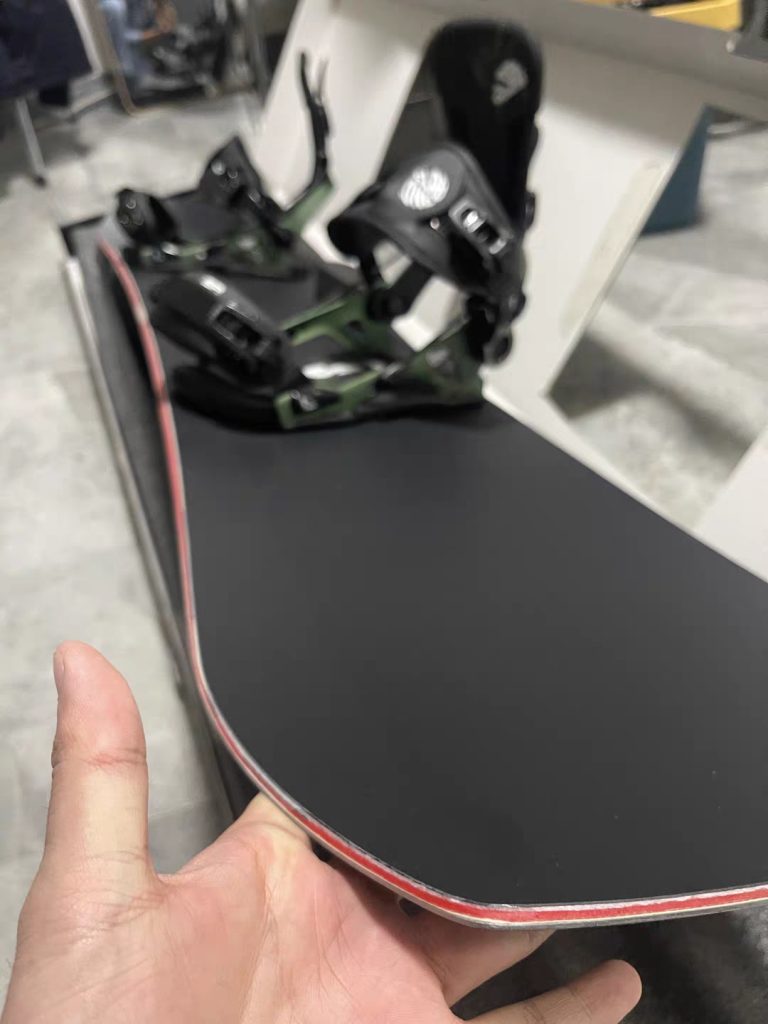
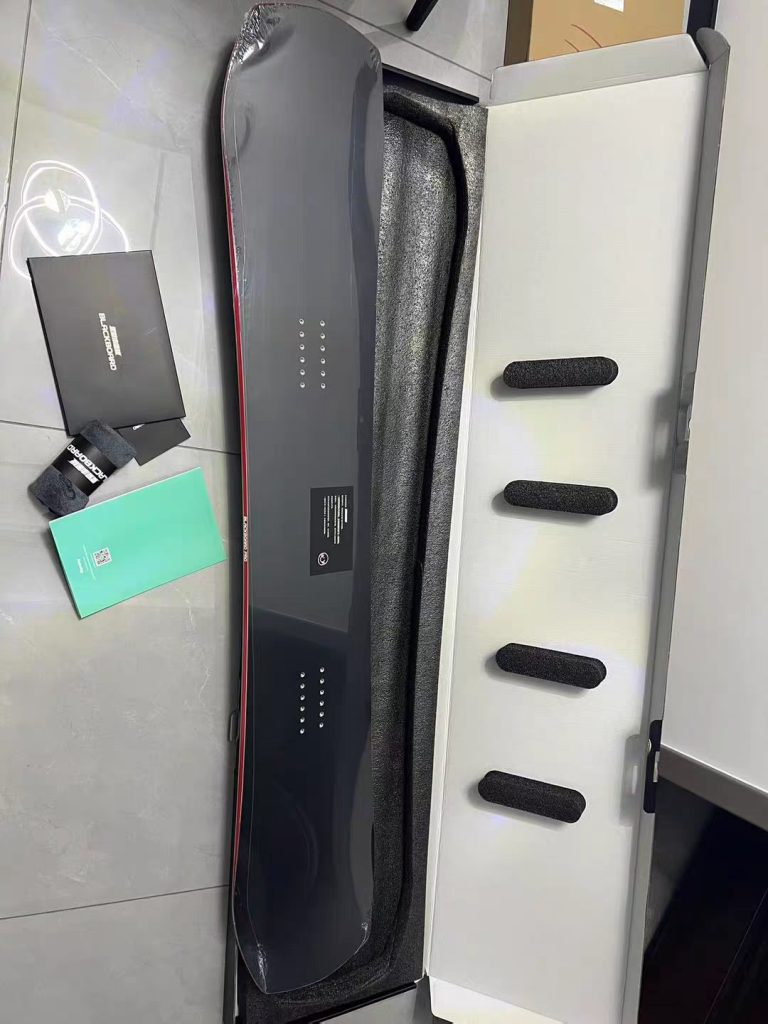
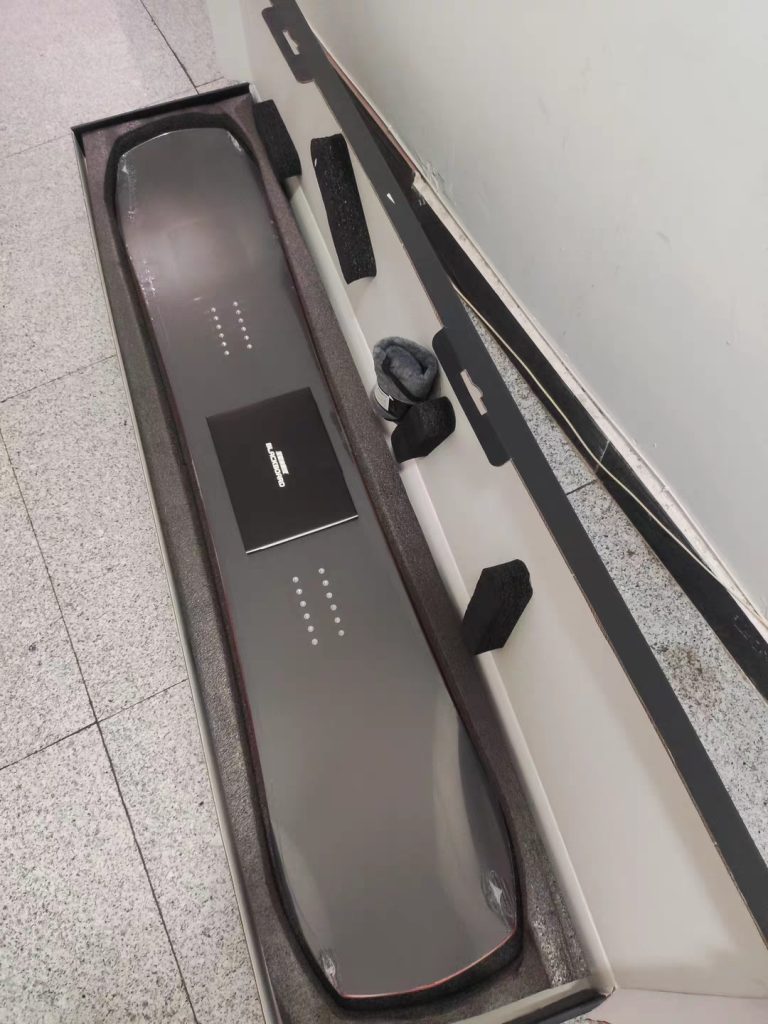
Importing snowboards from China can give retailers, distributors, ski shops, snowboard brands, and private-label businesses access to competitive manufacturing prices and customized products.
However, buying snowboards internationally involves more than comparing factory quotations. Buyers need to evaluate construction quality, materials, supplier reliability, packaging, shipping costs, import requirements, and after-sales support.
A snowboard can also be relatively large compared with its weight, so international freight can have a noticeable impact on the final landed cost.
This guide explains what you should check before importing snowboards from China.
1. Confirm the Exact Snowboard Specification
Before asking for a quotation, prepare a detailed specification.
Include:
- Snowboard type
- Length
- Width
- Shape
- Camber profile
- Flex
- Core material
- Base material
- Fiberglass
- Resin
- Edge construction
- Inserts
- Topsheet
- Graphics
- Logo
- Packaging
- Accessories
- Target market
- Order quantity
Do not simply send a product photo and ask for the price.
Two snowboards that look similar can have significantly different construction and manufacturing costs.
2. Verify the Chinese Supplier
Before making a payment, determine whether the supplier is:
- A manufacturer
- A trading company
- An export company
- A sourcing company
Ask for:
- Legal company name
- Factory location
- Manufacturing experience
- Main products
- Production capacity
- OEM experience
- Export experience
- Quality-control procedures
If the order is large, consider arranging a factory audit.
3. Request a Sample
Never place a large snowboard order based only on photos.
Request a sample and inspect it carefully.
Check:
- Board dimensions
- Weight
- Flex
- Camber
- Base
- Edges
- Inserts
- Topsheet
- Sidewalls
- Graphics
- Overall finishing
If possible, test the board on snow.
A real riding test can reveal issues that are difficult to identify through visual inspection.
4. Check the Snowboard Core
The core has a major influence on board performance.
Ask the manufacturer about:
- Core material
- Wood species
- Core construction
- Thickness
- Flex profile
- Moisture control
For OEM products, make sure the core specification is written into the product specification.
Do not accept vague descriptions such as simply “high-quality wood core.”
5. Check the Base
The base affects speed, durability, maintenance, and overall riding performance.
Ask whether the snowboard uses:
- Extruded base
- Sintered base
- Other specified base construction
If two suppliers quote different prices, make sure the base specifications are comparable.
A lower quotation may simply reflect a lower-cost base.
6. Inspect Fiberglass Construction
Fiberglass reinforces the board and affects its flex and structural characteristics.
Ask about:
- Fiberglass type
- Weight
- Number of layers
- Layer orientation
- Resin system
For custom OEM snowboards, the manufacturer should be able to explain how the construction affects the desired flex.
7. Check the Metal Edges
Inspect the edge installation carefully.
Check:
- Edge material
- Thickness
- Installation consistency
- Grinding
- Finishing
- Corrosion protection
Uneven or poorly finished edges can affect both performance and product durability.
8. Check the Binding Inserts
Insert accuracy is extremely important.
Check:
- Insert position
- Thread quality
- Alignment
- Installation strength
- Compatibility with the intended binding system
Incorrect insert placement can create problems for customers when installing bindings.
For OEM orders, insert positioning should be included in the technical specification.
9. Test Flex and Camber
Flex and camber are not merely marketing terms.
They influence how the board behaves during riding.
Before mass production, confirm:
- Flex category
- Flex consistency
- Camber profile
- Tip and tail dimensions
- Board symmetry
If possible, define acceptable production tolerances with the factory.
10. Check the Graphics and Topsheet
For private-label snowboards, the appearance of the finished product is important.
Check:
- Logo position
- Graphic alignment
- Color consistency
- Printing quality
- Topsheet finishing
- Base graphics
- Surface scratches
Approve the final artwork before mass production.
Do not rely on a low-resolution image sent through a messaging app as the final production reference.
11. Check Private-Label and OEM Capability
If you plan to sell under your own brand, ask the factory what customization is available.
Possible options include:
- Logo
- Graphics
- Topsheet
- Base artwork
- Board shape
- Flex
- Core
- Base
- Packaging
- Accessories
Private-label production usually uses an existing factory design.
OEM production may involve deeper product customization.
Make sure the factory understands exactly what you mean by OEM.
12. Understand the Factory Price
For preliminary planning, broad China factory-price ranges may look like:
| Product Type | Approximate Factory Price |
|---|---|
| Basic snowboard | US$35–60 |
| Standard snowboard | US$50–90 |
| Private-label snowboard | US$50–120+ |
| Professional snowboard | US$70–130+ |
| Custom OEM snowboard | US$60–150+ |
| Premium custom snowboard | US$100–180+ |
These figures are indicative planning ranges, not guaranteed quotations.
The actual price depends on:
- Materials
- Construction
- Board size
- Quantity
- Graphics
- Packaging
- Tooling
- Quality requirements
- Customization
13. Compare Quotations on the Same Specification
Suppose you receive three quotations:
Supplier A: US$55
Supplier B: US$70
Supplier C: US$95
Do not immediately choose Supplier A.
Check whether all three suppliers use the same:
- Core
- Base
- Fiberglass
- Resin
- Edges
- Inserts
- Topsheet
- Packaging
- Quality standards
The US$95 product may contain substantially better materials.
Always compare equivalent specifications.
14. Calculate the Landed Cost
Your factory price is not your final import cost.
The total cost may include:
Product price + packaging + inspection + domestic transportation + international freight + insurance + customs duty + import taxes + destination charges
For example:
Factory price: US$70
Other import and logistics costs: US$15
Estimated landed cost:
US$85 per snowboard
This is only an example. Your actual cost depends on the destination country, order volume, shipping method, and applicable taxes.
15. Pay Attention to Freight Costs
Snowboards are long and relatively lightweight.
This means shipping cost may be affected not only by actual weight but also by shipment volume and carrier rules.
Before ordering, ask the supplier for:
- Carton dimensions
- Gross weight
- Net weight
- Number of boards per carton
- Number of cartons
- Total CBM
- Pallet dimensions if applicable
Give this information to your freight forwarder before finalizing the order.
16. Choose the Right Shipping Method
Depending on your order size and delivery requirements, you may consider:
Sea Freight
Usually suitable for larger commercial shipments where delivery speed is less critical.
Air Freight
Faster but generally more expensive.
Express
Useful for samples or very small urgent shipments.
For commercial quantities of snowboards, sea freight is often worth evaluating because of the product’s size.
The best option depends on your destination and order volume.
17. Check Import Duties and Taxes
Before placing an order, determine the applicable customs classification and import charges in your destination market.
Potential costs include:
- Customs duty
- Import VAT/GST
- Customs clearance
- Port charges
- Handling fees
- Local delivery
Do not rely exclusively on the supplier’s estimate.
For larger shipments, confirm the requirements with a customs broker or qualified logistics provider.
18. Check Product and Packaging Labels
Before production, review all labels.
Depending on your destination market, information may include:
- Brand
- Product model
- Manufacturer
- Importer
- Country of origin
- Product information
- Warning information
- Barcode
- Packaging information
The exact requirements depend on the destination country.
Confirm applicable requirements before printing thousands of packages.
19. Check Quality Control
Ask the factory how it controls quality.
Potential inspections include:
- Raw-material inspection
- Core inspection
- Base inspection
- Dimension inspection
- Flex inspection
- Camber inspection
- Edge inspection
- Insert inspection
- Graphic inspection
- Surface inspection
- Final inspection
For a large order, consider using a third-party inspection company before shipment.
20. Confirm the Production Lead Time
Approximate planning ranges may be:
- Standard model: 15–30 days
- Private label: 20–40 days
- Custom graphics: 25–45 days
- Custom OEM: 45–90+ days
- New mold and development: 60–120+ days
These are general estimates.
Snowboards are seasonal products, so production should be planned well before your target winter selling season.
21. Check MOQ
Ask for the minimum order quantity for each customization level.
For example:
| Customization | Typical MOQ Trend |
|---|---|
| Existing model | Lower |
| Logo | Lower–medium |
| Custom graphics | Medium |
| Custom color | Medium |
| Custom construction | Higher |
| New mold | Higher |
For a new brand, it may be safer to start with a smaller quantity rather than committing to a large inventory before demand is proven.
22. Check Tooling Costs
If you want a custom shape, ask whether a new mold is required.
Clarify:
- Mold cost
- Development cost
- Prototype cost
- Mold ownership
- Maintenance
- Storage
- Transfer rights
If you pay for the tooling, ownership should be clearly stated in the contract.
23. Protect Your Brand and Design
If you are importing under your own brand, protect your intellectual property.
Consider:
- Trademark registration
- Graphic protection
- Product design protection
- Confidentiality agreements
- Custom mold ownership
- Technical drawing ownership
Your contract should clearly state who owns the custom designs and tooling.
24. Check Warranty and Defect Policy
Before placing a bulk order, agree on what happens if products have manufacturing defects.
Ask:
- What is the warranty period?
- What qualifies as a manufacturing defect?
- How are claims submitted?
- Will defective boards be replaced?
- Are replacement parts available?
- Who pays replacement shipping?
- What happens if a quality problem affects an entire batch?
Put these terms in writing.
25. Plan Spare Parts and After-Sales Service
Depending on your business model, consider whether you need:
- Replacement parts
- Binding inserts
- Accessories
- Board bags
- Protective equipment
- Warranty replacements
A strong after-sales system can be particularly important for established snowboard brands and distributors.
Importing Snowboards From China: Final Checklist
Before paying the factory, confirm:
- [ ] Supplier identity verified
- [ ] Factory capability checked
- [ ] Sample tested
- [ ] Core specification confirmed
- [ ] Base specification confirmed
- [ ] Fiberglass confirmed
- [ ] Edge quality checked
- [ ] Insert position checked
- [ ] Flex and camber confirmed
- [ ] Graphics approved
- [ ] Packaging approved
- [ ] MOQ confirmed
- [ ] Factory price confirmed
- [ ] Tooling cost confirmed
- [ ] Production lead time confirmed
- [ ] Landed cost calculated
- [ ] Shipping method selected
- [ ] Customs requirements checked
- [ ] Quality inspection arranged
- [ ] Warranty confirmed
- [ ] Purchase agreement signed
FAQ
How much does it cost to import snowboards from China?
A broad factory-price range can be approximately US$35–150+ per snowboard, depending on the product level and customization.
However, the final import cost will be higher after adding packaging, freight, duties, taxes, inspection, and destination charges.
What is the cheapest way to import snowboards from China?
For commercial quantities, sea freight is often worth comparing because snowboards are relatively large products. The best shipping method depends on the destination, order volume, delivery time, and freight quotation.
What MOQ should I expect from a Chinese snowboard factory?
There is no universal MOQ. Existing models with simple logo customization may have lower MOQs, while custom shapes, graphics, materials, and tooling usually require larger quantities.
Should I test a snowboard before importing in bulk?
Yes.
Testing a sample before mass production can help identify problems with flex, camber, base quality, edge finishing, inserts, graphics, and overall construction.
For an OEM project, real-world snow testing is particularly useful.
How long does it take to import snowboards from China?
Manufacturing may take approximately 15–30 days for standard products, 20–40 days for private-label orders, and 45–90+ days for many custom OEM projects.
International transportation and customs clearance must be added to the production time.
What is the biggest mistake when importing snowboards?
Choosing a supplier based only on the lowest factory price is one of the biggest mistakes.
The product specification, sample quality, factory capability, production consistency, freight cost, and after-sales support should all be considered.
Conclusion
Before importing snowboards from China, buyers should evaluate the entire supply chain rather than simply asking for the lowest factory price.
The most important steps are:
Verify the supplier → Test samples → Confirm materials → Check construction → Calculate landed cost → Verify import requirements → Confirm production schedule → Arrange inspection → Ship the goods.
For preliminary planning, Chinese snowboard factory prices may range from approximately US$35 to US$150+ per board, while premium or highly customized products can cost more.
A reliable sourcing strategy focuses on consistent quality, transparent specifications, realistic pricing, production reliability, and total landed cost rather than simply choosing the cheapest quotation.


No reply content