
China Surfboard and Snowboard Manufacturer Co., Ltd.
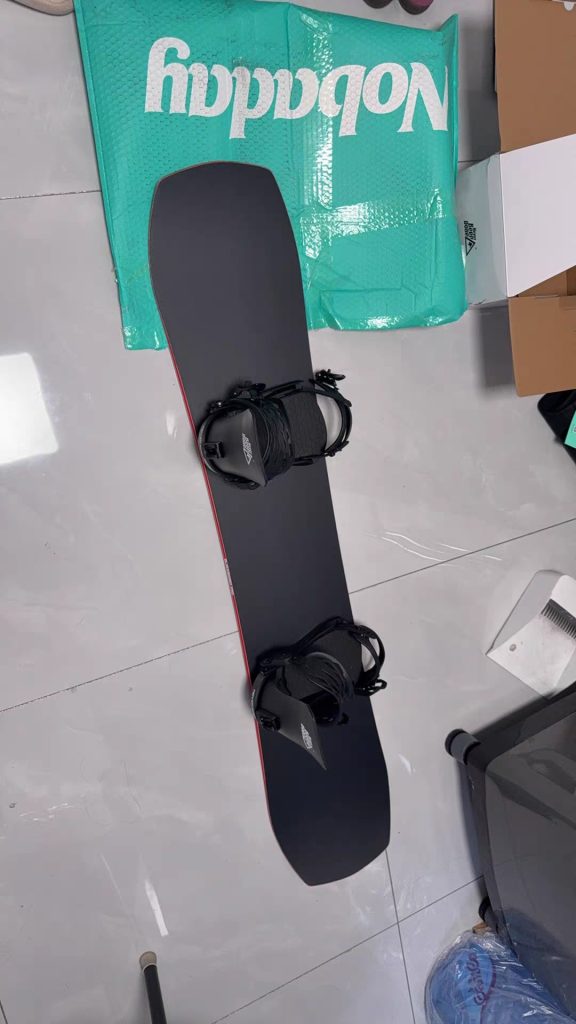
Ordering custom snowboards from China can give brands more control over product design, materials, graphics, packaging, and pricing. But customization also creates more opportunities for misunderstandings.
A snowboard may look excellent in a product photo and still fail to meet your expectations when you receive the physical sample.
The shape may be different from what you expected. The flex may feel wrong. Graphics may not match the approved artwork. The base may have visible defects. Or the production quality may vary between the first sample and the bulk order.
For this reason, buyers should evaluate the product and the manufacturer before placing a large OEM order.
Here are the most important things to check.
1. Start With the Intended Use
Before discussing colors or graphics, define what the snowboard is supposed to do.
A snowboard designed for beginners does not necessarily need the same characteristics as one designed for experienced riders.
Consider:
-
All-mountain riding
-
Freeride
-
Freestyle
-
Park riding
-
Powder riding
-
Beginner and rental use
-
Youth snowboards
-
Women’s snowboard models
-
Performance-oriented models
Your intended user affects the appropriate shape, flex, profile, dimensions, and construction.
If you simply tell a manufacturer that you want a “high-quality snowboard,” there is too much room for interpretation.
Instead, provide a product brief explaining your target rider and market.
2. Confirm the Board Dimensions
Dimensions should be agreed before sampling.
Important measurements include:
-
Overall length
-
Nose width
-
Waist width
-
Tail width
-
Effective edge
-
Sidecut radius
-
Thickness
-
Stance options
These specifications affect how the board behaves on snow.
Do not approve a sample simply because the overall appearance looks correct.
Measure the actual board and compare it with your technical drawing or specification sheet.
Small dimensional differences may be acceptable depending on your agreed manufacturing tolerances, but those tolerances should be established before production.
3. Check the Snowboard Profile
The profile is another important specification.
Common profiles include:
-
Camber
-
Rocker
-
Flat
-
Hybrid camber
-
Hybrid rocker
The profile influences turning behavior, stability, edge contact, and how forgiving the board feels.
When ordering custom snowboards, specify the intended profile clearly.
It is also useful to measure the sample rather than relying entirely on a manufacturer’s description.
For a custom project, your approved sample can become the physical reference for future production.
4. Evaluate Flex Carefully
Flex is one of the easiest characteristics to misunderstand.
A manufacturer may describe a board as “medium flex,” but different factories may have different interpretations of that term.
For a brand, it is better to establish a specific reference.
Consider:
-
Intended rider weight
-
Riding style
-
Board length
-
Core construction
-
Fiberglass layup
-
Desired response
-
Overall flex
If possible, test several samples and compare them.
For mass production, discuss how the factory will maintain consistency between boards.
A snowboard brand does not want customers purchasing the same model and receiving noticeably different riding characteristics.
5. Ask About the Core Construction
The core is a fundamental part of the snowboard.
Ask the manufacturer what material and construction are being used.
Questions can include:
-
What wood species are used?
-
How is the core laminated?
-
How is the core profiled?
-
What thickness range is used?
-
How is moisture controlled?
-
Can the core construction be customized?
Different core constructions can affect weight, flex, durability, and response.
You should not compare two manufacturers purely on the basis of board price without comparing their actual construction.
6. Check the Fiberglass Layup
Fiberglass reinforcement plays an important role in snowboard construction.
Ask the manufacturer for the fiberglass specifications used in your model.
You may want to clarify:
-
Fiberglass type
-
Orientation
-
Number of layers
-
Layup configuration
-
Whether the construction is symmetrical
-
Whether additional reinforcement is used
The correct construction depends on the product design.
The important point is that the manufacturer should understand and document the construction rather than treating fiberglass as a generic material.
7. Examine the Base
The base is directly exposed to snow and impacts during use.
When you receive a sample, inspect it carefully.
Look for:
-
Scratches
-
Uneven finishing
-
Surface marks
-
Contamination
-
Graphic defects
-
Uneven grinding
-
Poor finishing around the edges
Ask the factory what base material is being used and what finishing process is applied.
If your brand targets a higher-end market, base quality deserves particular attention.
8. Inspect the Edges
The metal edges should be installed consistently around the board.
Check:
-
Edge alignment
-
Edge connection
-
Bends around the nose and tail
-
Surface finishing
-
Sharp or damaged sections
-
Separation between edge and board structure
A poorly finished edge can create both performance and durability problems.
During sampling, inspect the entire perimeter rather than checking only one section.
9. Check the Topsheet and Graphics
For private-label snowboards, appearance is often one of the most important parts of the product.
Provide the manufacturer with final artwork rather than low-resolution images.
Before mass production, confirm:
-
Logo size
-
Logo position
-
Graphic dimensions
-
Color reproduction
-
Text
-
Model name
-
Serial or product information
-
Alignment
-
Topsheet material
Always approve a physical sample when color accuracy is important.
What appears correct on a computer screen may look different after printing.
10. Confirm Binding Mounting Specifications
If the snowboard is designed for standard bindings, the mounting configuration must be compatible with the intended market.
Clarify the mounting system and hole pattern before production.
Also confirm:
-
Hole position
-
Stance range
-
Insert quality
-
Insert alignment
-
Thread condition
-
Compatibility with the intended bindings
Incorrect insert positioning can make an otherwise attractive snowboard unusable.
This is one reason physical inspection is important before approving mass production.
11. Look for Bonding Problems
Snowboards are made from multiple layers.
The quality of bonding between those layers is critical.
Inspect the sample for:
-
Visible separation
-
Bubbles
-
Gaps
-
Uneven edges
-
Delamination
-
Surface deformation
The manufacturer should have a controlled pressing and bonding process.
If you see any bonding problem on the sample, do not simply assume that it will disappear during mass production.
Ask the factory why it happened and what process change will prevent it.
12. Test More Than One Sample When Necessary
Testing a single board tells you about one board.
It does not necessarily tell you about production consistency.
For important OEM projects, consider checking multiple samples or samples from different production batches.
Compare:
-
Weight
-
Dimensions
-
Flex
-
Profile
-
Graphics
-
Base finishing
-
Edge finishing
If all samples are consistent, you have more confidence in the manufacturing process.
13. Confirm the Packaging
A snowboard can leave the factory in perfect condition and arrive damaged after international transportation.
Packaging therefore matters.
Ask about:
-
Individual protective packaging
-
Edge protection
-
Surface protection
-
Carton construction
-
Moisture protection
-
Number of boards per carton
-
Carton dimensions
-
Pallet requirements
If you are importing large quantities, packaging dimensions can also affect freight costs.
A small improvement in carton design may reduce shipping damage and transportation expenses.
14. Calculate the Real Cost
Do not compare manufacturers using only the quoted snowboard unit price.
Your actual cost may include:
Product price + sample cost + tooling + artwork preparation + packaging + inspection + inland transportation + international freight + import-related costs
For example, a manufacturer offering a lower board price may have higher tooling costs or less suitable packaging.
Ask every supplier to quote according to the same specification.
Only then can you make a meaningful comparison.
15. Understand MOQ Before Finalizing the Design
Custom snowboard production may require a minimum order quantity.
MOQ can depend on:
-
Board model
-
Size
-
Graphic
-
Construction
-
Packaging
-
Custom tooling
-
Production schedule
If you are launching a new brand, do not automatically choose the manufacturer with the largest production capacity.
A smaller but more flexible factory may be more suitable if you need to test several models before scaling.
Ask whether different sizes or graphics can be combined in one order.
16. Confirm the Sample Approval Process
Before mass production begins, establish exactly what constitutes final approval.
A practical process can be:
Initial design → quotation → prototype → sample testing → revisions → final sample → written approval → mass production → inspection → shipment
Do not rely solely on messages such as “looks good.”
For important projects, keep a final specification sheet and approved sample reference.
This gives both buyer and manufacturer a clear standard.
17. Ask How Quality Is Controlled During Production
A good sample does not automatically guarantee good mass production.
Ask the factory how it checks production.
Important quality-control points may include:
-
Material inspection
-
Core dimensions
-
Layer positioning
-
Pressing conditions
-
Bonding
-
Board dimensions
-
Profile
-
Flex
-
Graphics
-
Base finishing
-
Edge finishing
-
Final appearance
You should also clarify how defective products are handled.
For larger orders, an independent inspection before shipment may be worthwhile.
18. Check Production Lead Time
Snowboard sales are strongly seasonal.
A production delay close to the winter selling season can cause serious problems.
Ask the factory for realistic lead times for:
-
Prototype development
-
Sample production
-
Sample modification
-
Final approval
-
Bulk production
-
Packaging
-
Pre-shipment inspection
Do not select a supplier simply because it promises the fastest delivery.
A realistic schedule is more valuable than an aggressive promise that cannot be maintained.
19. Protect Your Custom Design
If you have created your own snowboard graphics, shape, construction, or tooling, clarify ownership before production.
Discuss:
-
Artwork ownership
-
Custom molds
-
Tooling ownership
-
Product drawings
-
Packaging artwork
-
Brand logos
-
Confidential product information
If you pay for custom tooling, make sure the agreement clearly states who owns it.
This becomes particularly important if you plan to work with the manufacturer for several years.
20. Test the Manufacturer’s Communication
Before placing a large order, use the sampling process to evaluate the supplier itself.
Ask detailed questions.
See whether the manufacturer:
-
Understands your specifications
-
Identifies potential problems
-
Gives clear answers
-
Documents changes
-
Responds consistently
-
Meets agreed sample deadlines
A supplier that communicates well during development is usually easier to manage during mass production.
21. A Practical Pre-Order Inspection Checklist
Before placing your first large custom snowboard order, check the following:
Item |
What to Confirm |
|---|---|
Board length |
Actual measurement |
Width |
Nose, waist and tail |
Profile |
Camber/rocker specification |
Flex |
Approved reference |
Core |
Material and construction |
Fiberglass |
Layup specification |
Base |
Material and surface quality |
Edges |
Alignment and finishing |
Inserts |
Position and compatibility |
Graphics |
Artwork and color |
Topsheet |
Material and finish |
Bonding |
No visible separation |
Packaging |
Protection and carton size |
MOQ |
Confirmed in writing |
Price |
Based on final specifications |
Lead time |
Realistic production schedule |
QC |
Inspection requirements |
Tooling |
Ownership confirmed |


No reply content