
China Professional Hair Clipper Manufacturing Co., Ltd.
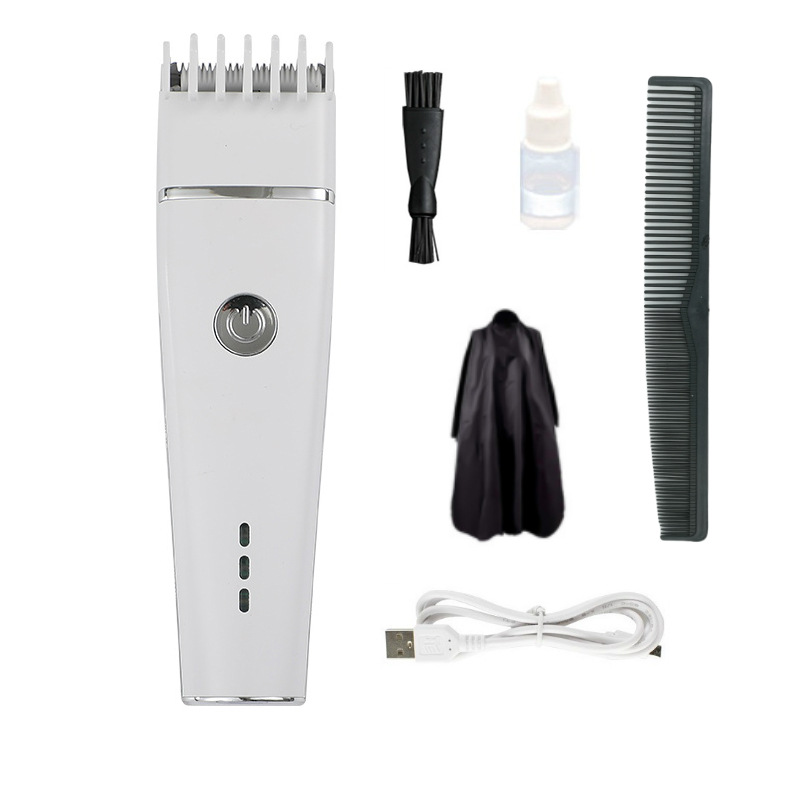
A very low quotation from a hair clipper manufacturer can be attractive, especially when you are buying hundreds or thousands of units.
If one supplier quotes $12 per unit and another quotes $8, the difference appears simple: the second factory is cheaper.
But manufacturing costs rarely work that way.
A lower price can come from better production efficiency, larger purchasing volumes, simpler packaging, lower labor costs, or a different product configuration.
It can also come from differences that are much harder to see before the products arrive.
The motor may be different.
The battery may have a different specification.
The blade material may not be the same.
The factory may perform fewer inspections.
The packaging may provide less protection.
Or the quotation may simply exclude costs that another supplier has already included.
For an importer, distributor, barber-equipment wholesaler, or private-label brand, the right question is therefore not:
“Why is this supplier so cheap?”
It is:
“What exactly is included in this price, and what has changed to achieve it?”
1. First Check Whether You Are Comparing the Same Product
This sounds obvious, but it is one of the most common purchasing mistakes.
Two suppliers can quote different prices for products that look almost identical in photographs.
However, their internal configurations may be different.
Compare the following:
-
Motor
-
Battery
-
Blade
-
PCB
-
Charging system
-
Housing material
-
Accessories
-
Packaging
-
Product weight
-
Warranty terms
For example, Supplier A may quote a clipper with a larger battery and upgraded blade while Supplier B quotes a basic configuration.
The lower quotation does not necessarily represent a lower manufacturing cost.
It may simply represent a different product.
2. Ask for a Detailed Quotation
A single unit price is not enough for serious purchasing.
Ask the manufacturer to clarify:
-
Product price
-
MOQ
-
Sample cost
-
Tooling cost
-
Logo cost
-
Packaging cost
-
Accessories
-
Charger
-
Spare parts
-
Shipping terms
-
Payment terms
If you are comparing several factories, give them the same specification.
Otherwise, you may end up comparing different products rather than different manufacturers.
3. The Motor Can Explain a Large Part of the Price Difference
The motor is one of the most important components in a hair clipper.
Different motors can vary significantly in:
-
Speed
-
Torque
-
Efficiency
-
Noise
-
Vibration
-
Heat generation
-
Manufacturing cost
A low-cost motor is not automatically bad.
A less expensive motor may be perfectly suitable for a basic consumer clipper.
The problem occurs when a supplier presents a lower-cost configuration as if it were equivalent to a higher-specification product.
For professional or heavy-use clippers, compare actual performance rather than motor marketing terms.
Ask:
-
What motor is used?
-
What is its rated voltage?
-
What is its operating speed?
-
How does it perform under load?
-
How is motor consistency controlled?
4. Battery Specifications Can Make Two Similar Clippers Very Different
Cordless clippers can have substantial differences in battery configuration.
Do not compare only the number printed on the product page.
Check:
-
Battery chemistry
-
Voltage
-
Capacity
-
Cell configuration
-
Charging system
-
Protection circuitry
-
Expected runtime
A manufacturer may offer a lower price by using a different battery configuration.
Again, this does not automatically mean poor quality.
The important question is whether the battery meets your actual requirements.
For a private-label product, battery specifications should be part of the agreed product documentation.
5. Look Carefully at the Blade
The blade is another area where cost differences can hide.
Two blades can have similar shapes while differing in:
-
Material
-
Hardness
-
Surface treatment
-
Manufacturing precision
-
Coating
-
Edge finishing
-
Adjustment mechanism
The result may become noticeable during actual use.
A lower-cost blade may work well initially but provide a different cutting experience or require more frequent maintenance.
For professional users, blade performance can be more important than saving a small amount on the factory price.
6. Don’t Ignore the PCB
The circuit board controls important functions in a cordless hair clipper.
Depending on the product, it may be involved in:
-
Charging
-
Power management
-
Motor control
-
Battery protection
-
Indicators
-
Switching
Two products with the same housing and motor can still have different electronics.
When comparing low-cost quotations, ask whether the electronic configuration is the same as your approved sample.
For battery-powered products, this is especially important.
7. Plastic Housing Costs Can Also Be Reduced
The external housing may appear identical in photographs.
But manufacturers can reduce costs through differences in:
-
Material
-
Wall thickness
-
Internal structure
-
Surface treatment
-
Molding process
-
Decorative finishing
A lower-cost housing is not necessarily unsuitable.
But if your product is positioned as a premium professional clipper, housing quality should match the intended market.
Check:
-
Button fit
-
Housing gaps
-
Surface quality
-
Structural strength
-
Assembly consistency
8. Ask What Is Included in the Accessories
Sometimes the clipper itself is not the main reason for a price difference.
The accessory package can make a surprising difference.
Compare:
-
Guide combs
-
Blade guards
-
Cleaning brush
-
Oil bottle
-
Charging cable
-
Charger
-
Travel case
-
Spare blade
-
Replacement parts
-
Display box
If one supplier includes a complete accessory kit and another supplies only the clipper and charging cable, their unit prices are not directly comparable.
9. Packaging Is an Easy Place to Reduce Cost
Packaging is another common source of price differences.
A manufacturer can lower the quotation by changing:
-
Carton thickness
-
Inner protection
-
Printing
-
Inserts
-
Plastic trays
-
Individual packaging
-
Master-carton configuration
This may be perfectly reasonable if the buyer wants economical packaging.
But it becomes a problem if the buyer expects premium packaging while the supplier quietly uses a cheaper structure.
For international shipments, packaging also affects transportation damage.
A low packaging cost can become expensive if products arrive scratched or damaged.
10. Check Whether the Quotation Includes Branding
For private-label buyers, the logo is not necessarily free.
Ask whether the quotation includes:
-
Logo printing
-
Laser engraving
-
Packaging artwork
-
Instruction manual
-
Labels
-
Barcode
-
Custom color
-
Custom box
A factory may initially quote the price of a standard product.
Once you add your brand requirements, the actual price can increase.
Get the complete OEM quotation before comparing suppliers.
11. MOQ Can Explain a Low Price
A manufacturer may quote a very low price for a large order.
For example, the price for:
5,000 units
may be significantly lower than the price for:
500 units.
This is normal because production setup, component purchasing, labor, and packaging costs can be distributed across more units.
But ask whether the quoted price depends on a specific quantity.
Your actual purchasing volume should match the quotation.
Do not assume that a price offered for a large production run automatically applies to a smaller order.
12. Large Component Purchasing Can Give Some Factories a Real Cost Advantage
Not every low quotation is suspicious.
A manufacturer with large production volumes may purchase:
-
Motors
-
Batteries
-
Blades
-
Plastic materials
-
Packaging
in larger quantities.
This can reduce component costs.
A factory with efficient production lines may also have lower labor costs per unit.
Therefore, a manufacturer can legitimately offer a lower price while maintaining good quality.
The objective is not to reject low quotations.
It is to understand why they are low.
13. Labor Efficiency Can Make a Genuine Difference
Manufacturing efficiency matters.
A factory with standardized processes may produce more units with the same amount of labor.
Possible advantages include:
-
Better workstation design
-
Standardized assembly
-
Automated equipment
-
Experienced workers
-
Better production scheduling
-
Lower rework rates
If the lower price comes from efficiency rather than reduced quality, that can be a positive sign.
14. Ask About Quality Control Before Accepting a Low Price
Suppose one factory offers a very low price.
Ask:
“What inspection is included in this price?”
Find out whether the factory performs:
-
Incoming inspection
-
In-process inspection
-
Final inspection
-
Functional testing
-
Charging testing
-
Battery testing
-
Appearance inspection
The exact QC process will vary by manufacturer.
The key is to understand what is actually being checked.
15. The Lowest Price May Reflect Less Testing
Testing costs money.
A manufacturer that spends more time testing each unit has higher labor and equipment costs.
A low-cost factory may reduce testing to basic functionality.
For a simple consumer product, that might be acceptable depending on the requirements.
For a professional rechargeable hair clipper, more extensive testing may be commercially worthwhile.
Ask what happens before the product is packed.
A simple question can reveal a lot:
“What tests are performed on finished units before shipment?”
16. Check the Warranty Terms
A low price becomes less attractive if warranty support is weak.
Ask:
-
What is the warranty period?
-
What defects are covered?
-
How are defective units reported?
-
Are replacement units provided?
-
Is compensation available?
-
Who pays transportation for replacement components?
The exact commercial terms should be agreed before production.
A slightly higher unit price may be worthwhile if the manufacturer provides better quality control and after-sales support.
17. Don’t Compare Unit Price Without Considering Defect Cost
Imagine two suppliers.
Supplier A:
$9.00 per clipper
Supplier B:
$9.50 per clipper
At first glance, Supplier A appears better.
But suppose Supplier A has a significantly higher defect rate.
You may have to pay for:
-
Returns
-
Replacement products
-
Customer service
-
Local transportation
-
International shipping
-
Refunds
-
Lost customers
The $0.50 saving can disappear quickly.
This is why experienced buyers consider total landed and after-sales cost, not just factory price.
18. Ask Whether the Price Is Based on a Standard Model
Many manufacturers have standard products.
A standard model can be cheaper because:
-
Tooling already exists
-
Components are already stocked
-
Packaging is established
-
Production procedures are mature
-
The product is already being manufactured
A fully customized product usually requires more development work.
Therefore, if you want the lowest reasonable cost, ask whether an existing platform can be adapted to your brand.
This can be more efficient than developing everything from zero.
19. Be Careful With “Same Product” Claims
A supplier may say:
“Our product is the same as the one from another factory.”
Do not accept that statement without verification.
Ask for the actual specifications.
Compare:
Item |
Supplier A |
Supplier B |
|---|---|---|
Motor |
||
Battery |
||
Blade |
||
PCB |
||
Charger |
||
Housing |
||
Weight |
||
Accessories |
||
Packaging |
||
Warranty |
A product is not truly equivalent simply because the external shape looks similar.
20. Ask What Happens If Components Become More Expensive
A manufacturer may quote a price based on current component costs.
But production may occur several months later.
Ask whether the price is:
-
Fixed
-
Valid for a specific period
-
Subject to material-cost changes
For a long-term supply relationship, this should be clear.
Otherwise, a low initial quotation may later be followed by unexpected price increases.
21. Extremely Low Prices Require More Questions, Not Immediate Rejection
Suppose five manufacturers quote:
-
$10.20
-
$10.50
-
$10.80
-
$10.30
-
$7.60
The $7.60 quotation deserves investigation.
It does not automatically mean the supplier is unreliable.
Possible explanations include:
-
Different motor
-
Smaller battery
-
Different blade
-
Simpler packaging
-
Lower MOQ assumptions
-
Different accessories
-
More efficient production
-
Missing costs
Ask the supplier to explain the difference.
A professional manufacturer should be able to explain its quotation logically.
22. Request a Sample at the Quoted Configuration
This is one of the most useful purchasing rules.
If a supplier quotes a very low price, request a sample that matches the exact production configuration.
Do not approve a premium sample and then negotiate a price based on a cheaper configuration.
The sample should represent what you will actually purchase.
That means:
Same motor + same battery + same blade + same accessories + same packaging configuration
where these characteristics are commercially important.
23. Test the Low-Cost Sample Against Your Existing Reference
If you already have a product from another manufacturer, compare the two.
Check:
-
Cutting performance
-
Motor sound
-
Vibration
-
Heat
-
Battery runtime
-
Charging
-
Blade adjustment
-
Weight
-
Ergonomics
-
Appearance
This is more meaningful than comparing two quotations on a spreadsheet.
A low-cost product may turn out to be perfectly acceptable.
Or you may discover why it is cheaper.
Either result gives you useful purchasing information.
24. Don’t Forget Shipping and Carton Dimensions
A cheaper product can sometimes have a larger package.
That can increase logistics costs.
For international B2B shipments, compare:
-
Product weight
-
Carton dimensions
-
Units per carton
-
Gross weight
-
Net weight
-
Carton volume
For some shipping methods, volumetric weight can significantly affect the final logistics cost.
Therefore, factory price and logistics cost should be considered together.
25. Ask the Manufacturer for the Final Production Specification
Before placing the order, confirm the final configuration in writing.
It should cover the characteristics that matter to your product.
For example:
-
Motor
-
Battery
-
Blade
-
Charging system
-
Housing
-
Accessories
-
Logo
-
Packaging
-
Dimensions
-
Weight
-
Testing requirements


No reply content