
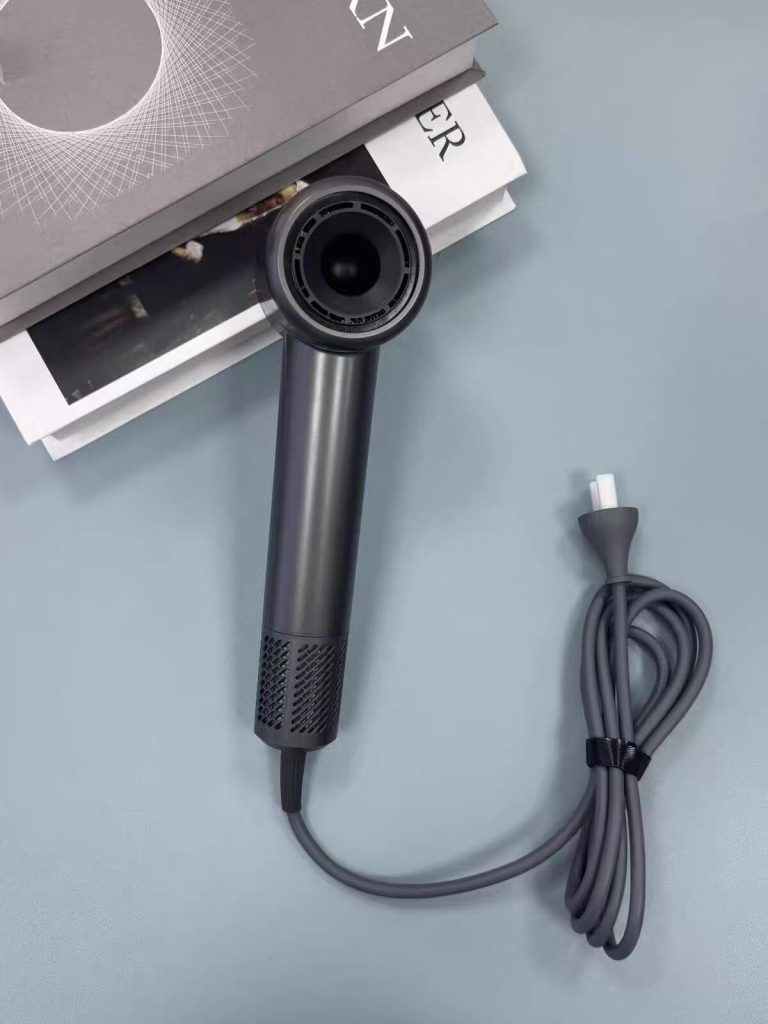
What Wattage Should a Hair Dryer Have? A Buyer’s Guide
Wattage is one of the first specifications buyers notice when purchasing hair dryers, but it is also one of the easiest specifications to misunderstand.
A higher wattage does not automatically mean that a hair dryer is better. For manufacturers, importers, distributors, retailers, hotels, and beauty salons, the appropriate wattage depends on the intended market, user requirements, voltage system, motor design, airflow, heating performance, product structure, and applicable safety requirements.
For bulk buyers, selecting the appropriate wattage before placing an order is important because the specification affects product performance, energy consumption, positioning, packaging information, and sometimes the target market.
This guide explains how buyers can evaluate hair dryer wattage and select an appropriate specification for different applications.
1. What Does Hair Dryer Wattage Mean?
Wattage indicates the electrical power consumed by a hair dryer under its specified operating conditions.
For example, a hair dryer may be specified as:
- 1200W
- 1400W
- 1600W
- 1800W
- 2000W
- 2200W
- 2400W
In general, a higher-wattage model can provide more electrical power to the heating system, but actual drying performance also depends on other components.
These include:
- Motor performance
- Airflow volume
- Air pressure
- Heating element design
- Temperature control
- Fan design
- Air inlet and outlet structure
- Thermal protection
- Overall product design
Therefore, wattage should be evaluated together with the complete technical specification.
2. Is a Higher-Wattage Hair Dryer Always Better?
No.
A 2200W hair dryer is not automatically better than a 1600W model for every application.
For example, a hotel may prefer a moderate-power model because the product is intended for general guest use and needs to meet the property’s electrical requirements.
A professional salon may prioritize airflow, motor durability, temperature control, and continuous operating capability.
A travel-focused product may place greater importance on compact size, weight, voltage compatibility, and energy consumption.
The correct specification depends on the intended application.
3. Common Hair Dryer Wattage Ranges
Different markets and product categories may use different power ratings.
1200W–1400W
Lower-wattage models can be suitable for applications where moderate drying performance and lower power consumption are important.
Potential applications include:
- Compact personal hair dryers
- Travel-oriented models
- Basic household products
- Smaller hospitality products
However, buyers should evaluate actual airflow and heating performance rather than selecting a product based only on the wattage number.
1600W–1800W
This range can provide a balance between drying performance and electrical consumption.
It may be appropriate for:
- Household use
- Hotel products
- General retail products
- Entry-level professional applications
For many buyers, this range can be considered when developing a product for general-purpose use.
2000W–2200W
Higher-power models are commonly associated with faster drying and stronger heating capability, although actual performance still depends on the motor, airflow system, heating element, and control design.
Potential applications include:
- Professional styling
- Beauty salons
- High-performance household products
- Large retail markets
Above 2200W
Higher-power products may be developed for specific markets or professional applications.
However, buyers should pay particular attention to:
- Electrical requirements
- Plug and socket compatibility
- Circuit capacity
- Thermal protection
- Product certification
- Energy consumption
- Target-country regulations
A high-power product should not be selected simply because the wattage appears attractive.
4. Wattage and Drying Speed
One reason buyers often focus on wattage is the relationship between electrical power and drying performance.
A higher-power heating system can potentially produce more heat, but drying speed also depends heavily on airflow.
For example, two hair dryers with similar wattage may provide different user experiences if one has:
- Better motor performance
- Higher airflow
- Better fan design
- More efficient air channels
- Better temperature control
Therefore, when comparing products, buyers should request more than the wattage specification.
Useful technical information can include:
- Rated power
- Motor type
- Airflow
- Air speed
- Temperature settings
- Speed settings
- Heating element specification
- Operating modes
This provides a more complete picture of the product.
5. Wattage and Motor Performance
The motor is a major component of a hair dryer.
Depending on the product design, manufacturers may use different motor technologies.
The motor can influence:
- Airflow
- Noise
- Product weight
- Operating life
- Power consumption
- Heat generation
- Overall performance
This means that two products with the same wattage can have different airflow and drying performance.
For B2B buyers, motor specifications should therefore be included in the product evaluation process.
If the product is intended for professional salons or frequent daily use, buyers should pay particular attention to the expected operating conditions rather than looking at wattage alone.
6. Wattage and Voltage Are Different Specifications
Wattage and voltage should not be confused.
Voltage describes the electrical potential required by the appliance, while wattage describes its power consumption.
A hair dryer may be designed for a particular voltage system and power rating, such as:
220–240V / 2000W
Another model may be designed for:
110–120V / 1600W
The appropriate specification depends on the target market.
Before placing an export order, buyers should clearly specify:
- Rated voltage
- Frequency
- Power
- Plug type
This is especially important when exporting the same product to multiple countries.
7. Why Voltage and Plug Requirements Matter for Export Buyers
A hair dryer designed for one electrical market may not be suitable for another market without the correct electrical configuration.
For international orders, buyers should provide:
- Destination country
- Voltage requirement
- Frequency
- Plug standard
- Required power rating
For example, a buyer importing hair dryers for a specific market should not simply request:
2000W hair dryer
A more complete request would be:
2000W hair dryer, 220–240V, 50Hz, required local plug, for retail distribution.
This gives the manufacturer a much clearer production specification.
8. Wattage for Hotel Hair Dryers
Hotels have different requirements from individual consumers.
A hotel hair dryer may be expected to:
- Operate reliably for repeated guest use
- Be easy to operate
- Have appropriate power
- Fit the hotel’s electrical system
- Meet applicable safety requirements
- Be easy to store
- Match the hotel’s branding or room design
Hotels may not necessarily need the highest available wattage.
Instead, buyers should consider the complete balance between:
- Drying performance
- Safety
- Energy consumption
- Durability
- Noise
- Weight
- User convenience
For large hotel projects, buyers should also confirm whether the product needs:
- Wall mounting
- Retractable cable
- Hotel branding
- Custom color
- Custom packaging
- Special safety features
9. Wattage for Professional Hair Salons
Professional users can have different requirements.
A salon hair dryer may be used many times throughout the day, so buyers should consider more than peak power.
Important specifications may include:
- Motor durability
- Continuous operating capability
- Airflow
- Heat stability
- Temperature control
- Speed control
- Ergonomic design
- Cable length
- Filter design
- Thermal protection
A professional buyer may therefore prefer a product with a well-engineered motor and airflow system rather than simply selecting the highest wattage.
10. Wattage for Household Hair Dryers
Household buyers often prioritize a balance between:
- Drying speed
- Weight
- Noise
- Ease of use
- Energy consumption
- Price
- Storage
For mass-market household products, the target retail price is also important.
A manufacturer may develop several configurations for the same basic product platform, such as:
- Lower-power entry model
- Medium-power household model
- Higher-power premium model
This allows buyers to target different retail price segments.
11. Wattage for Travel Hair Dryers
Travel hair dryers often have different design priorities.
Buyers may focus on:
- Compact size
- Low weight
- Folding handle
- Dual voltage
- Lower power consumption
- Travel storage
- Plug compatibility
For travel products, maximum wattage may not be the primary selling point.
If a product is intended for international travel, buyers should pay particular attention to whether the product supports the required voltage range.
12. Wattage and Energy Consumption
Higher wattage generally means higher electrical power consumption when the appliance operates at its rated power.
For example, a 2000W hair dryer operating for one hour at its rated power would theoretically consume 2 kWh of electrical energy.
However, consumers normally operate hair dryers for much shorter periods.
For product development and marketing, buyers should therefore consider both:
- Rated power
- Typical operating time
Energy consumption requirements may also vary between target markets.
13. Does Higher Wattage Mean Higher Airflow?
Not necessarily.
Wattage describes electrical power, while airflow describes the amount of air moved by the product.
The relationship between the two depends on the motor, fan, air path, heating system, and overall engineering.
Therefore, when comparing two hair dryers, buyers should ask for airflow or air-speed information when available.
A useful product specification sheet may include:
| Specification | Example |
|---|---|
| Rated power | 1800W |
| Voltage | 220–240V |
| Frequency | 50Hz |
| Motor | DC |
| Speed settings | 2 |
| Heat settings | 3 |
| Cool shot | Yes |
| Airflow | Manufacturer specification |
| Plug | Target-market plug |
This is much more informative than displaying only “1800W.”
14. What Should Bulk Buyers Ask the Manufacturer?
When purchasing hair dryers in bulk, buyers should request a complete specification sheet.
Important information includes:
Electrical specifications
- Voltage
- Frequency
- Rated power
- Plug type
Performance specifications
- Airflow
- Air speed
- Temperature range
- Speed settings
- Heat settings
Motor specifications
- Motor type
- Expected operating conditions
- Motor performance information
Product construction
- Housing material
- Heating element
- Fan structure
- Filter
- Cable
- Switches
Safety
- Thermal protection
- Applicable safety requirements
- Required market certifications
Commercial information
- MOQ
- Unit price
- Packaging
- Lead time
- OEM/ODM options
15. How Wattage Affects Product Positioning
Wattage can also influence how a product is positioned in the market.
For example:
A lower-power model may be positioned around:
- Compact design
- Travel
- Convenience
- Lower energy consumption
A medium-power model may focus on:
- Household use
- Value
- Balanced performance
A higher-power model may emphasize:
- Fast drying
- Professional styling
- Strong airflow
- High-performance use
However, marketing claims should be supported by actual product testing and specifications.
16. How Buyers Should Compare Two Hair Dryers
Suppose two manufacturers offer the following products:
| Specification | Model A | Model B |
|---|---|---|
| Power | 1800W | 2200W |
| Voltage | 220–240V | 220–240V |
| Speed settings | 2 | 2 |
| Heat settings | 3 | 3 |
| Motor | Specified | Specified |
| Airflow | Specified | Specified |
| Cool shot | Yes | Yes |
| Packaging | Standard | Customized |
It would be incomplete to conclude that Model B is automatically the better product simply because it has 2200W.
The buyer should compare the complete technical specification, target application, price, documentation, safety requirements, and expected operating conditions.
17. What Wattage Should Importers Choose?
There is no single wattage that is suitable for every importer.
The selection should start with the target market and application.
Before requesting quotations, buyers should define:
- Target country
- Target customer
- Intended application
- Voltage
- Required plug
- Desired drying performance
- Retail price range
- Product size
- Motor requirements
- Certification requirements
- Quantity
- Packaging requirements
This information allows the manufacturer to propose a configuration that is appropriate for the project.
18. Wattage Should Be Part of a Complete Product Specification
For professional procurement, wattage should never be treated as an isolated specification.
A complete hair dryer specification can include:
Product: Hair Dryer
Power: 1800–2000W
Voltage: 220–240V
Frequency: 50Hz
Motor: Specified motor configuration
Speed: 2 settings
Heat: 3 settings
Cool shot: Required
Plug: Target-market plug
Color: Customized
Logo: OEM logo
Packaging: Customized retail box
Quantity: 5,000 units
Destination: Target export market
This type of specification is much more useful when requesting a quotation.
Frequently Asked Questions
Is 2000W enough for a hair dryer?
A 2000W rating can be suitable for many household and professional applications, but suitability depends on the complete product design, voltage system, airflow, motor, and intended use.
Is a 2200W hair dryer more powerful than a 1600W model?
The 2200W model has a higher rated electrical power consumption, but actual drying performance also depends on airflow, motor design, heating efficiency, and other product characteristics.
What wattage is suitable for hotel hair dryers?
Hotels should select wattage according to the property’s electrical system, intended guest use, safety requirements, energy considerations, and desired drying performance.
What wattage is suitable for professional salons?
Professional applications may require higher-performance products, but buyers should evaluate motor durability, airflow, heat control, operating conditions, and safety requirements in addition to wattage.
Does higher wattage increase electricity consumption?
When operating at rated power, a higher-wattage appliance generally consumes more electrical power per unit of operating time.
Should export buyers specify voltage and wattage together?
Yes. Buyers should specify voltage, frequency, power, and plug requirements together when ordering hair dryers for export.
Can a manufacturer customize the wattage?
Depending on the product design and production configuration, manufacturers may be able to offer different power specifications. Buyers should confirm the available configuration before placing an order.
Conclusion
Wattage is an important hair dryer specification, but it should not be used as the only measure of product performance.
A suitable hair dryer configuration depends on the target market, application, voltage, motor, airflow, heating system, safety requirements, product positioning, and price range.
For B2B buyers, the most effective approach is to define the complete product specification before requesting quotations. By providing the required power, voltage, plug, motor configuration, performance requirements, packaging, quantity, and destination, buyers can receive more accurate quotations and reduce the risk of specification misunderstandings.
For OEM and bulk purchasing projects, wattage should therefore be considered as one part of the complete product design rather than the sole indicator of hair dryer quality or performance.


No reply content