Choosing the right yacht materials and construction method is one of the most important decisions when purchasing a new yacht. The selection affects strength, weight, durability, maintenance requirements, performance, comfort, cost, and long-term ownership experience.
Chinese yacht manufacturers offer a range of materials and building techniques. Understanding the main options helps international buyers, dealers, and charter operators select the most suitable combination for their intended use, market, and budget.
This guide outlines the primary materials and construction methods used in yacht building and the key factors buyers should consider.
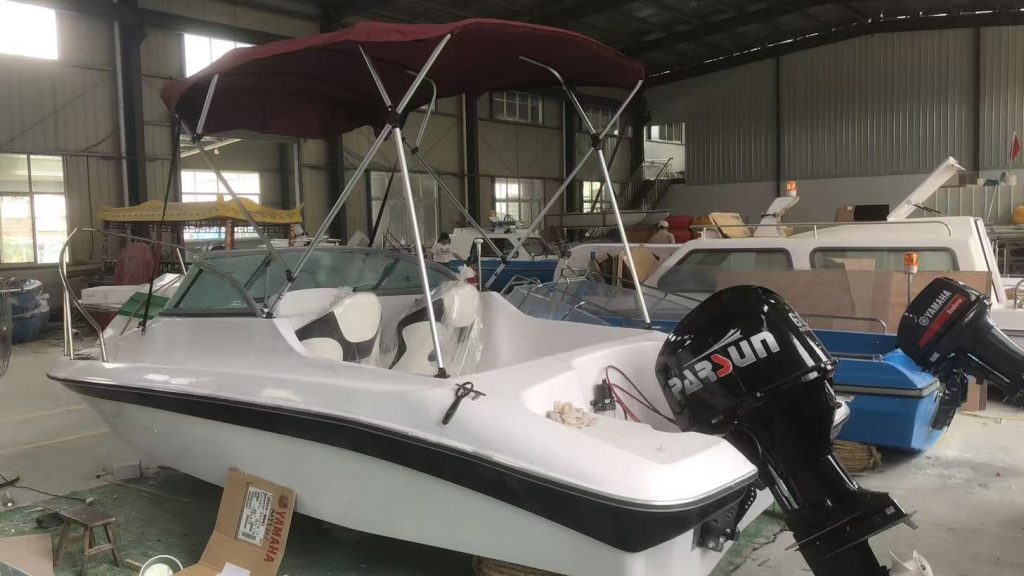
Fiberglass is the most widely used material for production and semi-custom yachts.
**Advantages:** – Cost-effective for series or semi-custom production – Good strength-to-weight ratio when properly built – Excellent design flexibility for complex shapes – Relatively low maintenance compared with metal hulls – Proven track record in recreational and light commercial yachts
**Considerations:** – Quality depends heavily on laminate schedule, resin type, and workmanship – Can be subject to osmosis if not properly constructed and protected – Repair techniques are well established but require skill
**Best suited for:** Most motor yachts, cruising yachts, and production-style vessels where cost efficiency and design freedom are priorities.
#### 2. Aluminum
Aluminum is commonly used for performance, expedition, and certain commercial or workboat-style yachts.
**Advantages:** – Lightweight and strong – Excellent corrosion resistance when correctly alloyed and protected – Good for custom and one-off builds – Easier to modify or repair in some situations – Suitable for higher-performance or long-range designs
**Considerations:** – Higher material and labor cost than standard fiberglass – Requires skilled welding and proper insulation to avoid galvanic corrosion – Noise and vibration characteristics differ from composite hulls
**Best suited for:** Expedition yachts, performance vessels, aluminum catamarans, and custom projects where weight savings or specific structural needs are important.
#### 3. Steel
Steel remains a strong option for larger yachts and long-range vessels.
**Advantages:** – High strength and impact resistance – Durable and well-suited to larger structures – Relatively straightforward to repair in many locations worldwide – Good for displacement and long-range cruising designs
**Considerations:** – Heavier than aluminum or advanced composites – Requires thorough corrosion protection (coatings, anodes, etc.) – Surface finishing to yacht standards demands significant fairing work
**Best suited for:** Larger motor yachts, explorer yachts, and vessels where robustness and range are higher priorities than light weight.
#### 4. Advanced Composites and Hybrid Builds
Some manufacturers use higher-performance composites (carbon fiber, advanced epoxy systems, or hybrid constructions) for specialized projects.
**Advantages:** – Significant weight reduction and increased stiffness – Improved performance potential – Design freedom for complex structures
**Considerations:** – Substantially higher cost – Requires specialized engineering, tooling, and quality control – Repair infrastructure may be more limited in some regions
**Best suited for:** High-performance sailing yachts, racing-oriented projects, or custom vessels where weight and stiffness are critical.
### Common Construction Methods
#### Fiberglass Construction Techniques
– **Hand lay-up** – Traditional method, still widely used. Quality depends on worker skill and process control. – **Vacuum infusion / resin infusion** – Better fiber-to-resin ratio, improved consistency, and reduced voids when executed correctly. – **Chopper gun / spray-up** – Faster but generally lower structural quality; less common in higher-end yacht building.
Buyers should ask manufacturers which method they use for the hull, deck, and structural components, and what quality control steps are in place.
#### Metal Construction
– **Welded aluminum or steel** – Standard for metal yachts. Weld quality, fairing, and corrosion protection are critical. – Framing systems and longitudinal/transverse structure design significantly affect strength and weight.
### Key Factors Buyers Should Consider
1. **Intended Use** – Coastal cruising vs. offshore or long-range – Private ownership vs. charter or commercial operation – Performance priorities (speed, efficiency, or comfort)
2. **Operating Environment** – Saltwater exposure level – Temperature range and UV conditions – Potential for grounding or impact
3. **Maintenance and Lifecycle Cost** – Fiberglass generally offers lower routine maintenance – Metal hulls require ongoing corrosion management – Availability of local repair expertise in the target market
4. **Weight and Performance Targets** – Lighter materials (aluminum or advanced composites) can improve speed and efficiency – Heavier displacement designs may prioritize comfort and range
5. **Budget** – Fiberglass usually provides the best cost-to-capability ratio for most recreational yachts – Aluminum, steel, and advanced composites increase cost but may deliver specific advantages
6. **Certification and Market Requirements** – Some materials and methods are preferred or required for certain classifications or commercial codes – Confirm that the chosen construction meets the standards needed for your market
### Questions to Ask the Manufacturer
– What primary material and construction method do you recommend for this type of yacht, and why? – What laminate schedule or plating thickness do you use? – How do you control quality during lamination or welding? – What corrosion protection or gelcoat/paint systems are applied? – Can you provide examples of similar vessels you have built with these materials? – What is the expected maintenance profile for this construction?
### Conclusion
There is no single “best” material or construction method for every yacht. Fiberglass remains the most popular and cost-effective choice for the majority of production and semi-custom motor yachts. Aluminum and steel offer distinct advantages for specific performance, expedition, or larger-vessel applications. Advanced composites serve specialized high-performance needs.
The right choice depends on the yacht’s intended use, operating conditions, performance goals, maintenance expectations, and budget. Buyers who clearly define these requirements and discuss them in detail with the manufacturer are far more likely to select a construction approach that delivers the desired balance of strength, durability, performance, and value.
If you are planning a new yacht project, start by identifying your operational priorities and constraints, then ask manufacturers to explain how their recommended materials and methods address those needs.



No reply content