
Guangzhou Fishing Tackle Co., Ltd
China
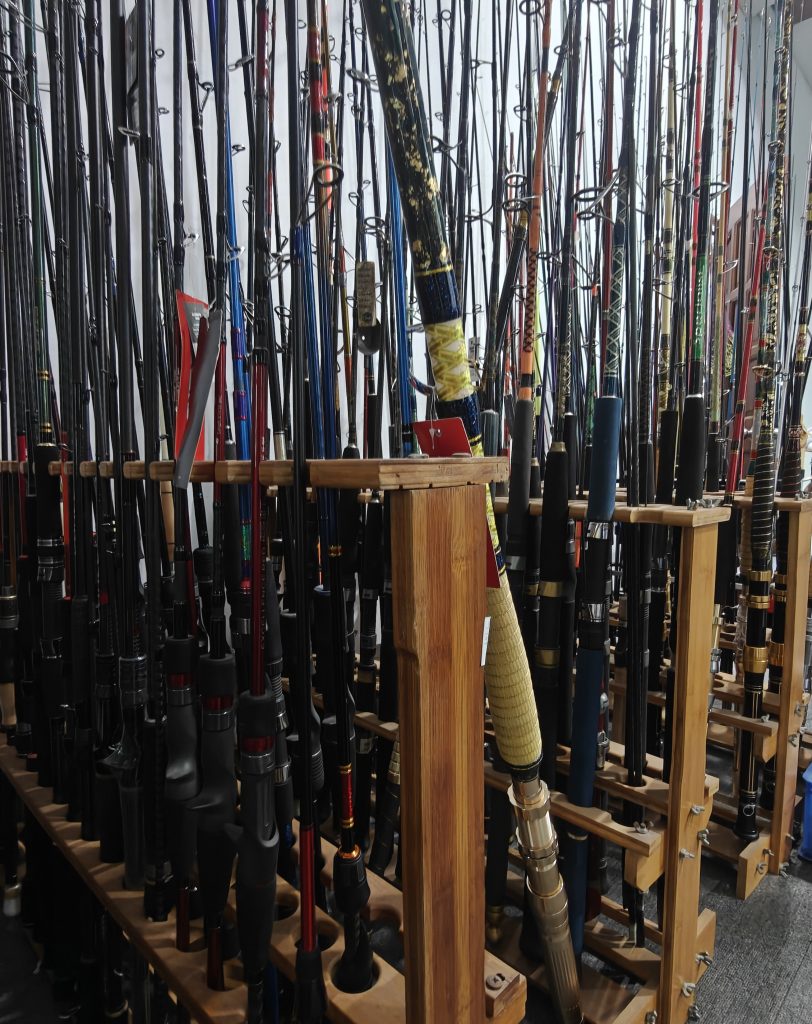
Wholesale Fishing Rod Buying Guide: MOQ, Samples, Quality Control and Packaging
Buying fishing rods wholesale from China involves more than finding a supplier and comparing unit prices. International buyers need to evaluate product specifications, minimum order quantities, sample quality, customization requirements, packaging, production arrangements, and shipping terms before confirming a purchase.
For fishing tackle distributors, sporting goods retailers, importers, and private-label brands, these details directly affect purchasing decisions and the consistency of the products delivered to customers.
A quotation that appears attractive may not include the same components, packaging, or customization as another supplier’s offer. Similarly, a sample that looks suitable may require further evaluation before it can serve as the reference for bulk production.
This guide explains how to approach wholesale fishing rod purchasing in a practical and organized way, with particular attention to MOQ, samples, quality control, OEM requirements, and international shipping.
1. Understand Your Wholesale Fishing Rod Requirements
Before contacting suppliers, define what you intend to purchase and who will use the products.
Fishing rods are available in different designs and specifications, including spinning rods, casting rods, telescopic rods, and other configurations.
Each category serves different applications and customer preferences.
A wholesale buyer should first identify the intended product range rather than requesting a general quotation for fishing rods.
Define Your Product Category
Consider whether your business needs:
-
Spinning fishing rods for compatible spinning reels.
-
Casting fishing rods for compatible casting reels.
-
Telescopic fishing rods for compact storage and transportation.
-
Carbon fiber fishing rods for applications where weight and responsiveness are important considerations.
-
Other models based on your customers’ fishing requirements.
If you are purchasing several models, prepare a separate specification for each one.
Identify Your Target Customers
Your target market influences the product specifications, packaging, and assortment you should request.
For example, a sporting goods retailer serving recreational anglers may require a different range from a specialist fishing tackle distributor.
Consider:
-
Customer experience level.
-
Intended fishing environment.
-
Preferred rod lengths.
-
Expected product positioning.
-
Retail or distribution channel.
-
Packaging and labeling requirements.
This information helps suppliers understand the intended application and discuss suitable product configurations.
2. What Does MOQ Mean in Fishing Rod Wholesale?
MOQ stands for Minimum Order Quantity.
It refers to the minimum quantity a supplier is willing to accept for a particular order or product arrangement.
In fishing rod purchasing, MOQ may vary depending on the product model, components, customization, packaging, and production requirements.
There is no single universal MOQ that applies to every fishing rod supplier or every OEM project.
Why Can MOQ Differ Between Products?
Several factors may influence the minimum order quantity.
Standard products
Existing models may have different ordering requirements from products that require new materials, components, or production arrangements.
Custom branding
Adding a logo or changing product appearance may involve additional preparation, artwork approval, or production steps.
Custom packaging
Printed boxes, labels, and other packaging materials may have their own quantity requirements.
Special specifications
A customized rod length, handle configuration, guide arrangement, or other non-standard requirement may affect the supplier’s production planning.
How Should Buyers Ask About MOQ?
Instead of asking only, “What is your MOQ?”, provide the product details.
A useful inquiry might include:
-
Product type and model.
-
Required specifications.
-
Estimated quantity.
-
Whether the order is for a standard product or OEM project.
-
Logo and packaging requirements.
-
Whether several models will be included in one purchase.
Ask the supplier to clarify whether the MOQ applies per model, per specification, per logo design, or per order.
This distinction is important when planning a mixed-model wholesale purchase.
3. Should You Order Fishing Rod Samples Before Bulk Production?
For many wholesale and OEM projects, sample evaluation is an important step before confirming a larger order.
Product photographs and specification sheets provide useful information, but they cannot fully demonstrate the physical characteristics of a finished fishing rod.
A sample allows the buyer to inspect the product directly and compare it with the intended requirements.
What Should You Check During Sample Evaluation?
Dimensions
Measure the rod length and relevant dimensions against the agreed specification.
Blank appearance
Inspect the surface finish for visible scratches, irregular coating, damage, or inconsistent appearance.
Guide alignment
Check whether the guides are aligned consistently along the rod.
Reel seat
Confirm compatibility with the intended reel and inspect the locking mechanism.
Handle
Review the handle material, shape, dimensions, finish, and general assembly.
Section connections
For multi-piece rods, inspect the fit and alignment of the sections.
For telescopic models, extend and retract the sections carefully.
Printed specifications
Check that the product markings match the technical information provided by the supplier.
Sample Approval for OEM Projects
For private-label orders, sample approval should cover more than the fishing rod itself.
Also confirm:
-
Logo artwork and placement.
-
Color and finish.
-
Handle and component configuration.
-
Product labels.
-
Packaging appearance.
-
Any agreed product markings.
Once approved, keep the sample and written specification as references for the bulk order.
If the supplier proposes a change after approval, request written confirmation before accepting the revised configuration.
4. How to Evaluate Fishing Rod Quality Before Ordering
Fishing rod quality should be evaluated through clearly defined product requirements and appropriate inspection procedures.
A general statement such as “high quality” is not sufficiently specific for a wholesale purchase agreement.
Buyers should identify the characteristics that matter to their product range and confirm how those characteristics will be checked.
Blank and Surface Inspection
Inspect the rod blank for visible defects, including:
-
Surface damage.
-
Uneven coating.
-
Obvious resin buildup.
-
Inconsistent decorative finish.
-
Visible irregularities around joints.
-
Damage caused by handling or packaging.
For branded products, establish acceptable appearance standards before production.
Guide and Component Inspection
Check guide frames, inserts, wrapping, reel seats, handles, and other components against the approved sample.
For example, buyers may specify the intended guide configuration and appearance without assuming that every fishing rod requires identical components.
Dimensional Verification
Verify important dimensions such as:
-
Overall rod length.
-
Collapsed length for telescopic rods.
-
Section count.
-
Handle dimensions.
-
Relevant packaging dimensions.
Measurements should use agreed units and tolerances.
Functional Checks
Where appropriate, agree on practical checks for reel seat operation, section fit, telescopic movement, and other product-specific functions.
Any load-based or destructive testing should use an agreed procedure and suitable safety precautions.
Do not assume that a visual inspection alone verifies every performance characteristic.
5. Establish a Quality Control Plan for Bulk Orders
A quality control plan helps both buyer and supplier understand what will be inspected and what constitutes acceptance.
For wholesale fishing rods, the plan can cover product appearance, dimensions, components, assembly, markings, and packaging.
Define Inspection Criteria Before Production
The purchase specification should identify:
-
Approved product model.
-
Technical specifications.
-
Required components.
-
Acceptable appearance.
-
Logo and printing requirements.
-
Packaging configuration.
-
Inspection timing.
-
Acceptance criteria.
-
Procedure for handling identified defects.
The criteria should be practical and agreed upon by both parties.
Use the Approved Sample as a Reference
A physical sample is useful for comparing bulk production against the agreed product.
However, the sample should be supported by written specifications because some details may not be obvious from appearance alone.
Check Packaging Before Shipment
Packaging inspection should confirm that the correct product quantity and protective materials are used.
For long fishing rods, check that the packaging arrangement is suitable for the product dimensions and expected handling conditions.
Document Inspection Results
For larger orders, buyers may request inspection records or photographs covering the agreed checkpoints.
Any identified discrepancies should be discussed and resolved before shipment according to the purchase agreement.
6. Fishing Rod Packaging: What Wholesale Buyers Should Confirm
Fishing rods have different packaging requirements from many compact sporting goods products.
Their length, shape, sections, guides, and components should be considered when selecting protective materials and carton arrangements.
Packaging serves two purposes: protecting the product during transportation and presenting it appropriately to the end customer.
Individual Product Packaging
Depending on the product design and buyer requirements, individual packaging may include:
-
Protective rod sleeves.
-
Individual cartons or boxes.
-
Product labels.
-
Printed branding.
-
Instruction or specification materials.
The packaging should fit the actual rod configuration rather than being selected solely for appearance.
Export Cartons
Before confirming shipment, ask the supplier to clarify:
-
Carton length, width, and height.
-
Quantity of rods per carton.
-
Gross weight.
-
Net weight, if required.
-
Protective materials.
-
Shipping marks.
-
Carton labeling.
These details are useful when requesting freight quotations and estimating shipment requirements.
Protecting Rods During Transportation
Fishing rods may be exposed to pressure, impact, bending, and repeated handling during international transportation.
Protective packaging should account for the product’s length and vulnerable components.
For multi-piece rods, ensure that sections and accessories are secured appropriately.
For telescopic rods, consider the collapsed length and protection of the guides and tip section.
Custom Retail Packaging
Private-label buyers may require branded packaging that matches their retail presentation.
Confirm artwork, colors, dimensions, product information, and labeling requirements before approving the final packaging.
Any changes to packaging should be reflected in the order documentation.
7. How to Compare Fishing Rod Wholesale Quotations
Price comparison is meaningful only when the products and commercial terms are sufficiently comparable.
Two quotations may differ because of product specifications, components, customization, packaging, or shipping arrangements.
Compare the Product Specifications First
Check whether both quotations cover the same:
-
Rod type.
-
Length.
-
Power and action.
-
Line and lure ratings.
-
Material construction.
-
Section count.
-
Guides and reel seat.
-
Handle configuration.
-
Branding and packaging.
A lower quotation may describe a different product configuration.
Confirm What Is Included
Ask whether the quoted amount includes:
-
Standard product packaging.
-
Custom logo application.
-
Custom packaging.
-
Sample charges.
-
Any additional preparation costs.
-
Export packing.
-
Freight or other shipping services.
Do not assume that an item is included unless the supplier confirms it.
Clarify Commercial Terms
Before placing an order, confirm:
-
Currency.
-
Payment terms.
-
Quotation validity.
-
Production schedule.
-
Shipping terms.
-
Responsibility for export documentation.
-
Destination customs clearance.
-
Applicable duties and taxes.
A written quotation should make the scope of the offer clear.
8. OEM Fishing Rod Wholesale: Customization and Production Planning
OEM purchasing allows buyers to develop products under their own brand, subject to the supplier’s available services and agreed project scope.
For fishing rods, customization may involve branding, appearance, components, and packaging.
Logo and Artwork
Prepare clear logo artwork and specify:
-
Placement.
-
Size.
-
Color.
-
Application method.
-
Required product markings.
Request a proof or sample before approving production.
Product Appearance
If you require a particular handle color, blank finish, decorative wrapping, or component configuration, record these requirements in the specification.
Avoid relying on informal descriptions such as “same as the picture” when the exact appearance matters.
Packaging Artwork
Confirm the final packaging design, product information, labels, and any required language.
For international retail products, buyers should ensure that the packaging information meets the requirements applicable to their destination market.
Production Schedule
Ask the supplier to provide an estimated production schedule after the product specifications, quantity, customization, and packaging have been confirmed.
If the order includes several models or customized packaging, clarify whether the production schedule differs between items.
Do not treat an estimated schedule as a confirmed shipping date unless the supplier has agreed to it.
9. A Step-by-Step Wholesale Fishing Rod Purchasing Process
A clear process helps reduce misunderstandings and makes supplier communication more efficient.
Step 1: Prepare Your Product Requirements
Identify the rod types, specifications, estimated quantities, target market, and customization needs.
Step 2: Contact the Supplier
Provide the product requirements and ask which available models may fit your application.
Step 3: Request a Detailed Quotation
Ask for product specifications, commercial terms, MOQ, sample arrangements, packaging details, and estimated production timing.
Step 4: Review Samples
Inspect the product and confirm whether it meets your requirements.
For OEM projects, approve branding and packaging as well.
Step 5: Confirm the Purchase Order
Document the final product specifications, quantities, prices, payment terms, packaging, delivery terms, and inspection requirements.
Step 6: Monitor Production and Inspection
Follow the agreed production schedule and conduct the specified inspection before shipment.
Step 7: Confirm Shipping Arrangements
Review carton dimensions, weights, packing quantities, shipping marks, and destination arrangements.
Step 8: Retain Product Records
Keep the approved sample, specification sheet, quotation, purchase order, and inspection records for future repeat orders.
These records can help maintain consistency when reordering the same fishing rod model.
10. Common Mistakes in Wholesale Fishing Rod Purchasing
Ordering Without a Clear Specification
A general product name may not identify the exact rod configuration.
Provide technical requirements before requesting a final quotation.
Ignoring MOQ Conditions
Confirm whether the minimum quantity applies to each model, customized design, packaging arrangement, or total order.
Skipping Sample Evaluation
A photograph cannot replace direct inspection of the physical product.
Where practical, review a sample before approving bulk production.
Failing to Define Quality Standards
Agree on inspection criteria before production rather than relying on subjective descriptions.
Overlooking Packaging Dimensions
Packaging affects storage, freight planning, handling, and product protection.
Confirm the final carton information before arranging shipment.
Leaving Commercial Responsibilities Unclear
Confirm payment, shipping, customs clearance, duties, taxes, and delivery responsibilities in writing.
Frequently Asked Questions
1. What is the MOQ for wholesale fishing rods?
MOQ varies by supplier, product model, customization requirements, and packaging arrangement. Buyers should provide their intended rod specifications and estimated quantity when requesting a quotation. Confirm whether the MOQ applies per model or to the overall order.
2. Should I order a fishing rod sample before placing a bulk order?
A sample is useful for checking dimensions, finish, guide alignment, reel seat, handle, section connections, and product markings. For OEM projects, it also allows buyers to review logo placement and packaging before bulk production.
3. How can I check the quality of fishing rods before shipment?
Agree on inspection criteria covering product appearance, dimensions, components, assembly, markings, and packaging. Use the approved sample and written specification as references. Any functional or load-based tests should follow an agreed procedure.
4. What information should I provide when requesting a fishing rod wholesale quotation?
Provide the rod type, technical specifications, estimated quantity, customization requirements, packaging preferences, destination country, and sample requirements. Also ask the supplier to clarify MOQ, quotation scope, production timing, and shipping terms.
5. Can I order fishing rods with custom logos and packaging?
OEM customization may be available depending on the supplier’s capabilities and the selected product. Confirm the logo artwork, placement, packaging design, applicable quantity requirements, sample approval, and final production specifications directly with the supplier.
Contact a Fishing Rod Supplier for Wholesale and OEM Inquiries
Are you sourcing fishing rods for wholesale distribution, retail sales, or a private-label fishing tackle brand?
Guangzhou Fishing Tackle Co., Ltd is listed on Vlefooena as a China-based fishing tackle supplier, with product categories including spinning rods, casting rods, telescopic rods, and carbon fiber fishing rods.
Its supplier profile describes OEM/ODM inquiries, custom logo options, packaging, and wholesale purchasing.
International buyers can contact the supplier through Vlefooena to discuss product specifications, sample arrangements, customization requirements, and quotations.
When submitting an inquiry, include:
-
Preferred fishing rod type and specifications.
-
Estimated order quantity.
-
Target market or destination country.
-
Custom logo and packaging requirements.
-
Sample or bulk production requirements.


No reply content