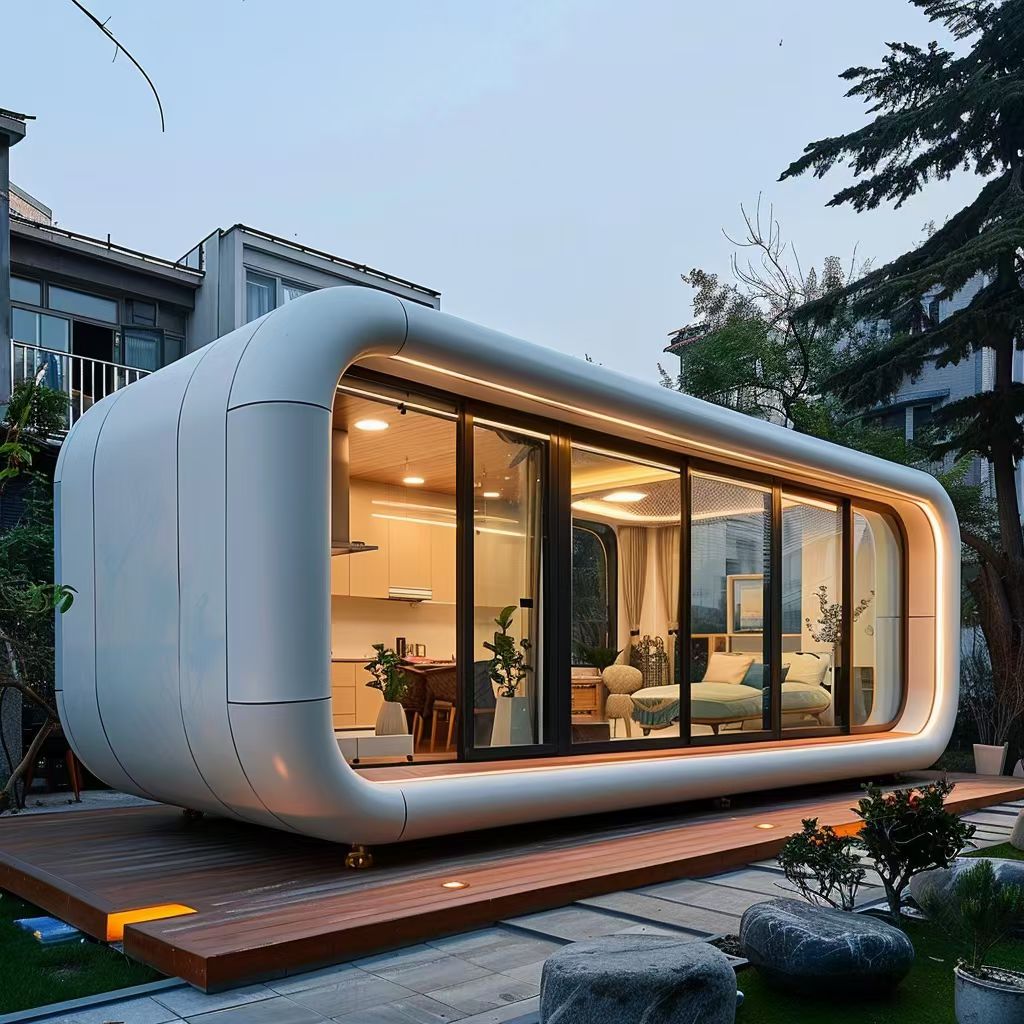
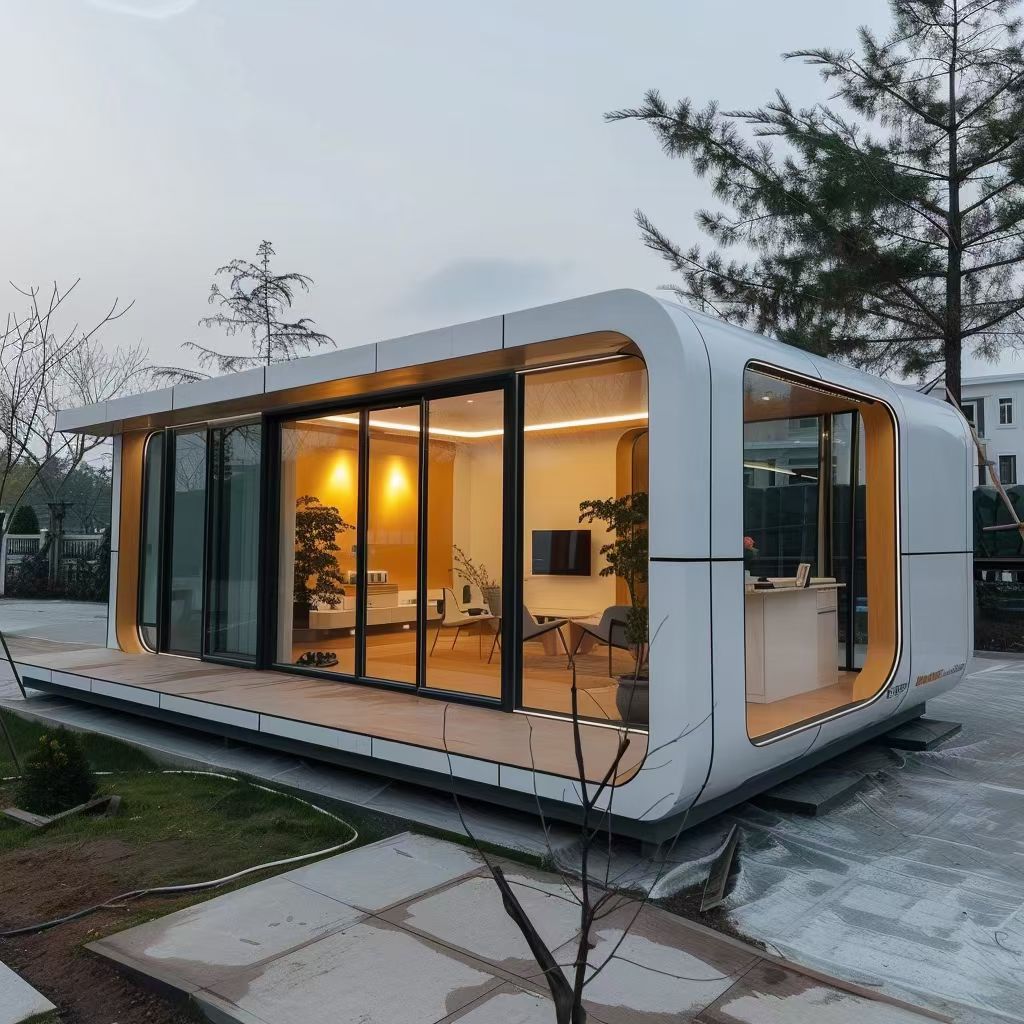
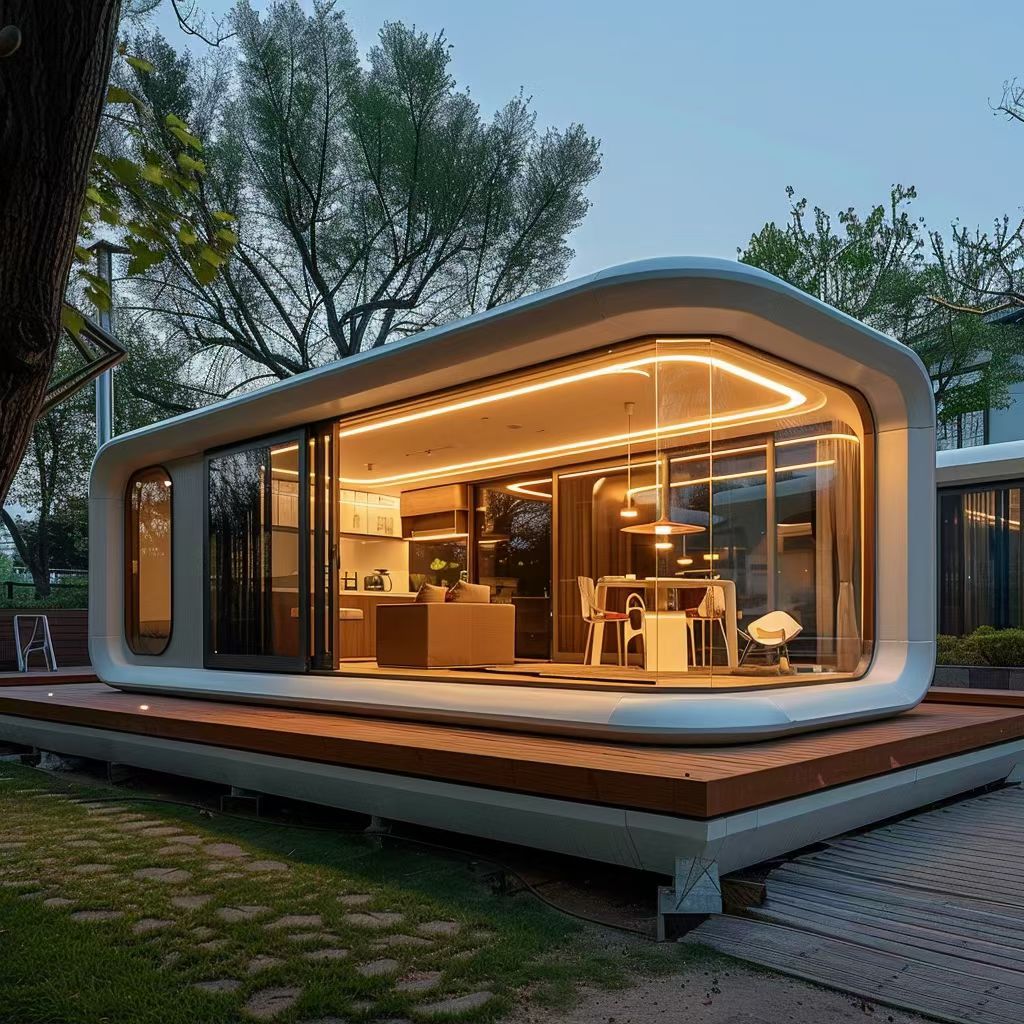
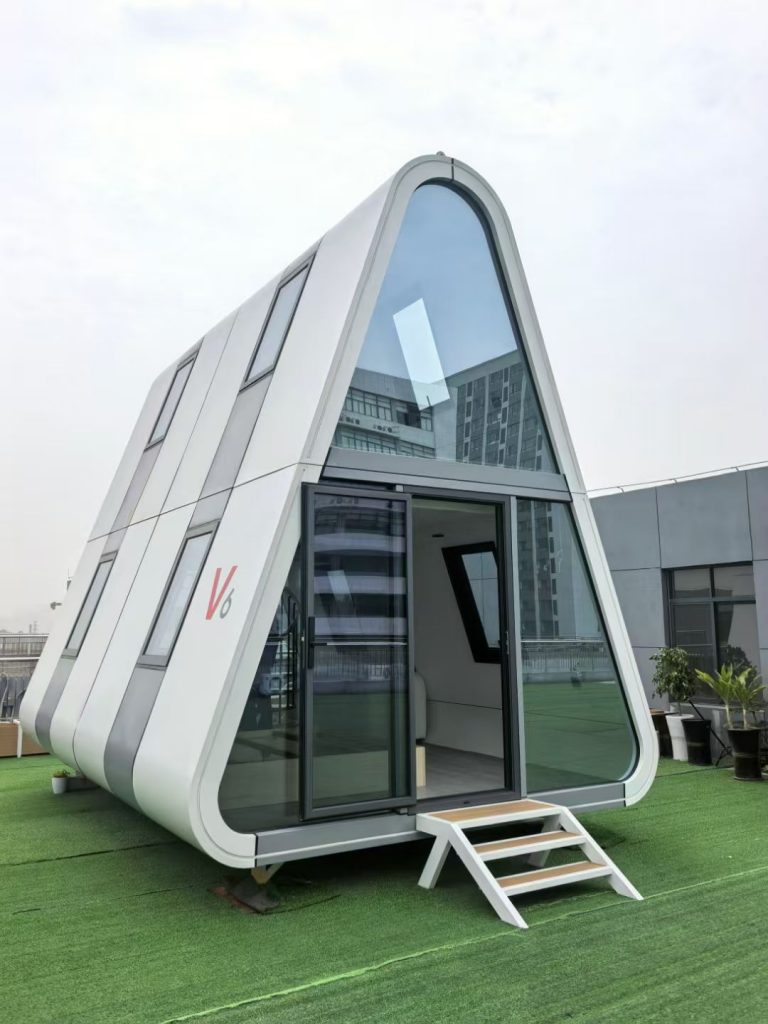
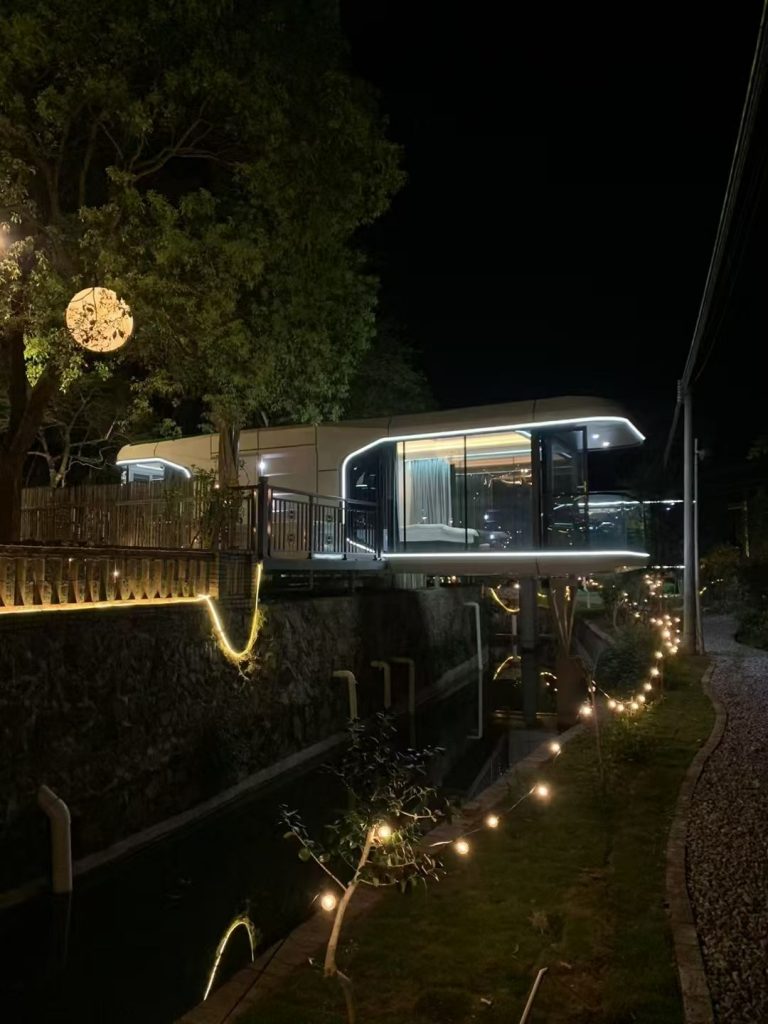
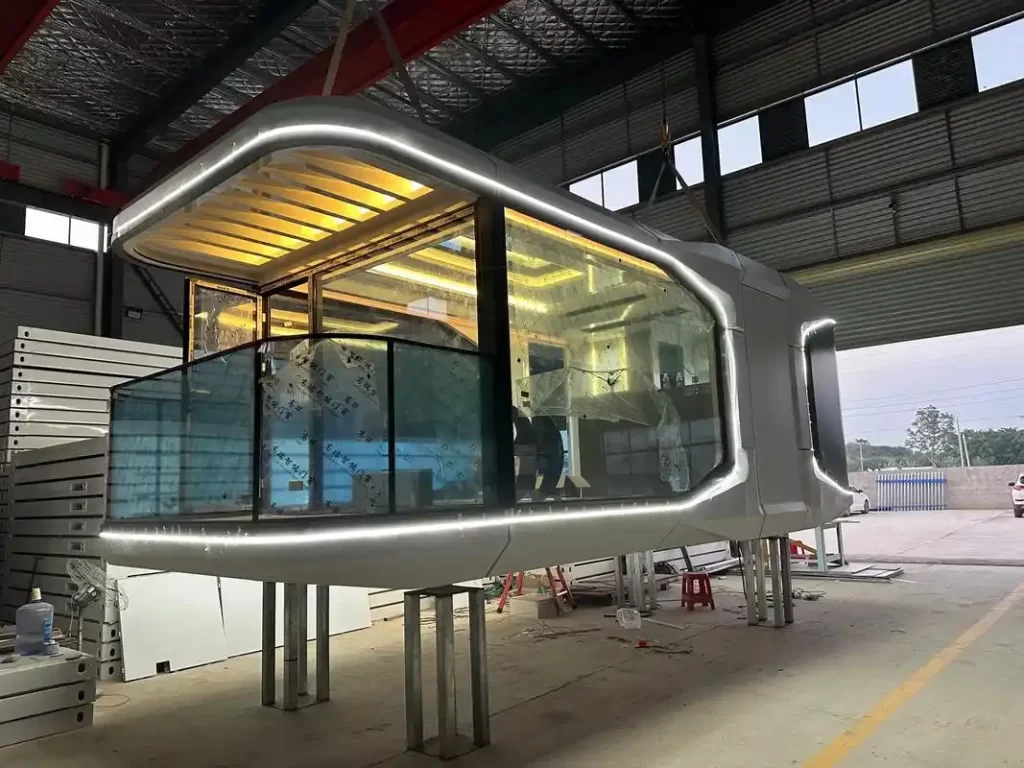
Last month, I toured a hillside development where a two-story home went from factory blueprint to move-in ready in 21 days. The owner, a software engineer, showed me the app that adjusts his home’s temperature based on his commute, the 3D-printed wall panels that cut construction waste by half, and the solar roof generating more power than he uses. “This isn’t just a house—it’s a living system,” he said. That’s the promise of high-tech prefab home: merging the efficiency of prefabrication with cutting-edge tech to build smarter, faster, and greener. Let’s explore how this hybrid approach is rewriting the rules of homebuilding.
🔧 Design Philosophy: Precision + Personality
High-tech prefab homes ditch the “cookie-cutter” stereotype. They use modular frameworks as a canvas for customization, blending factory precision with human-centric design.
Vertical Table 1: 7 Guiding Principles of High-Tech Prefab Design
| Principle | Description |
|---|---|
| Modular Flexibility | Base units (bedrooms, kitchens) mix-and-match like LEGOs; add/remove in days |
| AI-Optimized Layouts | Software analyzes family habits (e.g., “home office needs morning sun”) to arrange spaces |
| Rapid Prototyping | 3D-printed scale models test designs in hours (vs. weeks for traditional blueprints) |
| Eco-Integration | Pre-plumbed for solar, rainwater collection, and EV charging |
| Aesthetic Variety | Choose finishes (wood-look aluminum, textured concrete) to match local style |
| Future-Proofing | Leave conduits for future tech (fiber optics, smart grids) |
| User Co-Design | Clients tweak layouts via apps (drag-and-drop walls, swap fixtures) |
⚙️ Core Technologies: The Brains Behind the Build
Tech here isn’t just bells and whistles—it solves real problems, from waste to energy waste.
Vertical Table 2: 7 High-Tech Features in Prefab Homes
| Technology | How It Works |
|---|---|
| 3D-Printed Components | Robots print wall panels/roof trusses on-site (cuts transport emissions by 40%) |
| IoT Integration | Sensors monitor energy use, air quality, and structural stress (alerts via app) |
| AI Energy Management | Learns occupancy patterns; adjusts heating/cooling to save 25% on bills |
| Drone-Assisted Assembly | Drones deliver lightweight modules to hard-to-reach sites (mountains, islands) |
| Self-Healing Concrete | Bacteria-filled mix repairs hairline cracks (extends lifespan by 15 years) |
| Transparent Solar Glass | Windows generate electricity while letting in light (ideal for urban homes) |
| AR Visualization | Clients “walk through” virtual homes via headsets before ordering |
🪵 Materials: Stronger, Lighter, Greener
Forget heavy lumber—these homes use advanced materials that outperform traditional ones.
Vertical Table 3: 7 Cutting-Edge Materials in High-Tech Prefab
| Material | Pros | Use Case |
|---|---|---|
| Carbon Fiber Composites | 5x stronger than steel; lightweight (reduces transport costs) | Roof trusses, support beams |
| Recycled Plastic Lumber | Made from milk jugs; rot-resistant (no painting needed) | Decking, fencing |
| Aerogel Insulation | Ultra-light, R-value 10 per inch (thinner walls, more interior space) | Attics, exterior walls |
| Mycelium Panels | Mushroom-root-based boards (biodegradable, fire-retardant) | Interior partitions |
| Graphene Coatings | Anti-corrosive (protects steel from rust); self-cleaning (repels dirt) | Exterior siding |
| Phase-Change Materials | Absorb heat by day, release at night (reduces AC use by 30%) | Wall cores |
| Bamboo Fiber Composites | Fast-growing, strong (as strong as oak); carbon-negative | Flooring, cabinetry |
🏗️ Traditional vs. High-Tech Prefab: A Side-by-Side Look
How does this hybrid approach stack up against old-school methods?
Horizontal Table 1: Traditional Prefab vs. High-Tech Prefab
| Metric | Traditional Prefab | High-Tech Prefab |
|---|---|---|
| Build Time | 4–8 weeks (factory + site assembly) | 2–4 weeks (3D printing + drone delivery) |
| Waste Generation | 10–15% (off-cuts, packaging) | <5% (precision printing, recycled inputs) |
| Customization | Limited to pre-set modules | Fully customizable via app (layout, finishes) |
| Energy Efficiency | Standard insulation (R-19 walls) | Aerogel + phase-change materials (R-30+) |
| Initial Cost | 120–180/sq ft | 150–220/sq ft (offset by 30% energy savings) |
😊 User Experience: Living in a “Thinking” Home
Residents rave about the blend of convenience and control—no more guessing if the thermostat is right.
Vertical Table 4: 7 UX Wins of High-Tech Prefab Living
| Win | What It Feels Like |
|————————-|—————————————————————————–|——————————————-|
| Instant Personalization | App adjusts lighting/temperature to “work mode” or “relax mode” in seconds |
| Energy Transparency | Real-time dashboard shows solar generation vs. use (no surprise bills) |
| Quick Repairs | Sensors detect leaks/faults; contractors get precise repair maps via app |
| Health Monitoring | Air quality sensors alert to pollen/dust; auto-purify air |
| Flexible Spaces | Murphy beds + sliding walls convert a “bedroom” to a “yoga studio” in minutes |
| Remote Management | Adjust home settings from vacation (e.g., “keep plants watered”) |
| Pride in Innovation | Showing friends the app that “talks” to the house (geeky but fun!) |
🌍 Sustainability: Built to Give Back
These homes aim for net-zero impact—producing as much energy as they use.
Vertical Table 5: 7 Sustainable Practices in High-Tech Prefab
| Practice | Impact |
|————————-|—————————————————————————–|——————————————-|
| Zero-Waste Factories | 95% of materials recycled (e.g., sawdust becomes particleboard) |
| Local Sourcing | Modules made within 150 miles (cuts transport emissions by 60%) |
| Carbon-Neutral Production| Factories run on solar/wind; offsets residual emissions via reforestation |
| Rainwater Harvesting | Roofs channel water to underground tanks (supplies 70% of non-potable use) |
| Greywater Recycling | Shower water filters to irrigate gardens (saves 20k gallons/year) |
| Biodegradable Packaging | Mushroom-based foam replaces plastic wrap (decomposes in 30 days) |
| End-of-Life Takeback | Companies reclaim modules for new builds (90% material reuse) |
⚠️ Challenges & How Communities Are Solving Them
No innovation is perfect—here’s how builders and buyers are adapting.
Vertical Table 6: 7 Challenges & Grassroots Fixes
| Challenge | Solution |
|————————-|—————————————————————————–|———————————————|
| High Upfront Cost | Governments offer tax credits; co-ops pool funds for group purchases |
| Tech Literacy Gaps | Free workshops teach residents to use apps/sensors (hosted at libraries) |
| Zoning Restrictions | Advocacy groups push for “innovation zones” where high-tech prefab is allowed |
| Supply Chain Delays | Local 3D printers reduce reliance on overseas parts |
| Perceived “Coldness” | Add warm materials (wood accents, textile wall hangings) |
| Maintenance Complexity | Subscription services include remote monitoring + repairs |
| Aesthetic Skepticism | Showcase diverse designs (modern, rustic, minimalist) in model homes |
🏘️ Applications: From Cities to Wilderness
High-tech prefab fits everywhere—dense cities, remote villages, even disaster zones.
Horizontal Table 2: Top 5 Use Cases for High-Tech Prefab Homes
| Setting | Key Benefit | Example Scenario |
|---|---|---|
| Urban Density | Small footprints (600–800 sq ft) fit tight lots | Young professionals in downtown apartments |
| Rural Revitalization | Quick to deploy in declining towns | Retirees moving to affordable countryside |
| Emergency Housing | Assembled in 72 hours post-disaster | Temporary homes for wildfire evacuees |
| Off-Grid Living | Solar + battery storage for remote areas | Homesteaders in mountain valleys |
| Student Housing | Modular dorms expand as enrollment grows | University campuses with flexible housing |
📈 Future Trends: 2025–2030
Expect even tighter integration of biology, AI, and community.
Horizontal Table 3: Emerging High-Tech Prefab Trends
| Trend | Impact | Example Idea |
|---|---|---|
| Bio-Hybrid Modules | Walls embedded with algae (produce oxygen + biofuel) | Urban homes with “living” exterior walls |
| AI Co-Design Platforms | Clients and AI brainstorm layouts together (generates 100+ options) | Custom home designed in a weekend |
| Community Energy Grids | Neighborhoods share solar power via blockchain (lower costs for all) | Subdivision with shared battery storage |
🌟 Core Values: Why This Matters
High-tech prefab isn’t just about faster builds—it’s about equitable, resilient housing for all.
Vertical Table 7: 7 Values of High-Tech Prefab Homes
| Value | Manifestation |
|————————-|—————————————————————————–|——————————————-|
| Accessibility | Lower costs than custom homes; financing options for first-time buyers |
| Resilience | Withstand extreme weather (hurricane-rated panels, flood-resistant bases) |
| Innovation | Pushing boundaries (3D printing, self-healing materials) |
| Community | Shared energy grids + tool libraries strengthen neighborhood ties |
| Transparency | Open-source designs let anyone replicate (no patent barriers) |
| Joy | Homes that adapt to your life (not the other way around) |
| Hope | Proving we can build better—faster, greener, and fairer |
Final Thought
The high-tech prefab home I toured wasn’t just a building—it was a testament to what happens when we marry human creativity with machine precision. It’s a home that learns, adapts, and cares, proving that “prefab” no longer means “plain.” If you’ve ever wished for a house that fits your life like a glove, this might be the future you’ve been waiting for.
Curious to explore? Visit a local prefab showroom, or join a community workshop on 3D-printed housing. The future of home is being built—one smart module at a time.
Article link:https://www.vlefooena.com/%f0%9f%8f%a0%f0%9f%9a%80-high-tech-prefab-home-where-speed-meets-smarts


No reply content