
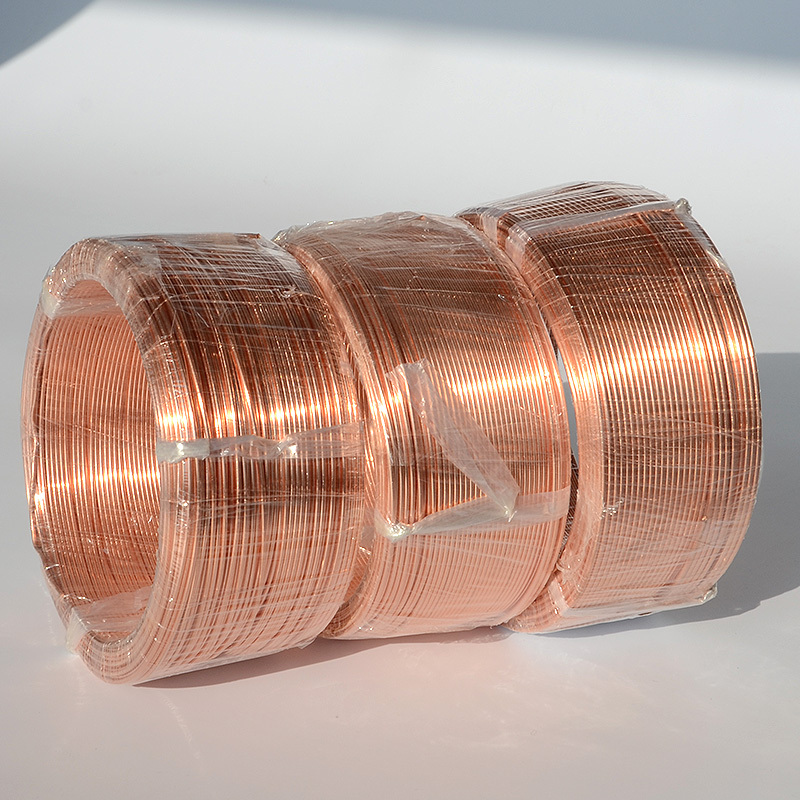
China Copper Wire Factory: What International Buyers Should Check
A factory website can tell a buyer what a company wants to sell.
A factory inspection tells the buyer something different: whether the manufacturer can actually produce the product consistently.
For international buyers purchasing copper wire from China, this distinction matters. A quotation may look competitive, a product photograph may look professional, and a technical datasheet may contain all the right specifications. None of these alone tells you how the factory handles a large production order.
A serious buyer should therefore look beyond the sales presentation and examine the manufacturing process itself.
This is especially important when purchasing copper building wire, flexible copper wire, PVC-insulated wire, OEM products, or large quantities for distribution.
What Should You Actually Check in a China Copper Wire Factory?
You do not need to inspect every machine in the building.
The more useful approach is to follow the product through the factory:
raw material → conductor production → stranding → insulation → testing → packaging → finished goods
At each stage, ask a simple question:
Can this factory control the specification I am paying for?
That question is more useful than simply asking how large the factory is.
1. Start With the Raw Copper
Copper is one of the most important cost components of many electrical wires.
When visiting or evaluating a factory, ask how copper enters the production process.
Depending on the manufacturer’s production setup, you may see copper rods, copper conductors, intermediate drawing processes, or finished conductor materials.
The important issue is traceability.
Ask the manufacturer:
-
Where is the copper material sourced?
-
What copper specification is used?
-
How is incoming material checked?
-
Are material batches recorded?
-
How is conductor resistance controlled?
-
Can the factory provide relevant test records?
A manufacturer should be able to explain its process clearly.
Simply saying “99.99% pure copper” is not enough to evaluate the finished wire. Electrical wire performance also depends on conductor construction, cross-sectional area, resistance and manufacturing control.
For buyers concerned about copper quality, see:
How to Check Copper Purity and Conductor Quality Before Buying Copper Wire
2. Look at the Wire Drawing Process
Copper rod normally needs to be processed into the required conductor dimensions.
Wire drawing reduces the diameter of the copper material through a controlled sequence of dies.
This process affects the final conductor dimensions and surface condition.
During a factory inspection, buyers do not necessarily need to understand every machine parameter.
Instead, ask:
-
What conductor diameters can the equipment produce?
-
How are dimensional tolerances controlled?
-
How frequently is equipment maintained?
-
How are damaged or abnormal conductors handled?
-
Are production records maintained?
A factory with an established process should be able to explain how it keeps conductor dimensions consistent between production batches.
3. Check Whether Stranded Conductors Are Actually Consistent
For stranded copper wire, the construction deserves particular attention.
A stranded conductor consists of multiple individual copper wires assembled into a larger conductor.
The manufacturer should be able to identify the construction being produced.
For example, buyers may need information about:
-
Number of strands
-
Individual strand diameter
-
Conductor diameter
-
Conductor class
-
Lay characteristics
-
Electrical resistance
Do not assume that two products with the same nominal cross-sectional area are constructed identically.
If flexibility is important for your application, conductor construction can be particularly relevant.
This is one reason buyers should approve a technical specification before production rather than relying only on a product name.
4. Inspect the Insulation Production Line
After the conductor is prepared, insulation is applied.
For PVC-insulated copper wire, the insulation process needs to produce a continuous covering around the conductor.
A buyer should look for evidence of process control rather than simply looking at the appearance of the finished cable.
Useful questions include:
-
What insulation material is used?
-
How is insulation thickness controlled?
-
How is conductor centering controlled?
-
How are surface defects detected?
-
Is the insulation continuously monitored?
-
How are production parameters recorded?
A wire can look perfectly normal from the outside while still failing a technical requirement.
That is why production testing and inspection matter.
5. Ask How the Factory Controls Insulation Thickness
Insulation thickness is not simply an aesthetic measurement.
It is part of the product construction.
Too little insulation can create a compliance or performance problem. Excessive insulation can increase material consumption and affect the finished product’s dimensions and cost.
A professional factory should have a defined method for controlling insulation dimensions.
Ask the manufacturer:
What is the nominal insulation thickness for this product?
Then ask:
How do you verify it during production?
The second question is often more revealing than the first.
6. Check the Testing Area
A copper wire factory should have a testing process appropriate to the products it manufactures.
The exact tests depend on the wire type and applicable standard, but buyers may encounter checks related to:
-
Conductor resistance
-
Conductor dimensions
-
Insulation dimensions
-
Voltage withstand
-
Insulation performance
-
Appearance
-
Mechanical characteristics
-
Finished-length verification
The buyer should ask which tests are performed routinely and which are performed only when specifically requested.
It is also useful to ask whether test instruments are calibrated and whether production records can be traced back to a particular batch.
The goal is not to collect as many test reports as possible.
The goal is to understand whether the factory has a repeatable quality-control system.
7. Ask to See an Actual Production Batch
A factory tour can become meaningless if the buyer is shown only a showroom.
If possible, ask to see an actual production order.
Look for:
-
Product identification
-
Production batch information
-
Work-in-progress material
-
Conductor specification
-
Insulation color
-
Printed markings
-
Finished reels
-
Quality-control records
You can then compare what you see with the product you were quoted.
For example, if the quotation is for 2.5 mm² copper wire, ask to see how the factory identifies that specification during production.
A real production line tells you much more than a display cabinet filled with finished samples.
8. Check the Printing on the Finished Wire
Many buyers pay attention to copper and insulation but overlook product marking.
Depending on the product and market requirements, finished wire may carry information such as:
-
Manufacturer identification
-
Product designation
-
Rated voltage
-
Conductor size
-
Standard reference
-
Certification marking where legitimately applicable
The printing should be clear and consistent with the agreed specification.
If your company requires private-label printing, confirm the exact artwork before mass production.
Do not rely on a verbal agreement such as “we can print your logo.”
Confirm:
-
Text
-
Logo
-
Font
-
Printing interval
-
Color
-
Reel label
-
Outer packaging
9. Look at How Finished Wire Is Measured and Packed
A factory may produce technically acceptable wire but still create problems through poor packaging control.
For example, a distributor may order a specific length per reel.
The manufacturer should have a defined process for controlling the finished length.
Ask:
How do you verify the length on each reel?
Also ask:
How are reel numbers recorded?
This becomes important when a shipment contains dozens or hundreds of reels.
Good packaging should allow the buyer to identify the product without opening every package.
Labels can include information such as:
-
Product name
-
Size
-
Color
-
Length
-
Net weight
-
Gross weight
-
Batch number
-
Customer reference
-
Reel number
The exact label depends on the buyer’s requirements.
10. Examine the Warehouse
The warehouse can reveal problems that are not visible on the production line.
Look at how finished wire is stored.
Ask:
-
Are finished products protected from moisture?
-
Are different specifications clearly separated?
-
Are rejected products physically identified?
-
Are customer orders separated?
-
Are older and newer production batches traceable?
-
Are finished reels protected from physical damage?
A large factory can still have poor warehouse management.
For export orders, this matters because the product may spend additional time in storage before container loading.
11. Find Out How Non-Conforming Products Are Handled
One of the most revealing questions you can ask a manufacturer is:
What happens when a production batch does not meet the required specification?
A mature quality system should have a defined process.
The factory may:
-
Identify the affected batch.
-
Isolate the material.
-
Investigate the cause.
-
Decide whether rework is possible.
-
Re-test the material.
-
Record the result.
The important point is that defective or questionable material should not simply disappear into the finished-goods area.
Ask the manufacturer whether rejected products are clearly identified and separated.
12. Check the Factory’s Ability to Handle Your Order Size
A factory may be perfectly capable of producing 5,000 meters but have a completely different production challenge when the order becomes several hundred thousand meters.
Before placing a large order, discuss:
-
Monthly production capacity
-
Current production schedule
-
Number of production lines
-
Typical order size
-
Raw-material preparation
-
Production lead time
-
Peak-season capacity
-
Packaging capacity
Do not confuse maximum theoretical capacity with available production capacity.
If a factory says it can produce 1,000 tons per month, the more useful question is:
How much capacity is available for my order during the requested production period?
13. Ask About Raw-Material Stock
A factory may produce many wire sizes, but it does not necessarily keep every specification in stock.
For regular products, raw materials may be readily available.
For unusual colors, custom printing, special conductor construction or OEM packaging, additional preparation may be required.
Ask the factory whether your order requires:
-
Special copper material
-
Special PVC color
-
Custom printing
-
Custom reels
-
Custom labels
-
Special packaging
This helps explain why two apparently similar products may have different lead times.
14. Verify the Company Behind the Factory
A factory building is not the same thing as a verified business relationship.
Before placing a large order, check the legal identity of the company you are contracting with.
The buyer should confirm that:
-
The company name matches the contract.
-
The business information is consistent.
-
The factory address is clear.
-
The payment account is properly identified.
-
The quotation comes from the same commercial entity.
-
Any changes to payment instructions are independently verified.
This is particularly important for international purchases.
If a supplier suddenly sends a different bank account, do not rely solely on an email or messaging-app instruction. Verify the change through an established contact method.
15. Ask Whether the Factory Produces the Product Itself
Not every company selling copper wire is necessarily the manufacturer.
Some businesses operate as trading companies, while others combine manufacturing and trading activities.
Neither business model is automatically suitable or unsuitable for every buyer.
The important question is whether the supplier can clearly explain its role.
Ask:
Is this product manufactured at your own facility?
If yes, ask:
Which parts of the production process are performed in-house?
For example, a company may manufacture conductors but outsource certain processes, or it may purchase finished conductors and focus on insulation and packaging.
Understanding the actual supply chain helps the buyer evaluate production control.
16. Ask About OEM Production Separately
OEM orders often look simple from the buyer’s perspective:
“Put our brand on the wire.”
In practice, OEM production involves several separate elements.
The factory may need to manage:
-
Brand printing
-
Product markings
-
Custom labels
-
Reel design
-
Carton design
-
Packaging instructions
-
Barcode information
-
Product documentation
Before production begins, the buyer should approve the final artwork and written specification.
A small printing error can affect an entire production batch, so artwork approval should not be treated as an informal step.
17. Compare the Factory’s Answers With Its Documents
This is a useful remote due-diligence method when you cannot travel to China.
Ask the manufacturer for:
-
Company information
-
Product datasheet
-
Factory photos or video
-
Production information
-
Sample
-
Test documentation
-
Packaging details
-
Quotation
-
Lead time
Then compare the answers.
For example, if the salesperson says one standard applies but the datasheet references another, ask for clarification.
If the product page says one conductor construction but the quotation says another, resolve the difference before ordering.
Consistency between documents is a useful sign of organized commercial and technical processes.
18. If You Cannot Visit China, Request a Live Factory Video
A physical visit is not always practical.
International buyers can request a live video call from the factory.
Instead of asking for a prepared promotional video, request a live walk-through.
For example:
Please show us the conductor production area, insulation line, testing area and finished-goods warehouse during a live video call.
A live walkthrough cannot replace an independent audit, but it can provide more useful information than a promotional factory video.
The buyer can also ask the salesperson to show the product specification being discussed during the call.
19. Ask Questions That a Salesperson Cannot Answer With One Word
Weak supplier evaluation often consists of questions such as:
Are you a factory?
Do you have good quality?
Can you do OEM?
These questions usually produce predictable answers.
Instead, ask operational questions:
Which production process is performed in-house?
How do you control conductor resistance?
How do you record production batches?
What is your standard packaging for this wire?
How do you handle non-conforming products?
What is the MOQ for each size and color?
How long does production take after artwork approval?
What information appears on the reel label?
These questions require the supplier to explain how the business actually works.
20. Build a Supplier File Before Placing the Order
For recurring purchases, keep the manufacturer’s information in one supplier file.
It can include:
Company information
-
Legal company name
-
Factory address
-
Main contact
-
Contact details
Product information
-
Product code
-
Specification
-
Standard
-
Conductor construction
-
Insulation
-
Packaging
Quality information
-
Test reports
-
Inspection records
-
Approved samples
-
Certification documents where applicable
Commercial information
-
Price
-
MOQ
-
Lead time
-
Incoterm
-
Payment terms
Order history
-
Purchase order
-
Production batch
-
Shipment
-
Inspection result
-
Customer feedback
This becomes particularly valuable when the same wire is purchased repeatedly.
Instead of starting from zero every time, the buyer can compare each new production batch against the approved specification.
A Practical China Factory Inspection Checklist
Before placing a substantial copper wire order, an international buyer can work through the following list.
Manufacturing
-
[ ] Copper material identified
-
[ ] Conductor production process understood
-
[ ] Stranding construction confirmed where applicable
-
[ ] Insulation process explained
-
[ ] Production capacity discussed
Quality
-
[ ] Technical specification approved
-
[ ] Conductor resistance requirements confirmed
-
[ ] Insulation requirements confirmed
-
[ ] Testing procedure discussed
-
[ ] Non-conforming product procedure understood
-
[ ] Sample approved
Factory
-
[ ] Factory address confirmed
-
[ ] Production facility verified
-
[ ] Warehouse inspected or reviewed
-
[ ] Manufacturing role confirmed
-
[ ] OEM capability confirmed where required
Export
-
[ ] Packaging confirmed
-
[ ] Reel dimensions confirmed
-
[ ] Product labels confirmed
-
[ ] Shipping documents discussed
-
[ ] Lead time confirmed
Commercial
-
[ ] Legal seller identified
-
[ ] Contract company verified
-
[ ] Payment account verified
-
[ ] Price basis confirmed
-
[ ] MOQ confirmed
-
[Incoterm] confirmed
What Should a Buyer Do After the Factory Check?
Do not immediately place the largest possible order.
For a new supplier, a staged purchasing process can reduce unnecessary risk.
A buyer may begin with:
Stage 1 — Specification
Define the exact wire construction and standard.
Stage 2 — Sample
Receive and review the product.
Stage 3 — Supplier verification
Check the company, factory and commercial information.
Stage 4 — Trial order
Place an order large enough to evaluate actual production and shipping performance.
Stage 5 — Repeat order
If the product, documentation and service meet the agreed requirements, move toward regular purchasing.
This approach also gives the manufacturer an opportunity to understand the buyer’s requirements before a much larger order is placed.
Frequently Asked Questions
How can I verify whether a China copper wire supplier is a real manufacturer?
Ask for the legal company information, factory address, production details and evidence of manufacturing capability. If possible, conduct a factory visit or live video inspection. Also clarify which production processes are performed in-house.
What should I inspect first in a copper wire factory?
Start with the production flow: copper material, conductor processing, insulation, testing and finished-goods storage. This gives you a practical understanding of how the product is made and controlled.
Should I visit the factory before ordering?
For a large or long-term supply relationship, a factory visit or independent inspection can be useful. For smaller orders, remote verification, samples and third-party inspection may be more practical.
How do I know if the factory can handle my quantity?
Ask for normal production capacity, current production schedules, MOQ, lead time and available capacity during your requested production period. Do not rely only on a factory’s maximum theoretical capacity.
What documents should a copper wire manufacturer provide?
Depending on the product and destination market, buyers may request a technical datasheet, test documentation, applicable certification documents, commercial documents and packing information. The exact requirements should be agreed before production.
Is a trading company always worse than a factory?
Not necessarily. A trading company may provide useful sourcing and export services. The important issue is whether the supplier’s role is transparent and whether it can meet the required product, quality, documentation and delivery requirements.
Can a China copper wire factory make custom-branded products?
Many manufacturers offer OEM options, but the available printing, labeling, packaging and minimum quantities vary. Confirm all artwork and specifications before mass production.
Final Thoughts
A reliable China copper wire supplier should be evaluated by what happens behind the quotation.
The useful questions are not only:
“How much is the wire?”
or:
“Are you a factory?”
The more important questions are:
How is the conductor made?
How is the insulation controlled?
How is each production batch tested?
How are non-conforming products handled?
Can the factory reproduce the same specification at commercial quantities?
Can the manufacturer provide the packaging and documentation required for the destination market?


No reply content