
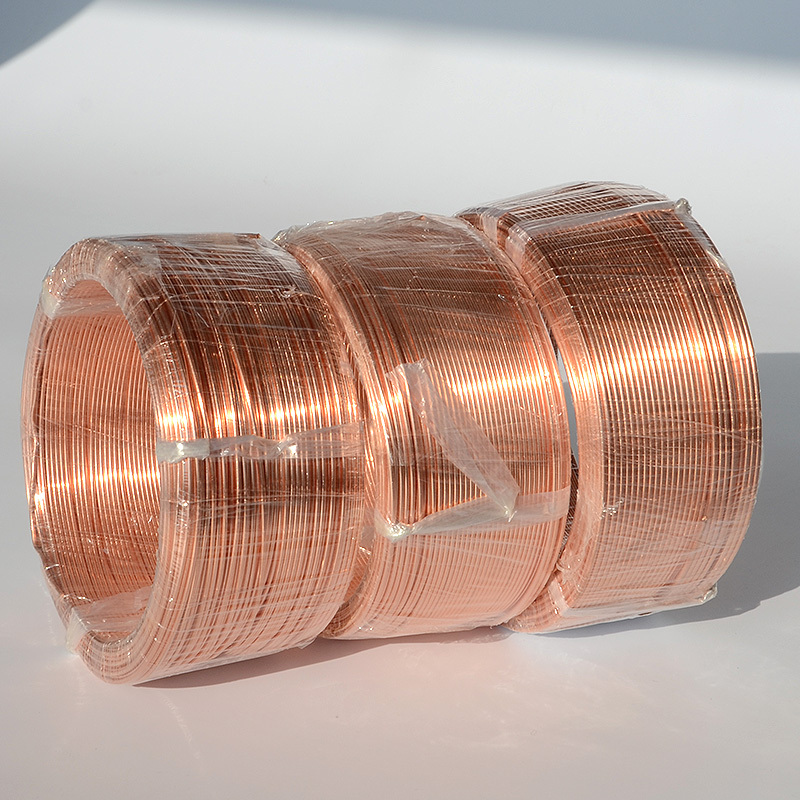
How to Check Copper Purity and Conductor Quality Before Buying Copper Wire
Copper is the most important conductive material in many types of electrical wire. For international buyers, distributors, contractors, and electrical product importers, checking conductor quality before placing a large order can reduce the risk of receiving wire that does not match the agreed specification.
A copper wire may look clean and bright from the outside, but appearance alone cannot confirm its electrical performance or material quality.
A proper inspection should consider the conductor material, cross-sectional area, electrical resistance, construction, surface condition, dimensions, insulation, documentation, and production consistency.
This guide explains practical ways buyers can evaluate copper conductor quality before purchasing wire from a manufacturer.
1. Why Copper Conductor Quality Matters
The conductor directly affects the electrical performance of the wire.
Poor conductor quality can result in:
- Higher electrical resistance
- Increased voltage drop
- Excessive heating
- Lower current-carrying performance
- Reduced efficiency
- Difficult installation
- Inconsistent production quality
For a large construction or electrical distribution project, these issues can become expensive if they are discovered only after the shipment arrives.
Buyers should therefore establish clear conductor requirements before requesting quotations.
2. Start With the Exact Wire Specification
Before checking copper quality, confirm exactly what product you are purchasing.
The RFQ should identify:
- Wire type
- Conductor material
- Nominal cross-sectional area
- Solid or stranded construction
- Voltage rating
- Insulation material
- Insulation thickness
- Conductor resistance requirement
- Required standard
- Color
- Packaging
- Length per coil
- Required quantity
For example, simply requesting “copper wire” is not sufficient for a professional quotation.
A manufacturer needs enough technical information to understand exactly what should be supplied.
For guidance on preparing a specification, see What Should Buyers Check Before Purchasing Copper Building Wire?.
3. Copper Purity and Conductor Performance Are Not the Same Test
Buyers often ask about “copper purity,” but electrical wire quality should not be judged by a single purity number.
For an electrical conductor, important characteristics include:
- Electrical conductivity
- DC resistance
- Cross-sectional area
- Tensile properties
- Flexibility
- Surface quality
- Conductor construction
A conductor can have the expected appearance while still requiring proper electrical and dimensional testing.
For this reason, buyers should focus on whether the finished conductor meets the agreed technical requirements.
4. Check the Conductor Material
The quotation should clearly identify the conductor material.
For example, a specification may require:
Copper conductor
The buyer should not assume that every product described as “copper wire” has identical material characteristics.
Ask the manufacturer to confirm:
- Conductor material
- Material specification
- Manufacturing process
- Applicable standard
- Test requirements
For large orders, the material information should appear in the technical specification or product datasheet.
5. Check the Cross-Sectional Area
The nominal cross-sectional area is one of the most important conductor specifications.
Common sizes include:
- 1.0 mm²
- 1.5 mm²
- 2.5 mm²
- 4 mm²
- 6 mm²
- 10 mm²
- 16 mm²
- 25 mm²
- 35 mm²
- 50 mm²
The actual conductor must meet the applicable dimensional and electrical requirements.
A wire that is labeled with a certain cross-section should not be evaluated only by its external diameter.
For more information, see How to Choose the Right Copper Wire Size for Building Electrical Projects.
6. Do Not Judge Copper Quality by Color Alone
Copper normally has a recognizable reddish or orange metallic appearance.
However, color alone is not a reliable quality-control method.
Surface appearance can be affected by:
- Production processes
- Oxidation
- Cleaning
- Storage conditions
- Surface treatment
- Manufacturing environment
A shiny conductor does not automatically mean that the wire meets all technical requirements.
Likewise, slight visual differences should not automatically be interpreted as evidence of poor quality.
Electrical and dimensional tests are more useful.
7. Inspect the Conductor Surface
When a sample is available, visually inspect the exposed conductor.
Look for:
- Smooth surface
- Consistent appearance
- No obvious cracks
- No significant scratches
- No unusual contamination
- No excessive oxidation
- No irregular deformation
For stranded wire, also check whether the individual strands appear consistently manufactured and properly assembled.
Surface inspection is a screening method rather than a complete laboratory test.
8. Check Solid vs Stranded Construction
Copper wire may use a solid conductor or a stranded conductor.
A solid conductor consists of a single conductor.
A stranded conductor consists of multiple smaller strands.
This distinction affects:
- Flexibility
- Installation characteristics
- Mechanical handling
- Manufacturing process
- Application
For a detailed comparison, see BVR Copper Wire vs BV Wire: Which Should Buyers Choose?.
9. Check the Number and Diameter of Strands
For stranded wire, buyers can request information about:
- Number of strands
- Individual strand diameter
- Conductor construction
- Nominal cross-sectional area
For example, two products may both be described as stranded copper wire but use different strand constructions.
The important point is to make sure the supplied construction matches the approved specification.
10. Measure the Conductor Diameter Carefully
For solid conductors, measuring diameter can provide a useful preliminary check.
The cross-sectional area of a circular solid conductor can be estimated using:
A = πd² ÷ 4
where:
- A = cross-sectional area
- d = conductor diameter
However, actual commercial acceptance should follow the relevant product specification and applicable tolerance requirements.
For stranded conductors, simply measuring the outside diameter of the complete bundle does not directly provide the exact metallic cross-sectional area.
11. Check Electrical Resistance
Electrical resistance is one of the most useful technical indicators of conductor performance.
For a conductor:
R = ρL/A
where:
- R = resistance
- ρ = resistivity
- L = conductor length
- A = cross-sectional area
Resistance depends on the conductor material, length, cross-sectional area, and temperature.
A suitable resistance test can therefore provide useful information about the conductor.
Buyers should compare the measured value with the requirement specified for the product.
For additional information about resistance and wire performance, see How Conductor Resistance Affects Copper Wire Performance.
12. Why Resistance Can Be More Useful Than Appearance
Imagine two copper wires that look almost identical.
One may meet the required electrical resistance while the other may not.
A visual inspection cannot reliably identify that difference.
Resistance testing provides measurable electrical data that can be compared with the agreed specification.
For this reason, professional quality inspection should combine:
Visual inspection + dimensional inspection + electrical testing + documentation review.
13. Check Resistance at the Correct Temperature
Copper resistance changes with temperature.
As temperature increases, copper resistance generally increases.
Therefore, test results should be interpreted according to the specified test temperature or corrected appropriately according to the applicable standard.
When comparing two suppliers, make sure the resistance values are being reported under comparable conditions.
Otherwise, the numbers may appear different even when the underlying conductors are similar.
14. Check Conductor Weight
Weight can provide another useful reference point.
For example, theoretical copper weight can be estimated from the nominal cross-sectional area.
A commonly used approximation is:
Copper weight ≈ Cross-sectional area × 8.96 kg/km
For example:
10 mm² × 8.96 ≈ 89.6 kg/km
This represents theoretical copper conductor weight, not finished insulated wire weight.
For a detailed explanation, see How to Calculate Copper Wire Weight per Kilometer.
15. Weight Should Not Be Used as the Only Quality Test
A heavier wire is not automatically a higher-quality wire.
Weight can be affected by:
- Conductor dimensions
- Insulation thickness
- Insulation material
- Manufacturing tolerances
- Packaging
Therefore, weight should be used as one supporting indicator rather than the only acceptance criterion.
Electrical resistance and dimensional requirements remain important.
16. Check Insulation Separately
Copper conductor quality and insulation quality are separate issues.
After checking the conductor, inspect:
- Insulation thickness
- Surface smoothness
- Color consistency
- Marking
- Flexibility
- Damage
- Adhesion where applicable
A high-quality copper conductor does not compensate for defective insulation.
The complete finished wire must meet the agreed product requirements.
For a deeper discussion of insulation materials, see PVC Insulation vs Other Cable Insulation Materials: What Buyers Should Know.
17. Check the Insulation Thickness
Insulation thickness should meet the applicable product specification.
If the insulation is significantly thinner than required, the wire may not provide the intended level of mechanical and electrical protection.
Buyers can request the manufacturer to provide:
- Nominal insulation thickness
- Minimum insulation thickness
- Finished outside diameter
- Applicable tolerance
For formal inspection, suitable measuring equipment should be used.
18. Inspect Wire Markings
The wire surface may include markings such as:
- Manufacturer identification
- Product designation
- Voltage rating
- Conductor size
- Standard reference
- Meter marking
- Other required information
Markings should correspond to the approved specification.
Incorrect or missing markings can create problems during installation, inspection, and later identification.
19. Request the Technical Datasheet
Before purchasing, ask the manufacturer for a technical datasheet.
It should ideally identify:
- Product type
- Conductor material
- Cross-section
- Conductor construction
- Insulation material
- Voltage rating
- Temperature rating
- Electrical resistance
- Dimensions
- Weight
- Applicable standard
- Testing information
The datasheet gives both buyer and manufacturer a common technical reference.
20. Request Sample Wire Before a Large Order
For a new supplier, purchasing a sample before placing a large production order is often useful.
A sample allows the buyer to check:
- Appearance
- Flexibility
- Conductor construction
- Insulation
- Markings
- Dimensions
- Packaging
- Available documentation
If laboratory testing is required, the sample can also be submitted for appropriate testing.
21. Compare the Sample With the Mass Production
Approving a sample is not the end of quality control.
The buyer should make sure that the production order matches the approved sample.
Important comparison points include:
- Conductor construction
- Cross-section
- Insulation
- Color
- Marking
- Length
- Weight
- Packaging
The approved sample should be clearly identified and retained as a reference.
22. Request Factory Test Reports
Depending on the product and purchasing requirements, buyers may request relevant factory test reports.
Possible information includes:
- Conductor resistance
- Dimensional measurements
- Insulation tests
- Voltage tests
- Material information
- Production batch information
The exact documents required depend on the product specification, market, and applicable standards.
23. Third-Party Inspection for Large Orders
For a significant purchase, an independent inspection can provide additional verification before shipment.
An inspection may include:
- Quantity counting
- Packaging inspection
- Visual inspection
- Dimensional checks
- Marking verification
- Weight measurement
- Sampling
- Electrical testing where available
The inspection scope should be agreed before production or shipment.
24. Check the Production Batch
For large orders, ask the supplier to identify the production batch or manufacturing date.
Batch information can help with:
- Traceability
- Quality investigation
- Reorder management
- Complaint handling
- Product identification
If a problem is discovered later, traceability makes it easier to determine which production lot was affected.
25. Compare Resistance With Cross-Section
Cross-sectional area and resistance should be considered together.
A nominally larger conductor generally has lower resistance per unit length than a smaller conductor made from the same conductive material, assuming comparable conditions.
This is one reason buyers should not evaluate wire only by outside diameter.
A proper technical comparison should consider:
Cross-section + conductor material + resistance + construction.
26. Check Conductor Flexibility
For stranded wire, flexibility can be important during installation.
However, flexibility should be evaluated according to the intended application rather than simply assuming that more flexibility is always better.
Factors include:
- Strand construction
- Individual strand diameter
- Temper or mechanical properties
- Insulation characteristics
- Installation environment
The product should match the application’s requirements.
27. Check the Wire Length
Quantity should not be evaluated only by weight.
For example, a buyer ordering:
10,000 meters
should confirm that the supplier is actually providing the required total length.
Ask for:
- Length per coil
- Number of coils
- Total nominal length
- Meter marking where applicable
This helps prevent quantity disputes.
28. Check Net Weight and Gross Weight
When receiving a quotation, distinguish between:
Net wire weight
and
Gross shipment weight.
Net weight refers to the product.
Gross weight includes packaging.
For international shipping, both numbers can be useful.
The buyer may also need:
- Number of packages
- Package dimensions
- Total CBM
- Pallet or drum information
29. Watch for Unusually Low Quotations
A very low quotation should be investigated rather than accepted immediately.
Ask whether the lower price comes from:
- Different conductor specifications
- Different insulation
- Different quantity
- Different packaging
- Different certification requirements
- Different delivery terms
- Different payment conditions
- Different raw material assumptions
The cheapest number is not necessarily a comparable number.
The key question is:
Are the two quotations based on the same specification?
30. Use a Standardized Inspection Checklist
For repeat purchases, create a fixed inspection checklist.
For example:
| Inspection Item | Requirement | Result |
|---|---|---|
| Conductor Material | Copper | |
| Cross-Section | 2.5 mm² | |
| Construction | Solid/Stranded | |
| Resistance | According to specification | |
| Insulation | PVC/Specified Material | |
| Insulation Thickness | Specified Value | |
| Color | Approved Color | |
| Marking | Required Marking | |
| Length | Specified Length | |
| Net Weight | Confirmed | |
| Packaging | Approved Type | |
| Test Report | Required |
This makes supplier inspection more consistent.
31. Create an Approved Product Specification
Before production, establish one final specification containing all critical requirements.
For example:
Product: Copper Building Wire
Conductor: Copper
Cross-Section: 2.5 mm²
Construction: Stranded
Insulation: PVC
Voltage: According to approved specification
Color: Blue
Length: 100 m/coil
Marking: According to approved specification
Packaging: Individual coil
Testing: According to agreed requirements
Both buyer and manufacturer should work from the same document.
32. Avoid Relying on a Supplier’s Description Alone
Terms such as:
- High quality copper
- Pure copper
- Premium copper
- High conductivity
- Professional cable
are not enough to establish technical compliance.
A professional purchasing process converts these descriptions into measurable specifications.
Instead of simply requesting:
High-quality copper wire
request:
Copper conductor, specified cross-sectional area, specified resistance, specified insulation, specified voltage rating, specified length and required testing.
This creates a much clearer purchasing requirement.
33. What to Ask a New Copper Wire Supplier
Before placing an order, ask:
- What is the conductor material?
- What is the nominal cross-sectional area?
- Is the conductor solid or stranded?
- What is the conductor resistance?
- What insulation material is used?
- What is the insulation thickness?
- What is the voltage rating?
- What standard does the product follow?
- What is the finished weight per kilometer?
- What is the standard packing method?
- What test reports are available?
- Can you provide a sample?
- What is the production lead time?
- What is the MOQ?
- Can the production batch be identified?
These questions provide a much stronger basis for supplier evaluation.
34. How to Prepare a Copper Wire RFQ
A good RFQ should contain enough technical information for different suppliers to quote the same product.
For example:
Product: Copper building wire
Conductor: Copper
Size: 6 mm²
Construction: Stranded
Insulation: PVC
Required quantity: 20,000 meters
Packing: 100 m per coil
Destination: Please quote according to the requested delivery term
Please provide: Unit price, finished weight/km, net weight, gross weight, package dimensions, MOQ, lead time, testing information and available documentation.
This reduces the risk of comparing different products under the same product name.
35. Common Mistakes Buyers Should Avoid
Mistake 1: Checking only the color
Color does not prove electrical performance.
Mistake 2: Checking only the weight
Weight does not prove conductor quality.
Mistake 3: Checking only the outside diameter
The outside diameter includes insulation.
Mistake 4: Comparing prices without comparing specifications
A lower price may reflect a different product.
Mistake 5: Skipping sample approval
A sample can reveal important differences before mass production.
Mistake 6: Ignoring test conditions
Electrical test results should be interpreted under appropriate conditions.
Mistake 7: Accepting vague product descriptions
Technical requirements should be measurable whenever possible.
FAQ
How can I check whether copper wire is good quality?
Start by checking the conductor material, cross-sectional area, electrical resistance, conductor construction, surface condition, insulation, markings, and relevant test documentation.
Can I determine copper purity by looking at the wire?
No. Appearance alone cannot reliably establish the electrical or material quality of a conductor.
Is copper wire weight a reliable quality test?
Weight is useful as a reference but should not be used as the only quality test. Electrical and dimensional measurements are also important.
How do I check copper wire resistance?
A suitable resistance measurement can be compared with the requirement for the specific product and applicable standard. Test temperature and conductor length must also be considered.
Should I request a sample before placing a large order?
For a new supplier or important project, a sample can be useful for checking construction, appearance, dimensions, insulation, markings, and documentation before mass production.
What documents should I request from the manufacturer?
Depending on the product and market, useful documents may include a technical datasheet, relevant factory test reports, product specifications, and other required compliance documentation.
Can a heavier wire be considered better?
Not necessarily. A heavier finished wire may have more insulation or different construction. Weight should be considered together with electrical and dimensional specifications.
What is the most important test for a copper conductor?
There is no single test that covers every aspect of conductor quality. Electrical resistance, cross-sectional area, construction, material information, and applicable dimensional and mechanical requirements should be evaluated together.
How can I compare two copper wire suppliers?
Give both suppliers the same technical specification and compare conductor material, cross-section, resistance, insulation, standards, testing, quantity, packaging, lead time, price, and delivery terms.
Conclusion
Checking copper purity and conductor quality before purchasing wire requires more than examining the appearance of the copper.
A reliable purchasing process should combine:
Material verification + cross-sectional inspection + resistance testing + conductor construction + weight reference + insulation inspection + documentation + sample approval.
For smaller purchases, a detailed specification and sample inspection may be sufficient.
For large international orders, buyers should consider more structured quality control, including batch identification, factory test documentation, and independent inspection when appropriate.
The most important principle is simple: turn every important quality requirement into a measurable specification before placing the order.
When the buyer and manufacturer agree on the same conductor size, material, resistance, construction, insulation, testing requirements, packaging, and quantity, the risk of misunderstandings becomes much lower.


No reply content