
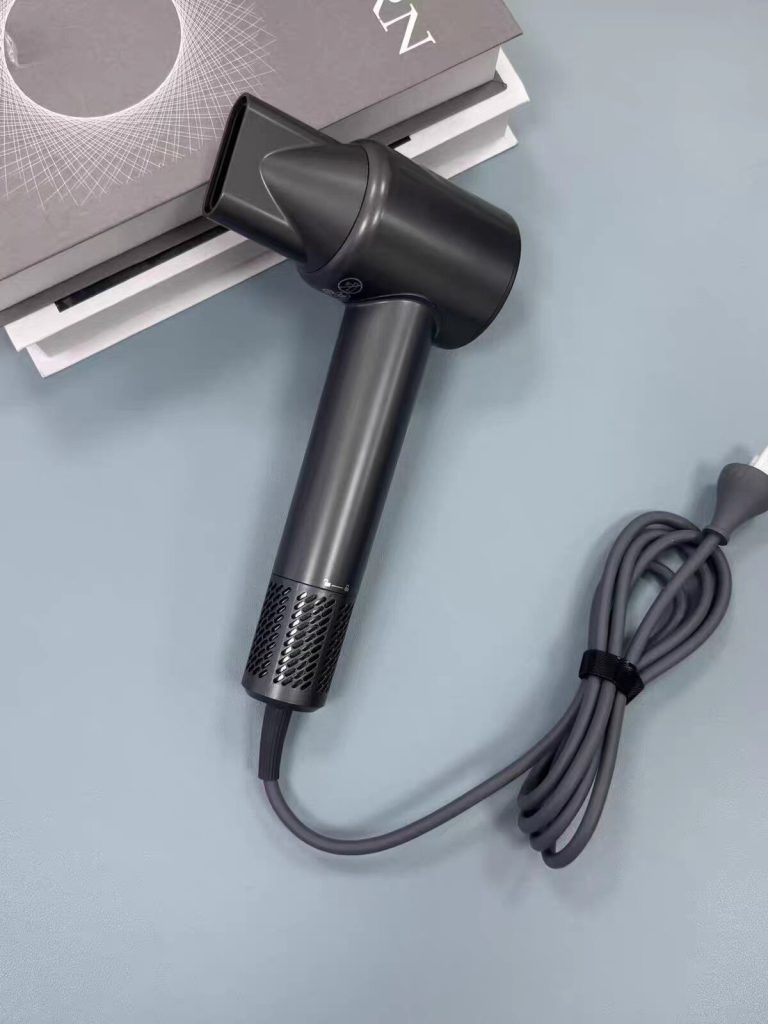
China Hair Dryer Factory vs Trading Company: What Buyers Should Know
When sourcing hair dryers from China, overseas buyers often ask the same question:
“Are you a factory or a trading company?”
The question is reasonable, but it is not enough to make a purchasing decision.
A trading company can sometimes provide products from several factories, manage communication, arrange packaging, and coordinate export shipments.
A factory may have direct control over production, engineering, assembly and quality management.
Neither description, by itself, tells you whether the supplier is suitable for your order.
The more useful question is:
Who will actually manufacture my hair dryer, who controls the product specification, and who will be responsible if something changes during production?
This distinction becomes particularly important for buyers ordering private-label hair dryers, customized models, professional salon products, hotel supplies or long-term repeat orders.
1. Why the Factory-or-Trading-Company Question Is Not Enough
Suppose two suppliers give you almost identical quotations.
Supplier A says:
We are a manufacturer.
Supplier B says:
We are an exporter working with several professional factories.
It would be a mistake to automatically assume Supplier A is the better choice.
What matters is what each supplier can actually provide.
You need to understand:
- Who owns or controls the production process?
- Where is the product manufactured?
- Who controls the components?
- Who performs quality inspection?
- Who handles product development?
- Who controls packaging?
- Who manages changes?
- Who is responsible for defects?
- Can the same product be reproduced for future orders?
These questions reveal much more than a company description.
For buyers still at the initial supplier-selection stage, see How to Choose a Hair Dryer Manufacturer in China for Your Brand.
2. What a Direct Hair Dryer Factory Usually Controls
A genuine manufacturer may control some or many parts of the production process.
Depending on the factory, this could include:
- Product engineering
- Plastic housing production
- Motor assembly
- Heating-system assembly
- Electronic components
- Wiring
- Final assembly
- Functional testing
- Quality inspection
- Packaging
- Production scheduling
However, do not assume that a factory manufactures every individual component itself.
A hair dryer manufacturer may purchase motors, heating elements, switches, cables, PCBs or other components from specialized suppliers.
That is normal.
The important question is who controls the final product.
3. What a Trading Company May Actually Provide
A trading company is not necessarily just a middleman adding an unnecessary layer.
A good trading company may provide useful services such as:
- Finding suitable factories
- Comparing manufacturers
- Negotiating prices
- Managing communication
- Coordinating samples
- Managing packaging
- Combining products from different factories
- Handling export documentation
- Arranging shipping
- Supporting overseas customers
For a buyer purchasing several categories of products, this can sometimes be convenient.
For example, a distributor may want:
- Hair dryers
- Hair clippers
- Hair straighteners
- Curling irons
- Other beauty appliances
A trading company with established factory relationships may be able to coordinate several products.
The important issue is transparency.
4. Ask Where Your Exact Model Will Be Produced
This is one of the most useful questions you can ask.
Do not ask only:
Are you a factory?
Ask:
Where will the exact model in my quotation be manufactured?
Then ask:
Can you provide the manufacturer’s company name and factory information for this product?
If the supplier is a trading company, there is nothing inherently wrong with that.
The buyer simply needs to understand the actual supply chain.
This becomes particularly important when the order involves customized products.
5. A Factory’s Product Catalogue Does Not Prove Manufacturing Capability
A supplier may show you dozens or even hundreds of hair dryer models.
That does not prove that all of them are manufactured in the same factory.
Ask which models are produced internally.
Then ask which products are sourced from partner factories.
This distinction matters when you want to customize an existing product.
For example, a supplier may show you a hair dryer and say:
We can customize it.
You should clarify:
- Is the model manufactured internally?
- Can the housing be modified?
- Can the motor be changed?
- Can the heating system be changed?
- Can the PCB be modified?
- Can the color be customized?
- Can the packaging be customized?
- Who handles engineering changes?
These questions quickly reveal the supplier’s actual capabilities.
6. Compare Factory Capability With Your Project
Different sourcing projects require different levels of factory involvement.
Project A: Existing Product
You want:
- Existing model
- Existing specifications
- Your logo
- Your packaging
A capable trading company may be able to manage this efficiently.
Project B: Product Customization
You want:
- Different motor
- Different heating system
- Custom housing
- New color
- Custom accessories
- Modified controls
You need stronger technical coordination.
Project C: New Product Development
You have:
- Your own design
- Specific performance requirements
- Custom appearance
- Engineering requirements
- Special electrical configuration
Now direct engineering and manufacturing capability become much more important.
The supplier should be able to explain exactly who will handle product development.
7. Ask for a Factory Video Call
If you are unable to visit China, request a live video call.
Do not rely exclusively on edited promotional videos.
During a live call, ask the supplier to show:
- Production area
- Assembly lines
- Testing area
- Warehouse
- Packaging area
- Product samples
- Production equipment
Ask them to show the area related to your product.
A factory tour is not absolute proof of manufacturing capability, but it can provide useful evidence.
For a more detailed verification process, see How to Verify a Hair Dryer Manufacturer in China Before Ordering.
8. Ask to See Production of the Exact Product
A common mistake is accepting a factory video showing unrelated products.
If you are purchasing hair dryers, ask:
Can you show us the production area where our hair dryer model is manufactured?
If your product is a customized model, ask how the customization is implemented.
For example:
Where is the logo applied?
Where is the custom packaging completed?
Where is the final electrical testing performed?
These questions connect the factory visit to your actual order rather than to the supplier’s general marketing material.
9. Check the Company’s Business Information
Request basic company information such as:
- Legal company name
- Business address
- Factory address
- Main products
- Years of operation
- Contact person
- Company website
- Export markets
- Manufacturing capabilities
For larger orders, buyers can also perform independent company verification where appropriate.
The purpose is not to demand every private document from a supplier.
The purpose is to make sure the company information presented during the sales process is consistent.
10. Check Whether the Quotation Comes From the Same Company
Pay attention to the quotation and payment information.
For example:
Quotation company: Company A
Invoice company: Company B
Bank account: Company C
This does not automatically mean something is wrong.
There may be legitimate reasons for different entities to be involved.
But the supplier should be able to explain the relationship clearly before payment.
For international buyers, payment-party consistency is an important part of supplier due diligence.
11. Ask Who Owns the Product Specification
This is particularly important for OEM orders.
Suppose you approve:
- 2,000W
- Specific motor
- Specific heating element
- Specific housing
- Specific control configuration
- Custom packaging
Ask:
Who maintains the final product specification?
If the answer is unclear, future production can become difficult.
The supplier should have a controlled specification or product record that identifies the agreed configuration.
12. Ask How Component Changes Are Handled
This is one of the questions that separates casual sourcing from professional procurement.
Imagine that the factory’s original motor supplier stops producing a particular motor.
What happens?
Does the manufacturer:
A. Automatically replace it?
or
B. Notify the buyer and request approval?
For a customized brand product, the second process is generally much easier to control.
You should establish this before the first production order.
13. Compare the Sample With the Factory’s Production Description
When you receive the sample, ask:
Is this sample representative of the mass-production configuration?
Then document the answer.
Check:
- Motor
- Heating system
- Power
- Voltage
- Controls
- Housing
- Cable
- Plug
- Accessories
- Logo
- Packaging
The sample should not be treated as an isolated promotional item.
It should become a reference for the production order.
For a deeper discussion of sample evaluation, see How to Inspect Hair Dryer Samples Before Placing a Bulk Order.
14. Ask Who Performs Quality Inspection
Do not stop at:
Do you have QC?
Ask what QC actually does.
For example:
Incoming inspection
Are motors, heating elements, cables and electronic components checked?
Assembly inspection
Are wiring and components checked during production?
Finished-product testing
Are finished hair dryers tested before packing?
Packaging inspection
Are labels, accessories and retail boxes checked?
A supplier should be able to describe its actual process.
15. Trading Companies Can Sometimes Add Value
There is a common assumption that buying directly from a factory must always be cheaper.
That is not necessarily true.
A trading company may have:
- Existing volume
- Established factory relationships
- Better product selection
- Export experience
- Consolidation capability
- Multilingual communication
- Better purchasing leverage
For a buyer who needs several products, these services may have commercial value.
The question should therefore not be:
Factory = good, trading company = bad.
Instead ask:
What additional value does this supplier provide, and what control do I have over the actual manufacturer?
That is a much more useful comparison.
16. When a Direct Factory May Make More Sense
A direct factory relationship may be particularly useful when you require:
- Significant production volume
- Deep customization
- Product development
- Long-term supply
- Detailed technical communication
- Strict production control
- Direct factory audits
The more complex the project becomes, the more important direct communication with the actual manufacturer can become.
17. When a Trading Company May Be Practical
A trading company may be useful when:
- Your order volume is relatively small
- You need several product categories
- You need supplier sourcing assistance
- You want one company to coordinate several factories
- You need export support
- You are unfamiliar with the Chinese supply chain
Again, the key is transparency.
Know who manufactures the product and who is responsible for the commercial relationship.
18. Don’t Let the Factory Question Distract You From Product Quality
Some buyers spend so much time trying to prove whether a supplier is a factory that they overlook the actual product.
Suppose Supplier A owns a factory but produces a product that does not meet your requirements.
Supplier B works with a specialized manufacturer and provides a sample that meets your specification, complete documentation, stable production and clear commercial terms.
The word “factory” alone does not resolve the purchasing decision.
Your evaluation should cover both:
supplier structure
and
product suitability.
19. Compare Suppliers Using the Same Questions
When contacting several Chinese suppliers, send the same basic RFQ.
For example:
| Question | Supplier A | Supplier B | Supplier C |
|---|---|---|---|
| Manufacturer or trading company | |||
| Actual production location | |||
| Product model | |||
| Motor | |||
| Heating system | |||
| Power | |||
| Voltage | |||
| Functions | |||
| OEM available | |||
| MOQ | |||
| Sample cost | |||
| Production lead time | |||
| QC process | |||
| Documentation | |||
| Packaging | |||
| Unit price |
This prevents one supplier from giving you a highly detailed quotation while another gives you only a low headline price.
20. Pay Special Attention to Customized Products
For standard products, the factory-versus-trading-company distinction may be less important.
For customized products, it becomes much more important.
Imagine your brand requires:
Custom housing + custom color + custom logo + custom packaging + special motor + specific plug
The supplier needs to coordinate several production processes.
Ask who controls each one.
A useful question is:
If we approve the final sample, who guarantees that the same configuration will be used for mass production?
The answer should be clear before you place the order.
21. Understand MOQ at the Manufacturer Level
MOQ can change depending on who is actually producing the product.
A factory may quote an MOQ based on:
- Production batch
- Raw materials
- Packaging
- Custom color
- Logo printing
- Component purchases
A trading company may have a different MOQ because it combines orders from several customers.
Therefore, do not compare MOQ without understanding the supply structure.
You can continue the discussion with What MOQ Should You Expect When Buying Hair Dryers From a Chinese Supplier?.
22. Ask About Production Lead Time
Lead time should be divided into stages.
For example:
Sample development
↓
Sample approval
↓
Raw-material preparation
↓
Production
↓
Quality inspection
↓
Packaging
↓
Shipment
A supplier that simply says:
“15 days.”
has not necessarily given you enough information.
Ask what the 15 days actually includes.
23. Check Whether the Supplier Can Support Repeat Orders
A brand may start with 500 or 1,000 units and later order much larger quantities.
Before selecting the supplier, ask:
- Can the product be reproduced using the same specification?
- Are production records retained?
- Can the same packaging be reproduced?
- Can the same color be maintained?
- How are component changes communicated?
- Can production capacity increase if demand grows?
This matters because your first successful order may eventually become a long-term supply relationship.
24. A Practical Question List for Factory Verification
Before choosing the supplier, ask these questions directly:
Company
- What is your legal company name?
- Are you the manufacturer or an export/trading company?
- Where is the actual production facility?
- Can we arrange a factory video call?
Product
- Which factory manufactures this exact model?
- What motor is used?
- What heating system is used?
- What voltage and plug configurations are available?
- What functions can be customized?
OEM
- Can you add our logo?
- Can you customize the housing color?
- Can you customize packaging?
- Can you develop product modifications?
Quality
- What inspections are performed?
- What finished-product tests are performed?
- How are defective units handled?
- How are component changes controlled?
Commercial
- What is the MOQ?
- What is the sample cost?
- What is the production lead time?
- What are the payment terms?
- What information is included in the quotation?
The answers should be compared as a complete package rather than individually.
25. What Should Be in Your Supplier File?
Once you identify a promising manufacturer, create a simple supplier file.
Keep:
- Company information
- Factory address
- Contact information
- Product specifications
- Quotations
- Sample photographs
- Approved sample information
- Test reports
- Packaging artwork
- Purchase orders
- Inspection reports
- Production records
- Communication about specification changes
This may seem unnecessary for a small first order.
It becomes extremely useful when you have multiple models or repeat purchases.
26. A Simple Way to Think About Factory vs Trading Company
Instead of asking:
“Which one is better?”
think in terms of responsibility.
Who makes the product?
Identify the actual manufacturer.
Who controls the specification?
Identify the company responsible for the technical configuration.
Who controls quality?
Identify who performs and records inspection.
Who handles changes?
Understand the approval process.
Who receives your payment?
Verify the commercial entity.
Who supports you after delivery?
This is particularly important for private-label products.
Once these questions are answered, the supplier structure becomes much easier to understand.
Frequently Asked Questions
Is it always better to buy directly from a hair dryer factory?
Not necessarily. Direct factory sourcing can provide closer production communication and control, while a qualified trading company may provide sourcing, consolidation, export and supplier-management services.
How can I tell whether a Chinese hair dryer supplier is a real factory?
Check the legal company information, production location, manufacturing capabilities, live factory evidence, product-specific production information and documentation. No single piece of evidence should be treated as conclusive by itself.
Can a trading company provide OEM hair dryers?
Yes. A trading company may coordinate OEM production with a partner factory. The buyer should understand which company actually manufactures the product and who controls the specification.
Should I ask to visit the factory?
For significant orders, a factory visit or live video inspection can provide useful information. It is particularly relevant when the product is heavily customized or the order value is substantial.
Why does the same hair dryer have different prices from different suppliers?
The quotations may involve different motors, components, functions, packaging, accessories, quantities, testing, customization or commercial structures. Compare the complete specification rather than the unit price alone.
Should I ask a trading company to disclose the factory?
It depends on the commercial relationship and the supplier’s business model. For a customized or long-term project, knowing where and how the product is manufactured can be particularly important.
What is more important: factory status or product quality?
Both matter, but they answer different questions. Factory status concerns the supply structure and manufacturing control; product quality concerns whether the actual product meets your requirements.
What should I do if a supplier refuses to explain who manufactures the product?
Ask for enough information to understand who controls production, quality and specification. If the supplier cannot provide adequate clarity, treat that as a supply-chain information issue and investigate further before making a significant commitment.
Final Thoughts
The factory-versus-trading-company question is useful, but it should be only the beginning of your supplier investigation.
For a serious hair dryer purchase, look beyond the label.
Find out:
Who makes the product.
Who controls the specification.
Who controls quality.
Who manages changes.
Who handles your order after the payment is made.
A supplier that can clearly answer these questions gives you a much better understanding of the actual supply chain.
For brands sourcing hair dryers from China, the next logical steps are to verify the manufacturer, request a representative sample, confirm the technical specification, and establish the production requirements before moving to a bulk order.
The goal is not simply to find a company that says “We are a factory.”
The goal is to identify a supply partner whose product, manufacturing process, documentation, communication and commercial terms all fit the requirements of your brand.


No reply content