
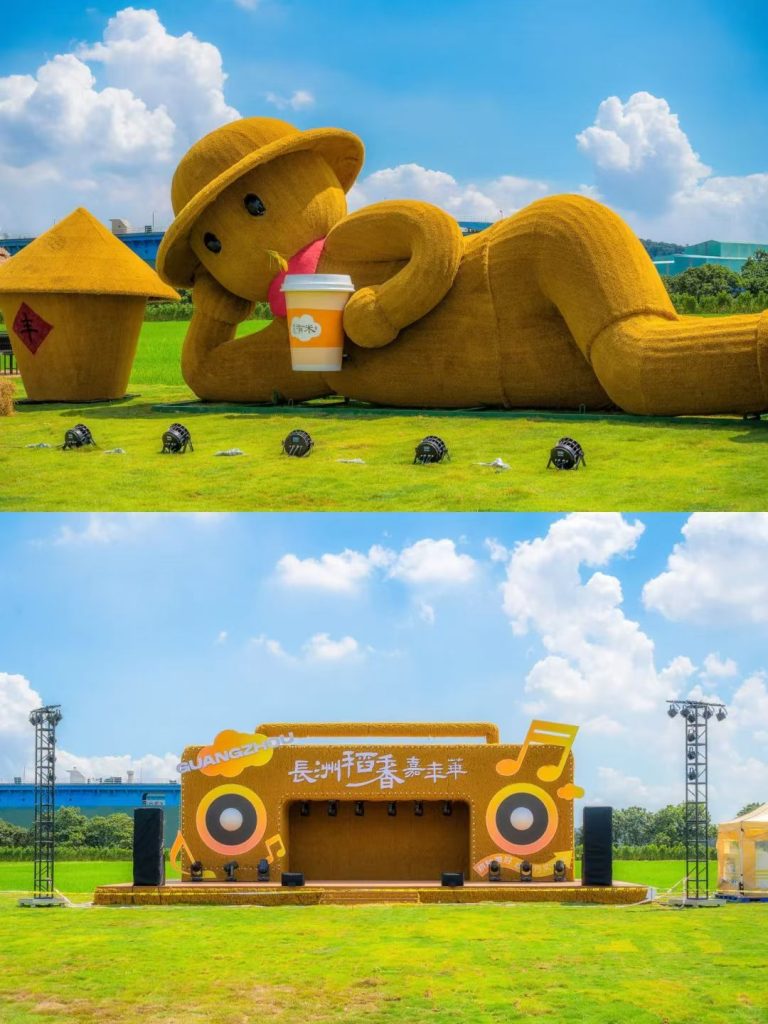
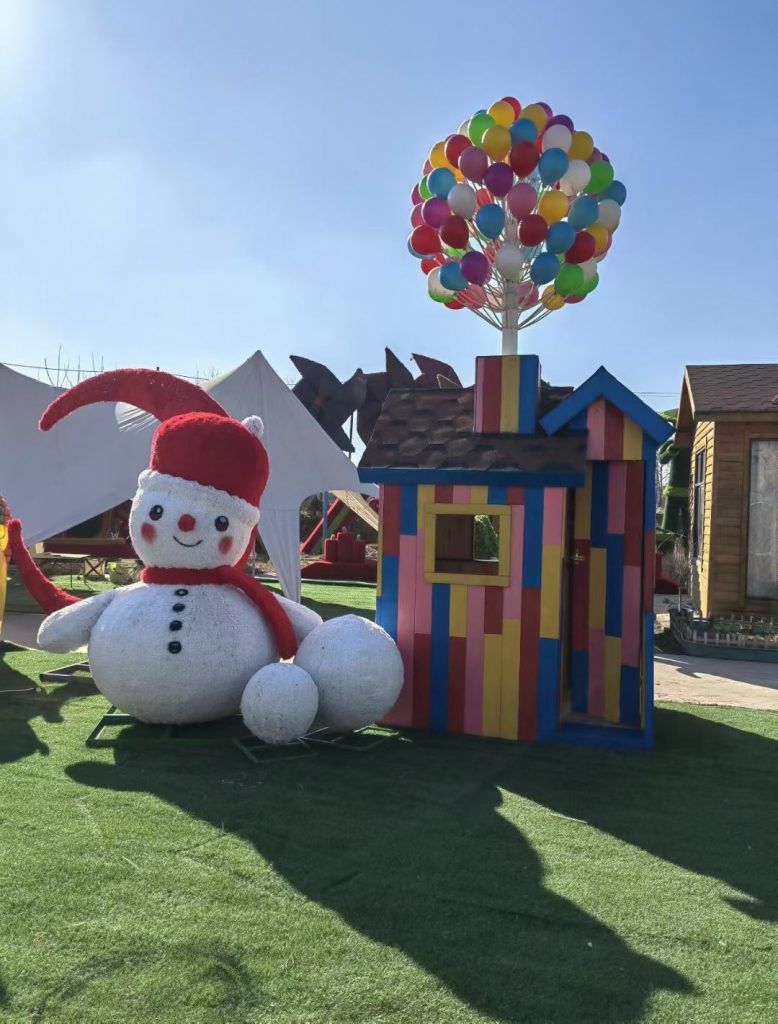
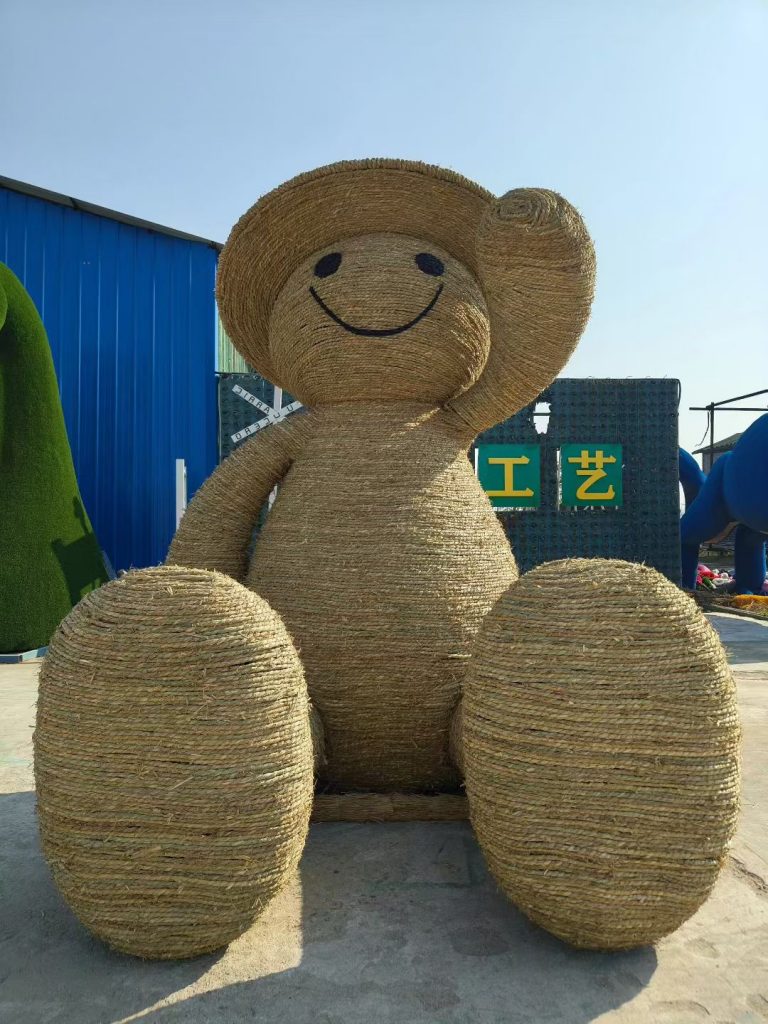
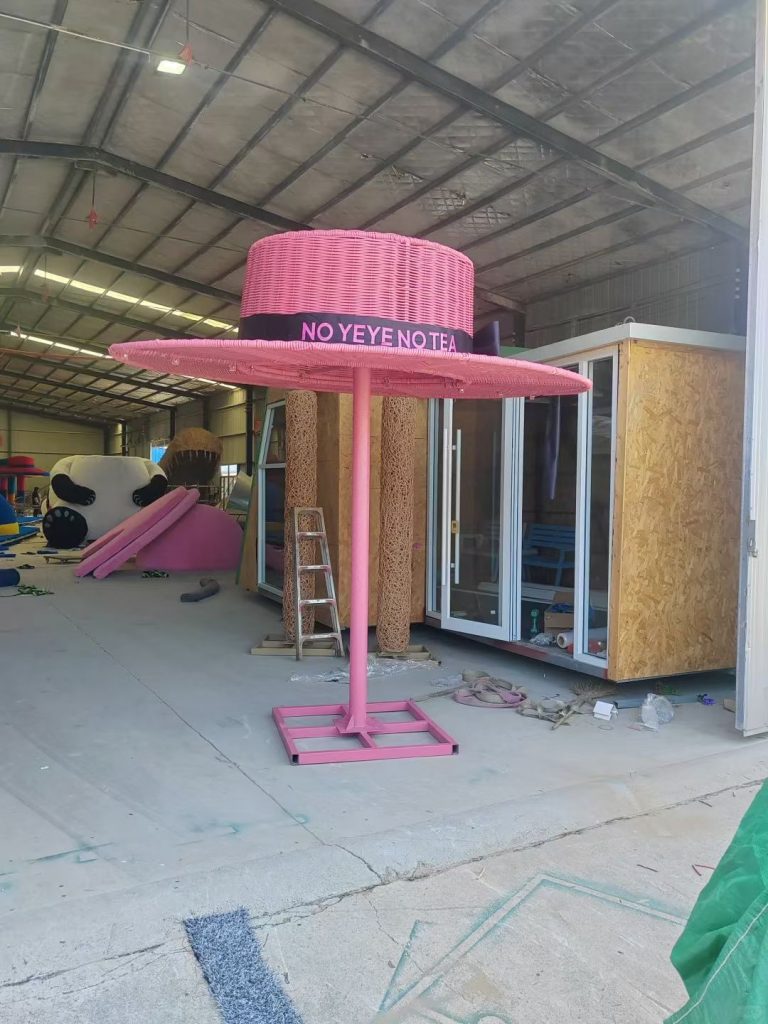
In the competitive realm of amusement park design, where every detail shapes visitor experience, landscape architecture has evolved beyond mere decoration—it has become a storytelling medium. Modern parks strive to create immersive worlds that linger in guests’ memories, blending fantasy, education, and emotional connection. Amid this pursuit, one art form has emerged as a standout solution: customizable handmade giant panda straw art. Combining the universal appeal of pandas, the tactile warmth of natural materials, and the flexibility of bespoke design, these installations are redefining how amusement parks craft unique landscapes. This article explores why handmade, customizable straw pandas are becoming indispensable to park designers, delving into their artistic value, functional adaptability, and role in building unforgettable guest journeys.
The Shift Toward Personalized Landscape Narratives
Amusement parks have long relied on iconic attractions—roller coasters, character meet-and-greets, themed restaurants—to draw crowds. Yet, as visitor expectations rise, a new priority has taken center stage: narrative cohesion. Guests no longer want to simply “visit” a park; they want to “step into” a story. A 2024 survey by the International Association of Amusement Parks and Attractions (IAAPA) revealed that 72% of visitors rank “immersive theming” as a top factor in choosing a park, with 65% willing to pay more for experiences that feel uniquely tailored.
This demand for personalization extends to landscape design. Generic statues or mass-produced decor fail to resonate; instead, parks seek art that reflects their brand identity, aligns with educational goals, and adapts to seasonal or event-driven themes. Enter handmade giant panda straw art—an art form that checks all these boxes. Unlike factory-made replicas, each piece is a collaboration between artists and park designers, allowing for precise alignment with the park’s vision.
Why Customization Matters: Tailoring Pandas to Park DNA
The giant panda, with its endearing appearance and global recognition, is already a powerful symbol. But customization elevates it from a generic mascot to a park-specific storyteller. Here’s how:
1. Theming Flexibility
Every amusement park has a unique identity—some focus on adventure (e.g., jungle expeditions), others on education (e.g., wildlife conservation), and many blend multiple genres. A handmade straw panda can be designed to reflect these themes. For an “Asian Adventure” zone, the panda might be depicted climbing a stylized bamboo structure, its pose conveying curiosity. For a conservation-themed park, it could sit beside a replica of a panda habitat, holding a sign with facts about habitat loss. Even subtle details—like incorporating park colors into the panda’s accessories (a scarf in the park’s signature hue)—strengthen brand consistency.
2. Spatial Adaptation
Amusement parks vary widely in size, layout, and terrain. A small family park may need a compact 8-foot panda for a courtyard, while a sprawling resort might require a 20-foot centerpiece for a main plaza. Customization allows artists to adjust scale, posture, and placement to fit any space. For example, a panda designed for a hillside might lean forward as if exploring the slope, while one in a flat garden could strike a playful pose with outstretched paws. This adaptability ensures the art feels integrated, not imposed.
3. Interactive Potential
Modern parks thrive on interactivity, and customized straw pandas can be designed to encourage guest participation. A panda with a hollow belly, for instance, could house a small exhibit on panda diets, inviting kids to “feed” it with toy bamboo. Another might have movable arms, allowing staff to pose it for photos during events. These features transform static art into dynamic experiences, boosting engagement and social media sharing.
The Art of Handmade: Why Craftsmanship Beats Mass Production
In an age of automation, handmade art carries a rare emotional weight. For amusement parks, which aim to create “wow” moments, the human touch in crafting a straw panda adds layers of authenticity that machines cannot replicate. Here’s what sets handmade pieces apart:
1. Meticulous Detail and Texture
Artisans spend hundreds of hours shaping each sculpture, using techniques passed down through generations of straw craft. Unlike fiberglass or plastic, straw’s natural flexibility allows for nuanced textures—fluffy fur on the panda’s cheeks, coarse strands for the bamboo it holds, even subtle shading to mimic sunlight filtering through leaves. This attention to detail makes the panda feel alive, encouraging guests to stop, observe, and connect.
2. Durability Through Expertise
Handmade does not mean fragile. Skilled craftsmen reinforce straw sculptures with hidden steel frames, ensuring they withstand weather, crowds, and daily wear. They also apply eco-friendly sealants (derived from plant resins) to protect against rain and UV damage, extending the sculpture’s lifespan to 3–5 years—far longer than many temporary decorations.
3. Collaboration-Driven Creativity
Unlike off-the-shelf products, handmade art is a dialogue. Artists work closely with park designers to refine concepts, sketch iterations, and troubleshoot challenges (e.g., how to make a large panda stable on uneven ground). This collaboration often leads to unexpected innovations—like integrating LED lights into the panda’s eyes for evening displays, or embedding speakers to play soft panda vocalizations.
The Making of a Handmade Giant Panda: A Glimpse into the Process
To appreciate the value of customization and craftsmanship, consider the journey of creating a single straw panda for an amusement park:
Step 1: Vision Alignment
The process begins with a meeting between park designers and the art studio. Designers share the park’s theme, target audience (families? thrill-seekers?), and desired location. For example, a park focusing on “family learning” might request a panda that looks approachable and educational.
Step 2: 3D Modeling and Sketching
Artists translate ideas into digital 3D models, adjusting proportions and poses until they match the park’s vision. Hand-drawn sketches add artistic flair—perhaps a playful tilt of the head or a bamboo stalk held at a jaunty angle.
Step 3: Frame Construction
A steel frame is built to match the 3D model’s skeleton. Craftsmen weld joints for stability and add crossbars to support heavy sections (like the panda’s torso).
Step 4: Straw Preparation
High-quality wheat straw is sourced locally (reducing carbon footprint) and cleaned, sorted by length, and sometimes dyed (for accents like pink paw pads). Thinner strands are reserved for fine details (eyes, nose); thicker ones for bulk (body, limbs).
Step 5: Layering and Shaping
Using non-toxic glue and natural twine, artisans attach straw to the frame, starting with the core structure and building outward. They layer strands to create depth—longer pieces for the back, shorter for the front—mimicking real fur. The face is sculpted last, with tiny adjustments to the eyes and mouth to convey emotion.
Step 6: Finishing Touches
The sculpture is sealed with a plant-based varnish, then inspected for gaps or weak spots. If requested, interactive elements (like a removable hat for seasonal changes) are added. Finally, it’s crated and shipped with instructions for installation.
Applications in Amusement Parks: From Entrances to Educational Zones
Customizable handmade pandas are versatile enough to enhance nearly any area of an amusement park. Here are common use cases:
1. Grand Entrances
A life-sized panda welcoming guests at the gate sets a friendly tone immediately. Placed on a bed of artificial grass with potted bamboo, it becomes a photo op that guests share online, acting as free marketing for the park.
2. Themed Land Zones
In a “Panda Village” area, multiple pandas could be arranged in a group—playing, eating, or napping—to create a lively scene. Smaller “baby panda” sculptures might dot the path, encouraging kids to hunt for them.
3. Educational Exhibits
Parks focused on conservation can pair a panda sculpture with informational panels about threats to wild pandas (habitat loss, climate change) and success stories (breeding programs). The handmade texture makes the panda feel like a “real” ambassador for its species.
4. Seasonal Events
During holidays, pandas can be dressed up: a Santa hat for Christmas, a pumpkin for Halloween, or a floral wreath for spring. Because the sculptures are handmade, adding these accessories is easy and reversible.
Sustainability: A Natural Fit for Green Parks
Amusement parks are increasingly prioritizing sustainability, and straw art aligns perfectly with this goal. Straw is an agricultural byproduct—using it diverts waste from landfills. It is also biodegradable, meaning the sculpture will decompose naturally at the end of its life (unlike plastic or metal). Many studios further reduce their impact by sourcing straw locally, using solar-powered workshops, and recycling water during the cleaning process. For parks seeking LEED certification or aiming to market themselves as “eco-friendly,” a handmade panda sculpture reinforces this commitment.
Case Study: A Park’s Transformation with a Custom Panda
Imagine a mid-sized amusement park struggling to differentiate itself from larger competitors. Its landscape was filled with generic fiberglass animals, and visitor surveys noted a lack of “memorable moments.” The park decided to commission a custom handmade panda for its central lake area.
The design team worked with artists to create a panda sitting on a rock, reaching for a fish in the lake (a playful nod to the park’s nearby aquarium). The sculpture stood 12 feet tall, with straw textured to look like wet fur after a swim. Local schoolchildren were invited to help paint the rock base, fostering community engagement.
The result? Within six months, social media posts tagged with the park’s hashtag increased by 80%, with many featuring the panda. Visitor surveys reported a 35% rise in “likelihood to recommend” the park, citing the panda as a top highlight. The sculpture also became a backdrop for wedding photos, generating additional revenue.
Choosing a Partner for Custom Handmade Art
For amusement parks considering this investment, selecting the right art studio is critical. Key questions to ask include:
-
Can you share examples of past park projects (without disclosing client names)?
-
How do you incorporate park themes into the design?
-
What materials and techniques do you use to ensure durability?
-
Do you offer post-installation support (e.g., repair kits)?
Conclusion: Handmade Pandas as Park Ambassadors
In an industry driven by innovation, customizable handmade giant panda straw art offers something rare: a blend of artistry, functionality, and emotional resonance. By tailoring each sculpture to a park’s unique story, artisans create more than decor—they create ambassadors. These pandas welcome guests, teach lessons, and spark joy, turning ordinary landscapes into unforgettable worlds.
As amusement parks continue to compete for attention, the parks that invest in personalized, handmade art will stand out—not just for their rides, but for their soul. And in a world craving connection, a friendly, handcrafted panda might be the most magical attraction of all.
Article link:https://www.vlefooena.com/customizable-handmade-giant-panda-straw-art-for-amusement-park-landscape-design


No reply content