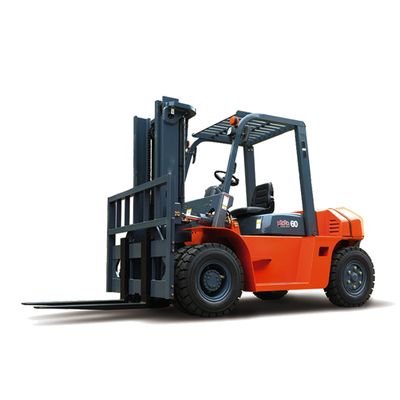
Electric vs Diesel Forklifts: Which Type Is Better for Your Business?
Choosing between an electric forklift and a diesel forklift is not simply a question of which machine has more power or which one costs less to purchase.
For importers, warehouse operators, distributors, logistics companies, manufacturers, and industrial businesses, the better choice depends on the working environment, load requirements, operating hours, floor conditions, ventilation, maintenance capability, energy costs, and total cost of ownership.
An electric forklift may be an excellent solution for warehouses, factories, retail distribution centers, and indoor operations. A diesel forklift may be more appropriate for heavy-duty outdoor applications, construction environments, yards, ports, and demanding material-handling operations.
The right decision should therefore be based on how the forklift will actually be used.
This guide compares electric and diesel forklifts from a practical purchasing perspective and explains what international buyers should consider before contacting a Chinese forklift manufacturer.
Electric vs Diesel Forklift: Quick Comparison
| Factor | Electric Forklift | Diesel Forklift |
|---|---|---|
| Indoor operation | Excellent | Usually less suitable |
| Outdoor operation | Suitable depending on model | Excellent |
| Noise level | Low | Higher |
| Local emissions | No exhaust emissions during operation | Produces exhaust emissions |
| Maintenance | Generally simpler | Generally more mechanical maintenance |
| Refueling | Battery charging or battery replacement | Diesel refueling |
| Continuous operation | Requires charging strategy | Easy refueling |
| Heavy-duty outdoor work | Model dependent | Excellent |
| Warehouse use | Excellent | Less suitable in enclosed spaces |
| Initial purchase price | Can be higher depending on battery | Often competitive |
| Long-term operating cost | Often attractive | Depends heavily on fuel and maintenance |
| Operator environment | Quieter | Noisier |
| Tight indoor spaces | Very suitable | Less suitable |
| Construction and yards | Depends on specification | Strong choice |
The table is only a starting point. Buyers should evaluate the actual specifications of the forklift rather than choosing solely according to the power source.
1. When Is an Electric Forklift a Better Choice?
Electric forklifts have become increasingly important for indoor material handling.
They are particularly suitable for businesses that operate:
- Warehouses
- Distribution centers
- Manufacturing facilities
- Retail logistics centers
- Cold-storage facilities
- Food and beverage facilities
- Pharmaceutical warehouses
- E-commerce fulfillment centers
- Indoor production plants
One of the biggest advantages is the absence of exhaust emissions during operation.
This can make electric forklifts more suitable for enclosed environments where ventilation and indoor air quality are important considerations.
Electric forklifts are also generally quieter than diesel models.
For warehouses where forklifts operate close to workers for many hours per day, reduced noise can be an important operational benefit.
2. When Is a Diesel Forklift a Better Choice?
Diesel forklifts remain highly relevant for demanding outdoor applications.
They are commonly considered for:
- Construction sites
- Building-material yards
- Steel handling
- Timber yards
- Outdoor warehouses
- Ports
- Industrial yards
- Heavy manufacturing
- Uneven outdoor surfaces
- Long continuous operating periods
The major advantage is the ability to refuel quickly.
A business that needs a forklift to operate for long periods without extended charging downtime may find diesel equipment easier to integrate into its operation.
Diesel forklifts can also be suitable for demanding environments where heavy loads, outdoor conditions, and long operating periods are common.
However, buyers should consider local emissions regulations and the operating environment before selecting a diesel model.
3. Electric Forklift vs Diesel Forklift for Warehouse Operations
For a typical indoor warehouse, an electric forklift is often the more logical starting point.
Warehouse operators usually care about:
- Noise
- Indoor air quality
- Turning radius
- Operating cost
- Maintenance
- Charging arrangements
- Operator comfort
- Floor protection
- Daily operating hours
Electric forklifts can work well in these conditions because they are quiet and produce no exhaust emissions during operation.
However, the battery becomes an important part of the purchasing decision.
A buyer should not simply ask:
“What is the price of the electric forklift?”
Instead, ask:
“What battery system, charger, charging time, operating time, and battery warranty are included?”
The battery can have a significant influence on the real cost of an electric forklift.
4. Electric Forklift vs Diesel Forklift for Outdoor Operations
Outdoor applications require a different evaluation.
Consider:
- Ground conditions
- Rain and moisture
- Dust
- Operating temperature
- Load weight
- Lifting height
- Tire requirements
- Daily operating hours
- Required travel distance
- Availability of charging infrastructure
Diesel forklifts can be advantageous when the machine operates continuously outdoors and rapid refueling is important.
Electric forklifts can also be used outdoors, but buyers should select a model designed for the specific environment rather than assuming that every electric forklift is suitable for outdoor industrial use.
5. Which Is Cheaper: Electric or Diesel Forklift?
There is no universal answer.
The purchase price depends on:
- Rated capacity
- Forklift configuration
- Battery type
- Battery capacity
- Charger
- Mast height
- Tire type
- Attachments
- Cabin configuration
- Safety equipment
- Brand requirements
- OEM customization
- Order quantity
For this reason, two forklifts with the same rated capacity can have significantly different quotations.
The correct comparison is not:
Electric forklift price vs diesel forklift price.
It is:
Total cost of ownership over the expected operating period.
A buyer should consider purchase cost, energy or fuel, maintenance, battery replacement, spare parts, downtime, labor, and resale value where relevant.
6. Battery Cost Is One of the Most Important Electric Forklift Factors
When purchasing an electric forklift, the battery should be treated as a major component rather than a minor accessory.
Ask the supplier:
- What battery technology is used?
- What is the battery capacity?
- How many hours can the forklift normally operate?
- How long does charging take?
- Is a charger included?
- What is the battery warranty?
- How many charging cycles are expected?
- Is a spare battery available?
- Can the battery be replaced easily?
- What happens when the battery reaches the end of its useful life?
For businesses operating multiple shifts, battery planning becomes particularly important.
For example, a company operating forklifts throughout the day may need:
- Multiple batteries
- Opportunity charging
- Battery swapping
- Additional charging stations
- Different operating schedules
Ignoring this issue can make an apparently inexpensive electric forklift more expensive to operate.
7. Diesel Forklift Fuel Costs Should Also Be Calculated
Diesel forklifts have their own ongoing operating expenses.
Buyers should consider:
- Diesel consumption
- Fuel prices
- Engine maintenance
- Oil changes
- Filters
- Cooling-system maintenance
- Exhaust-related components
- Tire wear
- Downtime
- Operator requirements
If a forklift operates many hours every day, fuel consumption can have a major impact on the long-term cost.
Therefore, comparing only the factory purchase price can lead to the wrong conclusion.
8. Maintenance: Electric vs Diesel
Electric forklifts generally have fewer traditional engine-related components.
A diesel forklift contains systems such as:
- Engine
- Fuel system
- Exhaust system
- Cooling system
- Lubrication system
- Transmission
- Filters
Electric forklifts have their own maintenance requirements, including:
- Battery
- Charger
- Electrical system
- Motors
- Hydraulic system
- Tires
- Brakes
- Steering components
Neither type is maintenance-free.
The important question is whether your business has access to the technicians, spare parts, tools, and service support required for the selected forklift.
9. Operating Environment Should Determine Your Choice
Instead of asking which forklift is universally better, start with the environment.
Choose electric first when:
- Most work is indoors
- Low noise is important
- Exhaust emissions are undesirable
- Charging infrastructure is available
- The operation has predictable working cycles
- The floor is relatively smooth
- Indoor air quality is important
Consider diesel first when:
- Most work is outdoors
- Heavy loads are common
- Long operating periods are required
- Fast refueling is important
- The working environment is demanding
- Charging infrastructure is difficult to install
- Uneven ground is common
The actual specifications still need to be checked before making the final decision.
10. Load Capacity Is More Important Than Fuel Type
A common purchasing mistake is choosing a forklift according to power source before determining the required capacity.
First calculate:
- Maximum load weight
- Typical load weight
- Load dimensions
- Load center
- Maximum lifting height
- Required travel distance
- Operating surface
- Attachment requirements
For example, a warehouse may normally move 2,000 kg loads but occasionally need to handle 2,500 kg.
That difference matters.
Forklift capacity is not simply the maximum number printed in a product name. Capacity can change according to load center, lifting height, mast configuration, and attachments.
This is why buyers should provide detailed load information when requesting quotations.
11. Lifting Height Can Change the Specification
The forklift must be evaluated according to both load capacity and lifting height.
A buyer should specify:
- Required lifting height
- Minimum lowered mast height
- Maximum overall height
- Warehouse door height
- Rack height
- Container height
- Working aisle width
A forklift that can lift the required weight may still be unsuitable if its mast configuration does not match the warehouse.
For importers, this information should be included in the initial inquiry.
12. Tire Selection Matters
Electric and diesel forklifts can use different tire configurations depending on the application.
Common considerations include:
- Solid tires
- Pneumatic tires
- Cushion tires
- Non-marking tires
Indoor warehouses may have very different requirements from construction sites or outdoor industrial yards.
Tire selection affects:
- Traction
- Ride comfort
- Floor protection
- Stability
- Maintenance
- Operating environment
Do not accept a standard configuration without checking whether it matches your actual working conditions.
13. Attachments Can Change the Forklift Requirement
Some businesses do not use standard forks.
They may require:
- Side shifters
- Fork positioners
- Bale clamps
- Paper roll clamps
- Carton clamps
- Rotators
- Specialized lifting attachments
Attachments can affect the effective capacity of a forklift.
They can also change the load center and overall machine configuration.
Therefore, if you need an attachment, tell the manufacturer before receiving a quotation.
14. OEM Forklift Requirements
International distributors and equipment brands may want to purchase forklifts under their own brand.
In that situation, ask about:
- Custom colors
- Logo placement
- Nameplates
- Packaging
- User manuals
- Product labels
- Control configuration
- Attachments
- Technical specifications
- Spare parts
- Warranty documentation
OEM requirements should be confirmed before production begins.
For larger projects, it is useful to establish a written specification sheet so that both buyer and manufacturer are working from the same technical requirements.
For buyers interested in customized equipment, Vlefooena also has information on custom forklift sourcing and OEM/ODM manufacturing.
15. Compare More Than the Forklift Price
When comparing quotations from different manufacturers, create a standardized comparison sheet.
| Item | Supplier A | Supplier B | Supplier C |
|---|---|---|---|
| Forklift type | |||
| Capacity | |||
| Load center | |||
| Lift height | |||
| Battery/fuel system | |||
| Mast | |||
| Tire type | |||
| Attachments | |||
| Charger | |||
| Warranty | |||
| Spare parts | |||
| MOQ | |||
| Lead time | |||
| Packaging | |||
| Incoterm | |||
| Shipping cost | |||
| Total landed cost |
This makes it much easier to identify whether two quotations are actually comparable.
16. Check the Manufacturer Before Placing an Order
A low quotation is not enough.
Before placing a large order, evaluate the supplier’s:
- Manufacturing capability
- Product range
- Quality-control process
- Production capacity
- Certifications
- Export experience
- Spare-parts availability
- Warranty policy
- Communication
- Lead time
- OEM capability
Buyers can also review the supplier’s other forklift-related information before making contact.
A practical example is the guide on How to Choose the Right Forklift Supplier for Your Material Handling Needs, which discusses equipment range, power-source options, customized solutions, after-sales support, spare parts, and safety considerations.
For supplier-specific information, buyers can also review the Guangzhou Forklift Manufacturing Factory supplier page.
17. Ask for a Complete Forklift Quotation
When contacting a Chinese forklift manufacturer, avoid sending only:
“I need a forklift. Please send price.”
Instead, provide a complete purchasing requirement.
For example:
Product: Electric forklift
Capacity: 3,000 kg
Load center: 500 mm
Lift height: 4,500 mm
Application: Indoor warehouse
Working hours: 8 hours/day
Quantity: 5 units
Tire: Non-marking
Attachment: Side shifter
Destination: Your country and port
Branding: OEM required / not required
Warranty: Please specify
Spare parts: Please provide options
The more complete the inquiry, the more useful the quotation will be.
18. What Should Importers Ask the Factory?
Before purchasing, ask these questions:
- Are you the manufacturer or a trading supplier?
- What forklift models do you currently produce?
- What is the rated capacity of the proposed model?
- What is the load center?
- What lifting heights are available?
- What battery or engine configuration is included?
- What is the normal operating time?
- What charging equipment is included?
- What tire options are available?
- What attachments can be supplied?
- What certifications are available for the target market?
- What is the warranty period?
- Which spare parts are recommended?
- What is the production lead time?
- What is the MOQ?
- Can the forklift be customized?
- What packaging is used for export?
- Which Incoterms can you offer?
- Can you provide a detailed quotation?
- Can you provide product specifications and technical documents?
These questions help transform a simple price inquiry into a meaningful supplier evaluation.
19. Electric vs Diesel Forklift: Which One Should You Buy?
There is no single answer for every business.
Electric forklifts are often better for:
- Indoor warehouses
- Distribution centers
- Manufacturing facilities
- Retail logistics
- Food-related facilities
- Quiet working environments
- Businesses prioritizing zero tailpipe emissions during operation
Diesel forklifts are often better for:
- Outdoor yards
- Construction
- Heavy industrial applications
- Long continuous operating periods
- Rougher working environments
- Operations where rapid refueling is important
The best forklift is the one that matches the actual working conditions rather than the one with the lowest initial quotation.
20. The Most Important Buying Principle
Do not choose a forklift based only on:
Electric vs diesel.
Choose based on:
Application + load + lifting height + operating hours + environment + maintenance + energy cost + total ownership cost.
This approach gives buyers a much more reliable basis for comparing manufacturers.
Forklift Buyer Checklist
Before placing an order, confirm:
- [ ] Required forklift type
- [ ] Rated capacity
- [ ] Load center
- [ ] Maximum lifting height
- [ ] Mast configuration
- [ ] Tire type
- [ ] Battery or engine specification
- [ ] Operating hours
- [ ] Charging or refueling requirements
- [ ] Attachments
- [ ] Safety equipment
- [ ] Operator environment
- [ ] Warranty
- [ ] Spare parts
- [ ] Certifications
- [ ] MOQ
- [ ] Production lead time
- [ ] Packaging
- [ ] Shipping terms
- [ ] Total landed cost
Frequently Asked Questions
Is an electric forklift better than a diesel forklift?
Not universally. Electric forklifts are often suitable for indoor and low-emission applications, while diesel forklifts can be better suited to heavy-duty outdoor operations.
Are electric forklifts cheaper to operate?
They can have lower operating and maintenance costs in some applications, but the result depends on electricity prices, battery costs, operating hours, maintenance, and the purchase price.
Are diesel forklifts suitable for warehouses?
They can be used in some warehouses, particularly where ventilation and local regulations permit it. However, electric forklifts are often more suitable for enclosed indoor environments.
Are electric forklifts suitable for outdoor use?
Some are. The buyer should confirm the forklift’s specifications, tires, protection level, battery system, ground conditions, and operating environment.
What is more important than forklift horsepower?
Rated capacity, load center, lifting height, stability, operating environment, and application requirements are generally more useful purchasing criteria than simply comparing engine or motor power.
Should I buy directly from a forklift manufacturer in China?
Direct manufacturer sourcing can be attractive for importers, distributors, and large-volume buyers, especially when OEM customization or long-term supply is required. However, the manufacturer’s actual capabilities should be evaluated before ordering.
How should I compare two forklift quotations?
Give both suppliers exactly the same specifications and compare the complete configuration, warranty, spare parts, lead time, trade terms, shipping cost, and estimated total landed cost—not only the unit price.
Conclusion
Electric and diesel forklifts serve different operating requirements.
Electric forklifts can be an excellent choice for warehouses, factories, distribution centers, and other indoor applications where low noise and no exhaust emissions during operation are important.
Diesel forklifts can remain a strong option for demanding outdoor environments, heavy-duty applications, and operations where rapid refueling and long continuous operation are priorities.
For international buyers, the smartest purchasing decision is not simply choosing the cheapest forklift or automatically choosing electric over diesel.
Instead, define your operating requirements, compare technical specifications, evaluate manufacturers, calculate total ownership costs, verify warranty and spare-parts support, and request a complete quotation.
Buyers looking for a Chinese forklift manufacturing partner can also review the Guangzhou Forklift Manufacturing Factory supplier profile and its related forklift resources on Vlefooena.


No reply content