
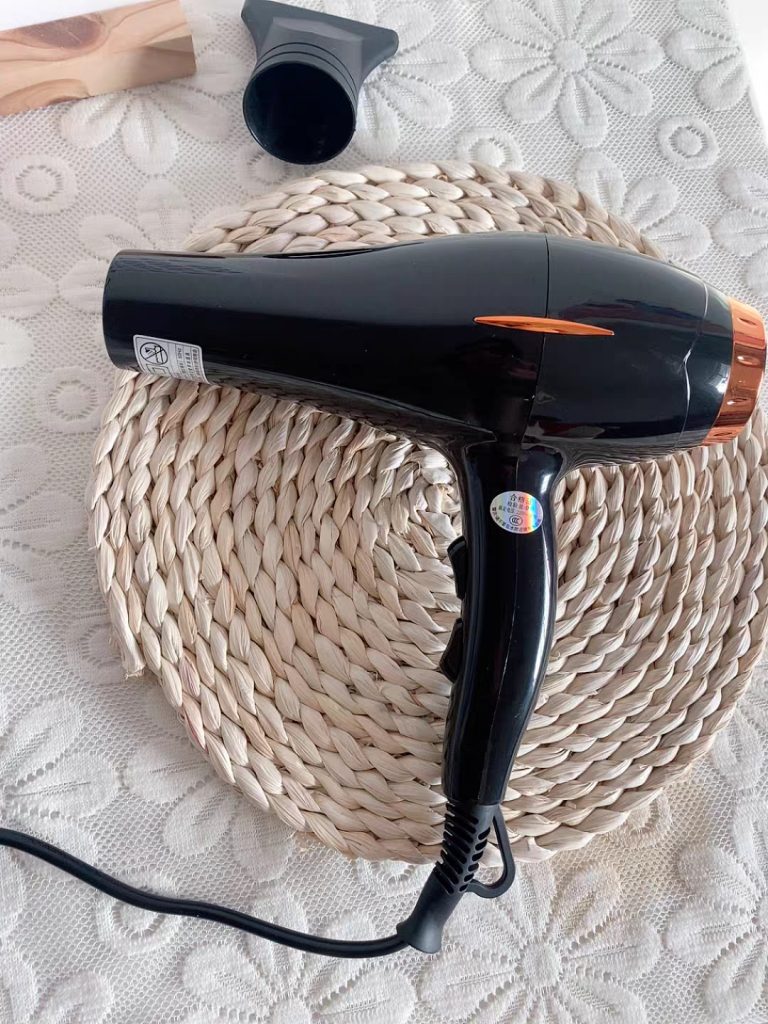
Hair Dryer OEM vs ODM: What Is the Difference for Buyers?
When buying hair dryers from a manufacturer, importers and brand owners often encounter two terms: OEM and ODM.
Both models can be used for private-label hair dryer production, but they are not exactly the same. The differences mainly involve product design, customization, development responsibilities, tooling, production costs, and the level of control the buyer has over the final product.
For businesses planning to launch a hair dryer brand, expand an existing product line, or purchase customized hair dryers in bulk, understanding OEM and ODM production can make the sourcing process much clearer.
This guide explains the practical differences between OEM and ODM hair dryer manufacturing and what buyers should consider before placing an order.
1. What Does OEM Mean in Hair Dryer Manufacturing?
OEM stands for Original Equipment Manufacturer.
In an OEM arrangement, the buyer generally provides the product requirements, design, branding specifications, or other technical instructions, while the manufacturer produces the product according to the agreed specifications.
Depending on the project, the buyer may provide:
- Product drawings
- Technical specifications
- Existing product samples
- Logo requirements
- Housing design
- Color requirements
- Packaging design
- Electrical specifications
- Performance requirements
The manufacturer then produces the hair dryers according to the confirmed requirements.
For example, a brand may already have its own hair dryer design and want a manufacturer to produce 5,000 units with its logo and packaging.
This is a typical OEM-type project.
2. What Does ODM Mean?
ODM stands for Original Design Manufacturer.
Under an ODM model, the manufacturer generally has an existing product design or product platform that the buyer can customize for its own brand.
The manufacturer may already have:
- Product structure
- Housing design
- Motor configuration
- Heating system
- Existing tooling
- Product testing
- Production process
- Packaging options
The buyer may then customize selected elements such as:
- Logo
- Color
- Packaging
- Labels
- Accessories
- Product configuration
For a company that wants to launch a hair dryer without developing an entirely new product from the beginning, ODM can be a practical manufacturing model.
3. OEM vs ODM: The Basic Difference
The simplest way to understand the difference is:
OEM: The buyer generally provides or controls the product design/specification, and the manufacturer produces it.
ODM: The manufacturer generally provides an existing design/product platform, and the buyer customizes it for its own brand.
The exact commercial and intellectual-property arrangements can vary from project to project, so buyers should confirm the details in writing before production.
4. OEM Hair Dryer Manufacturing
OEM production can provide greater control over product specifications.
A buyer may want a completely customized hair dryer with:
- Unique housing
- Specific dimensions
- Custom motor
- Specific heating system
- Custom buttons
- Special air outlet
- Unique color
- Custom cable
- Brand logo
- Customized packaging
This type of project usually requires more development work than simply adding a logo to an existing product.
Depending on the design, tooling or molds may also be required.
5. ODM Hair Dryer Manufacturing
ODM production usually starts with an existing manufacturer design.
For example, a manufacturer may offer several hair dryer models with different:
- Power ratings
- Motor types
- Colors
- Handle designs
- Speed settings
- Heat settings
- Accessories
- Packaging options
A buyer can select an existing model and customize the branding.
This can reduce product development requirements compared with creating an entirely new design.
For buyers who are new to the hair dryer market, an existing product platform may also simplify the initial sourcing process.
6. Which Model Requires More Product Development?
In general, a highly customized OEM project requires more product development than a standard ODM project.
An OEM project may involve:
- Product concept
- Industrial design
- Engineering design
- Prototype development
- Tooling
- Sample production
- Product testing
- Design modifications
- Final approval
- Mass production
An ODM project may start from an existing model and therefore require fewer development steps.
However, the actual process depends on how much customization the buyer requests.
7. OEM Does Not Always Mean a Completely New Hair Dryer
One common misunderstanding is that OEM always means designing a completely new product.
In practice, buyers may request different levels of customization.
For example:
Basic customization
- Logo
- Packaging
- Color
Medium customization
- Housing color
- Buttons
- Cable
- Plug
- Product configuration
- Accessories
Advanced customization
- New housing
- New tooling
- New motor configuration
- New heating system
- New internal structure
- Customized performance requirements
Therefore, buyers should describe exactly what they mean by “OEM” when contacting a manufacturer.
8. What Can Be Customized on an ODM Hair Dryer?
Depending on the existing product platform, ODM customization may include:
- Brand logo
- Product color
- Printing
- Packaging
- User manual
- Labels
- Plug
- Power configuration
- Accessories
Some manufacturers may also allow changes to selected components.
However, not every existing model can be customized in every way.
The buyer should ask the manufacturer for a list of available customization options before selecting the model.
9. MOQ Is an Important Consideration
Minimum order quantity, or MOQ, is one of the first commercial questions buyers should ask.
OEM projects may have different MOQ requirements depending on:
- Customization level
- Tooling requirements
- Material purchases
- Production setup
- Packaging
- Special components
ODM products may sometimes be easier to purchase in smaller quantities when the buyer uses an existing configuration.
However, MOQ is determined by the specific manufacturer and project.
Buyers should therefore request a written MOQ for the exact configuration they want.
If you are evaluating MOQ requirements, this related guide may also be useful:
What MOQ Should You Expect for Custom Hair Dryers?
10. Tooling and Mold Costs
Custom hair dryer housings may require new molds or tooling.
If a buyer requests a unique housing design, the manufacturer may need to develop new tooling.
The buyer should ask:
- Is a new mold required?
- What is the tooling cost?
- Who owns the tooling?
- How long will tooling take?
- How many units can the mold produce?
- What happens if the project is discontinued?
These questions should be answered before production begins.
Tooling ownership should also be clearly documented in the commercial agreement.
11. Product Design and Intellectual Property
For highly customized OEM projects, intellectual property can become important.
Buyers should clearly establish:
- Who owns the original design
- Who owns custom drawings
- Who owns custom molds
- Who owns the brand
- Whether the manufacturer can sell the same design to other customers
- Whether confidentiality obligations apply
The exact legal arrangement depends on the contract and applicable law.
For brand owners developing a unique product, it is advisable to address these issues before investing in tooling or product development.
12. OEM and ODM Logo Customization
Logo customization is one of the most common requests.
Possible methods include:
- Screen printing
- Laser marking
- Pad printing
- Embossing
- Metal labels
- Printed labels
The appropriate method depends on:
- Housing material
- Surface shape
- Logo size
- Desired appearance
- Production quantity
Buyers should provide the logo in an appropriate high-resolution format and confirm the final artwork before production.
13. Packaging Customization
Packaging can be customized under both OEM and ODM projects.
Possible packaging options include:
- Retail box
- Color box
- Gift box
- Customized carton
- Instruction manual
- Warranty card
- Product label
- Barcode
- QR code
If the hair dryer is intended for retail sale, packaging becomes part of the customer’s product presentation.
If it is intended for hotels or institutional procurement, simpler bulk packaging may be more practical.
For a detailed sourcing approach, buyers can also review:
How to Choose a Hair Dryer for Hotel and Hospitality Projects
14. Electrical Specifications Must Be Confirmed
OEM and ODM projects still require accurate electrical specifications.
Buyers should specify:
- Voltage
- Frequency
- Wattage
- Plug
- Motor configuration
- Heating configuration
For example:
1800W
220–240V
50Hz
Local-market plug
Do not assume that the same hair dryer configuration can automatically be sold in every country.
The target market should be confirmed before production.
15. Certifications and Compliance
Customization does not remove the need to meet applicable requirements in the destination market.
Depending on the target country, buyers may need specific documentation related to:
- Electrical safety
- Electromagnetic compatibility
- Product testing
- Energy requirements
- Materials
- Import compliance
The exact requirements vary by market and product configuration.
Before placing an OEM or ODM order, buyers should provide the destination market and ask the manufacturer which relevant documents are available.
A useful related guide is:
What Certifications Should a Hair Dryer Manufacturer Provide?
16. Sample Approval Is Essential
Whether using OEM or ODM production, buyers should normally approve a sample before mass production when the project is significant or customized.
The sample should be checked for:
- Appearance
- Logo
- Color
- Power
- Voltage
- Plug
- Motor performance
- Airflow
- Heat settings
- Speed settings
- Noise
- Cable length
- Packaging
For customized products, the approved sample should be clearly identified and retained as the production reference.
17. OEM vs ODM: Development Timeline
The development timeline depends on the level of customization.
A relatively simple ODM project may involve:
- Model selection
- Specification confirmation
- Logo design
- Packaging design
- Sample approval
- Production
A highly customized OEM project may involve:
- Product concept
- Industrial design
- Engineering
- Tooling
- Prototype
- Testing
- Sample modification
- Final approval
- Production preparation
- Mass production
Therefore, buyers should not assume that all “OEM” orders can be completed within the same timeframe.
18. How Cost Is Structured
The final cost of an OEM or ODM hair dryer can depend on:
- Product configuration
- Motor
- Heating element
- Housing
- Components
- Packaging
- Quantity
- Tooling
- Testing
- Certification requirements
- Shipping terms
An ODM product using an existing platform may have fewer development costs.
A customized OEM product may require additional engineering and tooling costs.
The buyer should request a detailed quotation that separates one-time development costs from the unit production price whenever possible.
19. What Should Buyers Ask a Manufacturer?
Before choosing an OEM or ODM production model, buyers can ask:
Product
- Which models are available?
- Which models support customization?
- What power options are available?
- What motor options are available?
- What voltage configurations are available?
Customization
- Can the logo be customized?
- Can the color be customized?
- Can the housing be changed?
- Can packaging be customized?
- Can accessories be changed?
Production
- What is the MOQ?
- What is the sample cost?
- What is the production lead time?
- Is tooling required?
Quality
- What testing is performed?
- What quality-control procedures are used?
- What documents are available?
Commercial
- What is the unit price?
- Are tooling costs separate?
- What are the payment terms?
- What are the packaging costs?
- What are the shipping terms?
20. Example OEM RFQ
A buyer can send a request such as:
Product: Hair Dryer
Production model: OEM
Quantity: 5,000 units
Power: 2000W
Voltage: 220–240V
Frequency: 50Hz
Plug: Target-market plug
Motor: Please provide available options
Logo: Customized
Housing color: Customized
Packaging: Customized retail box
Accessories: Please advise available options
Certifications: Please provide applicable documents
Sample: Required before mass production
Destination: Please quote according to the required delivery location
Lead time: Please advise
Tooling: Please confirm whether new tooling is required
This gives the manufacturer enough information to determine the production requirements.
21. Example ODM RFQ
An ODM inquiry may be simpler:
Product: Existing ODM Hair Dryer
Model: Please recommend available models
Quantity: 3,000 units
Power: 1800–2000W
Voltage: 220–240V
Plug: Target-market plug
Logo: Customized
Color: Please advise available options
Packaging: Customized
Required documents: Applicable certificates and test reports
Sample: Required
Destination: Please provide shipping options
Lead time: Please advise
This allows the manufacturer to recommend existing models rather than developing a completely new product.
22. Common Mistakes When Choosing OEM or ODM
Mistake 1: Assuming OEM and ODM mean the same thing
They represent different approaches to product development and customization.
Mistake 2: Discussing price before defining the specification
A price comparison is difficult when the product configuration has not been confirmed.
Mistake 3: Ignoring tooling ownership
If custom molds are involved, ownership should be clarified before payment.
Mistake 4: Not approving a sample
A written specification cannot always communicate every physical detail of a product.
Mistake 5: Not confirming certification requirements
The required compliance documents should be determined according to the destination market.
Mistake 6: Requesting too many customizations without considering MOQ
Every additional customization may affect development, tooling, production, or packaging requirements.
Frequently Asked Questions
Is OEM more customized than ODM?
OEM projects can involve a higher level of customization when the buyer provides or controls the product design. However, the actual customization level depends on the specific project.
Is ODM faster than OEM?
An ODM project may require less product development when an existing model is suitable. The actual production timeline depends on customization, sampling, packaging, testing, and other project requirements.
Can an ODM hair dryer have my own logo?
In many cases, existing hair dryer models can support private-label customization, but the available options and MOQ should be confirmed with the manufacturer.
Does OEM require a new mold?
Not necessarily. A new mold may be required if the buyer wants a substantially different housing or physical structure.
Who owns the mold in an OEM project?
This should be clearly agreed in the contract. Buyers should not assume ownership without written documentation.
Can the voltage and plug be customized?
Depending on the product design and target market, manufacturers may offer different voltage and plug configurations. Buyers should confirm compatibility before production.
Should I choose OEM or ODM?
The choice depends on the buyer’s product design, customization requirements, budget, development timeline, target market, and quantity. Buyers should first define these requirements and then discuss the appropriate production model with the manufacturer.
Conclusion
OEM and ODM are two different approaches to hair dryer manufacturing.
OEM projects can provide a higher level of control when a buyer has specific product requirements or wants to develop a customized product. ODM projects can use an existing manufacturer design and may reduce some of the development work required for a new product.
For either model, buyers should confirm the product specifications, MOQ, tooling, sample requirements, certifications, intellectual-property arrangements, packaging, production schedule, and total cost before placing an order.
A clear RFQ and approved production sample can help both the buyer and manufacturer establish the same understanding of the final product.


No reply content