
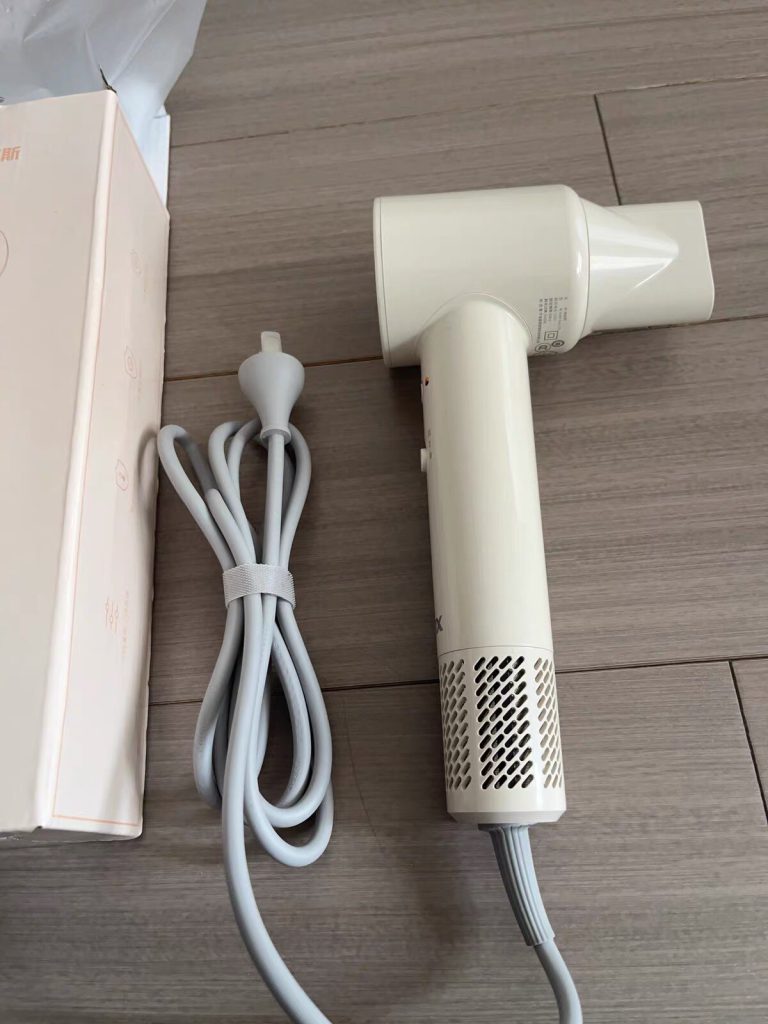

How Hair Dryer Packaging Affects Wholesale Shipping and Retail Sales
Hair dryer packaging is often treated as a simple protective layer around the product. For wholesale buyers, however, packaging can affect much more than product appearance.
The right packaging can reduce transportation damage, improve warehouse handling, support retail presentation, communicate product information, and help a brand create a consistent market identity.
For international buyers sourcing hair dryers from China, packaging also has a direct relationship with carton dimensions, shipping volume, storage requirements, and total landed cost.
A product may have an attractive factory price, but if the packaging is unnecessarily large, poorly designed, or unable to protect the product during international transportation, the actual purchasing cost and operational risk can increase.
This is why packaging should be discussed during product development rather than added as an afterthought.
1. Why Hair Dryer Packaging Matters
Hair dryers contain several components that may require protection during transportation.
The product can include:
- Plastic housing
- Motor
- Heating element
- Fan
- Electrical cable
- Plug
- Buttons or switches
- Nozzles
- Diffusers
- Other accessories
International shipments may pass through multiple handling points before reaching the final customer.
Products can be loaded into cartons, moved through warehouses, transported by truck, handled at ports, and delivered to distributors or retailers.
Packaging therefore needs to perform several functions simultaneously:
- Protect the product
- Keep accessories organized
- Identify the product
- Support transportation
- Facilitate warehouse handling
- Present the brand professionally
- Provide required product information
For wholesale buyers, these functions should be evaluated together.
2. Packaging Should Match the Sales Channel
There is no single packaging format suitable for every hair dryer.
The appropriate design depends on how the product will reach the customer.
Retail Packaging
Retail products normally need packaging that communicates the product’s main features.
The box may include:
- Product images
- Brand logo
- Model number
- Key functions
- Electrical information
- Instructions
- Barcode
- Warranty information
- Compliance information where applicable
The packaging is part of the retail presentation.
Wholesale Packaging
A wholesale buyer may prioritize protection, efficient carton packing, labeling, and transportation efficiency.
The packaging does not necessarily need the same level of retail presentation.
Hotel Packaging
Hotels purchasing large quantities may prefer simpler packaging because the products may be unpacked centrally before being distributed to rooms.
In this situation, protective bulk packaging may be more useful than expensive retail boxes.
E-Commerce Packaging
Products sold online may require additional protection because individual units can experience more handling during parcel delivery.
The packaging should be designed with the intended delivery environment in mind.
3. Packaging Dimensions Affect Shipping Costs
One of the most important reasons to optimize hair dryer packaging is shipping volume.
International freight can depend on:
- Weight
- Volume
- Number of cartons
- Transportation method
- Destination
- Shipping terms
A package that is unnecessarily large can increase the volume required to transport the same number of products.
For sea freight, carton dimensions can have a significant effect on the total cubic volume.
For air freight and express transportation, dimensional weight may also become important depending on the carrier and shipping arrangement.
Therefore, packaging design should not be separated from logistics planning.
4. Calculate the Carton Volume
For a rectangular carton, the basic volume calculation is:
Length × Width × Height
For example, if a master carton measures:
60 cm × 40 cm × 50 cm
the volume is:
60 × 40 × 50 = 120,000 cm³
Since:
1 CBM = 1,000,000 cm³
the carton volume is:
0.12 CBM
If a shipment contains 20 cartons:
0.12 × 20 = 2.4 CBM
This calculation gives buyers a basic understanding of how packaging dimensions influence shipment volume.
Actual freight calculations may use additional rules depending on the transportation method and carrier.
5. Smaller Packaging Is Not Always Better
Reducing packaging size can lower shipping volume, but packaging should not be made so small that the product becomes vulnerable to damage.
The goal is to find an appropriate balance between:
- Protection
- Product size
- Packaging material
- Carton dimensions
- Shipping efficiency
- Storage
- Presentation
A good packaging design uses space efficiently while providing enough protection around the product.
Simply reducing carton dimensions without testing the packaging can create more damage during transportation.
6. Protect the Hair Dryer During International Shipping
A hair dryer may travel a long distance before reaching its final market.
Packaging should therefore protect against normal transportation conditions such as:
- Vibration
- Impact
- Compression
- Handling
- Stacking
- Movement inside cartons
Internal packaging can be designed to prevent the product from moving excessively inside the box.
Depending on the product, protection may include:
- Molded inserts
- Paperboard supports
- Protective bags
- Foam components
- Corrugated partitions
- Protective sleeves
The best solution depends on the product design and transportation requirements.
7. Protect the Accessories
Hair dryers frequently include accessories such as:
- Concentrator nozzles
- Diffusers
- Storage bags
- Wall holders
- User manuals
These components should have their own designated positions within the packaging.
Loose accessories can move around during transportation and potentially scratch or damage the main product.
A well-designed package keeps the components organized and makes unpacking easier.
For OEM projects, the accessory list should already be documented in the product specification.
See:
What Should Be Included in a Hair Dryer OEM Specification Sheet
8. Packaging Materials Matter
Different packaging materials provide different levels of protection and presentation.
Common packaging components may include:
- Corrugated cardboard
- Paperboard
- Molded pulp
- Foam
- Plastic bags
- Protective films
- Printed cartons
- Shipping cartons
The choice should depend on the product, destination, transportation method, budget, and brand requirements.
For international shipments, packaging should also be practical for warehouse handling and carton stacking.
9. Retail Packaging Should Communicate Clearly
For retail products, packaging is often one of the first things a customer sees.
The front of the package may communicate:
- Brand
- Product name
- Product image
- Main feature
- Model
The sides or back can provide:
- Specifications
- Instructions
- Features
- Electrical information
- Manufacturer information
- Importer information where applicable
- Warnings
- Barcode
The exact labeling requirements depend on the target market.
A package should not be overloaded with unnecessary information.
The objective is to make the important information easy to understand.
10. Packaging and Brand Identity
For private-label hair dryers, packaging is an important part of the brand.
A consistent package can use:
- Brand colors
- Logo
- Typography
- Product photography
- Product naming
- Brand messaging
A buyer developing a new hair dryer brand should treat the packaging design as part of the overall product development process.
The logo and product appearance should be consistent across:
- Hair dryer
- Packaging
- User manual
- Website
- Product listing
- Marketing materials
This creates a more professional customer experience.
11. Custom Packaging for OEM Hair Dryers
OEM buyers can often customize packaging according to their market requirements.
Possible customization includes:
- Box size
- Box structure
- Printing
- Logo
- Color
- Product images
- Barcode
- Accessories
- User manual
- Labels
- Inner protection
However, custom packaging can require additional preparation.
The manufacturer may need:
- Artwork
- Printing specifications
- Packaging dimensions
- Sample approval
- Minimum order quantity
- Additional production time
Therefore, packaging requirements should be discussed before the final quotation.
For buyers developing a customized product, OEM hair dryer specification requirements should be confirmed together with packaging.
12. Master Carton Design for Wholesale Buyers
Individual product packaging is only one part of the logistics system.
Wholesale buyers should also pay attention to the master carton.
The master carton may contain multiple retail units.
Important information includes:
- Units per carton
- Carton dimensions
- Gross weight
- Net weight
- Carton material
- Carton markings
- Shipping marks
- Product model
- Quantity
- Destination information
The carton should be strong enough for normal transportation and stacking.
13. Optimize the Number of Units per Carton
The number of units packed into one carton affects:
- Carton size
- Carton weight
- Shipping volume
- Warehouse handling
- Loading efficiency
- Unpacking
A carton containing too few units may waste space.
A carton containing too many units may become too heavy or difficult to handle.
The manufacturer and buyer should therefore find a practical balance.
For warehouse operations, carton weight can be just as important as carton volume.
14. Packaging and Warehouse Storage
Packaging also affects how products are stored after arrival.
A distributor may need to store hundreds or thousands of units before selling them.
Consider:
- Carton dimensions
- Stackability
- Carton strength
- Product identification
- Barcode placement
- Warehouse shelf dimensions
- Pallet configuration
A packaging design that works well for transportation may still be inconvenient for warehouse operations.
For larger wholesale orders, buyers should consider the entire logistics chain.
15. Packaging and Palletization
Large shipments may be placed on pallets.
In this situation, carton dimensions can influence pallet efficiency.
An efficient packaging design can help reduce unused space.
The buyer can ask the manufacturer for:
- Cartons per pallet
- Units per pallet
- Pallet dimensions
- Total pallet weight
- Pallet height
- Palletized CBM
This information can help freight forwarders and warehouse teams plan transportation.
16. Packaging Should Be Tested Before Mass Production
Do not approve packaging based only on artwork.
The actual packaging should be evaluated.
Testing can include:
- Drop testing
- Compression testing
- Vibration testing
- Carton stacking
- Product movement
- Accessory protection
- Long-distance transportation simulation
The appropriate testing method depends on the product and transportation environment.
The objective is to identify weak points before thousands of packages are produced.
17. Product Packaging Should Match the Approved Sample
For OEM projects, packaging approval should happen together with product approval.
The buyer should check:
- Logo
- Color
- Text
- Product photographs
- Specifications
- Barcode
- Model number
- Accessories
- Packaging dimensions
- Printing quality
The final packaging should correspond to the approved artwork and specification.
A small error in a printed package can affect a large production run.
18. Avoid Incorrect Product Information
Packaging may contain important technical information.
This can include:
- Voltage
- Frequency
- Power
- Model number
- Manufacturer
- Importer
- Warnings
- Instructions
These details should be checked carefully before printing.
An incorrect voltage or wattage printed on thousands of packages can create significant problems.
The packaging information should match the actual product.
19. Consider the Destination Market
Packaging requirements can differ between countries.
Depending on the market, buyers may need to consider:
- Language
- Electrical information
- Product warnings
- Importer information
- Recycling information
- Barcode requirements
- Certification marks
- Consumer instructions
For international distribution, it may be necessary to create different packaging versions for different markets.
Do not assume that one package is automatically suitable for every country.
20. Multilingual Packaging
International products may need multiple languages.
A package sold across several markets could require different versions of:
- Product descriptions
- Safety warnings
- Operating instructions
- Technical information
However, adding too many languages can make packaging crowded.
An alternative is to use market-specific packaging or provide multilingual instructions separately.
The correct approach depends on the target markets and applicable requirements.
21. Packaging and Sustainability
Environmental considerations are becoming increasingly relevant to product packaging.
Buyers may request:
- Reduced plastic
- Recyclable paper
- Recycled materials
- Minimal packaging
- Paper-based protective inserts
- Reduced packaging volume
However, packaging reduction should not compromise product protection.
The best approach is to reduce unnecessary material while maintaining sufficient protection during transportation.
For large-volume wholesale projects, even a small reduction in packaging material per unit can become significant across thousands of products.
22. Packaging Cost Should Be Separated From Product Cost
When requesting an OEM quotation, ask the manufacturer to clarify packaging requirements.
For example:
Standard packaging: Included
Custom logo packaging: Additional cost
Custom printed box: Additional cost
Custom insert: Additional cost
Custom manual: Additional cost
The exact pricing structure depends on the manufacturer.
Separating these items makes the quotation easier to understand and helps buyers identify the actual cost of customization.
23. Packaging Can Affect the Final Wholesale Price
Packaging costs include more than the physical box.
The total packaging expense can involve:
- Materials
- Printing
- Artwork
- Inserts
- Labor
- Assembly
- Storage
- Packaging development
- Special production
- Minimum printing quantities
If the buyer wants premium packaging, the unit cost may increase.
For wholesale products competing primarily on price, simpler packaging may be more appropriate.
For premium retail products, better packaging may support a higher perceived value.
24. Packaging and E-Commerce Shipping
Online sales create additional packaging challenges.
A product shipped directly to an individual consumer may experience more delivery handling than a pallet shipment delivered to a distributor.
The package therefore needs to withstand parcel transportation.
E-commerce buyers should evaluate:
- Package dimensions
- Weight
- Protective structure
- Outer shipping carton
- Product presentation
- Return protection
A package that works well in a container shipment may not necessarily be ideal for individual parcel delivery.
25. How to Create a Hair Dryer Packaging Specification
A professional packaging specification can include:
Product: Hair Dryer
Model: OEM-HD-001
Individual Box: Required
Box Dimensions: To be confirmed
Material: Corrugated / paperboard / other
Printing: Full color / specified colors
Logo: Required
Product Image: Required
Barcode: Required
User Manual: Required
Accessories: Nozzle + diffuser
Inner Protection: Required
Master Carton: Required
Units Per Carton: To be confirmed
Carton Dimensions: To be confirmed
Gross Weight: To be confirmed
Net Weight: To be confirmed
Shipping Marks: Required
Destination Market: [Country]
Sample Approval: Required before mass production
This document can be included as part of the overall OEM specification.
26. Example of a Packaging Optimization Process
A professional project can follow this sequence:
Step 1: Confirm product dimensions.
Step 2: Confirm accessories.
Step 3: Develop the inner protection.
Step 4: Determine the individual box size.
Step 5: Calculate units per master carton.
Step 6: Calculate carton volume and weight.
Step 7: Check pallet configuration if required.
Step 8: Prepare packaging artwork.
Step 9: Produce a packaging sample.
Step 10: Test the package with the actual product.
Step 11: Approve the final packaging.
Step 12: Begin mass production.
This process can prevent packaging problems from appearing after production has already started.
27. Common Packaging Mistakes
Using an Oversized Box
Excessive empty space increases shipping volume and can allow the product to move inside the package.
Using Insufficient Protection
Reducing packaging material too aggressively can increase transportation damage.
Forgetting Accessories
Accessories should have dedicated positions so they do not damage the main product.
Printing Incorrect Specifications
Always verify voltage, frequency, power, model number, and other technical information before printing.
Designing Packaging Too Late
Packaging should be developed alongside the product, not after the product has already entered production.
Ignoring Master Cartons
Individual boxes may look good while the outer cartons are inefficient or difficult to handle.
Not Testing the Final Package
Artwork approval is not the same as physical packaging approval.
FAQ
Does hair dryer packaging affect shipping costs?
Yes. Packaging dimensions and weight can affect transportation costs. Larger cartons can increase shipping volume, while heavier packaging can increase weight-based costs.
Should wholesale hair dryers use retail packaging?
Not necessarily. Wholesale, hotel, and retail projects can have different packaging requirements. The packaging should match the sales channel.
Can I customize hair dryer packaging with my own logo?
Yes, many OEM manufacturers can provide customized boxes, logos, labels, manuals, and other packaging components depending on order quantity and production capability.
How many hair dryers should be packed in one master carton?
There is no universal number. The quantity should balance carton dimensions, total weight, protection, warehouse handling, and transportation efficiency.
Should I reduce packaging as much as possible?
Packaging should be optimized rather than simply minimized. The product still needs sufficient protection against normal transportation conditions.
Does packaging affect CBM?
Yes. The outer carton dimensions determine the carton volume, which contributes to the total shipment CBM for volume-based transportation.
Should I approve packaging before mass production?
Yes. Buyers should review and approve the actual packaging design and, where appropriate, a physical packaging sample before large-scale production.
What information should be printed on hair dryer packaging?
Depending on the market, packaging may include the brand, model, electrical specifications, product features, instructions, warnings, manufacturer or importer information, barcode, and applicable compliance information.
Is custom packaging expensive?
The cost depends on box structure, materials, printing, quantity, inserts, artwork, and other requirements. The manufacturer should provide a quotation based on the final packaging specification.
Can the same packaging be used in different countries?
Sometimes, but not always. Different markets may have different language, labeling, electrical, warning, and compliance requirements.
How can packaging reduce wholesale logistics costs?
Efficient packaging can reduce unnecessary carton volume, improve the number of units loaded per shipment, optimize pallet space, and reduce wasted storage space.
Conclusion
Hair dryer packaging is part of the overall product and logistics strategy, not simply a decorative box.
For wholesale buyers, good packaging should protect the product, organize accessories, support warehouse operations, use transportation space efficiently, and provide the information required by the target market.
For retail brands, packaging also contributes to product presentation and brand identity.
For hotel and commercial projects, simpler and more efficient packaging may be more practical than premium retail presentation.
For OEM buyers, the best approach is to develop the product and packaging together. Confirm the product dimensions, accessories, electrical information, branding, packaging structure, carton configuration, and destination-market requirements before mass production.
A well-designed package can reduce transportation risk, improve warehouse efficiency, support retail sales, and create a more consistent customer experience.
The key is to find the right balance between protection, presentation, packaging cost, shipping volume, and market requirements.


No reply content