
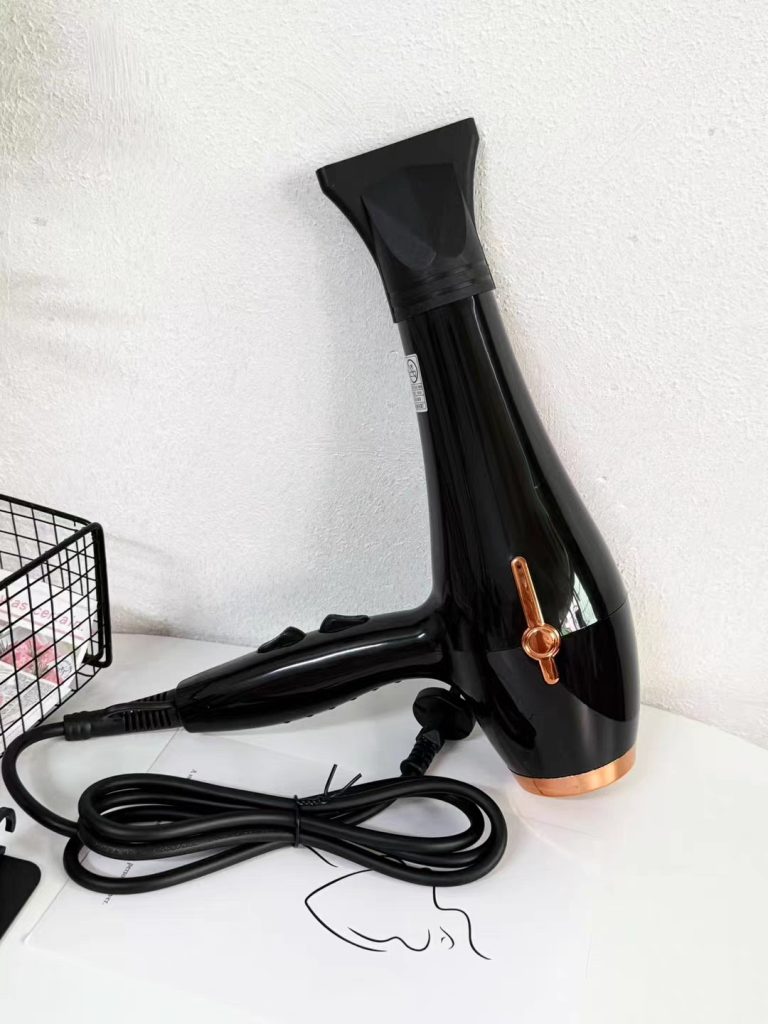
What Should Be Included in a Hair Dryer OEM Specification Sheet
A professional hair dryer OEM project should begin with a clear product specification sheet.
Whether the buyer is developing a private-label hair dryer, preparing a hotel project, launching a retail brand, or purchasing products for distribution, a detailed specification sheet helps both the buyer and manufacturer understand exactly what needs to be produced.
Without a written specification, important details can easily be misunderstood. A buyer may approve a product based on a photograph or sample while the manufacturer interprets the final requirements differently during mass production.
A good specification sheet reduces this risk by putting the important product requirements into one documented reference.
It can cover the electrical configuration, motor, heating system, airflow, controls, materials, appearance, accessories, packaging, branding, testing, and delivery requirements.
For buyers new to OEM sourcing, it is also useful to understand how to choose the right hair dryer factory for OEM production before finalizing the specification.
1. Start With the Intended Application
The first section of an OEM specification sheet should explain how the product will be used.
A hair dryer intended for:
- Household consumers
- Hotels
- Salons
- Spas
- Gyms
- Travel
- Professional stylists
- Retail distribution
may require different specifications.
For example, a hotel buyer may prioritize durability, simple operation, wall mounting, and consistent supply.
A professional salon may focus more heavily on motor performance, airflow, temperature control, ergonomics, and long operating periods.
A travel product may prioritize compact size, weight, and voltage flexibility.
The intended application gives the manufacturer context for the rest of the specification.
2. Product Model and Reference Number
Every OEM project should have a clear product identification system.
The specification sheet can include:
Product Name: Professional Hair Dryer
OEM Model: OEM-HD-001
Revision: V1.0
Date: [Date]
Buyer: [Company Name]
A model number helps prevent confusion when several products are being developed simultaneously.
If the manufacturer has its own internal model number, record that number as well.
When the design changes later, update the revision number rather than creating undocumented changes.
3. Electrical Specification
Electrical information is one of the most important sections.
The specification should clearly identify:
- Rated voltage
- Voltage range
- Frequency
- Rated power
- Plug type
- Cable length
- Cable specification
- Electrical protection requirements
For example:
Voltage: 220–240 V
Frequency: 50 Hz
Rated Power: 1,800 W
Plug: According to destination market
The actual values must be determined according to the target market and final product design.
For international OEM projects, never leave the destination market unspecified.
A manufacturer needs to know where the product will be sold before confirming the final electrical configuration.
For more information, see Hair Dryer Wattage Guide for Different Countries and Markets.
4. Motor Requirements
The motor directly affects airflow and overall product performance.
Depending on the product, the specification sheet may include:
- Motor type
- Motor speed
- Rated power
- Expected service life
- Airflow target
- Noise target
- Operating temperature
- Performance requirements
Not every project requires a specific motor model.
In some cases, the buyer may define the desired performance instead of specifying the exact internal component.
For example, the buyer might specify:
Strong airflow suitable for professional drying applications.
The manufacturer can then recommend an appropriate motor and fan configuration.
For high-performance products, however, the buyer may want more detailed engineering information.
5. Heating System
The heating system should also be documented.
Relevant requirements may include:
- Heating element type
- Heating power
- Temperature settings
- Temperature range
- Temperature stability
- Thermal protection
- Heating response time
A hair dryer should not simply generate maximum heat.
The heating system needs to work together with the airflow system so that the product provides controlled and consistent performance.
For professional or premium products, buyers may also specify particular temperature-control requirements.
6. Speed and Temperature Settings
The number and type of operating settings should be written clearly.
For example:
Speed: 2 settings
Heat: 3 settings
Cool Shot: Yes
Or:
Speed: 3 settings
Temperature: 3 settings
Cool Shot: Yes
The specification should also explain whether the buttons, switches, or electronic controls need a particular design.
For an OEM product, even small control details can affect the final user experience.
7. Airflow Requirements
Airflow is often more useful than wattage when evaluating actual drying performance.
The specification sheet can define:
- Airflow target
- Air speed
- Air outlet design
- Nozzle requirements
- Diffuser compatibility
- Air inlet design
If the buyer has a specific performance target, it should be stated clearly.
If the buyer does not have engineering specifications, the manufacturer can provide a sample for testing.
The important point is to establish a measurable reference whenever possible.
8. Noise Requirements
Noise can be especially important for hotel, salon, spa, and premium consumer products.
If low noise is a priority, include a noise requirement in the specification.
For example:
Low-noise operation required.
For a more technical specification, the buyer may define a target sound-pressure level under a specified testing condition.
The manufacturer should then confirm whether the product can meet that requirement.
Noise should be tested on the actual sample rather than judged from photographs or product descriptions.
9. Product Dimensions
The specification should record the physical dimensions of the product.
Useful measurements include:
- Overall length
- Overall width
- Overall height
- Handle dimensions
- Folded dimensions, if applicable
- Nozzle dimensions
- Mounting dimensions
Dimensions matter for:
- Packaging
- Storage
- Shipping
- Hotel installation
- Retail display
- Product photography
- Mold development
If the product is intended for a wall-mounted installation, mounting dimensions should be documented separately.
10. Product Weight
Weight can affect both shipping cost and user comfort.
For handheld products, excessive weight can make the hair dryer uncomfortable during use.
For travel products, low weight may be a major selling point.
For large international orders, product weight also contributes to logistics calculations.
The specification should distinguish between:
- Net product weight
- Gross packaged weight
- Carton weight
These values should not be treated as interchangeable.
11. Housing Material
The specification should identify the required material where appropriate.
Possible considerations include:
- Housing material
- Handle material
- Heat-resistant components
- Surface finish
- Internal insulation materials
For an OEM product, material requirements may be dictated by:
- Target price
- Appearance
- Heat resistance
- Durability
- Weight
- Manufacturing process
If the buyer does not have a specific material requirement, the manufacturer can recommend a suitable option based on the product’s intended use.
12. Product Color and Surface Finish
Color is an important part of private-label development.
The specification should identify:
- Main body color
- Handle color
- Button color
- Logo color
- Surface finish
- Gloss or matte finish
For brand consistency, a standardized color reference may be preferable to a general description such as “dark blue.”
If the buyer already has brand guidelines, those specifications should be supplied to the manufacturer.
13. Logo and Branding
OEM branding should be documented separately.
The specification may include:
Logo: Required
Logo Position: Handle / Housing
Logo Method: Printing / Laser / Other
Logo Color: [Specify]
The buyer should provide the manufacturer with the correct artwork.
Common file formats may include vector artwork such as AI, EPS, or SVG, depending on the manufacturer’s production process.
The final logo size and position should be confirmed on a sample before mass production.
14. Packaging Requirements
Packaging is often overlooked during product development.
An OEM specification should define:
- Individual box
- Inner carton
- Master carton
- Packaging material
- Printing
- Product protection
- User manual
- Accessories
- Barcode
- Labels
- Shipping marks
For retail products, packaging is part of the product presentation.
For hotel projects, packaging may be simpler, especially when the product is shipped in bulk.
The packaging should also provide sufficient protection for international transportation.
15. Accessories
The specification should list every accessory included with the product.
For example:
- Concentrator nozzle
- Diffuser
- Storage bag
- Wall holder
- User manual
- Cleaning accessory
- Spare filter
Do not simply write “standard accessories.”
Different manufacturers may interpret this differently.
Write the exact accessory list.
16. Cable and Plug Specification
Cable requirements should be clearly documented.
Consider:
- Cable length
- Cable material
- Cable diameter
- Plug type
- Plug rating
- Cable color
- Strain relief
- Swivel design, if applicable
For hotel and commercial applications, cable durability can be particularly important because the product may be used frequently.
The final cable and plug configuration should correspond to the destination market.
17. Safety and Protection Requirements
Depending on the target market and product design, the specification can include requirements for:
- Overheating protection
- Thermal cutoff
- Electrical insulation
- Motor protection
- Temperature control
- Safety switch
- Other applicable protection systems
The exact requirements should be determined according to the product design and destination-market regulations.
A buyer should not assume that a generic safety statement is sufficient.
Ask the manufacturer to provide the relevant technical documentation for the exact model being supplied.
18. Certification and Compliance
Certification requirements should be considered before production.
The specification sheet can include:
Target Market: [Country / Region]
Required Documentation: [Applicable Documents]
The buyer should then confirm which certifications or compliance documents are required for the destination market.
It is important to verify that the documents correspond to the actual product model and electrical configuration.
For additional guidance, see What Certifications Should Hair Dryer Buyers Ask a Manufacturer For?.
19. Quality-Control Requirements
The specification sheet should describe the buyer’s quality expectations.
Possible inspection items include:
- Appearance
- Color
- Logo position
- Dimensions
- Weight
- Electrical performance
- Airflow
- Heating
- Noise
- Switch operation
- Cable
- Plug
- Accessories
- Packaging
For large orders, the buyer may also establish an inspection procedure before shipment.
The more clearly the quality requirements are documented, the easier it is to identify whether the finished goods match the approved specification.
20. Sample Approval
An OEM project should have a clear sample approval process.
The sequence can be:
Initial concept → Factory sample → Buyer testing → Revision → Final sample → Approval → Mass production
Do not approve mass production based only on photographs if physical performance is important.
The final approved sample should be identified and retained as a reference.
If changes are made after approval, document them in the specification revision.
21. Production Quantity and MOQ
The specification should identify the expected quantity.
For example:
Initial Order: 1,000 units
Expected Annual Demand: 5,000 units
This information can help the manufacturer determine pricing and production planning.
For custom products, MOQ may depend on:
- Custom color
- Packaging
- Logo
- Mold
- Components
- Printing
- Production setup
Buyers should therefore discuss MOQ at the beginning of the project rather than after the product has already been designed.
22. Production Schedule
Include the expected timeline in the OEM specification.
Important milestones may include:
- Sample completion
- Artwork approval
- Packaging approval
- Production start
- Quality inspection
- Final packing
- Shipment
If the product is required for a hotel opening or retail launch, communicate the deadline early.
Custom components and packaging can increase the overall production time.
23. Carton and Shipping Information
For international buyers, shipping information is also useful.
The manufacturer should provide:
- Units per carton
- Carton dimensions
- Gross weight
- Net weight
- Number of cartons
- Loading information
This information helps freight forwarders calculate shipping requirements.
It can also help buyers compare the logistics cost of different product configurations.
24. Warranty and After-Sales Requirements
An OEM specification sheet can include after-sales requirements.
For example:
- Warranty period
- Replacement policy
- Spare parts
- Technical support
- Defective-unit handling
- Documentation
- Reorder support
The buyer should clarify whether warranty arrangements cover the complete product or specific components.
For large hotel or commercial projects, replacement procedures should be discussed before the first shipment.
25. Create One Final Master Specification
After all requirements are confirmed, create one master specification.
It should include:
- Product identification
- Application
- Electrical configuration
- Motor
- Heating system
- Airflow
- Controls
- Dimensions
- Weight
- Materials
- Color
- Logo
- Accessories
- Packaging
- Certification
- Quality requirements
- Sample approval
- Quantity
- Production schedule
- Shipping information
- Warranty
This document becomes the central reference for the OEM project.
It can also be updated when the product is revised.
Example Hair Dryer OEM Specification
A basic specification could look like this:
Product: Professional Hair Dryer
Application: Hotel / Retail / Professional Use
Model: OEM-HD-001
Voltage: 220–240 V
Frequency: 50 Hz
Power: 1,800 W
Speed: 2 settings
Temperature: 3 settings
Cool Shot: Yes
Motor: Manufacturer recommendation subject to sample approval
Airflow: To be confirmed through sample testing
Noise: Low-noise design required
Cable: Custom length
Plug: Destination-market specification
Color: Custom
Logo: Custom
Accessories: Concentrator nozzle + user manual
Packaging: Custom printed box
Quantity: 2,000 units
Destination: [Country]
Quality Control: Appearance + electrical + functional inspection
Sample: Required before mass production
This is only an example. The final values should be determined according to the buyer’s actual requirements.
Common Mistakes to Avoid
Mistake 1: Only specifying the product appearance
A beautiful sample does not guarantee that the mass-produced product will meet the required electrical or performance specifications.
Mistake 2: Using “standard specification”
Different factories may have different interpretations of standard specifications.
Mistake 3: Ignoring the destination market
Voltage, frequency, plug, labeling, and compliance requirements should be considered before production.
Mistake 4: Changing requirements after production begins
Late changes can increase cost and delay delivery.
Mistake 5: Approving the sample without documenting it
The approved sample should be connected to a written specification.
Mistake 6: Comparing prices without comparing specifications
Two quotations may represent different products.
Mistake 7: Forgetting future reorders
If the product will be purchased repeatedly, document the exact model and configuration for future orders.
FAQ
What is a hair dryer OEM specification sheet?
It is a written document that defines the product requirements for an OEM project, including electrical specifications, performance, materials, appearance, branding, packaging, quality requirements, and delivery information.
Why is an OEM specification sheet important?
It gives the buyer and manufacturer a common reference and reduces misunderstandings during sampling, production, inspection, and future reorders.
What electrical information should be included?
At minimum, specify the target voltage, frequency, rated power, plug type, and cable requirements.
Should the buyer specify the exact motor?
Not always. Buyers without engineering requirements can specify desired performance and ask the manufacturer to recommend a suitable motor. Buyers with technical requirements may specify a particular motor configuration.
Should I include packaging in the specification?
Yes. Packaging should be documented if it is part of the OEM project. Include box type, printing, materials, accessories, labels, and shipping cartons where applicable.
Can the specification sheet include a custom logo?
Yes. Logo position, size, color, application method, and artwork should be documented and approved before mass production.
Should a sample be approved before mass production?
Yes. For most customized projects, the buyer should evaluate and approve the final sample before authorizing mass production.
What happens if the manufacturer changes a component?
The buyer should be informed before a material or component change that could affect performance, appearance, safety, or compliance. Significant changes should be documented in a revised specification.
How should future reorders be handled?
Keep the approved model number, specification, sample reference, packaging artwork, logo files, and other important production information. This makes future orders easier to reproduce consistently.
Can one specification be used for every country?
Not always. Electrical, plug, labeling, certification, and other market-specific requirements may differ. International brands should maintain country-specific requirements where necessary.
Conclusion
A successful hair dryer OEM project starts with a clear definition of the product.
The specification sheet should cover much more than the product’s appearance. Electrical configuration, motor performance, heating, airflow, controls, materials, dimensions, branding, packaging, accessories, safety, certification, quality control, sample approval, and future supply should all be considered.
The document also provides an important bridge between product development and mass production.
For buyers, a detailed specification makes supplier quotations easier to compare and helps prevent unexpected changes.
For manufacturers, a clear specification provides the technical and commercial information needed to prepare samples and production accurately.
Before approving an OEM hair dryer order, make sure the final product is represented by one complete, written specification and an approved sample. This simple step can make the entire sourcing process more organized and easier to manage.


No reply content