
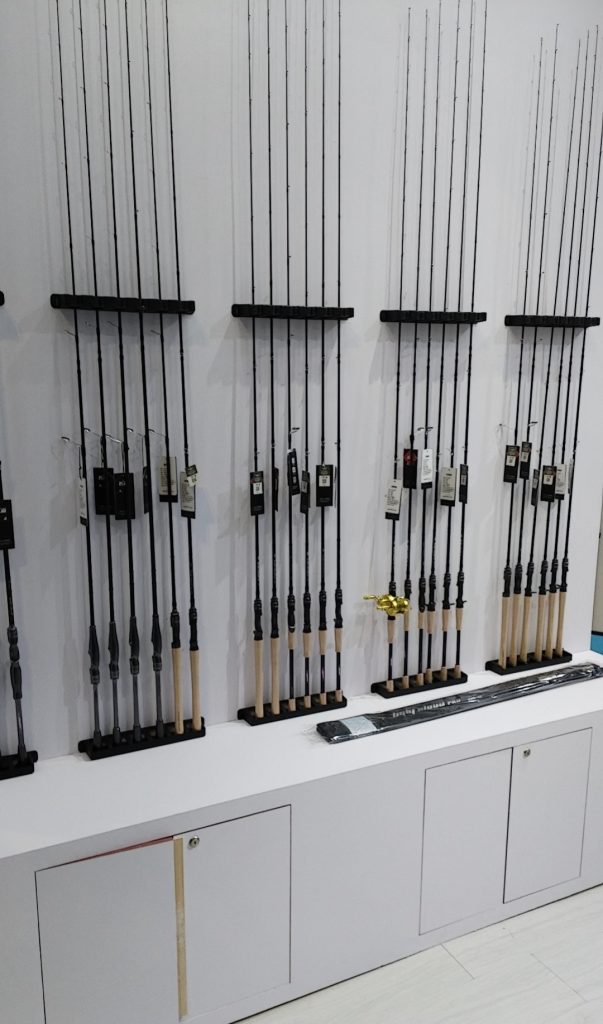
How to Choose the Right Fishing Rod Length for Different Fishing Markets
Fishing rod length is one of the first specifications wholesale buyers should define when sourcing fishing rods from China. A rod that is suitable for a compact freshwater fishing setup may not be appropriate for surf fishing, while a long-distance casting rod may be unsuitable for customers who prioritize portability.
For importers, distributors, retailers, and private-label brands, choosing the right rod length is therefore not simply a technical decision. It can affect product positioning, customer demand, packaging, transportation, and the overall fishing experience.
This guide explains how fishing rod length affects product selection and how wholesale buyers can choose appropriate lengths for different fishing markets.
1. Why Fishing Rod Length Matters
The length of a fishing rod influences casting distance, handling, leverage, portability, and the way the rod performs in different fishing environments.
For wholesale buyers, rod length also affects the physical dimensions of the finished product and its packaging. Longer rods may require different packaging solutions and can have different transportation requirements from shorter travel or telescopic rods.
When evaluating a fishing rod specification, length should therefore be considered together with:
- Rod power
- Rod action
- Rod material
- Section count
- Lure rating
- Line rating
- Handle configuration
- Target fishing application
For a broader specification checklist, see What Specifications Should Buyers Provide When Ordering Fishing Rods in Bulk?.
2. Common Fishing Rod Lengths
Fishing rods are manufactured in many different lengths. Common commercial specifications may include approximately 1.5 m, 1.8 m, 2.1 m, 2.4 m, 2.7 m, 3.0 m, and longer configurations.
These numbers should not be treated as universal recommendations because the appropriate length depends on the fishing method and target market.
For wholesale sourcing, buyers should ask the manufacturer which standard lengths are available for the specific rod model rather than assuming that every length can be produced with identical performance.
3. Short Fishing Rods: When Are They Suitable?
Shorter fishing rods can be useful where compact handling and portability are important.
Potential applications include:
- Small freshwater environments
- Fishing from confined spaces
- Travel-oriented products
- Beginner fishing products
- Portable fishing kits
- Specific lightweight fishing applications
A shorter rod can be easier to maneuver in areas with trees, structures, narrow banks, or limited casting space.
For retail buyers, short rods may also be attractive for customers who prioritize convenience and portability over maximum casting distance.
4. Medium-Length Fishing Rods
Medium-length rods are often considered for general-purpose fishing products because they can provide a balance between handling and casting capability.
Depending on the model and application, lengths around 2.1 m to 2.7 m may be considered for a variety of freshwater and general fishing products.
However, wholesale buyers should not select a length based only on the number itself.
The buyer should also confirm:
- Rod type
- Power
- Action
- Lure range
- Line range
- Target species
- Fishing environment
A 2.4 m rod designed for one fishing technique may have very different characteristics from a 2.4 m rod designed for another.
5. Long Fishing Rods
Longer fishing rods can provide advantages in applications where casting distance, line control, or leverage is important.
They may be considered for:
- Shore fishing
- Surf fishing
- Open-water applications
- Long-distance casting
- Fishing environments where additional reach is useful
However, longer rods can also be more difficult to transport, store, and handle.
For wholesale products, packaging dimensions should therefore be considered before finalizing the design.
6. Fishing Rod Length for Travel Products
Travel fishing rods require a different approach because the collapsed length can be just as important as the extended length.
For a travel-oriented product, buyers should request both:
- Extended rod length
- Collapsed rod length
They should also confirm the number of sections and the proposed carrying case or protective packaging.
A rod that has a convenient extended length but an inconvenient collapsed length may not be suitable for customers who frequently travel by air, train, car, or public transportation.
When comparing samples, measure the actual collapsed length rather than relying only on catalog descriptions.
7. Telescopic Fishing Rod Length
Telescopic fishing rods are designed to collapse into a shorter package by using multiple overlapping sections.
This makes them attractive for buyers targeting customers who value portability.
However, telescopic construction requires buyers to evaluate more than the overall length.
Important inspection points include:
- Collapsed length
- Extended length
- Section construction
- Section fit
- Locking or friction performance
- Overall weight
- Guide arrangement
- Finish quality
Buyers should test repeated extension and collapse during sample evaluation if the product is intended for frequent travel use.
8. How Rod Length Affects Casting
Rod length can influence casting performance, but longer does not automatically mean better.
A longer rod may provide additional leverage and can be useful when greater casting distance is required. However, the actual result also depends on rod action, power, lure weight, line, reel, angler technique, and overall rod construction.
For this reason, wholesale buyers should avoid marketing claims such as “longer rod equals longer casting” without considering the complete product specification.
When developing a product for a specific market, the manufacturer should be given the intended fishing application rather than only a requested rod length.
9. Rod Length and Power Should Be Considered Together
Length and power describe different characteristics of a fishing rod.
Two rods can have the same length but different power ratings and therefore serve different applications.
For example, a buyer comparing 2.4 m rods should not stop at the length. The buyer should also compare the power rating, action, lure range, line range, blank construction, and intended fishing method.
Our guide Fishing Rod Power and Action Explained for Wholesale Buyers provides additional information about these specifications.
10. Rod Length and Rod Action
Action describes how a rod bends under load, while length describes the physical size of the rod.
Fast, moderate, and slow actions can produce different characteristics even when two rods have the same length.
For wholesale buyers, the combination of length and action can be more meaningful than either specification by itself.
When requesting a quotation, specify both whenever possible.
11. How to Choose Fishing Rod Length for Different Markets
Freshwater Recreational Market
For general freshwater fishing, buyers may consider medium-length rods because they can provide a practical balance between handling and casting.
The final length should be selected according to the target species, fishing location, and intended rod type.
Travel Fishing Market
Travel customers generally place greater emphasis on portability.
Multi-section and telescopic products may therefore be attractive, but buyers should pay close attention to collapsed dimensions and construction quality.
Shore and Surf Fishing Market
Shore fishing products may require longer rods where additional casting distance and reach are important.
Packaging and transportation should be considered carefully when sourcing longer rods for international distribution.
Beginner Market
Beginner customers may benefit from a product that is easy to handle and not unnecessarily specialized.
For this segment, buyers should consider the complete combination of length, power, action, weight, and intended fishing application.
Premium Fishing Market
Premium buyers may pay more attention to detailed specifications, balance, weight, blank construction, components, and finishing quality.
In this segment, rod length should be developed as part of the complete product specification rather than treated as a standalone feature.
12. How Rod Length Affects Wholesale Packaging
Rod length can have a direct effect on packaging and logistics.
Before confirming a bulk order, buyers should ask the manufacturer for:
- Product dimensions
- Collapsed dimensions
- Individual packaging size
- Carton dimensions
- Units per carton
- Gross carton weight
- Net carton weight
This information can help importers estimate transportation requirements and compare suppliers more accurately.
Long rods may require special carton designs or protective packaging to reduce the risk of damage during handling and transportation.
13. What Information Should You Send to a China Fishing Rod Manufacturer?
A clear inquiry makes it easier for a manufacturer to recommend suitable models.
Instead of writing only “I need fishing rods,” provide information such as:
- Target market
- Fishing application
- Rod type
- Preferred length
- Power
- Action
- Material preference
- Section count
- Estimated order quantity
- Logo requirements
- Packaging requirements
- Target destination
If you are developing a private-label product, also provide your preferred logo, colors, packaging concept, and other customization requirements.
14. How to Test Rod Length Before a Bulk Order
For an important wholesale order, buyers should consider testing samples before approving mass production.
A practical sample evaluation can include:
- Measure the actual extended length.
- Measure the collapsed length if applicable.
- Check the total weight.
- Check the balance with the intended reel.
- Review the power and action specifications.
- Inspect the guides and reel seat.
- Check the handle and grip.
- Inspect section connections.
- Review packaging dimensions.
- Record all approved specifications for production.
This process helps reduce misunderstandings between the buyer and manufacturer.
15. Common Mistakes When Selecting Fishing Rod Length
Choosing Length Without Considering the Fishing Application
A rod length should be connected to how the product will actually be used.
Assuming Longer Is Always Better
Longer rods can provide additional reach or casting advantages in some situations, but they can also increase handling and transportation challenges.
Ignoring Collapsed Length
This is particularly important for telescopic and travel rods.
Comparing Length Without Comparing Power and Action
A length specification alone does not provide enough information to evaluate rod performance.
Ordering Large Quantities Without Testing Samples
A sample provides an opportunity to verify actual dimensions, weight, balance, components, finish, and packaging before mass production.
Frequently Asked Questions
What is a good fishing rod length for wholesale products?
There is no single best length for every wholesale market. The appropriate length depends on the fishing method, target customers, product type, and intended use.
Are longer fishing rods better for casting?
A longer rod can provide additional leverage and may help in applications where casting distance is important, but casting performance also depends on power, action, lure weight, line, reel, rod construction, and fishing technique.
What fishing rod length is suitable for travel?
Travel rods should be evaluated based on both extended and collapsed length. Section count, weight, protective packaging, and construction are also important.
Should I specify fishing rod length when requesting a China manufacturer quotation?
Yes. Providing the preferred length, together with rod type, power, action, material, quantity, and intended application, makes it easier for manufacturers to provide relevant models and quotations.
Can a fishing rod manufacturer customize the rod length?
Customization depends on the manufacturer’s production capabilities and the specific project. Buyers should confirm available standard lengths, development requirements, MOQ, sample process, and production conditions before placing an OEM order.
Conclusion
Fishing rod length is an important specification for international buyers, but it should never be evaluated by itself.
The right length depends on the fishing environment, target customers, product positioning, rod type, power, action, material, portability, and transportation requirements.
For wholesale and OEM projects, the safest approach is to define the intended market first, request detailed specifications from the manufacturer, compare physical samples, and confirm the final dimensions before mass production.
For buyers sourcing fishing rods from China, a detailed product specification can make communication with manufacturers much more efficient and can reduce misunderstandings during sampling and production.
Guangzhou Fishing Tackle Co., Ltd. supplies fishing rod products for international wholesale and OEM projects, including spinning rods, casting rods, telescopic rods, carbon fiber fishing rods, and customized fishing tackle products.
Related guide: Fishing Rod Specifications: A Practical Guide for Wholesale Buyers
Related guide: How to Choose a Carbon Fiber Fishing Rod for Wholesale and OEM Projects
Related guide: How to Develop a Private Label Fishing Rod with a Chinese OEM Factory


No reply content