
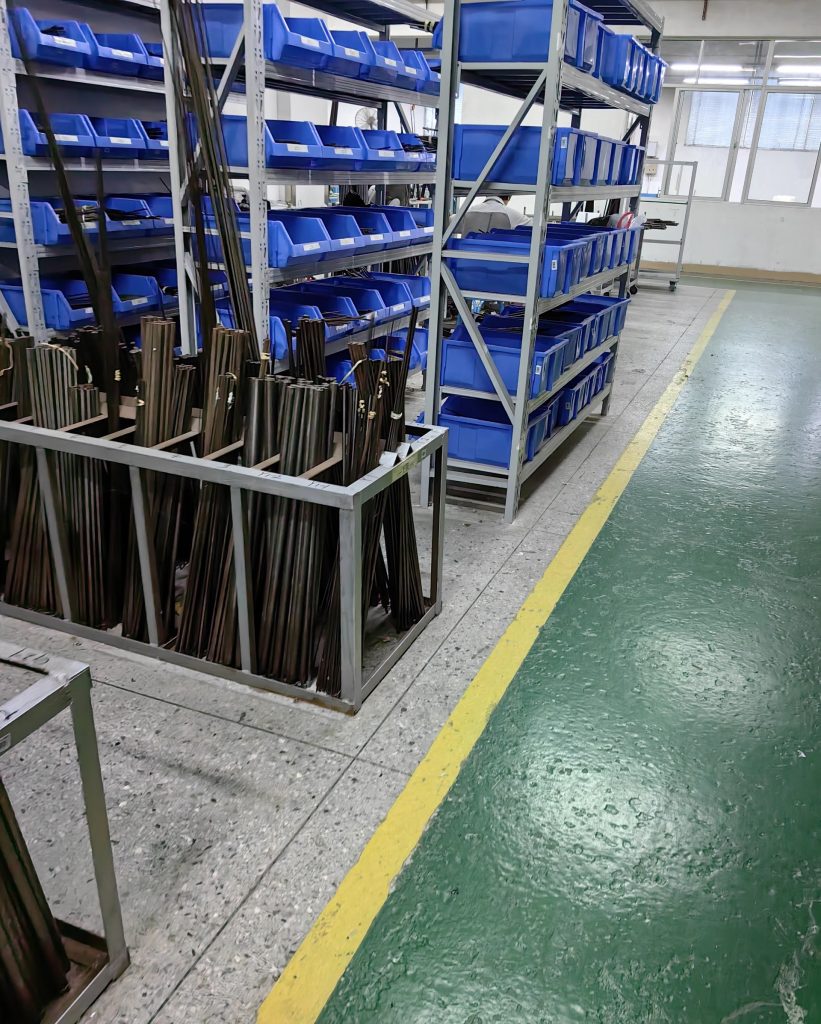
How to Develop a Custom Fishing Rod with a Chinese OEM Manufacturer
Developing a custom fishing rod with a Chinese OEM manufacturer can allow wholesalers, distributors, retailers, and private-label brands to create products designed for a specific market.
However, successful OEM production requires more than adding a logo to an existing fishing rod. Buyers need to define the product, communicate specifications, evaluate samples, confirm customization, and establish quality requirements before mass production.
This guide explains the main steps involved in developing a custom fishing rod with a Chinese manufacturer.
1. Define Your Target Market First
Before contacting an OEM manufacturer, determine who will buy the product.
Consider:
- Target country
- Target customer
- Fishing application
- Freshwater or saltwater use
- Beginner or professional users
- Retail positioning
- Expected price range
- Estimated order quantity
For example, a private-label brand targeting recreational freshwater anglers may require a very different product from a specialist brand serving experienced anglers.
The target market should influence the product specification from the beginning.
2. Decide Whether You Need OEM or ODM
Buyers should understand the difference between OEM and ODM before starting a project.
OEM generally means the buyer provides specific product requirements and the manufacturer produces according to those requirements.
ODM generally involves using an existing manufacturer design or platform with agreed customization.
For a new fishing tackle brand, ODM can sometimes provide a faster starting point, while a fully customized OEM product may provide greater control over specifications.
The appropriate model depends on the project requirements, budget, timeline, and expected quantity.
3. Prepare a Fishing Rod Product Brief
Before requesting quotations, prepare a basic product brief.
It should include:
- Rod type
- Fishing application
- Material
- Length
- Sections
- Power
- Action
- Line range
- Lure range, where applicable
- Handle
- Reel seat
- Guides
- Color
- Logo
- Packaging
- Quantity
- Target market
A detailed specification helps the manufacturer understand what you actually need.
You can use:
How to Prepare a Fishing Rod Specification Sheet for a China Supplier
as a reference when preparing the product requirements.
4. Decide Which Parts Need Customization
Not every OEM project requires a completely new fishing rod design.
Customization may involve:
- Logo
- Product color
- Blank finish
- Handle
- Reel seat
- Guide configuration
- Decorative graphics
- Model name
- Product markings
- Packaging
- Retail box
- Product labels
Before requesting a quotation, separate the requirements into:
Must Have
Requirements that cannot be changed.
Preferred
Features that would improve the product but are negotiable.
Optional
Features that can be added depending on cost and production feasibility.
This makes discussions with manufacturers more efficient.
5. Prepare Your Logo and Artwork
If you want a private-label fishing rod, prepare the brand artwork before production.
Depending on the project, the manufacturer may need:
- Logo file
- Logo dimensions
- Logo position
- Product graphics
- Model number
- Color references
- Packaging artwork
- Barcode information
Vector artwork is often preferable for manufacturing because it can be scaled without losing clarity.
Do not approve mass production until the final artwork has been confirmed.
6. Find a Manufacturer That Matches the Product
A manufacturer that produces fishing rods does not necessarily specialize in every type of fishing rod.
When evaluating suppliers, consider:
- Product range
- Relevant manufacturing experience
- OEM/ODM capability
- Sample development
- Customization options
- Quality-control process
- Communication
- Production requirements
- Packaging capability
For a China sourcing project, it is useful to compare several potential suppliers using the same product brief.
This makes the comparison more meaningful than choosing a supplier based only on a website or the lowest quotation.
7. Send the Same RFQ to Multiple Suppliers
When comparing manufacturers, provide the same basic requirements.
For example:
| Item | Requirement |
|---|---|
| Product | Custom Fishing Rod |
| Rod Type | Buyer specified |
| Material | Carbon Fiber |
| Length | Buyer specified |
| Power | Buyer specified |
| Action | Buyer specified |
| Sections | Buyer specified |
| Logo | Custom |
| Packaging | Custom |
| Quantity | Estimated quantity |
| Target Market | Country/region |
| Sample | Required |
Ask each manufacturer to clarify what is included in the quotation.
Do not compare unit prices if suppliers are quoting different specifications.
8. Ask About Sample Development
A sample is an important stage of a custom fishing rod project.
Before production, confirm:
- Sample cost
- Sample development process
- Sample lead time
- Customization included in the sample
- Shipping arrangement
- Number of revisions
- Final sample approval process
The sample should represent the product that will eventually be manufactured in bulk.
If the sample does not meet the requirements, record the changes clearly.
For additional guidance:
How to Evaluate a Fishing Rod Sample Before Placing a Bulk Order
9. Check the Sample Against Your Specification
Do not evaluate a sample only by appearance.
Check:
- Length
- Weight
- Sections
- Power
- Action
- Blank appearance
- Guides
- Reel seat
- Handle
- Logo
- Finish
- Packaging
The buyer should compare the actual sample with the original product brief.
If a specification has changed during development, update the final document.
10. Confirm the Final Product Specification
Once the sample is approved, create a final production specification.
The document should identify the agreed:
- Product model
- Rod type
- Material
- Length
- Sections
- Power
- Action
- Components
- Color
- Logo
- Packaging
- Quantity
- Quality requirements
The approved sample can also be retained as a physical reference.
This helps prevent the manufacturer from producing according to an outdated version.
11. Discuss MOQ and Order Quantity
MOQ requirements can vary between manufacturers and products.
The buyer should ask the supplier to confirm:
- Sample quantity
- Trial order quantity
- Standard MOQ
- MOQ by color
- MOQ by model
- Packaging MOQ
- Custom logo requirements
Do not assume that one MOQ applies to every customization.
For example, changing the product color or packaging may create additional production requirements.
The actual MOQ should be confirmed directly with the manufacturer.
12. Confirm Packaging Requirements
Private-label fishing rods often require customized packaging.
Possible requirements include:
- Rod bag
- Protective sleeve
- Retail box
- Inner carton
- Master carton
- Product label
- Barcode
- Brand markings
- Shipping marks
Packaging should be designed around the actual product dimensions.
It should also provide adequate protection during domestic and international transportation.
13. Establish Quality Requirements Before Mass Production
Quality requirements should be agreed before production begins.
For a custom fishing rod, buyers may define inspection points for:
- Dimensions
- Components
- Surface finish
- Logo
- Guide alignment
- Reel seat
- Handle
- Section connections
- Packaging
- Quantity
For more detailed quality-control guidance, see:
How to Check Carbon Fiber Fishing Rod Quality Before Bulk Production
The inspection requirements should match the actual product specification.
14. Confirm Changes in Writing
OEM projects often involve revisions.
For example, the buyer may change:
- Handle material
- Logo position
- Product color
- Guide configuration
- Packaging
- Model name
Every important change should be recorded and confirmed by both sides.
This reduces the risk of the factory using an earlier version of the design.
A simple version number can help:
V1 → V2 → Final
The final approved version should be clearly identified before mass production.
15. Approve a Pre-Production Sample
Before mass production, confirm the final sample or production reference.
The buyer should make sure that:
- Product specifications are correct
- Logo is correct
- Color is correct
- Components are correct
- Packaging is correct
- Quality requirements are understood
If there are unresolved issues, do not treat the product as finally approved.
16. Monitor Mass Production
Once production begins, communication should continue.
Depending on the order size and project requirements, buyers may request production updates or arrange inspection.
Important checkpoints can include:
Raw materials → Production → Assembly → Finishing → Packaging → Final inspection
The purpose is not to interfere with the manufacturer’s production process, but to make sure the finished goods follow the approved specification.
17. Conduct Pre-Shipment Quality Inspection
Before the goods are shipped, inspect the finished products according to the agreed quality requirements.
Check:
- Product quantity
- Product dimensions
- Appearance
- Components
- Branding
- Packaging
- Visible defects
- Model and color distribution
For larger orders, an appropriate sampling inspection may be considered.
Any inspection method should be agreed before production rather than introduced after a dispute occurs.
18. Protect Your Product Information
For a custom product, buyers should organize important project documents.
Keep records of:
- Product specifications
- Artwork
- Approved samples
- Packaging artwork
- Quotations
- Production confirmations
- Inspection reports
- Purchase orders
- Revision records
If the product includes original designs or proprietary artwork, buyers should also consider appropriate contractual and intellectual-property protections.
The exact legal requirements depend on the countries involved and the specific project.
19. Plan Reorders From the Beginning
A successful OEM product should be easy to reorder.
Keep the final specification and approved product references so that future orders can use the same requirements.
For repeat orders, confirm:
- Model
- Specification
- Quantity
- Color
- Packaging
- Logo
- Quality requirements
- Any changes from the previous order
If the product has been modified, record the new version before production.
20. Calculate the Complete Project Cost
The factory unit price is not necessarily the buyer’s final cost.
Depending on the project, the buyer may need to consider:
- Product cost
- Sample cost
- Customization
- Packaging
- Tooling or development charges, if applicable
- Inland transportation
- Export-related charges
- International freight
- Destination charges
- Import duties and taxes
- Customs clearance
- Other applicable costs
For more information:
How to Calculate the Total Cost of Importing Fishing Rods from China
The actual landed cost depends on the destination and shipping arrangement.
OEM Fishing Rod Development Checklist
Before placing a production order, confirm:
| Item | Status |
|---|---|
| Target market | ✓ |
| Fishing application | ✓ |
| OEM or ODM model | ✓ |
| Product specification | ✓ |
| Material | ✓ |
| Length | ✓ |
| Power | ✓ |
| Action | ✓ |
| Components | ✓ |
| Logo artwork | ✓ |
| Packaging artwork | ✓ |
| Sample | ✓ |
| Final specification | ✓ |
| MOQ | ✓ |
| Quality requirements | ✓ |
| Inspection method | ✓ |
| Production quantity | ✓ |
| Shipping plan | ✓ |
Frequently Asked Questions
1. Can I customize an existing fishing rod instead of developing a completely new product?
Yes. Depending on the manufacturer, buyers may be able to customize an existing product with branding, colors, components, packaging, or other agreed specifications. The available options should be confirmed with the supplier.
2. Should I request a sample before placing an OEM order?
For a new custom product, sample approval is strongly recommended. It allows the buyer to confirm the actual product before committing to mass production.
3. How many Chinese fishing rod manufacturers should I compare?
There is no universal number. Comparing several suppliers using the same product requirements can help the buyer understand differences in specifications, customization, pricing, MOQ, and production capabilities.
4. Can I customize the fishing rod packaging?
Packaging customization may include product bags, boxes, labels, barcodes, and other branding elements. The manufacturer should confirm the available options and applicable requirements.
5. How can I avoid receiving a product that differs from my approved sample?
Use a written final specification, keep an approved sample as a reference, confirm all changes in writing, and establish quality-inspection requirements before mass production.
Conclusion
Developing a custom fishing rod with a Chinese OEM manufacturer is a process rather than a single quotation.
The buyer should begin by defining the target market and product application, prepare a detailed specification, compare suitable manufacturers, develop and approve a sample, confirm the final production requirements, and establish quality-control procedures before mass production.
For private-label and wholesale projects, good documentation is particularly important. The product specification, artwork, packaging, approved sample, and quality requirements should all be clearly recorded.
A structured OEM process gives both the buyer and manufacturer a common reference and makes future reorders easier.
Request a Custom Fishing Rod OEM Quote
If you are developing a private-label or wholesale fishing rod, provide the target market, fishing application, rod type, material, length, power, action, estimated quantity, logo requirements, packaging requirements, and destination.
Guangzhou Fishing Tackle Co., Ltd. is listed on VLEFOOENA as a China-based fishing tackle supplier offering fishing rod products and OEM/ODM-related customization.
Buyers can provide their product requirements and estimated order quantity when making an inquiry.


No reply content