The global demand for flexible, affordable, and sustainable housing has grown rapidly as lifestyles change, urban areas expand, and people seek alternatives to traditional construction. Modern living no longer relies solely on fixed buildings made through long, costly projects. Instead, mobile homes, space-pod units, and container houses have become practical, stylish, and highly efficient solutions for personal and commercial use.
As a manufacturer specializing in these three categories, the process of designing and producing modular living units involves engineering precision, creative thinking, and a deep understanding of how people want to live today. This article explores the entire concept behind building innovative modular houses that combine mobility, durability, and modern comfort.
1. Why Modular Living Is Growing Worldwide
Modular housing continues to expand for several reasons:
- Faster construction and installation
- Lower long-term investment cost
- Relocation flexibility
- Environment-friendly building processes
- Wide application across residential, tourism, and commercial sectors
These solutions appeal not only to people searching for small homes but also to businesses, developers, and project managers who need fast and reliable building options.
2. Mobile Homes: Comfortable Living That Moves With You
Mobile homes are designed to provide the comfort of a traditional house but with the advantage of mobility. The structure typically begins with a strong steel chassis, engineered to support transportation and stable foundation placement.
2.1 Structure and Materials
A mobile home may look compact from the outside, but inside, it uses carefully chosen materials to balance strength and weight. These include:
- Reinforced steel frames
- Anti-corrosion coatings
- High-density insulation panels
- Durable flooring and wall systems
This combination ensures safety, weather resistance, and easy long-term maintenance.
2.2 Interior Space and Functionality
Designing a mobile home interior requires thoughtful planning. Every corner matters. Many designs include:
- Foldable or hidden beds
- Built-in cabinets
- Wall-mounted appliances
- Efficient kitchens and bathrooms
- Smart ventilation systems
The result is a living space that feels organized, warm, and practical despite its mobility.
2.3 Modern Lifestyles and Travel Needs
Mobile homes are popular among travelers, remote workers, outdoor enthusiasts, and people choosing minimalist living. They support:
- Road travel
- Seasonal relocation
- Temporary residence
- Camping and tourism
This makes them a lifestyle product as much as a housing solution.
3. Space-Pod Houses: Compact, Futuristic, and Inspiring
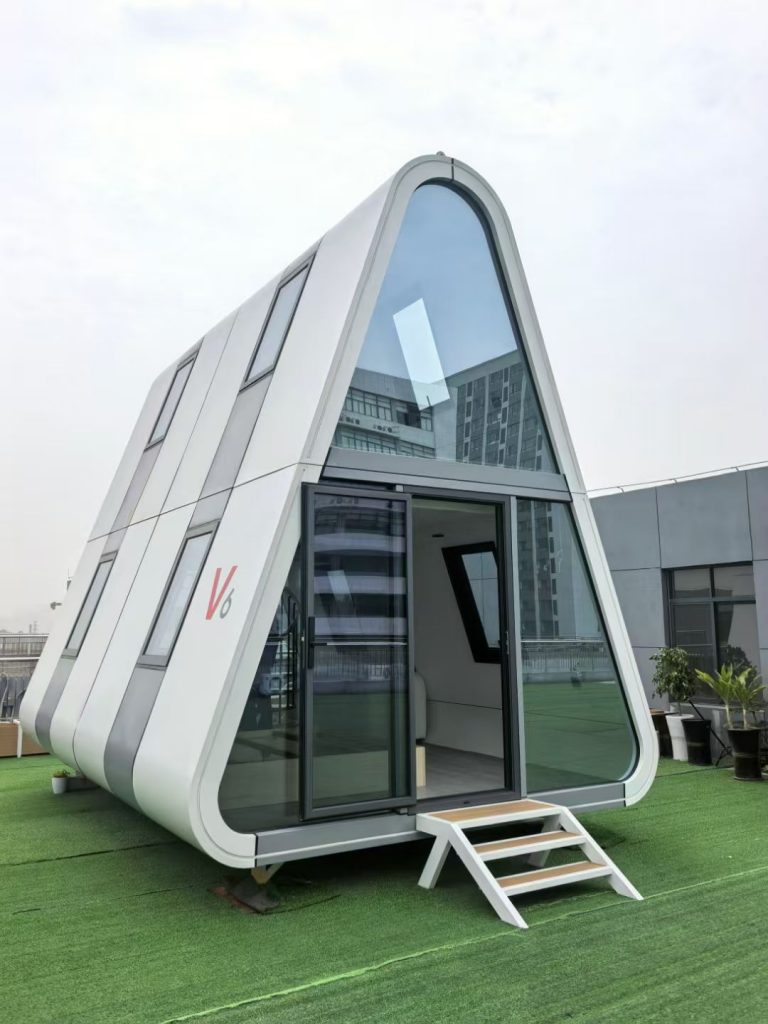
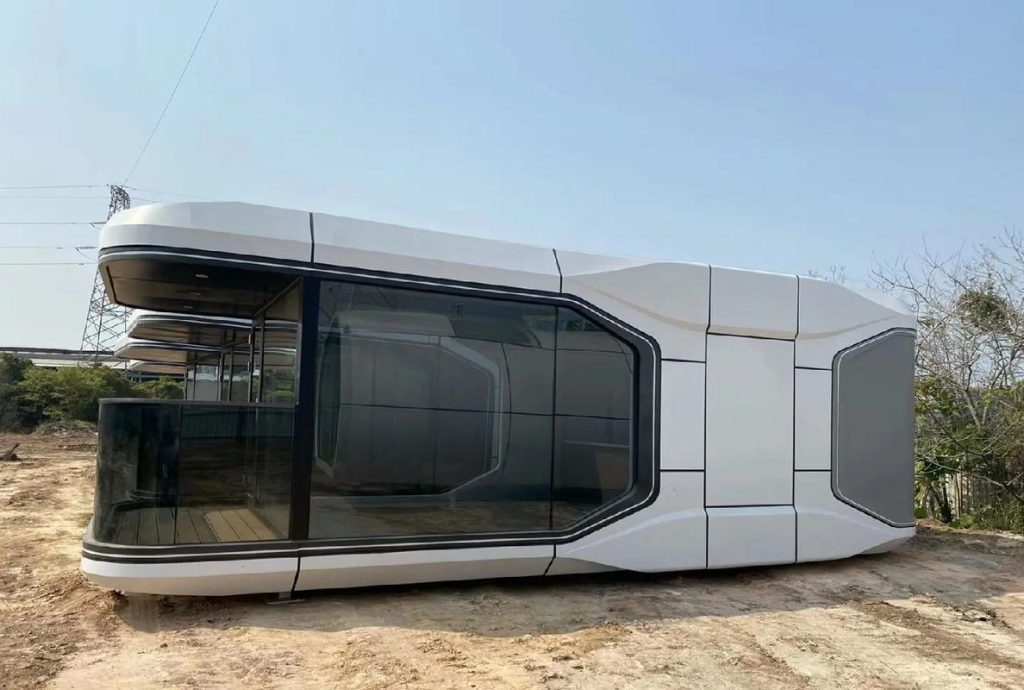
A space-pod house is designed with a unique futuristic look. Its smooth exterior shape, lightweight structure, and minimalistic interior appeal to people who want something visually striking yet functional.
3.1 Exterior Design and Shell Construction
The pod typically features:
- A curved aerodynamic shell
- Reinforced composite materials
- Weather-resistant surfaces
- High insulation performance
This type of structure performs well in wind, heat, cold, and humidity.
3.2 Interior Ambience
Inside the pod, the atmosphere is cozy and modern. The design often includes:
- Integrated LED mood lighting
- Curved ceilings
- Circular or panoramic windows
- Built-in furniture
- Multi-purpose storage areas
Though small, the space feels artistic and peaceful.
3.3 Ideal Applications
Space-pod homes are widely used in:
- Resort glamping projects
- Mountain-view camps
- Island retreats
- Farm stays
- Private garden studios
They provide guests with an unforgettable accommodation experience and help businesses differentiate from competitors.
4. Container Houses: Industrial Strength for Modern Living
Container houses are built from steel structures that are strong, durable, and highly modular. As a housing material, containers offer flexibility and strength, making them suitable for a variety of uses.
4.1 Structural Reinforcement
Although containers are already designed for heavy cargo, housing production involves further steps:
- Sandblasting and rust removal
- Structural strengthening
- Customized window and door openings
- Waterproof sealing
- Thermal insulation installation
These improvements transform industrial containers into comfortable living spaces.
4.2 Versatile Designs
Container houses can be:
- Single-unit small homes
- Multi-container villas
- Office buildings
- Worker dormitories
- Commercial stores
- Temporary project facilities
The modular system allows units to be stacked or arranged in creative configurations.
4.3 Interior Comfort
Inside, container houses deliver the same comfort as regular homes. High-quality insulation, modern lighting, flooring, and bathroom systems make them suitable for long-term residence.
5. Manufacturing Philosophy: Precision and Customization
Creating a mobile home, space-pod house, or container house is not just a production process—it is a design journey. Each unit starts from a concept and becomes a personalized space.
5.1 Customized Solutions
Clients come with different needs, such as:
- Resort operation
- Private living
- Commercial usage
- Emergency housing
- Remote project accommodation
Each requirement influences the layout, features, and technical design.
5.2 Attention to Detail
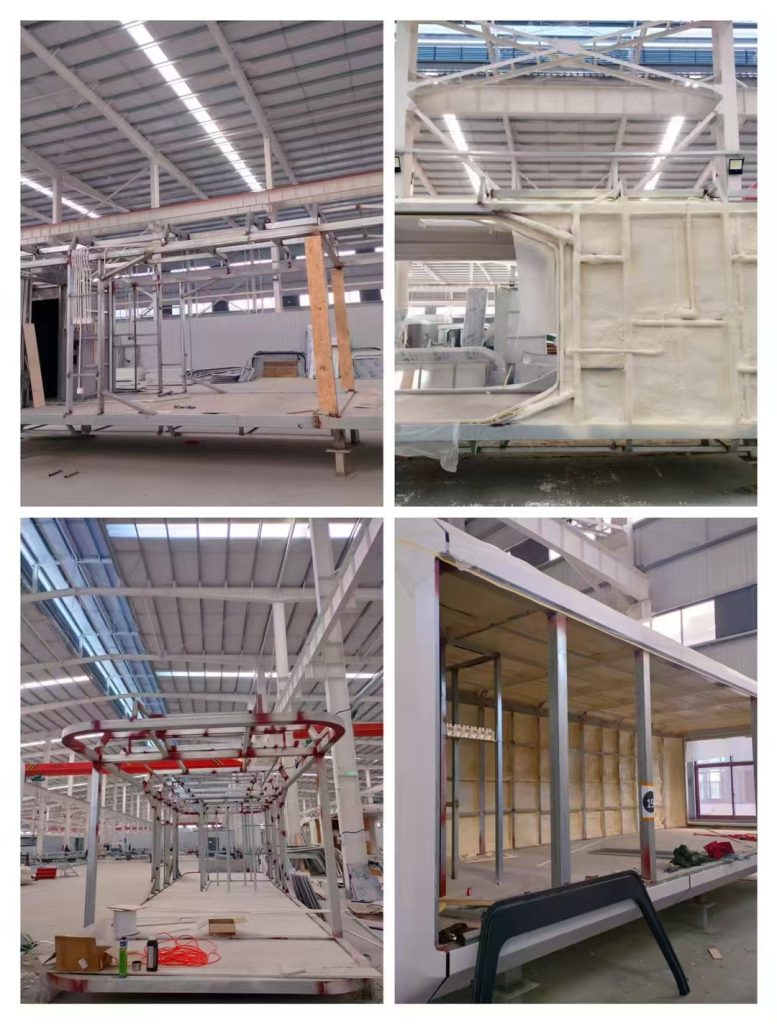
Every step, including welding, insulation, painting, electrical installation, plumbing, and interior finishing, must meet strict standards. Quality checks ensure durability and safety before shipment.
5.3 Smart Living Integration
Modern modular homes increasingly adopt smart technology:
- Remote lighting control
- Temperature regulation
- Security monitoring
- Energy-efficient systems
- Solar power compatibility
These additions make modular homes not just mobile, but intelligent.
6. Eco-Friendly Housing for the Future
One of the strongest advantages of modular homes is sustainability.
6.1 Low Waste Manufacturing
Producing homes in a factory-controlled environment reduces:
- Material waste
- Noise pollution
- On-site disruption
This approach is more eco-friendly than traditional construction.
6.2 Use of Recyclable and Lightweight Materials
Mobile homes and space-pod units often rely on recyclable composites and lightweight structures, reducing long-term energy usage.
6.3 Off-Grid Options
Solar systems, battery storage, and efficient insulation allow modular homes to operate independently in remote areas.
7. Diverse Applications Across Multiple Industries
Modular homes serve many industries:
- Tourism & hospitality – resort cabins, glamping pods, beachfront houses
- Residential living – affordable homes, compact private units
- Commercial spaces – offices, retail kiosks, cafés
- Construction & mining – worker housing, field offices
- Government & emergency – temporary shelters, relief housing
- Agricultural sectors – on-site living units for farms
This broad demand drives innovation and continuous improvement.
8. The Future of Modular Housing
The next stage of modular housing development will include:
- More energy-efficient materials
- Advanced environmental control systems
- Larger glass panels for natural light
- Expansion-friendly modular layouts
- Smarter production driven by automation
- Designs inspired by nature and future architecture
As lifestyles evolve, modular homes will continue to become more advanced, more comfortable, and more personalized.
Conclusion
Mobile homes, space-pod houses, and container houses are more than alternative living options—they represent a new philosophy of flexibility, creativity, and sustainable living. By combining strong materials, intelligent design, and advanced manufacturing, these structures offer long-term value and modern comfort.
From private homeowners to large commercial projects, modular housing meets the growing demand for practical, beautiful, and adaptable living solutions. As innovation continues, these homes will shape the future of how people live, work, and travel.
Article link:https://www.vlefooena.com/modular-living-solutions-for-a-new-generation


No reply content