Portable Space Shelter: Engineering for the Uncharted
We engineer for the point where infrastructure ends. The Portable Space Shelter is a high-integrity habitat system, manufactured for deployment where conventional shelter fails. It is not a temporary tent or a simple container; it is a rapidly deployable, self-sustaining biosphere engineered for exigency, research, and frontier habitation.
Chapter 1: Core Architecture – The Deployable Pressure Vessel
The defining innovation is its transitional geometry. In transit, the shelter is a dense, ruggedized cylinder or cube, conforming to standard shipping and air-drop logistics. Upon activation, it undergoes a controlled transformation:
-
Deployable Hull: Utilizing aerospace-grade composite scissor mechanisms or inflatable structural members, the shelter expands to 200-300% of its transit volume. The final shell is a multi-layer laminate: an outer ballistic/abrasion skin, a core of closed-cell foam and aerogel for radical insulation, and an inner antimicrobial liner.
-
Monocoque Endoskeleton: Within this hull, a lightweight, rigid lattice unfolds—a “skeleton” of aluminum or titanium alloy. This structure provides uncompromising anchor points for all interior systems and withstands high wind, snow loads, and seismic activity, independent of the outer skin’s tension.
-
Unified Systems Core: The shelter’s intelligence is housed in a single, shock-mounted cabinet—the “Life Core.” This pre-integrated unit contains power management (with hybrid solar-biofuel-generator inputs), water synthesis and recycling, atmospheric control, and a satellite communications nexus. It is plug-and-play, activated with a single switch.
Chapter 2: Manufacturing Genesis – Battlefield Precision for Civilian Resilience
This shelter is a product of deterministic fabrication.
-
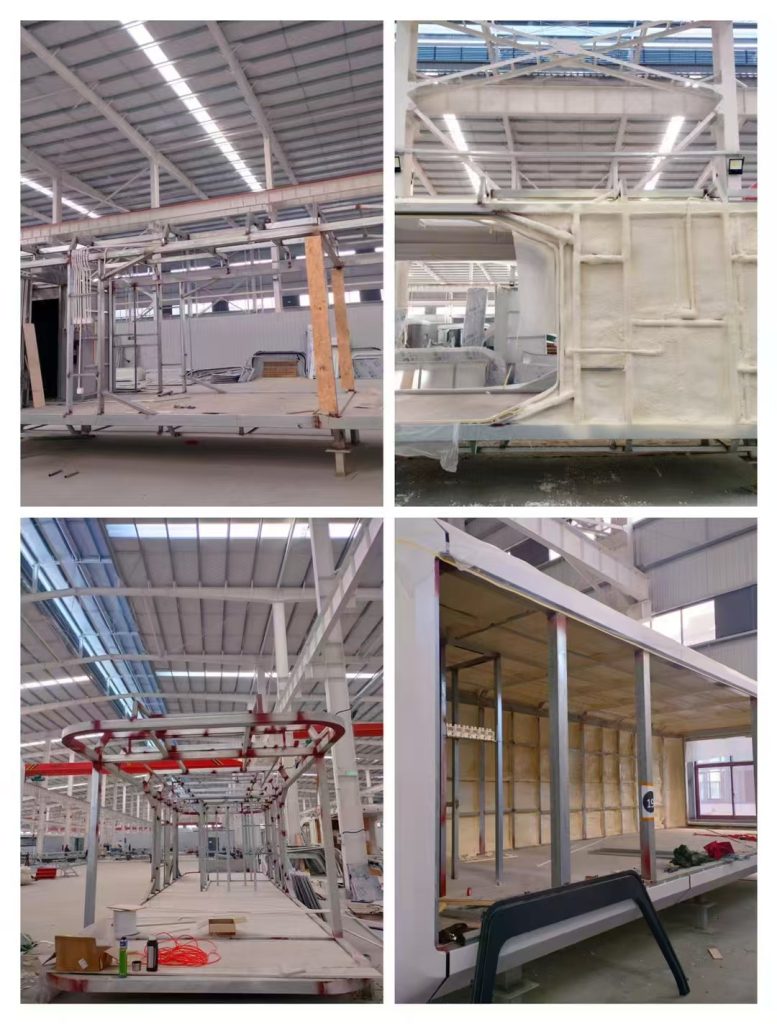
Nested System Assembly: The entire interior—modular berths, convertible galley, sanitary unit—is built as a single, dense package that fits precisely within the transit shell. Every conduit, fastener, and fold is pre-engineered and robotically assembled to tolerances of less than one millimeter, ensuring flawless deployment.
-
Extreme Environment Testing: Each completed unit is subjected to a certified battery of simulations: vibration to mimic transport, rapid pressure changes, thermal cycling from -40°C to +60°C, and simulated wind shear. It is certified functional after this ordeal, not before.
-
Logistics-Optimized Design: The transit form-factor is designed for universal mobility—transportable by flatbed truck, slung under a helicopter, or dropped by parachute. Its mating interfaces allow for the linear or clustered connection of multiple units to form expanded bases.
Chapter 3: Autonomous Life Support – The Sustaining Pulse
The shelter is designed for zero-infrastructure operation.
-
Atmospheric Autonomy: The system scrubs CO2, manages humidity, and maintains breathable air indefinitely, supplementing with electrolytic oxygen generation if needed.
-
Water Independence: A high-efficiency atmospheric water generator extracts humidity from the air, supplemented by an integrated ultrafiltration system for processing local water sources. Greywater is purified to drinking standard in a closed loop.
-
Energy Agnosticism: The Life Core accepts any input: standard solar arrays, vehicle power, micro-wind turbines, or liquid biofuel generators. Its solid-state battery bank provides 96 hours of full-system operation with no external input.
Chapter 4: Terrestrial & Analog Applications – Proving Grounds
While engineered for extremes, its purpose is immediate.
-
First Response & Humanitarian Aid: Delivered within hours of a disaster, providing immediate, climate-controlled operational bases and medical isolation units unaffected by broken infrastructure.
-
Frontier Research Stations: Enabling scientific operations in polar, desert, or high-altitude environments without the cost and impact of permanent construction.
-
Space Analog Missions: Serving as primary habitats for lunar or Mars simulation projects on Earth, testing protocols and human factors for future off-world colonization.
-
Secure Mobile Command Posts: For resource management, wildfire fighting, or remote security operations, offering instant, hardened command infrastructure.
Conclusion: The Inherent Right to Shelter
The Portable Space Shelter redefines rapid deployment. It moves beyond survival to provide secured operational capacity. It is the product of a manufacturing philosophy that views the most unstable environments on Earth (and beyond) as a solvable equation of engineering, logistics, and human physiology.
We do not wait for the infrastructure to arrive. We deliver the infrastructure. The Shelter is sealed. Systems are green. Environment is stable.
Article link:https://www.vlefooena.com/portable-space-shelter-engineering-for-the-uncharted


No reply content