In the high-stakes environment of modern logistics and warehouse management, efficiency is measured in seconds, and safety is paramount. Every piece of equipment must contribute to a seamless, swift, and secure workflow. The humble pallet, often overlooked, plays a foundational role in this ecosystem. Moving beyond basic load-bearing functionality, advanced pallet design directly addresses core operational challenges. This article delves into the engineered excellence of a specialized plastic pallet featuring integrated roller feet and a non-slip grid surface. This design is not an incremental upgrade but a targeted solution for improving material mobility, enhancing workplace safety, and optimizing handling processes across diverse industries.
-
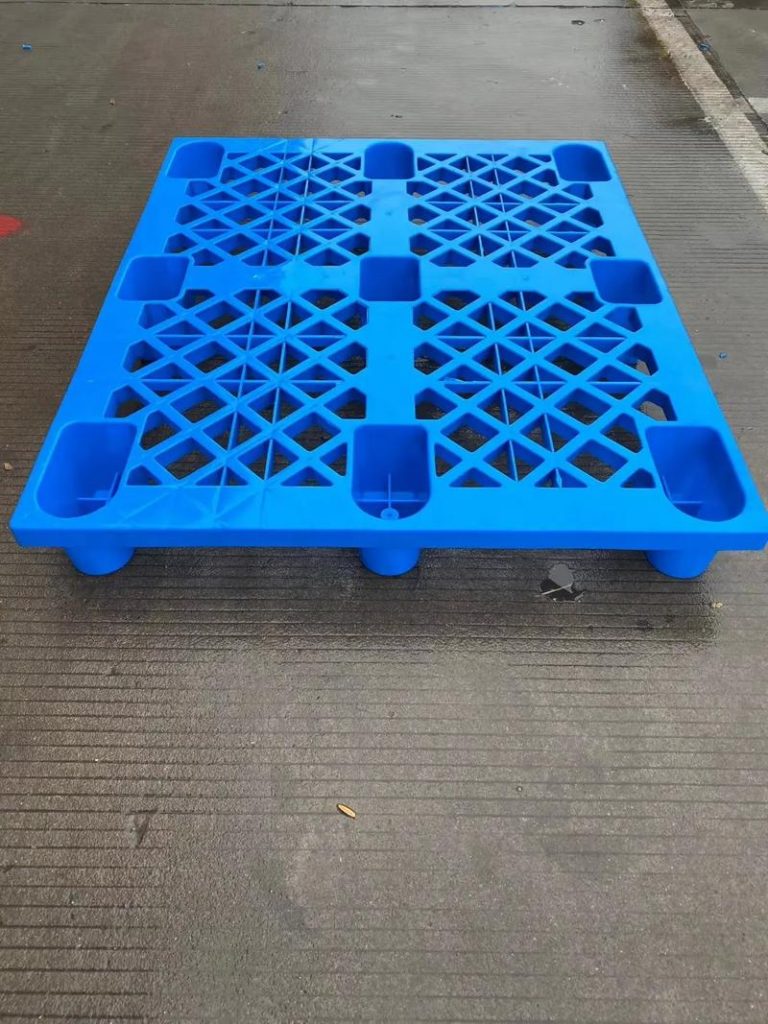
The Integrated Roller Feet System: Unlike standard static feet, this pallet incorporates low-friction, cylindrical glide feet or rollers at its base. These are not add-ons but are molded as an integral part of the pallet’s structure. Their primary function is to facilitate effortless manual movement and micro-positioning. When a loaded pallet needs a final nudge into a racking bay, to align with a conveyor, or to be positioned against a wall, the roller feet allow a single worker to move significant weight with minimal effort. This reduces reliance on forklifts for minor adjustments, decreases physical strain on employees, and prevents floor damage from dragging.
-
The Non-Slip Grid Surface Design: The load-bearing deck is a network of raised ribs forming a textured grid or diamond pattern. This design creates a high-friction surface that actively resists load shifting. The texture grips the bottom of boxes, bags, and containers, while the grid pattern itself provides channels that can help manage minor spillage. This is crucial for preventing product damage and, more importantly, for eliminating a major cause of workplace accidents—unstable loads that can topple during transport.
-
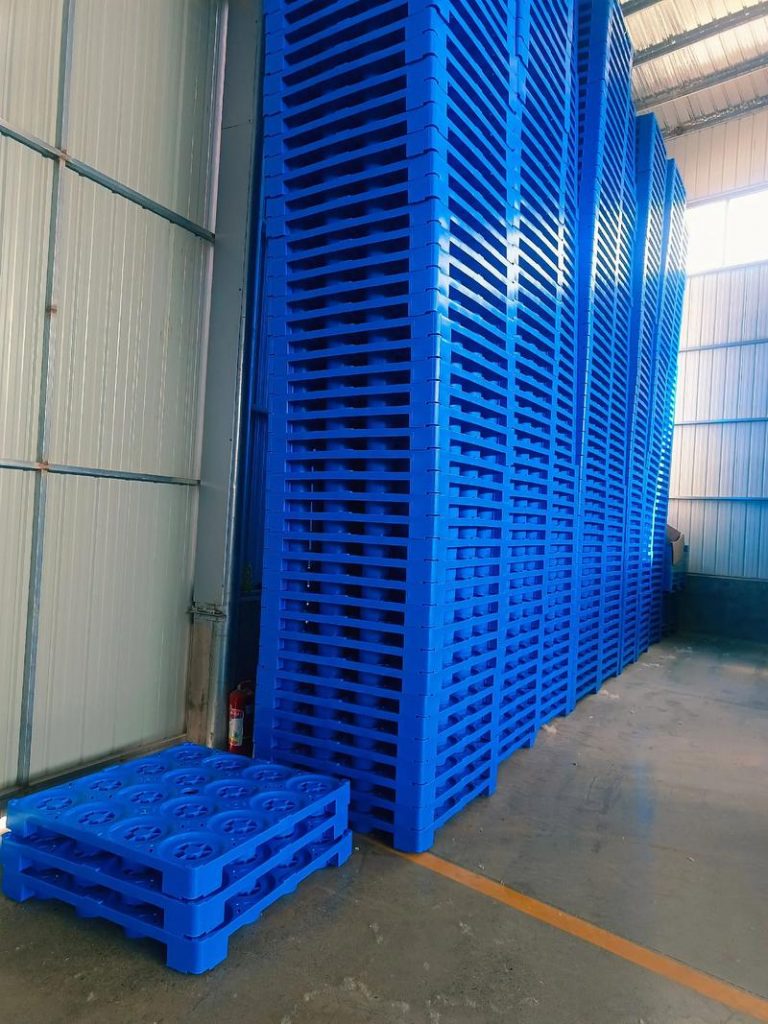
Complementary Structural Features: Supporting these systems is a robust four-way entry design, allowing forklift and pallet jack access from any side for maximum flexibility. The open grid structure ensures excellent ventilation and drainage, and the entire unit is manufactured as a single piece from high-grade polymer, ensuring hygiene and durability.
-
Enhanced Ergonomic Efficiency and Workflow Speed: The roller feet transform a static storage platform into a semi-mobile unit. This dramatically reduces the time and physical exertion required for precise positioning. Tasks like loading/unloading trucks, organizing picking faces, or rotating stock become faster and less labor-intensive, directly boosting productivity and reducing worker fatigue.
-
Superior Load Stability and Safety: The non-slip surface is a proactive safety feature. It mitigates the risk of loads—especially stacked or irregularly shaped items—sliding off during sudden stops or turns. This protects both the integrity of the goods and the safety of personnel working nearby. A stable load is also a prerequisite for safe high stacking in storage racks.
-
Reduced Equipment Dependency and Floor Protection: By enabling easy manual movement, these pallets lessen the need for using powered equipment like forklifts for every single move. This reduces traffic congestion in aisles, lowers energy costs, and minimizes the risk of minor collisions. Furthermore, rolling is inherently gentler on warehouse floors than dragging or scraping, preserving expensive flooring and reducing maintenance.
-
Hygienic and Durable Construction: Made from HDPE or Polypropylene, the pallet is impervious to moisture, chemicals, and corrosion. It can be easily steam-cleaned or pressure-washed, meeting strict hygiene standards for industries like food processing and pharmaceuticals. The absence of nails, splinters, or fasteners eliminates contamination risks and further enhances safety.
-
Order Picking and E-commerce Fulfillment Centers: In dynamic picking environments, orders are constantly being assembled and moved. Roller feet allow pickers to easily slide pallets along the floor to their workstation, while the non-slip surface keeps totes and cartons secure.
-
Food & Beverage and Pharmaceutical Warehousing: Hygiene is non-negotiable. The easy-clean plastic meets sanitary protocols, and the non-slip surface prevents costly spills of packaged goods. Roller feet facilitate easy movement in cold storage environments where manual handling needs to be quick to limit worker exposure to low temperatures.
-
Production Line and Assembly Area Feeding: For just-in-time manufacturing, components need to be delivered precisely to the line-side. Roller feet allow operators to smoothly guide loaded pallets into the exact position required without machinery, supporting lean manufacturing principles.
-
Retail Stockrooms and Supermarket Back-of-House: Space is often tight. The ability to manually reposition loaded pallets for stocking shelves or for inventory counts without machinery is a significant advantage. The clean appearance and stable load also prevent damage to retail goods.
-
Verify Load Capacity and Roller Specification: Ensure the dynamic (rolling/moving) and static load ratings match your typical unit loads. Confirm the roller feet are designed for your specific floor type (e.g., sealed concrete, epoxy) for optimal performance.
-
Assess the Grade of Non-Slip Surface: The level of texture can vary. For especially slick packaging materials, a more aggressive non-slip pattern may be beneficial.
-
Integrate into Workflow Design: To truly capitalize on the benefits, design workflows that leverage the manual mobility. Train staff on the correct techniques for moving pallets using the roller feet to prevent back strain.
-
Consider Stackability and Racking: Ensure the design is compatible with your storage methods. Many models with roller feet are still designed to be stable when stacked or placed in selective racking.


No reply content