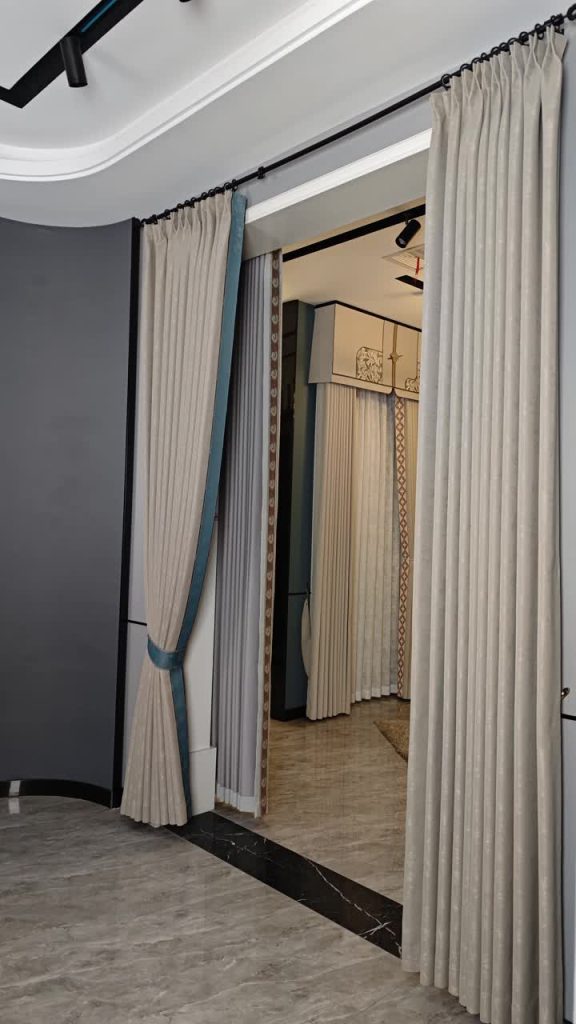
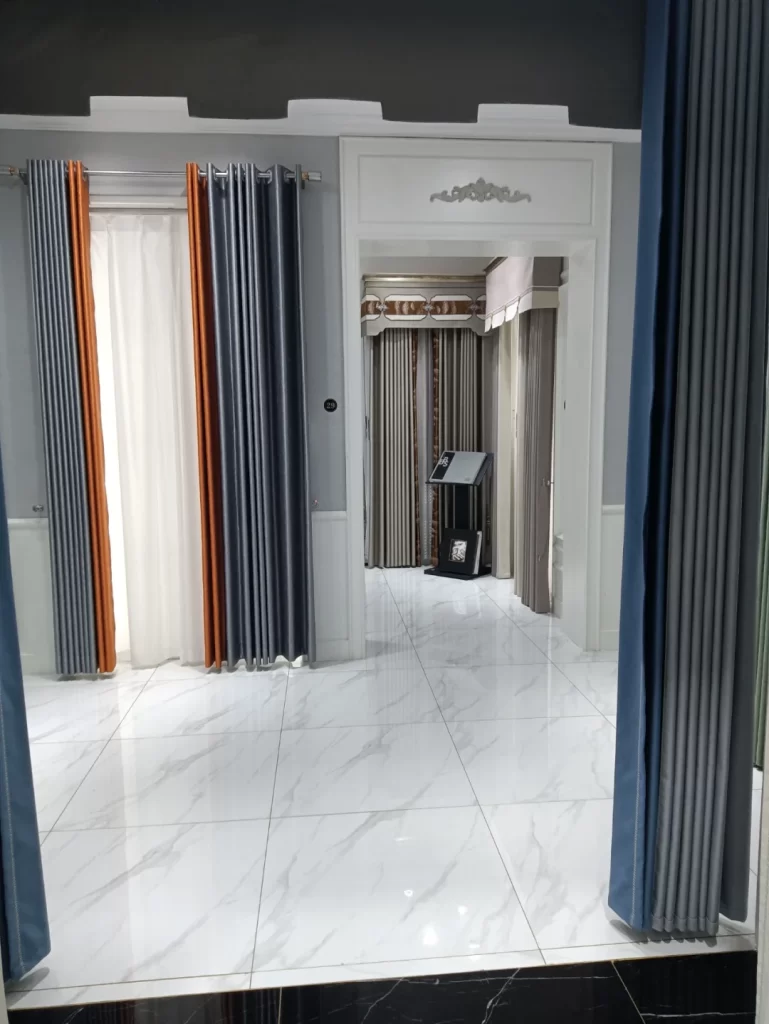
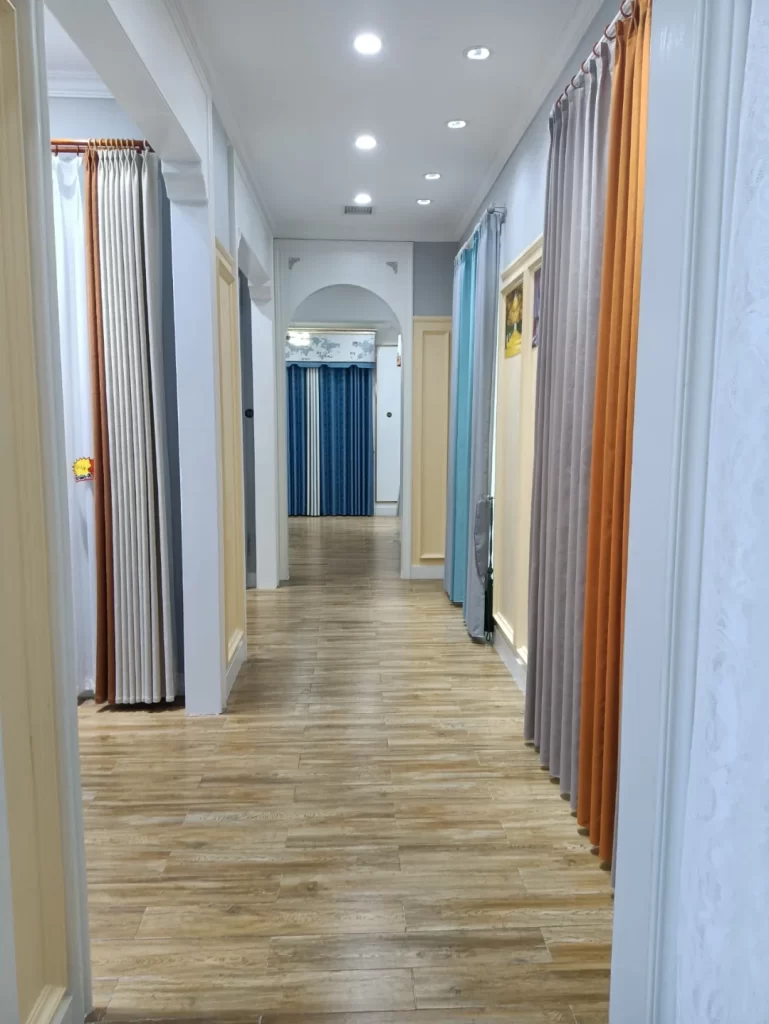
Curtains are more than just window coverings — they represent the perfect blend of design, craftsmanship, and function. Behind every beautiful drape lies a detailed production process that turns raw fabric into elegant window solutions. As a professional curtain manufacturer, the journey begins with careful material selection and ends with a product that enhances both comfort and style.
1. Material Selection: The Foundation of Quality
The first and most crucial step in curtain production is choosing the right fabric. The choice determines texture, light control, and durability. Every roll of fabric is tested for strength, shrinkage, and color fastness before entering the production line.
| Fabric Type | Key Features | Suitable For |
|---|---|---|
| Linen | Natural, breathable, eco-friendly | Living rooms, cafés, modern homes |
| Velvet | Luxurious, heavy, elegant | Hotels, theaters, bedrooms |
| Polyester | Durable, wrinkle-free, cost-effective | Apartments, offices, public spaces |
2. Precision Cutting and Tailoring
Once the fabric is selected, it moves to the cutting department. Using digital cutting machines and skilled craftsmanship, each piece is cut precisely according to specifications. Sewing experts then assemble the panels, apply linings, and create pleats or folds according to the required curtain style. Every stitch is carefully inspected to maintain consistency and strength.
3. Design and Customization
Curtains must suit different interior styles and functions. Whether blackout, sheer, thermal-insulated, or decorative, each design can be customized in terms of size, color, and texture. Modern manufacturing allows a balance between efficiency and personalized production, ensuring that every order meets diverse market requirements.
4. Quality Inspection and Finishing
Before packaging, every curtain undergoes a thorough quality inspection. Measurements, stitching, color consistency, and overall appearance are reviewed to ensure perfection. Ironing and folding are done by hand to maintain a neat presentation, followed by eco-friendly packaging for global shipping.
5. Sustainable Production Practices
Today’s manufacturing process also considers the environment. By adopting energy-saving machines, reducing fabric waste, and using recyclable materials, sustainable production has become a core part of modern curtain manufacturing.
Conclusion
Every curtain reflects craftsmanship and attention to detail. From the softness of the fabric to the precision of the stitching, each step contributes to beauty and durability. A well-made curtain not only enhances interior design but also adds warmth and comfort to daily life — a perfect example of how thoughtful manufacturing creates timeless value.
Article link:https://www.vlefooena.com/the-art-of-curtain-manufacturing-from-fabric-to-finished-elegance


No reply content