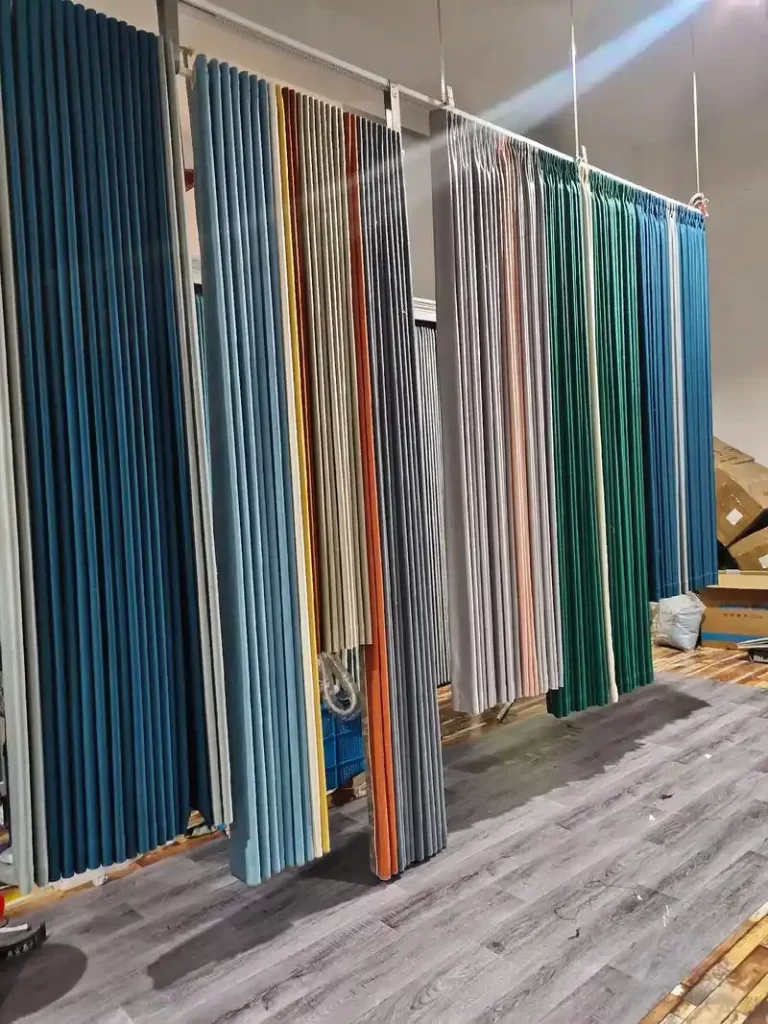
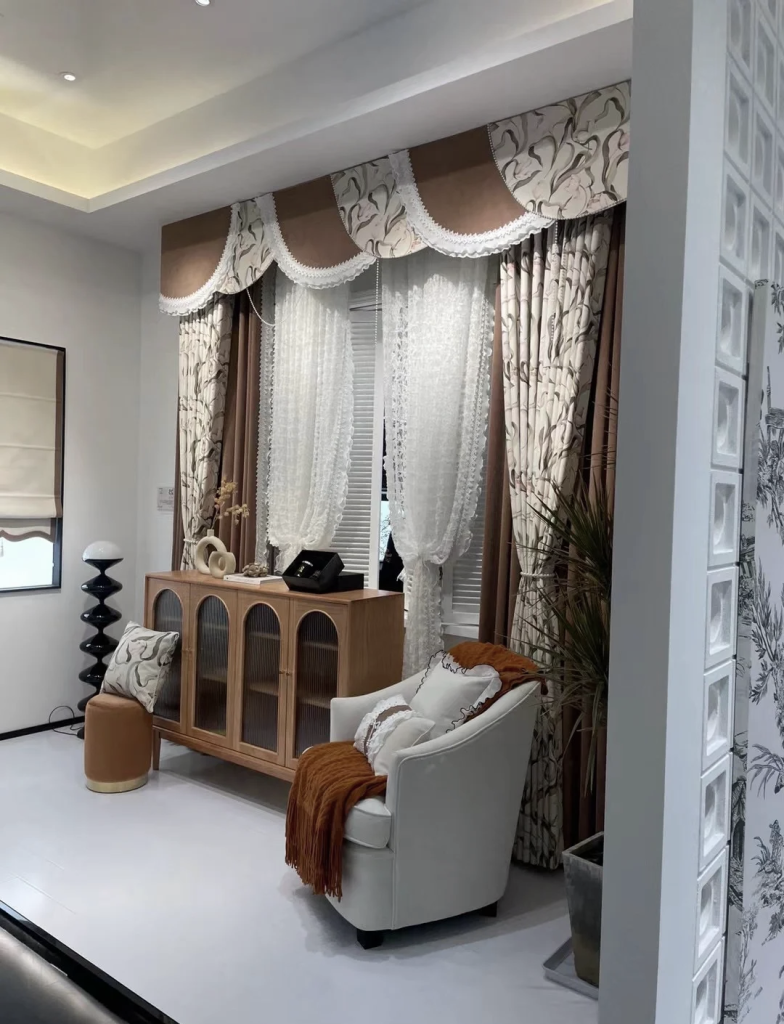
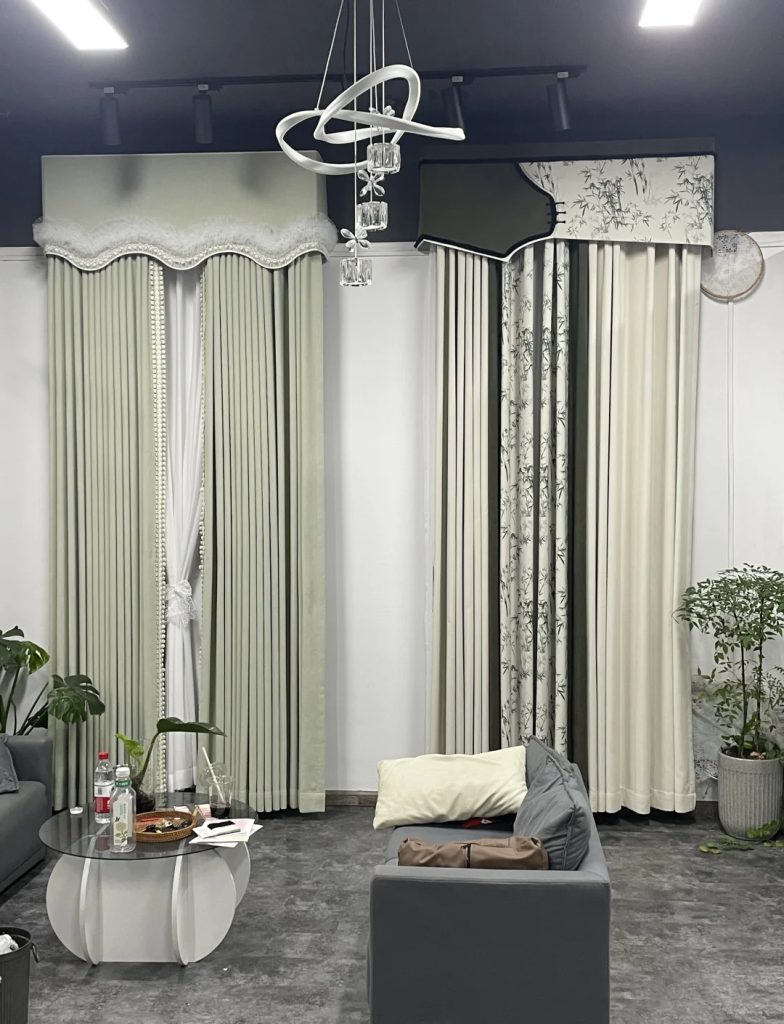
Curtains are more than just window coverings — they play a crucial role in interior design, controlling light, enhancing privacy, and adding style to any space. Behind every well-made curtain is a process that combines careful material selection, precise craftsmanship, and quality control.
1. Choosing the Right Fabric
The foundation of any high-quality curtain is the fabric. Selecting the right material ensures durability, appearance, and functionality.
- Polyester: Durable, wrinkle-resistant, and easy to clean. Ideal for hotels, offices, and residential spaces.
- Cotton: Soft, breathable, and eco-friendly. Suitable for bedrooms and living rooms.
- Velvet: Thick and luxurious, also reduces sound. Perfect for theaters and high-end interiors.
- Linen: Natural texture with an elegant feel. Works well in cafés, studios, and boutique homes.
- Blackout Fabrics: Multi-layered fabrics that block sunlight and UV rays, ideal for nurseries or media rooms.
Each fabric is tested for colorfastness, shrinkage, and strength to meet international export standards.
2. Precision Cutting and Stitching
Once the fabric is selected, accurate cutting is crucial. Modern factories use digital cutting machines for precise measurements, ensuring minimal waste and uniformity. Skilled workers then sew and assemble the curtains, paying attention to pleats, hems, and linings.
- Cutting: Laser-guided to achieve perfect accuracy.
- Stitching: Ensures strong seams and neat edges.
- Pleating: Creates uniform folds for aesthetic appeal.
- Lining Attachment: Adds functionality such as thermal insulation or blackout effect.
Quality inspection is performed at each stage to prevent defects and maintain consistent standards.
3. Customization and Styles
Clients today demand flexibility and personalization. Curtain factories offer a variety of styles and customizable options:
- Eyelet Curtains: Modern look with easy sliding rings.
- Pinch Pleat Curtains: Elegant and formal, suitable for hotels and offices.
- Sheer Curtains: Light, translucent fabric that softens natural light.
- Roman Shades: Foldable and stylish, space-saving.
- Blackout Curtains: Complete privacy and light control.
Customization options include fabric type, size, pleat style, lining, and branding, allowing clients to create their own signature products.
4. Quality Control and Packaging
Before shipping, every curtain undergoes multiple tests to ensure durability and performance:
- Colorfastness: Ensures fabric does not fade easily.
- Shrinkage Test: Verifies stability after washing.
- Tensile Strength: Confirms the strength of seams.
- Light Blocking (for blackout curtains): Confirms full light protection.
After inspection, curtains are folded, packaged in protective bags, labeled, and prepared for export. This ensures products arrive safely and retain their quality.
5. Global OEM and Export Support
Professional curtain factories support international buyers through OEM and ODM services:
- Manufacturing under client brands.
- Custom packaging and labeling.
- Flexible order quantities and sizes.
- Timely production and global shipping.
This allows retailers, wholesalers, and interior designers to launch or expand their curtain collections efficiently and reliably.
Conclusion
Curtain manufacturing is both an art and a science. From fabric selection to final packaging, every step demonstrates skill, precision, and dedication. High-quality curtains bring warmth, comfort, and elegance to homes, offices, and commercial spaces worldwide.
Article link:https://www.vlefooena.com/the-craft-of-curtain-manufacturing-from-fabric-to-finish


No reply content