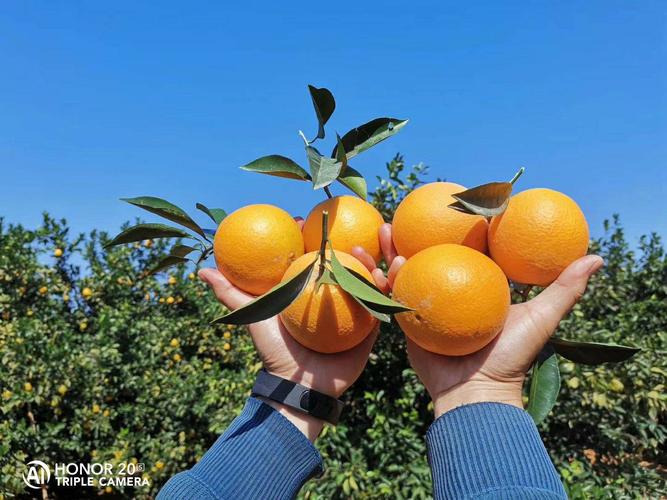
The Grove Where My Boots Are Never Clean: A Navel Orange Story, Rooted in Dirt and Dawn
I’ve been kneeling in this soil since I was five, my tiny fingers brushing the gnarled trunks of our first navel orange trees. Back then, they were no taller than me—scraggly, stubborn things my grandfather had planted after a drought, whispering, “Grow anyway.” Now, their branches bow low with fruit that glows like liquid gold, and my boots? They’re caked in dirt I can’t scrub off, no matter how hard I try. That dirt? It’s the badge of this place.
This isn’t a farm. It’s a diary. Every leaf, every fruit, every scratch on the bark tells a story of rain, of sun, of hands that chose to listen instead of command.
Grandpa’s Lesson: “Oranges Don’t Rush—They Remember”
My grandfather, Elias, was a man of few words, but his hands spoke volumes. He bought this land in ’78, a sun-baked patch with 10 wild orange saplings he’d rescued from a flooded canyon. “They’re survivors,” he’d say, digging holes with a shovel he’d forged himself. “Plant ’em deep, water ’em slow, and let ’em tell you what they need.”
He hated clocks. No “plant by May” rules. No “harvest on schedule.” He watched the bees. When they swarmed the blossoms, he knew it was time to let the fruit swell. When a late frost crept in, he’d light smudge pots—not to fight the cold, but to say, “We’re here. We’ll wait.” By spring, the grove bloomed anyway, as if thanking him for his patience.
That patience lives in the soil now. We don’t till it. We let clover and vetch grow between rows, feeding the earthworms that turn last year’s leaves into black gold. We compost coffee grounds from the diner down the road, avocado peels from our kitchen, even the straw we use to mulch. “The land’s not a trash can,” Grandpa used to wink. “It’s a pantry. Feed it, and it’ll feed you.”
A Day in the Grove: No Scripts, Just Rhythms
Here, time moves with the sun.
5:30 a.m.: I wake to the sound of my dog, Jax, pawing at my door. He knows the drill: coffee first, then boots. I sip chicory coffee on the porch, watching fog lift off the fields, revealing rows of trees just starting to glow. Dew drips from leaves, sticky-sweet, and a mockingbird sings—a sound so familiar, it’s like a morning hug.
7:45 a.m.: Check-ups. I wander the rows, fingers brushing leaves—smooth, waxy, no aphids (ladybugs are on patrol). I note which young trees need water (only the babies; the old ones have roots deep enough to find it themselves). Last week, I found a nest of baby bluebirds in a low branch. I left it alone. “They’re part of the family,” I told Jax, who yawned in agreement.
10:30 a.m.: Harvest. My cousin, Mia, and her son, Leo, arrive with wicker baskets. Mia, 16, moves slow, cradling each orange like a baby bird. “This one’s heavy,” she whispers, grinning. “Juicy, I bet.” Leo, 8, chases a ladybug instead, yelling, “Race you, bug!” Mia sighs, but I catch her smiling.
Imperfections: The Best Kind of Magic
Not every orange is picture-perfect. Some have dents from branches, others are lopsided, their tops a little flat. For years, we’d toss them—or sell them cheap. Then Mia, age 10, brought me one, its peel scuffed like an old map. “This one fought the storm!” she declared. “It’s brave!”
Brave, indeed. Now, we call them “naranjas con historia”—oranges with stories. They go to the food bank, where a single mom cries, “My kid eats these like candy—their ‘ugly’ oranges are the best.” They go to the elementary school, where kids paint them and call them “citrus superheroes.” And some stay right here, left for deer or squirrels—because even the “imperfect” ones deserve a feast.
What You’ll Taste: Sunlight, Soil, and Someone Who Cares
Bite into one of our oranges, and you’ll taste it first: a bright, tangy zing—like licking a lemon drop, but warmer, softer. Then, the sweetness unfolds, slow and rich, like honey steeped in summer. The juice runs, thick and golden, not watery. Peel it, and the skin comes away cleanly, leaving no bitter pith—just a faint, citrusy scent that lingers, like a memory of Grandpa’s old gloves.
But it’s more than taste. It’s the feel of dew on your boots at dawn. It’s Mia’s giggle as she chases a butterfly. It’s Jax’s tail thumping as he guards the crates. It’s the soil, fed by coffee grounds and ladybugs, giving back its best.
Come, Taste the Story (Or Let Us Bring It to You)
If you’re ever nearby, pull up a stool under the old oak. I’ll pour sweet tea, hand you a basket, and let you pick. I’ll show you Grandpa’s first tree—its trunk thick, its branches still heavy with fruit. Mia will teach you to test ripeness by smell: “If it smells like sunshine, it’s ready.” And Leo? He’ll insist you try an “adventure orange.” “It’s the best kind,” he’ll say, grinning.
If you’re far, we’ll pack your order with straw and care—no plastic, no rush. These oranges aren’t perfect. They’re not mass-made. They’re grown by people who show up, day in and day out, for the land, for the fruit, and for anyone who believes food should taste like it’s rooted in love.
Article link:https://www.vlefooena.com/the-grove-where-my-boots-are-never-clean-a-navel-orange-story-rooted-in-dirt-and-dawn

No reply content