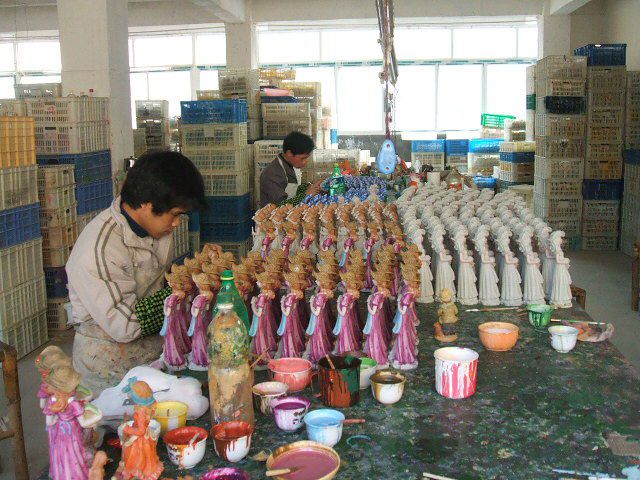

The handicraft industry stands as a testament to humanity’s oldest creative impulse—transforming raw materials into objects of utility, beauty, and cultural identity through skilled hands. Unlike mass production, it thrives on uniqueness, tradition, and the intimate bond between artisan and artifact. From rural pottery studios to urban leather workshops, this industry bridges past and present, proving that “slow making” holds irreplaceable value in a fast-paced world. Let’s explore its essence, evolution, and enduring relevance.
🌱 Origins: The Birth of Handicraft
Handicrafts emerged alongside civilization itself, driven by necessity and creativity. Early humans shaped stone, clay, and fiber into tools, ornaments, and ritual objects—each piece a reflection of their environment and beliefs. The table below traces its historical milestones:
Horizontal Table 1: Evolution of the Handicraft Industry
| Era | Key Driver | Iconic Craft | Cultural Role |
|---|---|---|---|
| Neolithic (10,000 BCE) | Survival needs | Woven baskets, fired clay pots | Food storage, ceremonial offerings |
| Medieval (500–1500 CE) | Guild systems, trade routes | Illuminated manuscripts, stained glass | Religious devotion, merchant identity |
| Industrial Revolution (1760–1840) | Reaction to mechanization | Hand-loomed textiles, artisanal furniture | Preserving “pre-industrial” skills |
| 21st Century | Conscious consumerism | Ethical jewelry, upcycled ceramics | Sustainability, cultural storytelling |
✋ Core Values: The 7 Pillars of Handicraft
At its heart, the handicraft industry rests on seven principles that distinguish it from industrial production. The vertical table below unpacks these pillars:
Vertical Table: 7 Core Values of the Handicraft Industry
-
Human Touch → Every piece bears the artisan’s unique fingerprints, brushstrokes, or tool marks.
-
Cultural Preservation → Techniques (e.g., Japanese kintsugi, Indian bandhani) pass down ancestral knowledge.
-
Sustainability → Local materials (e.g., reclaimed wood, natural dyes) minimize ecological footprints.
-
Customization → Made-to-order designs reflect individual client stories (e.g., wedding rings, family portraits).
-
Economic Empowerment → Supports rural artisans, women-led cooperatives, and marginalized communities.
-
Aesthetic Imperfection → “Wabi-sabi” (beauty in imperfection) celebrates flaws as signs of handmade authenticity.
-
Emotional Connection → Buyers invest in the artisan’s journey, not just the object.
⚖️ Handicraft vs. Industrialization: A Tale of Two Systems
While industrialization prioritizes scale, the handicraft industry champions depth. The table below contrasts their approaches:
Horizontal Table 2: Handicraft Industry vs. Industrial Production
| Criteria | Handicraft Industry | Industrial Production |
|---|---|---|
| Production Scale | Small batches (1–100 units) | Mass production (1,000+ units/day) |
| Value Proposition | Story, uniqueness, cultural heritage | Affordability, consistency, speed |
| Labor | Artisan-led (skilled, hands-on) | Automated (machine-dependent) |
| Material Sourcing | Local, renewable, or reclaimed | Global, standardized, often synthetic |
| Customer Relationship | Direct (artisan-client interaction) | Indirect (retailer/distributor-mediated) |
💡 Modern Innovations: Handicraft in the Digital Age
Today, the industry adapts to global markets without losing its soul. The table below highlights three key innovations:
Horizontal Table 3: Modern Innovations in the Handicraft Industry
| Innovation | How It Works | Impact |
|---|---|---|
| E-commerce Platforms | Artisans sell directly via Shopify, Etsy, or niche marketplaces | Reaches global buyers; cuts out middlemen |
| Digital Storytelling | Social media (Instagram, TikTok) shares artisan journeys (e.g., “A Day in the Pottery Studio”) | Builds emotional loyalty; educates consumers |
| Hybrid Craft-Tech | 3D-printed molds for consistent bases + hand-carved details | Balances efficiency with uniqueness |
🌍 Global Impact: Beyond Borders
The handicraft industry is a soft power force:
-
Economic: Contributes $150 billion annually to developing economies (UNESCO).
-
Cultural: Showcases traditions like Mexican alebrijes (painted sculptures) or Moroccan zellige (tilework) on global stages.
-
Diplomatic: “Craft diplomacy” initiatives (e.g., U.S.-India artisan exchanges) foster cross-cultural understanding.
⚠️ Challenges: Navigating Modern Hurdles
Despite its strengths, the industry faces threats:
-
Skill Erosion: Young artisans abandon crafts for urban jobs; guilds decline.
-
Counterfeiting: Mass-produced “knockoffs” mimic handmade designs, diluting value.
-
Market Access: Remote artisans lack logistics/sales training to compete globally.
🔮 The Future: Crafting a Resilient Path
To thrive, the handicraft industry must:
-
Invest in Education: Apprenticeship programs (e.g., India’s Craft Council initiatives) train next-gen artisans.
-
Leverage Tech: Blockchain verifies authenticity; VR tours immerse buyers in workshops.
-
Advocate for Policy: Governments can offer tax incentives for artisan cooperatives and fair-trade certifications.
In a world chasing speed, the handicraft industry reminds us to slow down—to honor the hands that shape clay, weave thread, and carve wood. It is more than an economic sector; it is a living archive of human creativity, resilience, and connection.
Article link:https://www.vlefooena.com/the-handicraft-industry-weaving-culture-skill-and-soul-into-modern-markets


No reply content