

What Affects the Cost of Custom Shoes in China?
The cost of custom shoes in China depends on several factors, including material selection, shoe design, construction methods, order quantity, tooling requirements, branding, packaging, and quality-control standards.
For footwear brands, wholesalers, importers, and private-label businesses, understanding these cost factors is essential when planning an OEM or ODM footwear project.
A low unit price does not always mean a better deal. Buyers should compare the full scope of each quotation, confirm what is included, and evaluate whether the proposed materials and manufacturing requirements match their expectations.
This guide explains the main factors that affect custom shoe manufacturing costs in China and how international buyers can prepare a more accurate quotation request.
1. Material Selection
Materials are one of the most important factors affecting footwear manufacturing costs.
Different materials have different purchasing prices, processing requirements, availability, and performance characteristics.
Common footwear materials include:
- Genuine leather
- Synthetic leather
- Mesh fabric
- Canvas
- Knit textiles
- EVA foam
- Rubber
- TPR and other sole materials
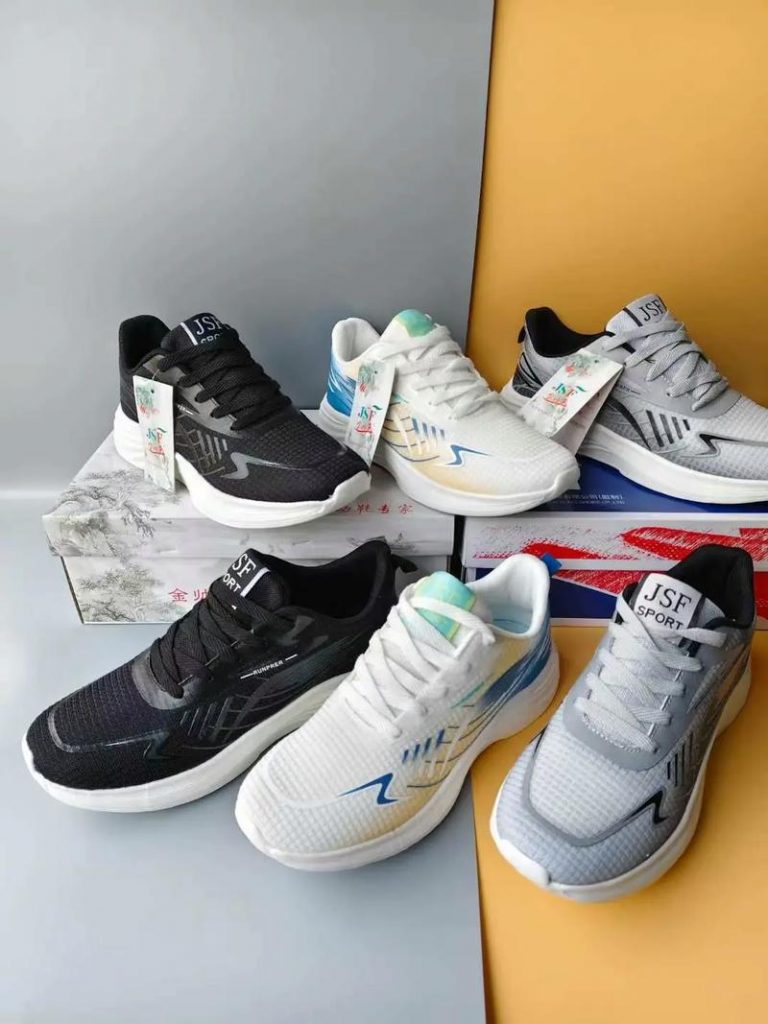
For example, a sneaker made with specialized knit fabric, reinforced panels, and a complex multi-layer sole may require different materials and processing steps from a basic canvas shoe.
However, material names alone are not enough to determine the final cost. Grade, thickness, specifications, color, supplier availability, and required performance standards can also affect the quotation.
Buyer tip: Provide material references, technical specifications, or approved swatches whenever possible. Ask the manufacturer to identify any proposed material substitutions before accepting a quotation.
2. Shoe Design and Construction Complexity
A simple design is generally easier to develop and manufacture than a shoe with many components, specialized construction details, or complex decorative features.
Cost factors may include:
- Number of upper panels
- Stitching complexity
- Decorative overlays
- Special closures or fasteners
- Multi-layer midsoles
- Specialized outsole patterns
- Waterproofing or other functional requirements
- Customized logos and surface treatments
Complex designs may require more labor, additional production steps, specialized equipment, or more development work.
Buyers should distinguish between features that are essential to the product and those that are optional. Simplifying unnecessary details may help control costs without compromising the intended product quality.
3. Order Quantity and Minimum Order Quantity
Order quantity can affect unit cost because manufacturers need to allocate material purchasing, setup, labor planning, and production resources across an order.
Some costs are relatively fixed for a particular project, while others increase with each additional pair.
For example, a new shoe design may require development work or tooling before production begins. Producing more pairs may spread certain fixed costs across a larger quantity, although the actual savings depend on the product and factory.
When requesting a quotation, provide:
- Estimated total quantity
- Quantity per color
- Quantity per size
- Number of styles
- Expected repeat-order volume
A total order may appear large but still require multiple production setups if it contains many different styles and colors.
Ask the manufacturer to confirm its minimum order quantity for each style, color, and material where applicable.
4. Tooling, Molds, and Product Development
Some custom footwear projects require dedicated molds, tooling, or specialized development work.
Potential costs include:
- Outsole molds
- Midsole molds
- Custom components
- Pattern development
- Technical drawing preparation
- Sample development
- Specialized branding tools
Not every project requires new tooling. A manufacturer may be able to adapt an existing platform or component, depending on the design and the buyer’s requirements.
However, using an existing mold may limit design flexibility or affect product differentiation.
Before proceeding, ask the supplier:
- Is new tooling required?
- Which tooling charges are included in the quotation?
- Who owns the tooling after payment?
- Can the tooling be used for repeat orders?
- What happens if the design changes?
- Are maintenance or storage charges applicable?
These questions help buyers understand the initial investment and avoid unexpected expenses later.
5. OEM vs. ODM Manufacturing Costs
OEM and ODM are related but different approaches to footwear development.
OEM manufacturing generally involves producing footwear according to a buyer’s design and specifications.
ODM manufacturing generally involves adapting or selecting designs and product solutions developed or offered by a manufacturer.
The cost difference depends on the project rather than the label alone.
A fully customized OEM shoe may require additional development, tooling, and sampling. An ODM project using an existing design may reduce some development work, but customization, branding, materials, and packaging can still affect the price.
When comparing suppliers, confirm the actual scope of work instead of assuming that every OEM project costs more than every ODM project.
6. Branding and Private-Label Requirements
Private-label footwear may require customized branding across multiple components.
Examples include:
- Tongue labels
- Heel logos
- Insole printing
- Embossed or debossed logos
- Custom shoelaces
- Branded shoe boxes
- Hangtags and product inserts
The cost depends on the branding method, artwork complexity, component quantity, and production process.
Buyers should provide final artwork, dimensions, color references, and placement requirements before requesting a detailed quotation.
If the design is not finalized, ask the manufacturer to separate estimated development costs from the production quotation.
7. Quality Standards and Testing Requirements
Quality requirements can affect material choices, inspection procedures, testing costs, and manufacturing controls.
Depending on the footwear category and destination market, buyers may need to consider:
- Dimensional consistency
- Stitching and workmanship standards
- Sole adhesion
- Abrasion resistance
- Slip resistance
- Colorfastness
- Restricted-substance requirements
- Product-specific regulatory obligations
Not every test applies to every shoe. Buyers should identify the applicable requirements and agree on suitable test methods and acceptance criteria.
If independent laboratory testing is needed, clarify whether the cost is included in the supplier’s quotation or charged separately.
A quotation based on basic visual inspection should not automatically be treated as equivalent to one that includes additional testing or independent inspection.
8. Packaging and Export Preparation
Packaging is another cost factor that buyers should include in their calculations.
Depending on the project, packaging may include:
- Individual shoe boxes
- Tissue paper or protective inserts
- Size and barcode labels
- Hangtags
- Inner cartons
- Export cartons
- Customized retail packaging
Special packaging may increase material costs or require additional production time.
Packaging dimensions and carton quantities also affect shipment volume, which can influence international freight costs.
For wholesale orders, ask the manufacturer to provide the proposed packing configuration and estimated carton dimensions before arranging transportation.
9. How to Compare Custom Shoe Quotations
Comparing quotations solely by unit price can lead to misleading conclusions.
One supplier may quote a basic material specification, while another includes upgraded materials, custom packaging, or additional inspection requirements.
Use the following comparison framework.
| Cost item | What buyers should confirm |
|---|---|
| Product specification | Are materials, construction, and dimensions identical? |
| Unit price | What quantity and currency does the price cover? |
| Sampling | Are sample-development charges included? |
| Tooling | Are new molds or specialized tools required? |
| Branding | Are logos, labels, and custom packaging included? |
| Quality control | What inspections and tests are included? |
| Packaging | What type of shoe boxes and export cartons are provided? |
| Shipping terms | Is the quotation EXW, FOB, or another agreed Incoterm? |
| Payment terms | What deposit and balance-payment conditions apply? |
| Lead time | Does the timeline include sampling and production? |
Request a written quotation with a clearly defined product specification, quantity, delivery terms, and validity period.
For international shipments, keep manufacturing costs separate from freight, insurance, customs duties, import taxes, and other destination charges unless the quotation explicitly includes them.
10. How to Calculate the Total Cost of a Custom Shoe Order
The unit manufacturing price is only one part of the total project cost.
A simplified budgeting formula is:
Total project cost = Manufacturing cost + Development and tooling + Packaging + Inspection and testing + Freight and insurance + Applicable import charges + Other project expenses
Some items may be included in the supplier’s quotation, so avoid counting them twice.
For example, if the manufacturer includes standard packaging in the unit price, do not add the same packaging cost again. Likewise, confirm which charges are covered under the agreed shipping terms.
For landed-cost planning, divide the relevant total costs by the number of saleable pairs to estimate the cost per pair delivered to the intended destination.
The calculation should use the actual order details and applicable taxes and charges rather than a generic online estimate.
11. Practical Ways to Control Custom Shoe Costs
Standardize Materials Where Possible
Using the same approved materials across related styles may simplify purchasing and production planning. Confirm that any shared materials still meet each product’s requirements.
Reduce Unnecessary Design Complexity
Review decorative elements, component counts, and special finishes. Remove features that do not contribute meaningfully to the product’s function or brand positioning.
Consolidate Color and Size Planning
Provide a clear breakdown of quantities by style, color, and size. Better planning helps the manufacturer evaluate material requirements and production arrangements.
Finalize Specifications Before Sampling
Late design changes can create additional sample rounds, tooling revisions, and production delays.
Use a detailed technical package and document all approved changes.
Compare Suppliers on Equal Terms
Send the same specification to each shortlisted supplier. Compare the complete quotation, communication quality, manufacturing capability, and proposed quality-control process.
Plan Repeat Orders Early
If you expect recurring purchases, discuss material availability, tooling ownership, and repeat-order arrangements in advance.
Never assume that a future price or production slot is guaranteed unless it has been confirmed in writing.
12. Frequently Asked Questions
How much does custom shoe manufacturing in China cost?
There is no single price that applies to all custom shoes. The cost depends on materials, design complexity, order quantity, tooling, branding, quality requirements, and packaging. A detailed specification is needed for a meaningful quotation.
Does a larger order always mean a lower unit price?
Not necessarily. Larger quantities may spread some fixed costs across more pairs, but material prices, design changes, production capacity, and order complexity also affect the result.
What is usually included in a custom shoe quotation?
The quotation may include footwear manufacturing and standard packaging, but sampling, tooling, testing, customized packaging, freight, and other charges vary by supplier. Ask for a written breakdown.
Is OEM more expensive than ODM footwear?
It depends on the project. OEM designs may require more development or tooling, while ODM projects may use existing designs. Materials, customization, and order quantity can be more important than the label itself.
How can I reduce the cost of private-label shoes?
Consider simplifying unnecessary design details, using suitable standardized materials, planning quantities carefully, and finalizing specifications before sampling. Do not reduce essential quality or safety requirements just to achieve a lower quotation.
What information should I provide to get an accurate quotation?
Provide product drawings or reference photos, materials, size range, colors, branding requirements, estimated quantity, packaging details, destination market, and target delivery schedule. Explain any required testing or compliance standards.
13. Request a Custom Footwear Manufacturing Quotation
Understanding the factors that affect custom shoe manufacturing costs helps international buyers plan their budgets, compare suppliers, and make better sourcing decisions.
Before contacting a Chinese footwear manufacturer, prepare your technical specifications, target quantity, size breakdown, branding requirements, packaging details, and destination market.
Ask each potential supplier to confirm its manufacturing capabilities, sample-development process, tooling requirements, quotation scope, payment terms, and quality-control procedures.
VLEFOOENA helps buyers explore sourcing information and potential supplier connections for international B2B procurement. Supplier capabilities, prices, and commercial terms should be confirmed directly before placing an order.
Related guides:
- How to Create a Shoe Tech Pack for OEM Manufacturing in China
- How to Evaluate Shoe Samples Before Mass Production
Use these guides together to prepare your product specifications, evaluate samples, and compare custom footwear quotations more consistently.


No reply content