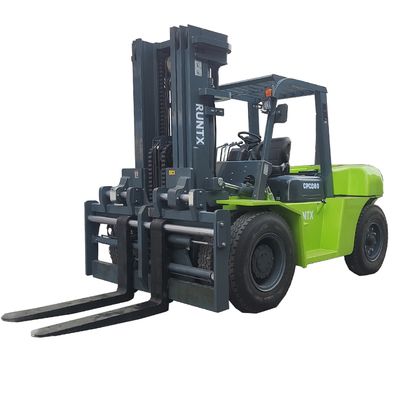
What Should You Check Before Buying Forklifts from a Chinese Factory?
Buying a forklift directly from a Chinese factory can give importers, distributors, warehouse operators, construction companies, and industrial businesses access to competitive manufacturing costs and a wide range of configurations.
But a forklift is not a product that should be purchased simply because the factory offers a lower quotation.
It is a piece of industrial equipment that will carry heavy loads, operate around workers, and potentially work for thousands of hours. A problem that seems small during purchasing can become expensive once the machine is operating at the buyer’s warehouse or job site.
A supplier may quote the correct lifting capacity but use a configuration that does not match the buyer’s load center. Another supplier may offer an attractive price but exclude the charger, attachment, spare parts, or important safety equipment.
Before paying a deposit, buyers should therefore examine the machine itself, the factory’s manufacturing capability, the technical documentation, and the commercial terms.
This guide focuses on the practical checks that should be completed before buying forklifts from a Chinese factory.
1. First Check Whether the Factory Can Supply Your Actual Forklift
Do not start with the question:
“What is your cheapest forklift?”
Start with:
“Can your factory manufacture the exact configuration I need?”
Give the manufacturer your actual requirements:
- Rated capacity
- Load center
- Lifting height
- Mast type
- Indoor or outdoor application
- Operating hours
- Floor conditions
- Tire requirements
- Attachment requirements
- Battery or engine preference
- Quantity
- Destination country
A factory that mainly produces small warehouse forklifts may not be the right manufacturer for a heavy-duty outdoor application.
Product suitability should come before price.
2. Check the Rated Capacity Carefully
The capacity printed on a forklift model is only the starting point.
Ask the manufacturer to confirm:
- Rated capacity
- Load center
- Maximum lifting height
- Residual capacity
- Mast configuration
- Attachment effect on capacity
For example, a forklift advertised as a 3-ton machine may have a different effective capacity depending on the load center, lifting height, mast, and attachment.
If your load is long, high, or unusually shaped, give the factory the actual dimensions.
This is particularly important when importing specialized equipment because the buyer may not have an opportunity to change the configuration easily after the machine arrives.
3. Check the Load Center
Load center is one of the specifications inexperienced buyers often overlook.
Suppose the forklift is rated for a certain load at a standard load center, but your actual cargo extends much farther forward.
The practical lifting capability can be different.
Provide the supplier with:
- Load weight
- Load length
- Load width
- Load height
- Pallet dimensions
- Center of gravity where relevant
If you use special attachments, tell the manufacturer before receiving the final quotation.
4. Check the Mast Configuration
Do not simply ask:
“How high can it lift?”
Also ask:
- Maximum lift height
- Collapsed mast height
- Free lift
- Overall height
- Mast stages
- Visibility
- Maximum height with load
This matters particularly for warehouses.
A forklift may be able to lift high enough for your rack system but may be too tall to pass through a warehouse door when the mast is lowered.
Measure the actual operating environment before ordering.
5. Inspect the Forks
The forks are directly involved in lifting the load, so they deserve particular attention.
Check:
- Fork length
- Fork thickness
- Fork width
- Fork spacing
- Fork adjustment
- Fork locking mechanism
- Surface condition
- Wear resistance
- Compatibility with the intended load
If you require unusually long forks or specialized forks, make this part of the original specification.
Do not assume that the standard fork configuration will automatically suit your cargo.
6. Look Closely at the Mast and Welded Structures
The mast and frame carry significant loads during operation.
When evaluating a factory, look at:
- Weld quality
- Welding consistency
- Structural design
- Surface finish
- Paint quality
- Hydraulic mounting points
- Mast alignment
- Visible deformation
- Protection of important components
Photographs can help, but an actual factory inspection or independent inspection provides much stronger evidence.
The objective is not to judge a forklift simply by how polished it looks.
The important question is whether the machine is consistently manufactured according to an appropriate engineering and quality-control process.
7. Check the Hydraulic System
The hydraulic system is critical to lifting performance.
Ask about:
- Hydraulic pump
- Hydraulic cylinders
- Hydraulic hoses
- Hydraulic valves
- Oil capacity
- Leakage prevention
- Lifting speed
- Lowering control
- Maintenance requirements
During inspection, look for visible hydraulic leakage around:
- Cylinders
- Hoses
- Connections
- Valves
- Pump areas
A small leak during factory inspection should not simply be ignored.
It may indicate an assembly or component problem that needs to be corrected before shipment.
8. Check the Engine or Electric Drive System
The power system should match the intended application.
For diesel or internal-combustion forklifts, check:
- Engine model
- Rated power
- Fuel type
- Cooling system
- Exhaust configuration
- Maintenance requirements
- Fuel consumption information
For electric forklifts, check:
- Motor type
- Motor power
- Battery type
- Battery capacity
- Charger
- Charging time
- Expected operating time
- Battery warranty
Do not accept a quotation that only says “electric forklift” without identifying the actual battery and motor configuration.
9. Pay Particular Attention to the Battery
For electric forklifts, the battery can be one of the most expensive components.
Ask:
- What battery technology is used?
- What is the voltage?
- What is the capacity?
- What is the charging time?
- What is the expected operating time?
- What charger is included?
- Can the battery be replaced?
- What is the warranty?
- Are spare batteries available?
If the forklift will operate multiple shifts, ask the manufacturer to calculate whether one battery is sufficient.
A low-priced forklift with an undersized battery may not be a good purchase for a high-utilization warehouse.
10. Check the Tires for Your Working Environment
Tire selection should match the application.
Possible configurations include:
- Cushion tires
- Solid tires
- Pneumatic tires
- Non-marking tires
For indoor warehouses, floor protection and maneuverability may be important.
For outdoor yards, traction and durability may matter more.
Before purchasing, provide the supplier with information about:
- Floor type
- Ground condition
- Indoor/outdoor use
- Rain exposure
- Operating temperature
- Daily operating hours
Do not choose tires simply because they are included in the cheapest quotation.
11. Test the Steering and Braking System
During inspection, check whether:
- Steering responds correctly
- Turning is smooth
- Braking is predictable
- Parking brake works correctly
- Controls are clearly labeled
- Operator visibility is acceptable
A forklift should not only lift the required load.
It must also be controllable during normal operation.
For larger orders, the buyer should consider including functional testing requirements in the inspection checklist.
12. Check the Operator’s Position
Operator comfort is sometimes treated as a luxury.
For a forklift operating several hours every day, it can become an operational issue.
Check:
- Seat
- Seat adjustment
- Steering wheel position
- Pedal position
- Control layout
- Visibility
- Overhead guard
- Access and exit
- Instrument panel
- Noise
- Vibration
The operator needs to see the load and surrounding working area clearly.
A forklift with technically good specifications can still be inconvenient if the operator’s working position is poorly designed.
13. Check the Safety Equipment
Safety should be reviewed before the order is finalized.
Depending on the configuration, check:
- Horn
- Lights
- Warning lights
- Reverse alarm
- Seat belt
- Parking brake
- Emergency controls
- Overhead protection
- Load backrest
- Mirrors
- Operator protection
The exact requirements depend on the forklift configuration and destination market.
Do not assume that a machine sold in one market automatically meets every requirement in another market.
14. Ask for the Applicable Certification Documents
Certification is not simply a box to tick.
Ask the supplier:
- Which certifications are available?
- Which model do they cover?
- Do they match the actual configuration?
- What testing was performed?
- What technical documentation is included?
- Are additional destination-market requirements applicable?
The buyer should verify requirements for the country where the forklift will be imported and operated.
This should be done before production rather than after the forklift has already been shipped.
15. Check Whether the Factory Has a Real Quality-Control Process
A factory should be able to explain how it controls quality.
Ask about:
- Incoming component inspection
- Production inspection
- Welding inspection
- Hydraulic testing
- Electrical testing
- Functional testing
- Final inspection
- Pre-shipment inspection
You can also ask the factory to provide photographs or videos of testing procedures.
The objective is to determine whether quality control is systematic or simply based on a final visual inspection.
16. Ask How the Finished Forklift Is Tested
A finished forklift should be checked before shipment.
Depending on the model and order, testing may include:
- Starting test
- Steering test
- Braking test
- Hydraulic lifting test
- Lowering test
- Load test
- Mast operation
- Attachment operation
- Electrical system test
- Safety-function test
For a larger order, agree on the acceptance criteria before production.
That gives both parties a clear standard.
17. Check the Spare-Parts Situation Before Buying
This is one of the most important questions for an importer.
Ask:
“If this forklift stops working six months after delivery, how will I obtain the replacement part?”
Then ask:
- Which spare parts are normally stocked?
- What is the lead time?
- Can parts be ordered individually?
- Are maintenance kits available?
- Can the factory provide technical diagrams?
- Are replacement components clearly identified?
For distributors, this becomes even more important because their own customers will expect service after the sale.
18. Buy a Basic Spare-Parts Package With the Initial Order
For larger purchases, it can make sense to order commonly used spare parts together with the forklifts.
Depending on the model, the package may include:
- Filters
- Fuses
- Lights
- Belts
- Seals
- Brake components
- Hydraulic components
- Electrical components
- Sensors
- Wear parts
The exact list should be recommended according to the actual model.
The objective is simple:
Reduce downtime when a relatively inexpensive component fails.
19. Examine the Warranty Instead of Just Asking “Is There a Warranty?”
A warranty statement is only useful when its conditions are clear.
Ask:
- Warranty period
- Covered components
- Excluded components
- Labor coverage
- Replacement-part responsibility
- Shipping responsibility
- Claim procedure
- Required evidence
- Technical-support process
For international purchases, also ask how warranty claims are handled when the buyer is thousands of kilometers away from the factory.
20. Check the Factory’s OEM Capability
If you are buying for your own brand, do not stop at asking whether OEM is available.
Confirm exactly what can be customized.
For example:
- Logo
- Paint color
- Nameplate
- Product labels
- Packaging
- User manuals
- Warning labels
- Accessories
- Spare-parts packaging
Send the supplier the final artwork and specifications before production.
A simple statement such as “OEM available” does not tell you what the factory can actually customize.
21. Check the Factory’s Production Capacity
A factory may be able to manufacture one sample but struggle with a large order.
If you are purchasing 20, 50, or 100 units, ask:
- Monthly production capacity
- Current production schedule
- Estimated lead time
- Component supply
- Production planning
- Inspection capacity
- Shipment schedule
This is especially important for distributors who need consistent deliveries.
22. Compare the Factory’s Quotation Line by Line
A quotation should be detailed enough to understand exactly what you are buying.
Check:
| Item | What to Confirm |
|---|---|
| Model | Exact model |
| Capacity | Rated capacity |
| Load center | Exact specification |
| Mast | Type and height |
| Battery | Type, voltage and capacity |
| Charger | Included or optional |
| Tires | Type and size |
| Attachment | Included or optional |
| Safety equipment | Exact configuration |
| Warranty | Period and scope |
| Spare parts | Included or optional |
| Packaging | Export packaging |
| Lead time | Production schedule |
| Trade term | EXW / FOB / CIF / etc. |
| Payment | Deposit and balance |
| Shipping | Responsibility and cost |
This prevents a common problem where one factory appears cheaper simply because its quotation excludes several items.
23. Check the Contract Against the Final Quotation
Before paying a deposit, compare the contract with the quotation.
The documents should clearly identify:
- Product model
- Quantity
- Technical specifications
- Attachments
- OEM requirements
- Packaging
- Delivery time
- Warranty
- Payment terms
- Inspection terms
- Documentation
- Spare parts
Anything important that exists only in a chat message is more difficult to enforce than a clearly documented requirement.
24. Do Not Skip Pre-Shipment Inspection
For a significant order, consider arranging an inspection before the final payment or shipment, according to the agreed commercial terms.
The inspection can verify:
- Model
- Quantity
- Appearance
- Dimensions
- Components
- Accessories
- Battery
- Tires
- Attachments
- Hydraulic operation
- Steering
- Braking
- Lifting
- Documentation
- Packaging
- OEM branding
The exact inspection procedure should be agreed in advance.
25. Take Photos and Videos During Inspection
For international transactions, documentation is useful.
Request clear photographs and videos showing:
- Full forklift
- Nameplate
- Serial number
- Engine or motor
- Battery
- Charger
- Mast
- Forks
- Tires
- Controls
- Attachments
- Testing
- Packaging
The purpose is not merely to collect promotional photographs.
The records can help verify that the actual shipment corresponds to the agreed configuration.
26. Check the Nameplate
The nameplate should be consistent with the agreed machine specification.
Depending on the machine, check information such as:
- Manufacturer
- Model
- Serial number
- Rated capacity
- Load center
- Manufacturing date
- Relevant technical information
Make sure the information matches the documents.
A mismatch between the machine, nameplate, quotation, and shipping documents should be resolved before shipment.
27. Confirm Export Packaging
A forklift can spend weeks in transportation and may experience moisture, dust, handling, and storage.
Ask the factory how it protects:
- Electrical components
- Battery
- Control panel
- Hydraulic components
- Exposed metal
- Spare parts
- Documentation
Also confirm how the machine will be secured during transportation.
28. Check Shipping Dimensions Before the Order
Ask for:
- Length
- Width
- Height
- Gross weight
- Net weight
- Packaging dimensions
- Loading method
These figures are needed for freight planning.
Do not wait until production is finished to ask your forwarder about transportation.
Forklift dimensions can significantly affect the shipping arrangement.
29. Think About Total Cost, Not Just Factory Price
A forklift’s real cost includes more than the purchase price.
Consider:
Purchase price
-
shipping
-
insurance
-
customs duties and taxes
-
destination charges
-
local transportation
-
battery or fuel
-
maintenance
-
spare parts
-
downtime
-
operator-related costs
The cheapest quotation is not automatically the cheapest forklift to own.
30. Red Flags Before Buying From a Chinese Factory
Be careful if a supplier:
- Refuses to provide basic specifications
- Cannot explain the load center
- Gives inconsistent product information
- Changes specifications repeatedly
- Cannot explain warranty conditions
- Avoids questions about spare parts
- Provides unclear certification information
- Offers an unusually low price without explaining the configuration
- Pressures you to pay immediately
- Cannot provide clear production information
- Refuses reasonable inspection arrangements
One red flag does not automatically mean the supplier is unreliable.
But several together deserve further investigation.
31. Questions to Ask During a Factory Video Call
If you cannot visit China personally, a live video call can still provide useful information.
Ask the supplier to show:
- Production area
- Forklift assembly
- Welding area
- Quality-control area
- Finished forklifts
- Nameplates
- Battery area
- Testing process
- Spare-parts area
- Packaging area
Ask them to show the areas live rather than sending only edited promotional videos.
This does not replace an independent inspection, but it can provide additional evidence during the initial supplier evaluation.
32. Use the Supplier’s Existing Information as One Part of Your Due Diligence
The Guangzhou Forklift Manufacturing Factory supplier page can be used as a central reference for reviewing the supplier’s published forklift information.
The supplier has also published How to Choose the Right Forklift Supplier for Your Material Handling Needs, which covers equipment range, electric and internal-combustion forklifts, attachments, spare parts, safety considerations, and information buyers should provide when requesting quotations.
However, published information should not be treated as a substitute for technical verification.
Use the supplier’s online information to build your shortlist, then verify the actual machine and commercial terms before ordering.
33. A Practical Pre-Order Inspection Checklist
Before approving the purchase, check:
- [ ] Exact model confirmed
- [ ] Rated capacity confirmed
- [ ] Load center confirmed
- [ ] Lift height confirmed
- [ ] Mast type confirmed
- [ ] Fork dimensions confirmed
- [ ] Attachment confirmed
- [ ] Tire specification confirmed
- [ ] Battery or engine confirmed
- [ ] Charger confirmed
- [ ] Safety equipment confirmed
- [ ] Certification requirements checked
- [ ] Warranty confirmed
- [ ] Spare parts discussed
- [ ] OEM requirements confirmed
- [ ] Production lead time confirmed
- [ ] Shipping dimensions confirmed
- [ ] Packaging confirmed
- [ ] Inspection arranged
- [ ] Contract checked
- [ ] Payment terms confirmed
If these items are clear, the risk of a specification misunderstanding is much lower.
Frequently Asked Questions
What should I check first when buying a forklift from China?
Start with the application, load weight, load center, lifting height, operating environment, working hours, tire requirements, and attachments. These determine the correct forklift configuration.
How can I verify a Chinese forklift factory?
Review its product range, manufacturing capability, technical documents, quality-control process, certifications, warranty, spare-parts support, and export experience. For larger orders, consider factory or third-party inspection.
Should I inspect the forklift before shipment?
For high-value equipment or larger orders, pre-shipment inspection is a sensible risk-control measure. It allows the buyer to verify the machine before international transportation.
What documents should a forklift manufacturer provide?
Depending on the transaction and destination market, buyers may need technical specifications, commercial documents, packing information, certification documents, manuals, warranty information, and shipping documentation.
What is more important: price or specifications?
Specifications come first. A cheap forklift with the wrong capacity, mast, battery, tires, attachment, or compliance configuration can cost considerably more after delivery.
Should I buy spare parts together with the forklift?
For commercial or industrial operations, keeping commonly required spare parts available can reduce downtime and dependence on urgent international shipments.
How do I know whether a forklift quotation is complete?
Ask the supplier to list the exact model, capacity, mast, battery or engine, charger, tires, attachments, safety equipment, warranty, packaging, lead time, trade term, and any optional items.
Can I customize a forklift under my own brand?
Many manufacturers offer some form of OEM customization, but the exact scope varies. Confirm logo, color, nameplate, packaging, manuals, labels, and other requirements before production.
Conclusion
Buying a forklift directly from a Chinese factory can work well when the buyer treats the transaction as an industrial procurement project rather than a simple price comparison.
The most important checks happen before the deposit is paid.
Confirm the actual application.
Confirm the load and load center.
Confirm the mast and lifting height.
Check the hydraulic, electrical, engine, battery, tires, forks, and safety systems.
Review certifications and technical documents.
Understand warranty and spare-parts support.
Confirm shipping dimensions and packaging.
Then compare the complete quotation and inspect the finished equipment before shipment when appropriate.
The best supplier is not necessarily the factory offering the lowest initial price.
It is the manufacturer that can consistently deliver the correct machine, document the specifications clearly, support the equipment after delivery, and provide a configuration that makes economic sense for the buyer’s actual operation.
For international buyers researching this supplier, the Guangzhou Forklift Manufacturing Factory supplier profile provides a central place to review its published forklift information before moving to direct technical and commercial verification.


No reply content