
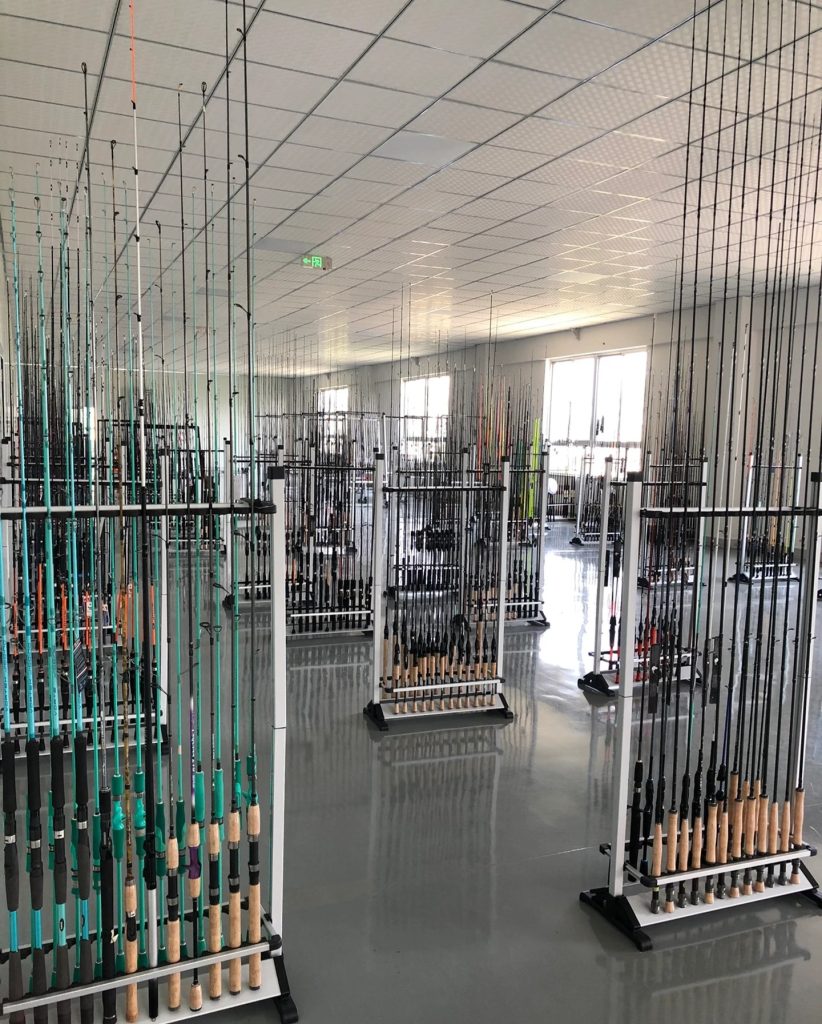
How Fishing Rod Guides, Reel Seats, and Handles Affect Product Quality
When sourcing fishing rods from China, wholesale buyers often focus on the rod blank, length, power, action, and material. However, the finished fishing rod is made from multiple components, and the quality of the guides, reel seat, handle, and other parts can also affect the product’s usability, appearance, durability, and market positioning.
For importers, distributors, retailers, and private-label brands, evaluating these components is particularly important when comparing fishing rod suppliers. Two rods with similar blank specifications may still have significant differences in their finished configuration.
This guide explains the main components that buyers should examine when purchasing fishing rods for wholesale or OEM projects.
1. Why Fishing Rod Components Matter
A fishing rod is more than a blank. The finished product normally combines the blank with guides, a reel seat, handle or grip, decorative components, finishing materials, and other parts.
Each component contributes to the final product in a different way.
For wholesale buyers, important considerations include:
- Component quality
- Compatibility
- Weight
- Finish
- Assembly quality
- Appearance
- Intended fishing application
- Target retail market
For this reason, buyers should evaluate the complete fishing rod rather than selecting a supplier based only on the blank material.
2. Fishing Rod Guides
Guides are the components positioned along the rod that help control the fishing line as it moves through the rod during casting and retrieval.
The guide configuration can affect the overall design, weight distribution, appearance, and intended application of the fishing rod.
When evaluating guides, buyers should consider:
- Guide type
- Frame construction
- Insert material
- Guide size
- Number of guides
- Guide placement
- Attachment quality
- Finish
The appropriate configuration depends on the rod type and intended application. A spinning rod, casting rod, and specialized fishing rod may use different guide arrangements.
3. Guide Size and Configuration
Guide size and placement should be considered as part of the overall rod design.
Wholesale buyers should not simply request the largest or smallest guides available. Instead, they should ask the manufacturer to recommend a suitable configuration based on the rod design, reel type, line requirements, and intended fishing application.
When developing an OEM fishing rod, the guide specification should be included in the approved product specification.
4. Inspecting Guide Installation
Guide quality is not only about the component itself. Installation is also important.
During sample inspection, buyers should look for:
- Consistent guide alignment
- Secure attachment
- Clean wrapping
- Consistent finishing
- Absence of visible damage
- Proper positioning along the blank
Small inconsistencies can become more noticeable when purchasing large quantities, particularly for private-label products where consistent appearance is important.
5. Fishing Rod Reel Seats
The reel seat is the component that secures the fishing reel to the rod.
For wholesale buyers, reel-seat selection should be based on the rod type, intended reel, product positioning, and overall design.
When evaluating a reel seat, buyers should check:
- Material
- Design
- Reel compatibility
- Locking mechanism
- Fit and finish
- Installation quality
- Overall weight
A reel seat should hold the intended reel securely without unnecessary movement.
6. Spinning Rod vs Casting Rod Reel Seats
Spinning rods and casting rods are designed for different reel configurations, so buyers should make sure the reel seat is appropriate for the intended rod type.
When ordering fishing rods in bulk, specify whether the product is intended for:
- Spinning reels
- Baitcasting reels
- Other specified reel configurations
This information should be included in the product specification before the manufacturer prepares samples.
For more information about rod types, see Spinning Rod vs Casting Rod: Which Type Should Wholesale Buyers Choose?.
7. Fishing Rod Handles and Grips
The handle is another important part of the finished fishing rod because it directly affects how the angler holds and controls the product.
Common handle or grip materials can include different types of foam, cork, and other materials depending on the product design.
Buyers should evaluate:
- Grip material
- Handle length
- Handle shape
- Surface finish
- Comfort
- Weight
- Connection to the reel seat
The appropriate handle design depends on the rod type and target fishing application.
8. EVA and Cork Fishing Rod Handles
EVA and cork are two materials buyers may encounter when sourcing fishing rod handles.
EVA grips are commonly used in many fishing rod designs because they can provide a lightweight and practical grip solution.
Cork handles are also widely used in fishing rod products and may be selected for their appearance and traditional feel.
Neither material should automatically be considered superior for every product. The correct choice depends on the target market, product positioning, rod design, and customer expectations.
9. Handle Design and Product Positioning
Handle design can influence how a fishing rod is perceived by customers.
A basic value-oriented fishing rod may use a straightforward handle configuration, while a premium private-label product may require more attention to handle shape, materials, finishing, and visual details.
For OEM projects, buyers should provide clear requirements for:
- Handle material
- Color
- Length
- Shape
- Logo placement
- Decorative details
10. How Components Affect Fishing Rod Weight
When buyers request a lightweight fishing rod, they should not evaluate the blank alone.
Guides, reel seats, handles, grips, and decorative components all contribute to the final weight.
This means that two fishing rods with similar blank materials can have different finished weights.
For wholesale buyers, the best practice is to request the finished product weight and verify it against the approved sample.
Our guide Fishing Rod Materials Explained: Carbon Fiber vs Fiberglass for Wholesale Buyers provides additional information about how material selection relates to fishing rod design.
11. Component Quality and Fishing Rod Balance
Component weight and positioning can influence the balance of a finished fishing rod.
For example, changing the reel seat, handle, or guide configuration can affect how the rod feels when held with a reel attached.
For this reason, buyers developing a custom fishing rod should evaluate balance using the intended reel or an appropriate test setup.
A rod that appears lightweight on a specification sheet may not necessarily feel well balanced in actual use.
12. How to Check Fishing Rod Components Before Ordering
Before approving a bulk order, buyers should inspect a physical sample whenever possible.
A practical inspection checklist includes:
- Check the blank surface for visible defects.
- Check guide alignment.
- Inspect guide wrapping.
- Check the guide inserts and frames.
- Test the reel-seat locking mechanism.
- Check reel compatibility.
- Inspect handle material and surface quality.
- Check the connection between the handle and blank.
- Measure finished weight.
- Check the overall balance.
- Inspect logo and decorative printing.
- Review individual and carton packaging.
The inspection results should be recorded and compared with the approved specification.
13. Questions to Ask a China Fishing Rod Manufacturer
When comparing fishing rod suppliers, buyers can ask the following questions:
- What guide configurations are available?
- Which guide materials and inserts can be supplied?
- What reel-seat options are available?
- Which handle materials can be customized?
- Can guide placement be customized?
- Can the handle shape be customized?
- Can colors and decorative details be changed?
- What components are included in the standard model?
- Can the supplier provide samples before bulk production?
- What is the MOQ for customized components?
These questions help buyers understand whether a supplier is providing a standard product or a genuinely customizable OEM solution.
14. Components for OEM Fishing Rod Projects
For an OEM project, component specifications should be confirmed before production.
A buyer may need to define:
- Blank material
- Rod length
- Power
- Action
- Guide configuration
- Reel seat
- Handle material
- Handle color
- Logo
- Packaging
The manufacturer should confirm which requirements can be achieved with an existing model and which may require additional development.
For a broader OEM process, see OEM Fishing Rod Manufacturing in China: Custom Logo, Design and Packaging.
15. Standard Fishing Rod vs Customized Fishing Rod
A standard fishing rod can be a practical choice for buyers who want to test a market quickly or place an initial wholesale order.
Customization becomes more relevant when the buyer wants to establish a differentiated private-label product.
Standard products may offer advantages such as:
- Existing specifications
- Faster sample availability
- Established components
- Lower development complexity
Customized products may provide greater control over:
- Rod specifications
- Component configuration
- Appearance
- Branding
- Packaging
- Product positioning
The appropriate approach depends on the buyer’s quantity, market strategy, budget, and development requirements.
16. Common Mistakes When Selecting Fishing Rod Components
Choosing Components Only by Appearance
A visually attractive component still needs to be compatible with the rod and intended application.
Ignoring Component Weight
Small component changes can affect the finished weight and balance of a fishing rod.
Not Checking Reel Compatibility
The reel seat should match the intended reel configuration.
Ignoring Guide Installation
The quality of the guide itself is not enough. Alignment and installation should also be inspected.
Changing Components Without Testing a Sample
Component changes can affect the feel, balance, weight, and appearance of the finished product. A sample should therefore be evaluated before mass production.
Frequently Asked Questions
What are the main components of a fishing rod?
A finished fishing rod generally includes a blank, guides, reel seat, handle or grip, and various finishing or decorative components. The exact configuration depends on the rod type.
Do fishing rod guides affect quality?
Yes. Guide selection, installation, alignment, finish, and compatibility with the intended rod design are important considerations for the finished product.
Which is better for fishing rod handles, EVA or cork?
Neither material is universally better. The choice depends on the target market, product design, customer preferences, intended application, and product positioning.
Can fishing rod components be customized?
Many components can potentially be customized, depending on the manufacturer’s capabilities, product design, MOQ, and development requirements. Buyers should confirm the available options before ordering.
Should I inspect fishing rod components before a bulk order?
For significant wholesale or OEM orders, reviewing a physical sample is recommended. Buyers can use the approved sample as a reference for production and quality inspection.
Conclusion
Fishing rod quality is determined by the complete product rather than the blank alone. Guides, reel seats, handles, grips, and finishing components can all influence weight, balance, usability, appearance, and product positioning.
For wholesale buyers, the best approach is to define the intended fishing application first and then select compatible components based on the rod type, target market, and product requirements.
For OEM and private-label projects, buyers should confirm the component specifications before production, request samples, and keep the approved sample and specification sheet as a reference.
Guangzhou Fishing Tackle Co., Ltd. supplies fishing rod products for international wholesale and OEM projects, including spinning rods, casting rods, telescopic rods, carbon fiber fishing rods, and customized fishing tackle products.
Related guide: How to Choose the Right Fishing Rod Length for Different Fishing Markets
Related guide: Fishing Rod Power and Action Explained for Wholesale Buyers
Related guide: How to Develop a Private Label Fishing Rod with a Chinese OEM Factory


No reply content