How Much Does a Forklift Cost? A Complete Buyer’s Guide for Importers
Forklift price is one of the first questions asked by importers, distributors, warehouse operators, manufacturers, logistics companies, and businesses planning to upgrade their material handling equipment.
However, there is no single price for a forklift.
A forklift with a similar rated capacity can have a very different price depending on its power source, mast configuration, battery or engine, lifting height, tires, attachments, operating environment, customization, safety equipment, and export requirements.
For international buyers, the price shown in a quotation is also only one part of the purchasing cost. Freight, insurance, customs duties, taxes, port charges, inland transportation, spare parts, and other expenses may affect the final landed cost.
This guide explains the main factors that determine forklift prices and how buyers can compare quotations more accurately.
What Determines the Price of a Forklift?
The cost of a forklift is mainly influenced by its configuration and intended application.
Important factors include:
- Forklift type
- Rated load capacity
- Power source
- Battery specification
- Engine configuration
- Mast type
- Maximum lifting height
- Fork dimensions
- Tire type
- Attachments
- Operator cabin
- Safety equipment
- Customization
- Quantity
- Packaging
- Destination market
- Warranty and after-sales requirements
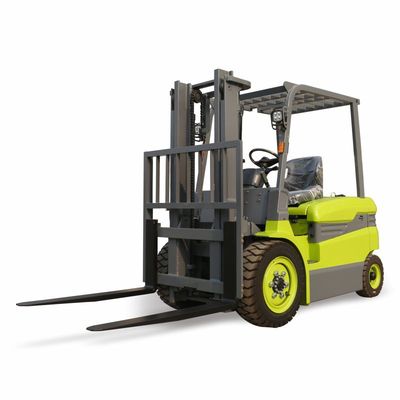
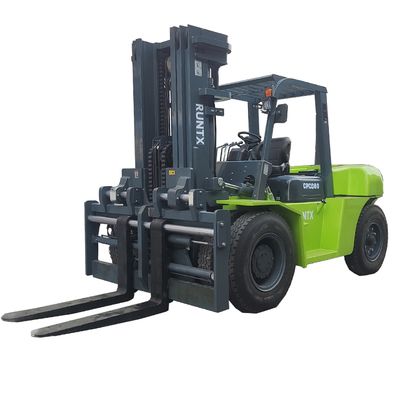
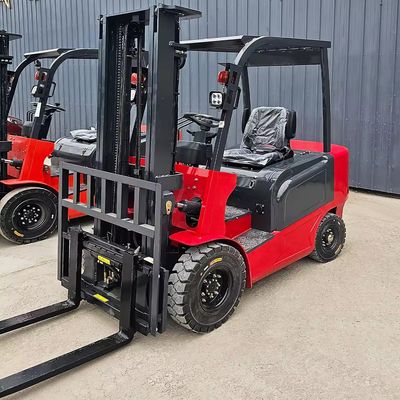
Two forklifts may look similar in photographs but have substantially different specifications.
This is why comparing only the headline price can produce a misleading purchasing decision.
1. Forklift Type Has a Major Impact on Price
The first question is not simply “How much does a forklift cost?”
It should be:
What type of forklift do I actually need?
Different forklift categories are designed for different operating conditions.
Common types include:
- Electric forklifts
- Diesel forklifts
- LPG forklifts
- Counterbalance forklifts
- Reach trucks
- Warehouse forklifts
- Pallet trucks
- Specialized material handling equipment
Each type has a different cost structure.
For example, an electric forklift may have a higher initial equipment cost because of its battery and charging system, while a conventional internal-combustion forklift may have a different operating-cost structure.
The correct comparison should therefore include both purchase price and expected operating costs.
2. Rated Load Capacity Affects Forklift Cost
Capacity is one of the most important price factors.
A small warehouse forklift and a heavy-duty industrial forklift require very different components and engineering.
Typical capacity requirements may include:
- 1.5-ton
- 2-ton
- 2.5-ton
- 3-ton
- 5-ton
- Higher-capacity industrial equipment
However, rated capacity alone does not tell you everything about the machine.
The actual lifting capability can also depend on the load center and lifting height.
For example, a buyer may request a 3-ton forklift but have a load that extends farther from the fork face than standard conditions assume.
In this case, the manufacturer needs to evaluate the actual application rather than simply supplying a machine labeled “3 ton.”
3. Electric Forklift Price Depends on the Battery System
For electric forklifts, the battery can represent an important part of the overall equipment cost.
Buyers may need to compare:
- Lead-acid batteries
- Lithium-ion batteries
- Battery capacity
- Voltage
- Charging system
- Charging time
- Operating hours
- Battery replacement requirements
Lithium-ion systems can provide operational advantages in applications requiring frequent charging or opportunity charging, while lead-acid systems may have a lower initial equipment cost in some configurations.
The correct choice depends on the operating schedule.
If the forklift operates several shifts per day, battery performance and charging infrastructure should be considered when calculating the total cost.
For buyers evaluating electric equipment, the existing Electric Forklift Buying Guide provides additional information about choosing the right configuration.
4. Diesel Forklift Cost Depends on the Application
Diesel forklifts are commonly considered for outdoor, heavy-duty, and demanding material handling applications.
Their cost can depend on:
- Engine specification
- Rated capacity
- Transmission
- Mast
- Tires
- Cabin
- Hydraulic system
- Safety equipment
- Emissions requirements
For international buyers, the destination market should be discussed before selecting an engine configuration because different markets may have different regulatory and emissions requirements.
A manufacturer should know the destination country before preparing a final quotation.
5. Lifting Height Changes the Price
A forklift designed for basic material handling does not necessarily have the same mast requirements as a warehouse operation with high storage racks.
Mast options may vary by:
- Lifting height
- Mast stages
- Overall collapsed height
- Visibility
- Free lift
- Load capacity at height
Higher lifting requirements can require a different mast configuration and may affect the overall equipment price.
Therefore, when requesting a quotation, do not simply state the rated capacity.
Also tell the manufacturer the required maximum lifting height.
6. Forklift Attachments Can Increase the Total Cost
Standard forks are not suitable for every application.
Specialized loads may require attachments such as:
- Side shifters
- Fork positioners
- Paper roll clamps
- Bale clamps
- Rotators
- Carton clamps
- Drum handlers
- Specialized forks
An attachment changes the equipment configuration and can affect both purchase price and effective capacity.
The attachment itself adds cost, but it may also affect the forklift’s load center and rated capacity.
Therefore, buyers should specify attachments before asking for a final quotation.
The supplier’s existing guide on choosing forklift equipment also highlights the importance of attachment options for different cargo-handling applications.
7. Tire Selection Also Matters
Tires are sometimes overlooked when buyers compare quotations.
Depending on the application, a forklift may use different tire configurations.
Common options include:
- Cushion tires
- Solid tires
- Pneumatic tires
- Other application-specific configurations
Indoor warehouse operations and rough outdoor surfaces can require very different tire solutions.
If two manufacturers quote different tire configurations, their prices should not be compared as if the forklifts were identical.
8. Forklift Cab and Operator Features Affect Cost
Operator configuration can also change the price.
Depending on the application, buyers may request:
- Open operator compartment
- Overhead guard
- Full cabin
- Heating
- Air conditioning
- Suspension seat
- Adjustable steering column
- Improved visibility
- Lighting systems
- Warning systems
- Display systems
For operations in extreme temperatures or long shifts, operator comfort may become an important productivity consideration.
9. Safety Equipment Can Affect the Quotation
Safety should not be treated as an optional consideration after the forklift has been purchased.
Depending on the application and market, buyers may require:
- Warning lights
- Reverse alarms
- Seat belts
- Mirrors
- Safety guards
- Cameras
- Speed-control systems
- Load indicators
- Operator monitoring systems
The appropriate safety configuration depends on the working environment and applicable requirements.
When comparing prices, confirm whether safety equipment is included or quoted separately.
10. OEM Customization Changes the Price
Distributors and brands may require customized forklifts.
Customization can include:
- Company logo
- Paint color
- Branding
- Labels
- Dashboard configuration
- Seat options
- Attachments
- Packaging
- Product documentation
- Technical modifications
Simple branding may add relatively little to the equipment cost compared with engineering modifications.
If a buyer requests significant customization, the manufacturer may need to evaluate tooling, engineering, testing, production changes, and minimum order quantity.
For buyers considering OEM cooperation, it is useful to distinguish between private labeling and genuine engineering customization.
11. Order Quantity Can Affect the Unit Price
The quantity you purchase can influence the commercial quotation.
A buyer purchasing one forklift may receive a different unit price from a distributor purchasing 20, 50, or 100 units.
Higher-volume orders can sometimes provide advantages in:
- Production planning
- Packaging
- Procurement
- Component purchasing
- Shipping efficiency
- OEM development
However, buyers should not order more equipment than they actually need simply to obtain a lower unit price.
The correct decision should consider inventory risk and cash flow.
12. MOQ Is Important for International Importers
Minimum order quantity varies by manufacturer and product configuration.
Standard forklifts may be available for smaller orders, while customized or private-label equipment may require a higher MOQ.
Before requesting a final quotation, ask:
- Is there an MOQ?
- Is the MOQ different for standard and customized machines?
- Can different forklift models be mixed?
- Can colors be customized for a small order?
- Is OEM branding available for the requested quantity?
This helps prevent unexpected requirements after negotiations begin.
13. Factory Price Is Not the Same as Landed Cost
This is one of the most important points for international buyers.
Suppose the forklift quotation looks attractive at the factory level.
The final cost may still include:
- Product price
- Export packaging
- Inland transportation
- Port charges
- Ocean freight
- Insurance
- Customs clearance
- Import duties
- Taxes
- Destination handling
- Local transportation
Therefore, the number that matters to an importer is not always the factory quotation.
It is the total landed cost.
14. Shipping Costs Can Change the Final Price
Forklifts are large industrial machines.
Shipping cost can depend on:
- Forklift dimensions
- Weight
- Quantity
- Container type
- Loading method
- Port
- Destination
- Shipping season
- Trade terms
When requesting an international quotation, provide the destination port or delivery location whenever possible.
This allows the supplier or logistics provider to calculate a more useful estimate.
15. FOB, CIF and Other Trade Terms Matter
A quotation without a clearly stated trade term is difficult to compare.
For example, two suppliers may provide different prices because one quotation is based on an ex-works arrangement while another includes transportation to a port.
When comparing quotations, check:
- EXW
- FOB
- CIF
- CFR
- DAP
- Other agreed trade terms
The trade term determines which costs and responsibilities are included in the quoted price.
Never assume that two prices represent the same delivery condition.
16. Warranty Can Affect the Real Value
A cheaper forklift may not necessarily be cheaper over its working life.
Ask each manufacturer:
- What is the warranty period?
- Which components are covered?
- Are batteries covered separately?
- Are wearing parts excluded?
- How are warranty claims handled?
- Who pays for replacement parts?
- Is technical support included?
A transparent warranty can reduce purchasing risk.
However, warranty terms should always be compared alongside actual spare-parts availability and service capability.
17. Spare Parts Should Be Included in Your Cost Analysis
A forklift is a productive asset.
If the machine is unavailable because a relatively inexpensive part cannot be obtained, the cost of downtime can exceed the cost of the component itself.
Ask about:
- Filters
- Tires
- Forks
- Brake components
- Hydraulic components
- Electrical components
- Battery parts
- Chargers
- Engine parts
- Service kits
For fleet operators and distributors, establishing a spare-parts plan before purchasing can reduce future downtime.
18. How to Compare Forklift Quotations Correctly
Suppose three manufacturers give you three prices.
Do not immediately select the lowest number.
Create a comparison table.
| Item | Supplier A | Supplier B | Supplier C |
|---|---|---|---|
| Forklift type | |||
| Capacity | |||
| Lift height | |||
| Mast | |||
| Power source | |||
| Battery/engine | |||
| Tire type | |||
| Fork length | |||
| Attachments | |||
| Safety equipment | |||
| Warranty | |||
| Spare parts | |||
| Packaging | |||
| Trade term | |||
| Production lead time | |||
| Unit price | |||
| Estimated landed cost |
This makes differences much easier to identify.
19. Why Two Forklift Prices Can Be Very Different
A large price difference does not automatically mean that one supplier is overcharging.
The difference may come from:
- Different battery
- Different engine
- Different mast
- Different capacity
- Different tires
- Different attachments
- Different safety equipment
- Different warranty
- Different packaging
- Different trade terms
- Different quality requirements
For this reason, always ask:
“Are these two quotations based on exactly the same specifications?”
If the answer is no, the prices cannot be compared directly.
20. How to Request an Accurate Forklift Quote
A good inquiry should contain enough information for the manufacturer to understand your requirements.
For example:
We are looking for 5 electric forklifts for warehouse use. Required capacity is 2.5 tons, lifting height is 4.5 meters, and the machines will operate approximately 8 hours per day. Please quote the forklift including battery, charger, standard forks, warranty, export packaging and FOB price to our nearest port.
This is much more useful than:
Please send your best forklift price.
The more specific your inquiry is, the more meaningful the quotation will be.
21. Questions to Ask Before Accepting the Price
Before placing an order, ask:
- What exact model is included?
- What is the rated capacity?
- What is the load center?
- What is the maximum lifting height?
- What battery or engine is included?
- What charger is included?
- What tire configuration is included?
- Are attachments included?
- What safety equipment is included?
- What is the warranty?
- What spare parts are available?
- What is the production lead time?
- What is the MOQ?
- What packaging is included?
- What trade term is used?
- What destination costs are excluded?
- What documentation is supplied?
- Can the configuration be customized?
- How will the finished forklift be inspected?
- What happens if the delivered configuration does not match the order?
These questions can prevent many misunderstandings.
22. When Is a More Expensive Forklift Worth Buying?
A higher-priced forklift may be worthwhile when it provides measurable advantages for your operation.
For example:
- Lower energy consumption
- Longer operating time
- Better operator ergonomics
- Higher productivity
- Lower maintenance requirements
- Better spare-parts support
- Better durability
- More suitable safety equipment
- Better resale potential
The correct question is not:
“Can I find a cheaper forklift?”
It is:
“Will the additional investment provide enough value over the equipment’s working life?”
23. Check the Supplier Before Comparing Prices
Price research should be combined with supplier evaluation.
An international buyer should consider:
- Manufacturing capability
- Product specialization
- Quality-control procedures
- Production capacity
- OEM capability
- Export experience
- Spare-parts support
- Warranty
- Communication
- Long-term cooperation
The supplier’s existing article How to Choose the Right Forklift Supplier for Your Material Handling Needs also emphasizes equipment range, attachments, after-sales support, spare parts, and safety when evaluating a forklift supplier.
24. Review Available Forklift Products
Once you understand your requirements and budget, review the actual forklift configurations available from the manufacturer.
The Guangzhou Forklift Manufacturing Factory supplier page provides access to the supplier’s forklift-related information and available product content.
Instead of selecting a machine based only on its appearance, compare the product specifications with your actual operating requirements.
Look specifically at:
- Capacity
- Lift height
- Power system
- Dimensions
- Battery or engine
- Tires
- Attachments
- Operating environment
- Customization options
This creates a much more reliable purchasing process.
25. Don’t Confuse Low Price With Low Total Cost
A low initial price can be attractive, but the real financial calculation should extend beyond the purchase order.
For a multi-year forklift investment, consider:
Total Cost of Ownership = Purchase Cost + Energy + Maintenance + Spare Parts + Downtime + Other Operating Costs
The exact calculation depends on the forklift and application.
A machine that costs slightly more initially may provide better economics if it operates more efficiently and requires less maintenance.
Forklift Price Checklist for Importers
Before accepting a quotation, confirm:
- [ ] Forklift type
- [ ] Rated capacity
- [ ] Load center
- [ ] Maximum lifting height
- [ ] Mast configuration
- [ ] Fork length
- [ ] Battery or engine
- [ ] Charger
- [ ] Tire type
- [ ] Attachments
- [ ] Safety equipment
- [ ] Operator configuration
- [ ] Warranty
- [ ] Spare parts
- [ ] Packaging
- [ ] MOQ
- [ ] Production lead time
- [ ] Trade term
- [ ] Shipping cost
- [ ] Import costs
- [ ] Estimated landed cost
If these items are clearly defined, you can compare quotations much more accurately.
Frequently Asked Questions
How much does a forklift cost?
There is no single universal forklift price. Cost depends on forklift type, capacity, power source, battery or engine, mast, lifting height, tires, attachments, customization, quantity, and destination.
For international buyers, shipping and import costs must also be considered.
Why do two similar forklifts have different prices?
They may use different components or configurations.
Battery type, engine, mast, tires, attachments, safety equipment, warranty, packaging, and trade terms can all affect the quotation.
Is an electric forklift more expensive than a diesel forklift?
It depends on the specific configuration.
An electric forklift may have a higher initial equipment cost in some cases because of the battery and charging system, while its operating and maintenance costs may differ from an internal-combustion forklift.
The best choice depends on the application and operating schedule.
Does lifting height affect forklift price?
Yes.
Higher lifting requirements may require a different mast configuration and can affect the overall machine specification.
Does order quantity reduce the forklift price?
It can.
Manufacturers may provide different commercial terms for larger orders, but the actual pricing depends on the model, configuration, customization, production schedule, and quantity.
What should I include when asking for a forklift quotation?
Include capacity, lifting height, application, operating environment, power source, quantity, attachments, destination, and customization requirements.
The more complete your specification, the easier it is for the manufacturer to provide a meaningful quotation.
Should I choose the cheapest forklift?
Not necessarily.
Compare the complete specification, quality, warranty, spare-parts support, operating costs, shipping, and expected service life before making a decision.
What is the difference between forklift price and landed cost?
Forklift price is the equipment quotation under a particular trade term.
Landed cost is the estimated total cost of getting the equipment to its intended destination, including applicable transportation, customs, duties, taxes, handling, and other costs.
Can I request an OEM forklift?
OEM options depend on the manufacturer’s capabilities and the requested configuration.
Branding, color, packaging, attachments, documentation, and engineering changes may have different MOQ and cost requirements.
Conclusion
Forklift purchasing should never be based on one number alone.
The price of a forklift is influenced by its capacity, power source, battery or engine, mast, lifting height, tires, attachments, safety configuration, customization, quantity, and destination.
For international buyers, the factory quotation is only the beginning of the cost calculation. Shipping, customs, duties, taxes, handling, spare parts, maintenance, and long-term operating costs should also be considered.
The best purchasing strategy is to define your requirements first, request comparable quotations from suitable manufacturers, verify that each quotation covers the same configuration, and then calculate the expected total cost of ownership.
If you are sourcing forklifts for wholesale, distribution, warehouse operations, or industrial use, review the available forklift products and manufacturer information and compare each configuration against your actual business requirements.
A forklift is a long-term working asset. The best purchase is not necessarily the cheapest machine—it is the machine that provides the right combination of specification, reliability, operating cost, service support, and long-term value.


No reply content