
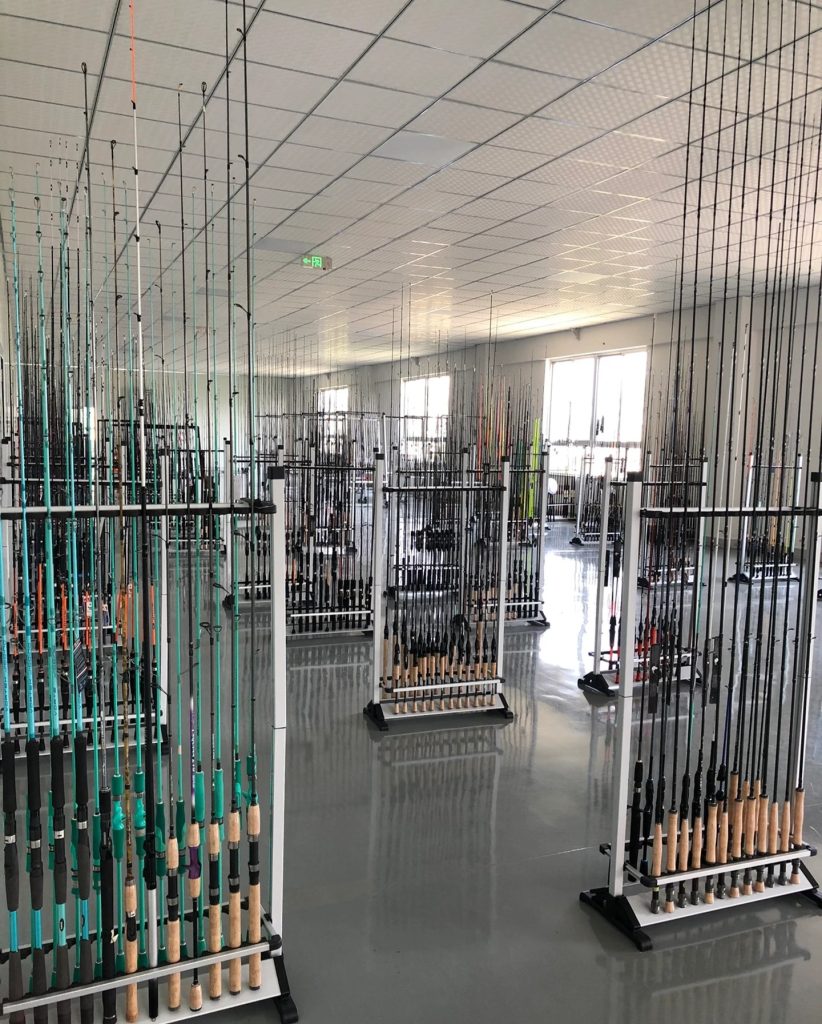
Importing fishing rods from China can help fishing tackle wholesalers, distributors, retailers, and private-label brands develop their product ranges. However, calculating the real purchasing cost involves more than comparing the unit prices offered by different suppliers.
International buyers should consider product specifications, order quantities, packaging, transportation, customs duties, taxes, and other applicable expenses before confirming an order.
A fishing rod with a low quoted price may not necessarily deliver the lowest total landed cost. Differences in materials, components, packaging, shipping arrangements, and import requirements can significantly affect the final budget.
This guide explains how to calculate the cost of importing fishing rods from China and what buyers should confirm before placing a wholesale or OEM order.
1. Start with the Fishing Rod Product Cost
The product cost is usually the starting point when preparing an import budget.
The quoted price may depend on several factors:
- Fishing rod type and intended application.
- Materials and construction.
- Rod length and number of sections.
- Guides, reel seats, and handle materials.
- Product finishing and color.
- Logo printing and private-label requirements.
- Order quantity.
- Individual packaging requirements.
For example, two fishing rods with the same length may have different prices because their materials, components, construction, and finishing requirements differ.
When comparing suppliers, request quotations based on the same product specifications.
Ask each supplier to identify the model, materials, included components, packaging, and applicable commercial terms.
For additional purchasing guidance, read How to Prepare a Fishing Rod Specification Sheet for a China Supplier.
Calculate the Total Product Cost
Use this formula:
Total Product Cost = Unit Price × Order Quantity
For illustration only, suppose a buyer receives a hypothetical quotation of $8 per fishing rod and plans to purchase 1,000 units.
The product cost would be:
$8 × 1,000 = $8,000.
This is an illustrative calculation, not an actual supplier quotation. Your actual product cost must be based on the supplier’s confirmed price and order requirements.
2. Include Samples and Product Development Costs
Before placing a bulk order, buyers may need to evaluate samples or develop customized fishing rods.
Potential expenses include:
- Sample products.
- Sample shipping.
- Custom logo preparation.
- Packaging samples.
- Design adjustments.
- Special components or tooling, where applicable.
Not every order will involve all these costs.
For standard fishing rods, sample requirements may differ from those for customized OEM products.
Before ordering, ask the supplier which charges apply, whether any charges can be credited against a subsequent order, and whether additional development costs are required.
You can read our guide to Fishing Rod Sample Approval Before Bulk Production.
3. Calculate Packaging Costs
Packaging is another factor that can affect the total cost of importing fishing rods.
Depending on the product and sales channel, packaging may include:
- Individual protective sleeves.
- Fabric rod bags.
- Retail boxes.
- Product labels.
- Custom printed packaging.
- Protective materials for transport.
- Export cartons.
Buyers selling fishing rods through retail stores or online marketplaces may require different packaging from those purchasing products for wholesale distribution.
Long fishing rods also require appropriate packaging dimensions and protection during transportation.
When requesting a quotation, clarify whether the product price includes standard packaging.
If customized packaging is required, ask the supplier to quote it separately or explain how it is included in the unit price.
Also request the carton dimensions, packing quantity, and gross weight when available. These details help freight forwarders estimate transportation costs.
4. Estimate International Shipping Costs
International shipping can be an important part of the total import budget.
The actual cost depends on the origin, destination, shipment size, transport mode, packaging dimensions, shipping schedule, and service requirements.
Common transportation options include:
Sea Freight
Sea freight may be suitable for larger wholesale shipments when delivery time allows.
Buyers should compare the total cost of the selected shipping arrangement rather than looking only at the advertised ocean freight rate.
Depending on the quotation and trade terms, additional charges may apply for origin handling, documentation, destination handling, customs-related services, or final delivery.
Air Freight
Air freight may be suitable for smaller or time-sensitive shipments.
Fishing rods can be relatively long compared with their actual weight. Consequently, the chargeable weight may be affected by the shipment’s dimensions.
Ask the freight forwarder to confirm the chargeable weight, packaging requirements, and applicable rate.
Express Courier
Express courier services may be convenient for samples or small shipments, subject to the carrier’s size and service restrictions.
Before choosing a service, verify whether the package dimensions are accepted and request the full transportation quotation.
Information Needed for a Shipping Quote
Provide the following details to your freight forwarder:
- Collection city or supplier location in China.
- Destination country and city.
- Product description.
- Number of cartons.
- Carton dimensions.
- Gross weight.
- Preferred shipping method.
- Required delivery arrangements.
For long fishing rods, provide accurate carton measurements rather than relying only on the product’s net weight.
5. Understand Customs Duties and Import Taxes
Import duties and taxes vary by destination country and product classification.
Before shipping, buyers should verify the applicable customs requirements for their specific fishing rod products.
Important considerations include:
- Correct customs tariff classification.
- Declared customs value.
- Applicable import duty.
- Import VAT, GST, or other relevant taxes.
- Required commercial invoices.
- Packing lists.
- Certificates or documents required by the destination market, where applicable.
Do not assume that every fishing rod has the same tariff rate in every country.
The applicable classification and tax treatment should be confirmed with the destination country’s customs authority or a qualified customs broker.
Some taxes may be recoverable by eligible businesses, depending on local law and their tax status. Therefore, distinguish cash-flow requirements from the final economic cost of the shipment.
6. Include Destination Charges and Customs Clearance
The quoted international freight rate may not include all charges payable when the shipment reaches its destination.
Depending on the shipping arrangement, potential charges may include:
- Destination terminal handling.
- Delivery order or documentation fees.
- Customs brokerage.
- Port or terminal service charges.
- Storage charges, if applicable.
- Inspection-related charges, if applicable.
- Local transportation.
- Final delivery.
These charges vary by destination, carrier, service provider, shipment type, and contractual terms.
Before confirming the shipment, request a written quotation that clearly separates included and excluded charges.
For sea freight, this is especially important when comparing quotations from different forwarders.
A low ocean freight rate may not represent the lowest total cost if significant destination charges are excluded.
7. Understand FOB, CIF, and DDP Quotation Terms
International buyers should understand which expenses are included in the supplier’s or forwarder’s quotation.
Three commonly encountered trade terms are FOB, CIF, and DDP.
| Trade Term | General Meaning | What Buyers Should Confirm |
|---|---|---|
| FOB | The seller delivers the goods on board the nominated vessel at the agreed port of shipment under the applicable Incoterms rules | Which origin costs are included and which freight and destination costs remain with the buyer |
| CIF | The seller arranges cost, insurance, and freight to the named destination port under the applicable Incoterms rules | Which destination charges, import duties, taxes, and clearance costs remain payable by the buyer |
| DDP | The seller arranges delivery to the named destination under the applicable Incoterms rules, including import clearance and applicable duties and taxes within the seller’s agreed responsibilities | Whether the provider can legally and practically handle the required import arrangements and what is excluded from the quotation |
These terms are not interchangeable, and the exact named place or port and applicable Incoterms edition should be stated in the contract.
In particular, CIF does not automatically mean that all destination charges, import duties, and customs clearance costs are included.
For a more reliable comparison, ask each provider to specify the exact services included in its quotation.
8. Calculate the Total Landed Cost
The landed cost represents the total cost of bringing the goods to the agreed destination point, based on the buyer’s chosen costing method.
For a basic import budget, use the following formula:
Estimated Landed Cost = Product Cost + Packaging and Other Pre-Shipment Costs + International Freight + Insurance, If Applicable + Import Duties and Non-Recoverable Taxes + Customs and Destination Charges + Inland Delivery + Other Applicable Costs
The precise calculation depends on the shipment terms, tax treatment, and the costs already included in the supplier’s or forwarder’s quotation.
Avoid counting the same expense twice.
For example, if the supplier’s price already includes export packaging, do not add the same packaging charge again.
Illustrative Cost Calculation
The following example demonstrates how an importer might organize a preliminary budget for a hypothetical order of 1,000 fishing rods.
These figures are examples only. They are not current market prices or a quotation from Guangzhou Fishing Tackle Co., Ltd.
| Cost Item | Illustrative Amount |
|---|---|
| Fishing rods: 1,000 units × $8 | $8,000 |
| Additional packaging costs | $300 |
| International freight | $1,200 |
| Insurance | $100 |
| Import duties | $500 |
| Customs clearance and destination charges | $400 |
| Inland delivery | $200 |
| Illustrative Total Landed Cost | $10,700 |
In this example, the landed cost per fishing rod would be:
$10,700 ÷ 1,000 = $10.70 per unit.
The example assumes that the listed amounts are separate, applicable costs and that there is no double counting.
Actual import costs may be higher or lower depending on the product, destination, shipping arrangement, taxes, and service providers.
9. Compare Suppliers Using the Same Costing Method
When comparing fishing rod suppliers, buyers should not focus on the unit price alone.
A supplier offering a lower product price may require more expensive packaging or different shipping arrangements.
A more useful comparison considers both product requirements and the expected landed cost.
Use the following checklist when evaluating quotations.
| Comparison Item | Supplier A | Supplier B |
|---|---|---|
| Product specifications | Confirm | Confirm |
| Unit price | Obtain quote | Obtain quote |
| MOQ | Confirm | Confirm |
| Sample charges | Confirm | Confirm |
| Custom logo costs | Confirm | Confirm |
| Packaging costs | Confirm | Confirm |
| Production lead time | Confirm | Confirm |
| Shipping terms | Confirm | Confirm |
| Destination charges | Confirm | Confirm |
| Import duties and taxes | Verify separately | Verify separately |
| Quality-control arrangements | Confirm | Confirm |
Make sure the products being compared have equivalent specifications.
A meaningful comparison should also consider product consistency, communication, documentation, and the supplier’s ability to meet your requirements.
For more guidance, read How to Compare Fishing Rod Manufacturers in China.
10. Prepare an Import Budget Before Placing a Bulk Order
Before confirming a fishing rod order, prepare a budget that includes the main cost categories.
A practical process is:
Step 1: Confirm the product specifications.
Determine the fishing rod type, materials, dimensions, components, branding, and packaging.
Step 2: Request a written product quotation.
Ask the supplier to confirm the unit price, MOQ, applicable charges, payment terms, and production lead time.
Step 3: Confirm shipment dimensions.
Obtain the expected carton count, dimensions, gross weight, and packing quantity.
Step 4: Request freight quotations.
Compare suitable transport options using the same origin, destination, shipment details, and service scope.
Step 5: Verify destination import costs.
Consult the relevant customs authority or a qualified broker to confirm classification, duties, taxes, and clearance requirements.
Step 6: Calculate the landed cost per unit.
Add all applicable costs and divide by the number of saleable units, taking account of any damaged or unsaleable products if relevant.
Step 7: Evaluate the expected selling price and margin.
Consider warehousing, distribution, payment fees, marketing, returns, and other business expenses not included in the landed cost.
Following these steps helps importers make more informed purchasing decisions.
Frequently Asked Questions
1. How much does it cost to import fishing rods from China?
The total cost depends on the product specifications, quantity, supplier price, packaging, transport method, destination country, import duties, taxes, and destination charges. Request product and freight quotations based on your actual shipment details.
2. Is sea freight cheaper than air freight for fishing rods?
Sea freight may be more economical for some larger shipments, while air freight may be preferable for urgent or smaller orders. Fishing rod dimensions can affect freight calculations, so compare complete quotations rather than relying on general assumptions.
3. Are customs duties included in the fishing rod supplier’s price?
Not necessarily. Whether duties and taxes are included depends on the agreed commercial terms and service arrangement. Confirm the exact inclusions and exclusions in writing.
4. Does CIF include destination port charges?
Not automatically. CIF generally covers cost, insurance, and freight to the named destination port under the applicable Incoterms rules, but many destination charges and import-related expenses may remain payable by the buyer.
5. How can I calculate the landed cost per fishing rod?
Add the applicable product, packaging, transportation, insurance, duties, taxes, customs, destination, and delivery costs. Divide the resulting total by the number of saleable units, avoiding duplicate charges.
6. What information is needed to get an accurate import cost estimate?
Provide the product specifications, order quantity, supplier location, carton dimensions, gross weight, destination country, preferred shipping method, and required delivery terms.
7. Should I compare suppliers by unit price or landed cost?
Both matter. Unit price helps evaluate the supplier’s product quotation, while landed cost provides a broader view of the cost of bringing the goods to the agreed destination. Product quality and commercial conditions should also be considered.
Request a Fishing Rod Wholesale or OEM Quotation
Are you planning to import fishing rods from China for wholesale distribution, retail sales, or your own fishing tackle brand?
Before placing a bulk order, confirm your product specifications and prepare an import budget that accounts for product costs, packaging, transportation, and destination expenses.
Guangzhou Fishing Tackle Co., Ltd is listed on Vlefooena. Buyers interested in sourcing fishing rods can contact the supplier to discuss their product requirements.
To help prepare your inquiry, include:
- Product type: Spinning, casting, surf, telescopic, or another fishing rod design.
- Specifications: Required length, material, power, action, and components, where applicable.
- Order quantity: Estimated quantity for each model.
- Branding: Standard products, OEM, ODM, or private-label requirements.
- Packaging: Standard or customized packaging.
- Destination country: Where the goods will be imported.
- Shipping preference: Sea freight, air freight, or another suitable method, if known.
Visit the Guangzhou Fishing Tackle Co., Ltd supplier profile to review the company information and discuss product availability, MOQ, sample arrangements, and quotations.
For international transportation, obtain a separate freight quotation that clearly identifies the origin costs, destination charges, customs-related services, and final delivery arrangements.
The actual product price, MOQ, shipping cost, and production lead time must be confirmed by the relevant providers before an order is placed.


No reply content