
China Cable and Wire Manufacturing Co., Ltd.
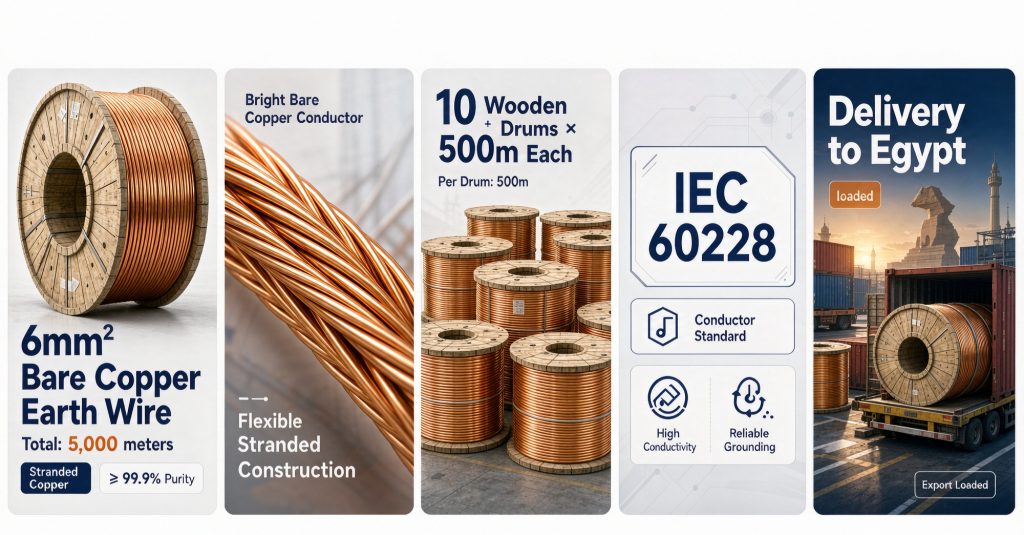
A copper electrical wire quotation may look attractive when the price is expressed in dollars per meter. However, the amount paid to the manufacturer is only one part of the purchasing cost.
For an overseas importer, the actual cost of receiving electrical wire can also include international transportation, insurance, customs duties, taxes, destination handling, inspection, inland delivery, and other charges.
This is particularly important for distributors purchasing several wire sizes or importing full container loads. A small difference in freight, packaging, or customs-related expenses can change the final cost per meter.
The most useful way to evaluate an import quotation is to calculate the total landed cost using the same product specification, quantity, destination, and delivery assumptions.
This guide explains how electrical wire importers can build a practical landed-cost calculation when sourcing copper wire from China.
1. Understand What Landed Cost Means
Landed cost is the total cost associated with purchasing and bringing goods to a defined destination or receiving point.
For an electrical wire importer, the calculation may include:
-
Product purchase price
-
Export packing
-
Origin handling
-
International freight
-
Cargo insurance, where applicable
-
Customs duties
-
Import taxes
-
Destination handling
-
Customs broker charges
-
Inland transportation
-
Inspection or testing
-
Other documented shipment-related expenses
The exact items depend on the agreed Incoterm, destination country, shipment arrangement, and applicable import requirements.
A buyer should define the destination point before comparing landed costs.
For example, the cost of copper wire delivered to a destination port is not necessarily the same as the cost delivered to the importer’s warehouse.
2. Start With the Correct Product Quantity
Before calculating transportation or import expenses, establish the actual quantity being purchased.
Consider an illustrative order:
Item |
Example |
|---|---|
Product |
PVC-insulated copper building wire |
Conductor size |
2.5 mm² |
Quantity |
20,000 meters |
Unit price |
USD 0.45/meter |
Product value |
USD 9,000 |
These figures are hypothetical and are used only to demonstrate the calculation.
The buyer should confirm whether the quoted quantity is expressed in meters, coils, reels, drums, kilograms, or another unit.
If several wire sizes are included, calculate the product value separately for each specification.
For additional purchasing considerations, see What Should Buyers Check Before Purchasing Copper Building Wire?.
3. Confirm What the Supplier’s Quotation Includes
A quotation should clearly identify the delivery term and named location.
For example, an FOB quotation for a named Chinese port is not directly equivalent to a quotation that includes international freight to the destination port.
The buyer should confirm:
-
Exact product specification
-
Quoted quantity
-
Currency
-
Unit of measurement
-
Packaging
-
Named delivery location
-
Applicable Incoterm and version
-
Quotation validity
-
Payment conditions
-
Any excluded charges
Do not assume that the phrase “shipping included” means all transportation, import clearance, duties, and taxes are covered.
The contractual delivery term determines the allocation of responsibilities and costs between buyer and seller.
For a broader overview of purchasing from Chinese suppliers, see How to Buy Electrical Wires from China: A Step-by-Step Guide for Importers.
4. Calculate the Product Purchase Value
The basic product calculation is:
Product value = Unit price × Quantity
Using the illustrative order:
USD 0.45 × 20,000 meters = USD 9,000
This is the product value before adding any costs not included in the quoted price.
If the supplier quotes different prices for different sizes, calculate each product line separately.
For a mixed order, the total product value is the sum of all product-line values.
5. Add Origin Charges Where Applicable
Depending on the agreed delivery term, the buyer may need to account for charges associated with preparing and moving the goods from the factory or warehouse to the export port.
Potential charges may include:
-
Pickup transportation
-
Export packing
-
Warehouse handling
-
Export documentation
-
Customs declaration services
-
Origin terminal handling
-
Other agreed origin charges
These charges should not be added twice if they are already included in the supplier’s quoted price or the applicable delivery term.
Ask the supplier or freight forwarder to identify the included and excluded items.
For large copper wire reels, also confirm whether the packaging dimensions and handling requirements affect the origin charges.
6. Estimate International Freight Using the Actual Packing Information
International freight should be calculated using the shipment’s actual transport characteristics.
Depending on the shipping method, the relevant information may include:
-
Gross weight
-
Net weight
-
Number of packages
-
Package dimensions
-
Total cubic volume
-
Container requirements
-
Loading arrangement
-
Origin and destination ports
-
Required shipping schedule
For less-than-container-load shipments, freight may be charged according to the forwarder’s applicable weight or volume rules.
For full-container shipments, the buyer should consider the container type, usable loading capacity, package dimensions, and carrier quotation.
Do not calculate freight using product weight alone if the shipping quotation is based on volume or another charging basis.
7. Include Cargo Insurance When Required
Cargo insurance is a separate consideration from the product purchase price.
The buyer should confirm whether insurance is included in the commercial arrangement or needs to be purchased separately.
If insurance is required, obtain the premium and coverage details from the responsible party.
The insurance calculation should follow the actual policy terms and agreed insured value rather than an assumed universal percentage.
Also confirm whether the policy covers the relevant transportation stages and whether any exclusions or deductibles apply.
8. Understand Customs Duties and Import Taxes
Import duties and taxes vary by destination country, product classification, customs valuation rules, and applicable trade arrangements.
Electrical wire products may have different tariff classifications depending on their construction, insulation, conductor material, and other characteristics.
The importer should confirm the appropriate classification with a qualified customs broker or the relevant customs authority.
Do not assume that all copper wire products use the same tariff code or duty rate.
The customs calculation may depend on factors such as:
-
Customs value
-
Product classification
-
Country of origin
-
Applicable tariff measures
-
Preferential trade arrangements
-
Import taxes
-
Destination-specific regulations
For an accurate landed-cost estimate, obtain the applicable figures for the actual destination and product.
9. Add Destination Handling and Inland Delivery
The shipment may incur charges after arrival at the destination port or airport.
Depending on the shipment arrangement, these may include:
-
Terminal handling
-
Port or warehouse handling
-
Customs broker fees
-
Documentation charges
-
Inspection charges
-
Storage
-
Demurrage or detention, if incurred
-
Inland transportation
-
Final warehouse delivery
For electrical wire shipped on large reels or drums, confirm whether unloading equipment or special handling is required at the destination.
A quotation delivered to the port should not be treated as a warehouse-delivery quotation unless the relevant inland transportation and handling costs are included.
10. Calculate the Total Landed Cost
A simplified calculation is:
Total landed cost = Product value + Applicable origin charges + Freight + Insurance + Import duties and taxes + Destination charges + Inland delivery + Other applicable costs
Using hypothetical figures:
Cost component |
Illustrative amount |
|---|---|
Product value |
USD 9,000 |
Origin charges |
USD 250 |
International freight |
USD 1,100 |
Insurance |
USD 80 |
Import duties and taxes |
USD 900 |
Destination handling |
USD 300 |
Inland delivery |
USD 220 |
Total |
USD 11,850 |
These amounts are examples only, not current freight rates, tax rates, or a quotation for a specific country.
The landed cost per meter is:
Landed cost per meter = Total landed cost ÷ Total quantity
USD 11,850 ÷ 20,000 meters = USD 0.5925 per meter
The illustrative landed cost is therefore approximately USD 0.593 per meter.
This figure is meaningful only if the quantity, destination, cost inclusions, and calculation assumptions are consistent.
11. Compare Supplier Quotations on the Same Basis
Suppose two manufacturers quote the same nominal product at different prices.
Before deciding which quotation is less expensive, verify that both suppliers are offering equivalent products.
Compare:
-
Conductor material
-
Conductor construction
-
Cross-sectional area
-
Insulation material
-
Rated voltage
-
Applicable standard
-
Packaging
-
Quantity
-
Documentation
-
Delivery term
-
Production lead time
Then calculate the landed cost using the same destination and freight assumptions.
A lower factory price may not produce a lower landed cost if the packaging, freight arrangement, or other charges differ.
For a detailed comparison process, see How to Compare Copper Wire Quotations from Different Manufacturers.
12. Consider the Cost of Packaging and Storage
Packaging can affect both transportation and warehouse costs.
For example, a buyer may request:
-
Individual coils
-
Cartons
-
Plastic reels
-
Wooden drums
-
Private-label packaging
-
Export packing
The selected arrangement can influence shipment dimensions, handling requirements, storage space, and product identification.
If the buyer plans to distribute wire through retail channels, packaging may also need to meet the buyer’s labeling and presentation requirements.
Request packaging dimensions and gross weight before finalizing the freight estimate.
13. Account for Currency and Payment Conditions
International purchases may involve different currencies and payment arrangements.
The buyer should record:
-
Quotation currency
-
Payment currency
-
Exchange rate used for internal budgeting
-
Bank charges
-
Payment processing fees
-
Applicable payment schedule
-
Any agreed financing costs
If the product is quoted in US dollars but the buyer budgets in another currency, exchange-rate assumptions should be clearly identified.
For long quotation-validity periods or repeat purchases, confirm whether the supplier’s price can change under the agreed commercial terms.
Do not treat an internal budget exchange rate as a guaranteed transaction rate.
14. Separate Landed Cost From Selling Price
Importers should distinguish the cost of receiving goods from the final selling price.
A distributor’s commercial calculation may also consider:
-
Warehouse operating expenses
-
Sales commissions
-
Local delivery
-
Inventory financing
-
Customer credit terms
-
Warranty or return costs
-
Business overhead
-
Target gross margin
These items are relevant to commercial planning but should not automatically be described as customs or transportation charges.
Keeping the calculations separate makes it easier to identify where cost changes are occurring.
15. Use a Repeatable Landed-Cost Worksheet
For regular imports, create a worksheet for each purchase order.
Recommended fields include:
Product information
-
Product designation
-
Conductor size
-
Material
-
Quantity
-
Unit price
-
Product value
Shipment information
-
Origin
-
Destination
-
Incoterm
-
Gross weight
-
Total volume
-
Package count
-
Freight quotation
Import expenses
-
Origin charges
-
Freight
-
Insurance
-
Customs duties
-
Import taxes
-
Destination handling
-
Inland delivery
-
Other documented costs
Final calculation
-
Total landed cost
-
Total quantity
-
Landed cost per meter
-
Currency
-
Calculation date
-
Assumptions and exclusions


No reply content