
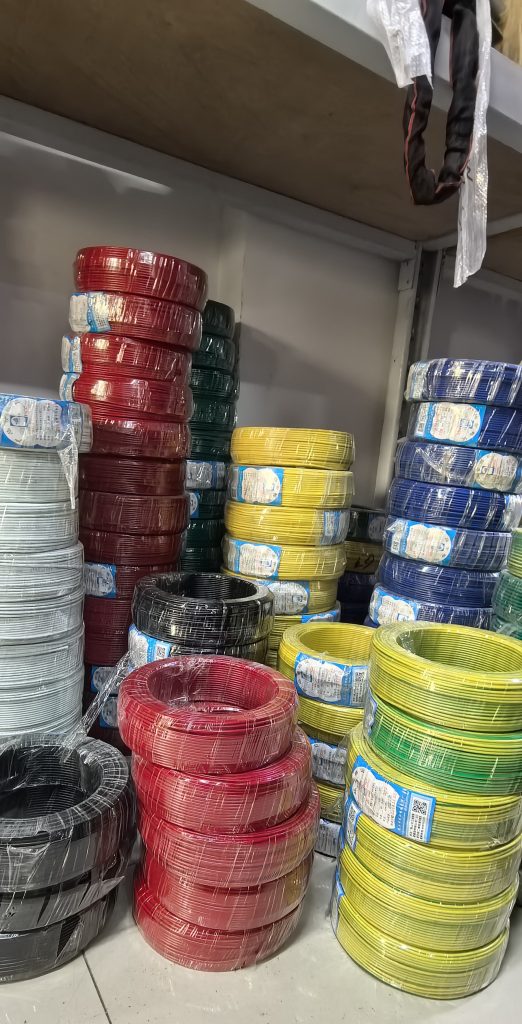
What Should Buyers Check Before Purchasing Copper Building Wire?
Purchasing copper building wire for an electrical project involves much more than comparing the price per meter or kilogram.
A wire may look similar from the outside while having significant differences in conductor material, cross-sectional area, insulation, electrical resistance, flexibility, packaging, documentation, and manufacturing consistency.
For contractors, distributors, importers, electrical wholesalers, and project buyers, these details can directly affect installation, performance, inventory management, and the overall cost of a project.
Before placing an order, buyers should establish a clear technical specification and confirm that the manufacturer can consistently produce the required wire.
This guide explains the main factors buyers should check before purchasing copper building wire.
1. Start With the Intended Application
The first question should be:
Where will the wire be used?
Building wire can be used for different applications, including:
- Residential electrical installations
- Commercial buildings
- Industrial facilities
- Lighting circuits
- Power distribution
- Control circuits
- Electrical panels
- Internal building wiring
- Equipment connections
The application affects the required conductor size, insulation, flexibility, voltage rating, temperature requirements, and installation method.
A manufacturer cannot recommend the most appropriate specification based only on the word “copper wire.”
The buyer should explain the intended application before requesting a quotation.
2. Confirm the Wire Type
The exact wire type should be specified in the purchasing request.
Depending on the market and application, buyers may encounter products such as:
- BV
- BVR
- H07V-U
- H07V-K
- Other PVC-insulated copper wires
These products can have different conductor constructions and intended applications.
Do not assume that two products with the same cross-sectional area are automatically interchangeable.
For a detailed comparison, see BVR Copper Wire vs BV Wire: Which Should Buyers Choose?.
3. Check the Conductor Material
Copper quality is one of the most important factors.
The conductor should meet the agreed material specification.
Depending on the product, buyers may need to confirm:
- Copper type
- Conductor construction
- Electrical resistance
- Cross-sectional area
- Conductor diameter
- Surface quality
- Manufacturing consistency
A low quotation can sometimes be associated with differences in material or construction.
For this reason, buyers should not judge copper wire quality by appearance alone.
4. Confirm the Copper Cross-Section
The nominal cross-sectional area is normally expressed in square millimeters, such as:
- 1.0 mm²
- 1.5 mm²
- 2.5 mm²
- 4 mm²
- 6 mm²
- 10 mm²
- 16 mm²
- 25 mm²
- Larger sizes
The required size depends on the electrical application and design requirements.
The buyer should specify the required cross-section rather than asking the factory to supply “standard wire.”
The manufacturer should then confirm that the finished conductor meets the applicable specification.
5. Check Electrical Resistance
Conductor resistance is an important quality indicator.
Copper wire with excessive resistance can result in greater voltage drop and energy losses under load.
Buyers should request the applicable resistance specification and test results where appropriate.
For large projects, resistance requirements should be included in the purchase specification rather than left as an informal expectation.
6. Check Whether the Conductor Is Solid or Stranded
Conductor construction can significantly affect installation characteristics.
Solid Conductor
A solid conductor consists of a single conductor element.
It can be suitable for fixed wiring applications where the wire does not need to be repeatedly bent.
Stranded Conductor
A stranded conductor consists of multiple smaller copper strands.
It generally provides greater flexibility and can be easier to handle in applications involving bends or more complicated installation paths.
The buyer should select the conductor construction according to the intended installation rather than simply choosing the cheapest option.
7. Confirm the Insulation Material
The insulation protects the conductor and separates it from surrounding materials.
For many building wires, PVC is commonly used.
The buyer should confirm:
- Insulation material
- Insulation thickness
- Temperature rating
- Voltage rating
- Color
- Surface quality
- Resistance characteristics
The insulation should be consistent along the entire length of the wire.
For a broader discussion, see PVC Insulation vs Other Cable Insulation Materials: What Buyers Should Know.
8. Check the Voltage Rating
Voltage rating should be clearly stated in the product specification.
A common specification for building wire is 450/750V, although the appropriate rating depends on the exact product and market requirements.
Buyers should not assume that all PVC-insulated copper wires have the same voltage rating.
The rating should be confirmed on:
- Product specification
- Packaging
- Marking
- Technical documentation
For more information, see What Is 450/750V Electrical Wire and Where Is It Used?.
9. Check the Temperature Rating
Temperature performance is another important specification.
The buyer should confirm the applicable operating temperature of the selected wire.
Temperature requirements can vary depending on:
- Insulation material
- Product standard
- Installation environment
- Electrical load
- Ambient temperature
If the project has specific temperature requirements, these should be included in the RFQ.
10. Check the Wire Color
Wire color may be important for installation and identification.
Depending on the market and project requirements, buyers may require different colors for different circuits or conductors.
Common commercial colors may include:
- Black
- Red
- Blue
- Brown
- Green
- Yellow
- Green/yellow
- White
- Other custom colors
The exact color requirements should follow the applicable electrical practice or project specification.
For large orders, confirm that the manufacturer can maintain consistent color across production batches.
11. Check the Outer Surface
The insulation should have a consistent surface.
During inspection, look for:
- Scratches
- Cracks
- Bubbles
- Uneven thickness
- Surface contamination
- Color variation
- Exposed conductor
The wire should also maintain consistent dimensions throughout the production length.
A simple visual inspection can identify obvious manufacturing problems, but it should not replace appropriate electrical testing.
12. Check the Marking
Depending on the product standard and market, wire may require identification markings.
The buyer should confirm whether the marking needs to include:
- Manufacturer information
- Product type
- Voltage rating
- Cross-sectional area
- Standard
- Certification information
- Meter marking
- Other required information
If private-label production is required, discuss the marking design with the manufacturer before production.
13. Confirm Applicable Standards
Do not simply ask a manufacturer:
“Is this wire certified?”
Instead, ask:
“Which standard does this exact model comply with, and what documentation is available?”
The buyer should confirm the applicable standard for the destination market.
The manufacturer should be able to provide relevant technical documentation for the actual product being quoted.
Avoid assuming that a certificate for one model automatically applies to another model.
14. Ask for Test Reports
Depending on the project, buyers may request relevant test documentation.
Possible tests can include:
- Conductor resistance
- Voltage testing
- Insulation testing
- Dimensional inspection
- Physical testing
- Flame-related testing where applicable
- Finished-product inspection
The exact testing requirements should match the applicable product standard.
For large orders, buyers may also arrange independent pre-shipment inspection.
15. Check the Manufacturer’s Production Capability
A quotation alone does not tell you whether a manufacturer is capable of producing the required product consistently.
Ask about:
- Production capacity
- Wire drawing capability
- Stranding equipment
- Insulation extrusion
- Testing equipment
- Quality control
- Packaging capability
- Experience with export orders
For a large project, production consistency may be more important than a small difference in unit price.
16. Confirm the Manufacturing Process
A typical copper building wire production process may involve several stages:
- Copper material preparation
- Wire drawing
- Annealing where applicable
- Stranding where applicable
- Insulation extrusion
- Cooling
- Surface inspection
- Electrical testing
- Length measurement
- Packaging
Understanding the production process helps buyers identify where quality control is important.
17. Ask About Quality Control
A professional purchasing specification should define how quality will be checked.
Quality control may include:
- Incoming material inspection
- Conductor inspection
- Diameter measurement
- Insulation thickness inspection
- Electrical testing
- Appearance inspection
- Length verification
- Packaging inspection
Ask the manufacturer which inspections are performed during production and before shipment.
18. Check the Actual Length
Length is an important commercial specification.
If you order:
100-meter coils
the manufacturer should clearly identify the agreed length tolerance.
For larger reels or drums, the buyer should confirm the total length per unit.
Length discrepancies can create inventory and installation problems.
For wholesale purchases, packaging should clearly identify the quantity or length contained in each package.
19. Check Packaging
Copper building wire may be supplied in different packaging formats.
Depending on the product and order quantity, packaging can include:
- Coils
- Rolls
- Plastic reels
- Wooden reels
- Wooden drums
- Cartons
- Palletized packages
The packaging should protect the wire from:
- Moisture
- Dirt
- Mechanical damage
- Deformation
- Transportation impact
The buyer should also consider how the wire will be stored after arrival.
20. Consider the Packaging Size
Packaging dimensions affect logistics costs.
Ask the factory for:
- Package length
- Width
- Height
- Net weight
- Gross weight
- Units per carton
- Number of packages
- Total CBM
This information can be used when calculating shipping costs.
A slightly cheaper product may not necessarily produce the lowest landed cost if its packaging is inefficient.
21. Confirm the Minimum Order Quantity
MOQ can vary according to the product.
Standard products may have one MOQ, while customized products can require higher quantities.
Ask about MOQ for:
- Standard wire
- Custom color
- Custom packaging
- Private labeling
- Special conductor construction
- Special specifications
If your initial requirement is small, tell the manufacturer clearly.
22. Request Price Breaks by Quantity
Instead of asking only for one price, request several quantity levels.
For example:
| Quantity | Unit Price |
|---|---|
| 500 kg | Please quote |
| 1,000 kg | Please quote |
| 5,000 kg | Please quote |
| 10,000 kg | Please quote |
This allows the buyer to understand how production volume affects pricing.
It is especially useful when planning repeat purchases.
23. Compare Copper Wire Quotations Correctly
Two quotations should only be compared when their specifications are equivalent.
Check whether both quotations use the same:
- Copper specification
- Cross-sectional area
- Conductor construction
- Insulation
- Voltage rating
- Color
- Packaging
- Certification
- Quantity
- Delivery terms
For example, a quotation for standard BV wire should not automatically be compared with a quotation for a different flexible conductor construction.
The product specifications must match first.
24. Ask About Sample Availability
For a new manufacturer, a sample can provide useful information before a large order.
The buyer can inspect:
- Appearance
- Flexibility
- Conductor construction
- Insulation
- Marking
- Packaging
- Dimensions
For larger projects, the sample should be documented as the approved reference.
25. Confirm Production Lead Time
Ask the manufacturer to provide a realistic production schedule.
Confirm:
- Sample lead time
- Raw material preparation
- Production time
- Inspection time
- Packaging time
- Shipment preparation
Custom colors, packaging, and specifications may require additional time.
The final schedule should be agreed before the purchase order is issued.
26. Check Payment Terms
The quotation should clearly state the payment terms.
The buyer should confirm:
- Deposit percentage
- Balance payment
- Payment timing
- Accepted payment methods
- Additional charges
Payment terms should be reviewed together with the production and inspection schedule.
27. Confirm the Incoterm
International buyers should specify the required delivery term.
Depending on the transaction, this may include:
- EXW
- FOB
- CIF
- DDP
- Other agreed terms
Do not compare an EXW quotation directly with a CIF quotation without calculating the additional logistics costs.
28. Confirm the Destination
The factory should know where the goods are going.
Provide:
- Country
- Port or city
- Final delivery location when necessary
This helps the supplier prepare the appropriate quotation and packaging information.
For larger orders, shipping costs can represent a significant part of the overall purchasing budget.
29. Inspect the Wire Before Shipment
For significant orders, pre-shipment inspection can be useful.
The inspection may check:
- Product type
- Conductor size
- Wire length
- Insulation
- Marking
- Packaging
- Quantity
- Appearance
- Documentation
If specific testing is required, the inspection criteria should be agreed before production.
30. Keep an Approved Specification
After the product has been approved, maintain a written specification.
It should identify:
- Product type
- Cross-sectional area
- Conductor construction
- Copper specification
- Insulation
- Voltage
- Temperature
- Color
- Marking
- Packaging
- Length
- Testing requirements
This document becomes especially important when placing repeat orders.
It helps prevent the product from changing unexpectedly between production batches.
31. Think About Future Reorders
A good supplier relationship should support repeat purchasing.
Before the first order, ask:
- Can the same specification be reproduced?
- Can the same color be maintained?
- Can the same packaging be supplied?
- Will the model remain available?
- Can production records be retained?
- Can the same testing requirements be applied?
This is particularly important for distributors and electrical wholesalers.
32. Build a Complete RFQ
A useful copper building wire RFQ can contain:
Product: Copper Building Wire
Type: BV / BVR / Other
Conductor: Copper
Cross-Section: [Required Size]
Construction: Solid / Stranded
Insulation: PVC / Required Material
Voltage: [Required Rating]
Temperature: [Required Rating]
Color: [Required Color]
Length: [Required Length]
Quantity: [Required Quantity]
Packaging: [Coil / Roll / Drum]
Destination: [Country / Port]
Certification: [Required Standard]
Testing: [Required Tests]
Incoterm: [EXW / FOB / CIF / DDP]
Lead Time: Please advise
MOQ: Please advise
A complete RFQ allows the manufacturer to prepare a much more useful quotation.
FAQ
What is the most important thing to check when buying copper building wire?
The buyer should first confirm the exact product type and intended application, then verify conductor size, material, insulation, voltage rating, applicable standards, testing, and packaging.
How can I check whether the wire is really copper?
Ask the manufacturer for the product specification and applicable test documentation. For important orders, independent inspection and electrical testing can provide additional verification.
Is a larger copper wire always better?
No. The appropriate cross-sectional area depends on the electrical design, load, installation method, and applicable requirements. An unnecessarily large conductor can increase material cost without being necessary for the application.
What is the difference between BV and BVR wire?
The main difference is conductor construction. BV generally uses a solid conductor, while BVR uses a stranded copper conductor. The appropriate choice depends on installation requirements.
Should I request a sample before ordering?
For a new supplier or significant order, requesting a sample can help verify the actual product before committing to mass production.
What documents should I request from the manufacturer?
Depending on the market and project, request product specifications, applicable certificates, test reports, inspection records, packaging information, and other required compliance documentation.
How should I compare prices from different suppliers?
Compare equivalent specifications, quantities, packaging, certification, testing, and delivery terms. Unit price alone does not provide a complete comparison.
Does packaging affect the final cost?
Yes. Packaging affects material consumption, storage, handling, carton or drum dimensions, shipping volume, and labor.
What information should be included in a copper wire quotation?
A quotation should ideally identify the product specification, quantity, unit price, MOQ, packaging, production lead time, testing, documentation, payment terms, Incoterm, and any additional charges.
What should I do before placing a large order?
Confirm the technical specification, review the manufacturer’s documentation, test or approve a sample where appropriate, agree on quality requirements, and confirm the commercial terms in writing.
Conclusion
Buying copper building wire requires a complete evaluation of both technical and commercial requirements.
The buyer should not focus only on the copper price or unit price.
Before placing an order, confirm:
Product type → conductor → cross-section → insulation → voltage → temperature → color → marking → standards → testing → packaging → quantity → MOQ → lead time → delivery terms.
For international purchasing, a detailed RFQ is one of the simplest ways to reduce misunderstandings.
The manufacturer should know exactly what product is required, while the buyer should know exactly what is included in the quotation.
Once the technical specification has been approved, keep it as a permanent reference for production and future reorders.
This approach makes supplier comparison easier, improves purchasing accuracy, and provides a clearer foundation for long-term copper building wire procurement.


No reply content