
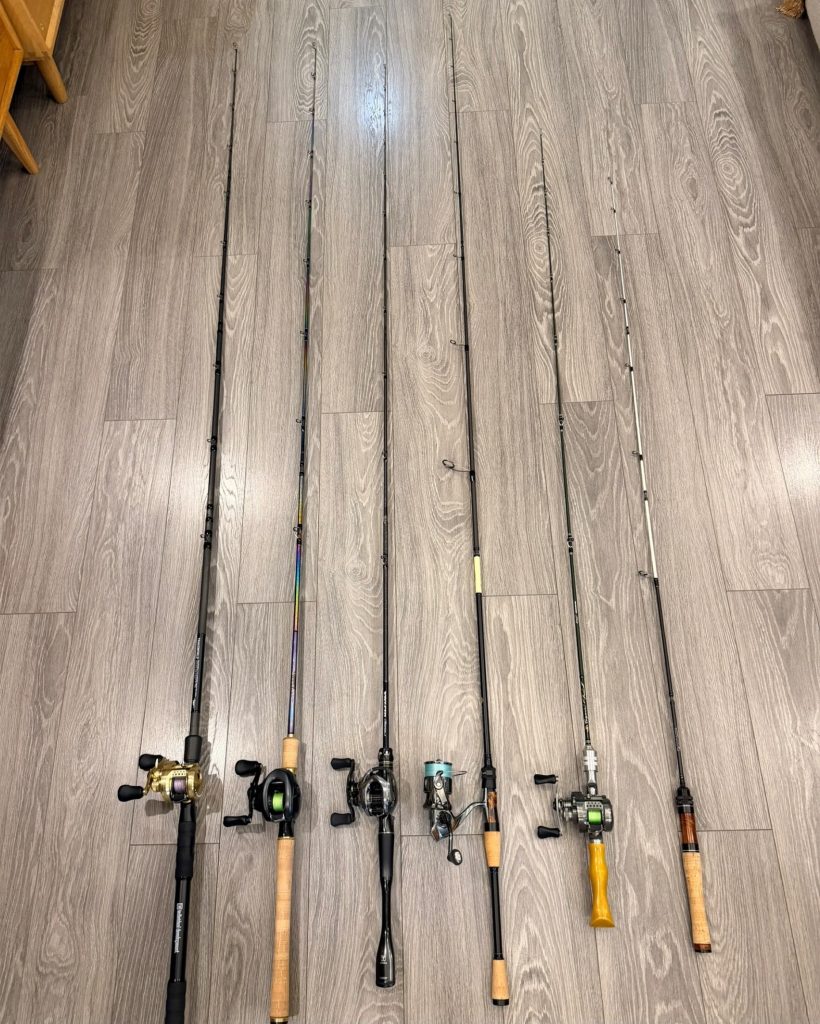
How to Choose Fishing Rod Action: Fast, Moderate, and Slow Action Explained
Fishing rod action is an important specification for buyers sourcing fishing rods from China. It describes how and where a rod bends when pressure is applied, and it can influence casting behavior, lure control, hook setting, and the overall feel of the rod.
For wholesalers, distributors, retailers, and private-label fishing brands, understanding rod action is important when selecting products for a specific customer group. A fast-action rod and a moderate-action rod may have the same length and material but provide a very different fishing experience.
This guide explains the main fishing rod action categories and shows wholesale buyers how to evaluate action when developing or sourcing fishing rods from China.
1. What Does Fishing Rod Action Mean?
Fishing rod action generally describes the area of the rod that bends when the rod is loaded.
The commonly used descriptions include:
- Fast action
- Moderate action
- Slow action
Some manufacturers may use additional descriptions or slightly different terminology. Because of this, buyers should always confirm the manufacturer’s exact specifications instead of assuming that two suppliers use the same rating system.
Action should also be considered together with rod length, power, material, lure rating, and line rating.
For a broader overview of specifications, see What Specifications Should Buyers Provide When Ordering Fishing Rods in Bulk?.
2. Fast-Action Fishing Rods
A fast-action rod generally bends closer to the upper section or tip when loaded, while a larger portion of the lower rod remains relatively firm.
This type of design is often selected when anglers want a responsive rod with relatively direct transmission of movement through the blank.
Depending on the specific design, fast action may be useful for applications where lure control and quick response are important.
Wholesale buyers considering fast-action models should evaluate:
- Rod length
- Power
- Blank construction
- Material
- Lure rating
- Line rating
- Target fishing method
A fast-action label by itself is not enough to determine whether a particular rod is suitable for a target market.
3. Moderate-Action Fishing Rods
Moderate-action rods generally bend farther down the blank than fast-action rods.
This can provide a different balance between flexibility and recovery. Moderate action may be appropriate for applications where a more progressive bend is preferred.
For a wholesale buyer, moderate-action rods can be useful when developing products intended for general-purpose fishing or applications where a less aggressive response is preferred.
However, the exact behavior still depends on the rod’s complete construction.
4. Slow-Action Fishing Rods
Slow-action rods generally bend through a larger portion of the blank when loaded.
This creates a more progressive bending profile and can provide a different fishing feel compared with a fast-action design.
Slow-action products may be considered for specific fishing techniques and customer groups where greater rod flex is desirable.
Buyers should evaluate actual samples because the same “slow action” terminology can feel different between manufacturers.
5. Fast vs Moderate vs Slow Action
| Rod Action | General Bending Area | Typical Buyer Consideration |
|---|---|---|
| Fast | Primarily toward the upper section | Responsiveness and direct control |
| Moderate | Further down the blank | Balanced and progressive bending |
| Slow | Through a larger portion of the blank | Greater flexibility and progressive loading |
This comparison is a general guide. The actual performance of a fishing rod depends on the complete design and should be verified through manufacturer specifications and samples.
6. Fishing Rod Action Is Not the Same as Power
One of the most common mistakes among new fishing rod buyers is confusing action with power.
Power describes how much force is generally required to load the rod.
Action describes where the rod bends when it is loaded.
For example, a fishing rod can be:
- Medium power + fast action
- Medium power + moderate action
- Medium-heavy power + fast action
- Light power + moderate action
Therefore, buyers should specify both power and action when requesting a quotation.
For more information, see Fishing Rod Power and Action Explained for Wholesale Buyers.
7. How Rod Action Affects Fishing Performance
Lure Control
Rod action can affect how an angler controls a lure. A more responsive upper section may provide a different feeling from a rod that bends progressively through the blank.
Casting
The action of a rod can influence how energy is loaded and released during casting. However, casting distance is not determined by action alone.
Rod length, power, lure weight, line, reel, blank design, and casting technique also contribute to the result.
Hook Setting
Different action profiles can provide different levels of immediate response when pressure is applied. Buyers targeting specific fishing techniques should therefore consider action together with the intended application.
Fish Fighting Characteristics
A rod with a more progressive bend can provide a different experience when fighting fish compared with a rod that remains relatively firm through much of the blank.
For commercial product development, buyers should test the complete rod rather than making performance assumptions based only on the action label.
8. How Rod Length and Action Work Together
Rod length can change how an action profile feels in actual use.
Two rods with the same action classification may feel different if they have significantly different lengths or blank constructions.
For example, a short fast-action rod and a long fast-action rod may both be classified as fast action, but their handling and casting characteristics can still differ.
This is why a complete specification should include both length and action.
If you are selecting different lengths for different markets, see How to Choose the Right Fishing Rod Length for Different Fishing Markets.
9. How Material Can Affect Rod Action
Rod action is also related to blank construction and material.
Carbon fiber and fiberglass can produce different characteristics, but the material name alone does not determine the action of the finished product.
Manufacturers can use different blank designs, fiber arrangements, wall structures, and resin systems to achieve different performance characteristics.
Therefore, buyers should not assume that all carbon fiber rods are fast action or all fiberglass rods are slow action.
For more information about material selection, see Fishing Rod Materials Explained: Carbon Fiber vs Fiberglass for Wholesale Buyers.
10. How to Choose Rod Action for Different Markets
General-Purpose Fishing
For general-purpose products, buyers may prefer an action that provides a practical balance between responsiveness and progressive bending.
The final choice should be based on the fishing method and target customers rather than on action terminology alone.
Technique-Specific Products
When developing products for a specific fishing technique, action becomes more important because the rod needs to work with the intended lure, line, target species, and fishing method.
In this situation, buyers should provide the manufacturer with the intended application and ask for recommended specifications.
Beginner Fishing Rods
Beginner products should generally be selected based on ease of handling and the intended fishing environment.
Instead of choosing an action category solely because it sounds more advanced, buyers should test the complete rod and consider the customer profile.
Premium and Professional Products
Premium product buyers may expect more precise specifications and consistent performance.
For these products, action should be considered together with blank construction, weight, balance, components, finishing quality, and intended fishing technique.
11. How to Ask a China Fishing Rod Manufacturer About Action
When contacting a supplier, avoid sending only a message such as “I need fast-action fishing rods.”
A more useful inquiry should include:
- Rod type
- Target fishing method
- Preferred length
- Preferred action
- Power
- Material
- Lure rating
- Line rating
- Quantity
- Target market
- OEM requirements
- Packaging requirements
This gives the manufacturer enough information to identify suitable existing models or discuss a customized product.
12. What to Check on a Fishing Rod Sample
When a manufacturer sends a sample, buyers should verify that the physical product matches the agreed specification.
A sample inspection can include:
- Confirm the actual rod length.
- Check the total weight.
- Check the section count.
- Inspect the blank finish.
- Check the guides.
- Inspect the reel seat.
- Check the handle and grip.
- Evaluate the bending profile.
- Confirm power and action information.
- Check packaging and labeling.
For a larger order, buyers should keep the approved sample and specification sheet as a reference for production quality control.
13. Fishing Rod Action for OEM and Private-Label Projects
For OEM buyers, action should be treated as part of the product specification rather than a marketing word added after production.
A private-label fishing rod project may involve customization of:
- Rod length
- Power
- Action
- Blank material
- Color
- Handle
- Guides
- Reel seat
- Logo
- Packaging
The manufacturer should confirm which elements can be customized and whether the requested specifications require a new mold, tooling, sample development, or minimum order quantity.
For private-label development, see How to Develop a Private Label Fishing Rod with a Chinese OEM Factory.
You can also review OEM Fishing Rod Manufacturing in China: Custom Logo, Design and Packaging.
14. Common Mistakes When Choosing Fishing Rod Action
Choosing Action Without Defining the Fishing Application
The same action may be appropriate for one application and unsuitable for another.
Confusing Action With Power
These are different specifications and should be listed separately.
Assuming All Manufacturers Use Identical Definitions
Terminology can vary, so buyers should request detailed specifications and samples.
Choosing Based Only on Marketing Claims
Words such as “professional,” “premium,” or “high performance” do not replace measurable product specifications.
Skipping Sample Testing
A sample allows buyers to evaluate the actual rod rather than relying entirely on photographs or descriptions.
Frequently Asked Questions
What is fast action on a fishing rod?
Fast action generally means that the rod bends primarily toward the upper section when loaded, while more of the lower blank remains relatively firm.
What is moderate action?
Moderate action generally means that the rod bends farther down the blank compared with a fast-action design, creating a more progressive bending profile.
What is slow action?
Slow action generally means that a larger portion of the rod bends when loaded, producing a more progressive and flexible response.
Is fast action better than slow action?
Neither is universally better. The appropriate action depends on the fishing technique, target customers, lure, line, rod power, length, and intended product positioning.
Should fishing rod action be included in a wholesale quotation?
Yes. Buyers should request action together with rod length, power, material, lure rating, line rating, and other relevant specifications.
Conclusion
Fishing rod action is an important specification for wholesale and OEM buyers because it describes how the rod bends under load and can influence the overall fishing experience.
Fast, moderate, and slow actions serve different product requirements. However, action should never be evaluated independently. Rod length, power, material, blank construction, lure rating, line rating, and fishing application all need to be considered together.
For international buyers sourcing fishing rods from China, the best approach is to define the target application, request a detailed specification, compare physical samples, and confirm the final product requirements before mass production.
Guangzhou Fishing Tackle Co., Ltd. supplies fishing rod products for international wholesale and OEM projects, including spinning rods, casting rods, telescopic rods, carbon fiber fishing rods, and customized fishing tackle products.
Related guide: Fishing Rod Power and Action Explained for Wholesale Buyers
Related guide: How to Choose the Right Fishing Rod Length for Different Fishing Markets
Related guide: Fishing Rod Materials Explained: Carbon Fiber vs Fiberglass for Wholesale Buyers


No reply content