Choosing a hair dryer for a business is not the same as choosing one for personal use.
A consumer may care mainly about appearance, airflow, weight, or price. A business buyer has to consider a much wider set of factors: the target customer, selling channel, electrical requirements, product positioning, expected order volume, operating environment, packaging, after-sales risk, and long-term supply stability.
This is especially important when purchasing from a manufacturer for wholesale, retail, salon distribution, hotel supply, e-commerce, or private-label business.
A hair dryer that looks attractive in a product photo may not necessarily be the right product for your market. The better approach is to start with the business requirement and then work backward to the product specification.
Start With Your Target Customer
Before comparing manufacturers or asking for quotations, define who will actually use the hair dryer.
This sounds simple, but it can completely change the product you need.
For example, a professional salon may need a dryer that can withstand frequent and relatively long operating periods. A travel-focused retailer may care more about compact size and weight. A hotel supplier may prioritize durability, simple operation, packaging, and stable bulk supply.
An online consumer brand may have a different priority again. Appearance, color, product weight, packaging, accessories, noise, and perceived value can have a major influence on customer reviews and repeat purchases.
Therefore, instead of starting with:
“How much is this hair dryer?”
a better first question is:
“What type of customer am I selling this hair dryer to?”
Once that is clear, the rest of the purchasing decision becomes much easier.
Decide Where the Hair Dryer Will Be Sold
The sales channel also affects product selection.
A hair dryer sold through a physical retailer may need packaging designed for shelf presentation. An e-commerce product may require stronger protective packaging because it will travel through parcel networks before reaching the customer.
A salon-oriented product can be evaluated differently from a consumer product sold through an online store.
For B2B buyers, the product should therefore be considered together with its distribution method.
Ask yourself:
- Will the product be sold online or offline?
- Is it intended for consumers or professionals?
- Will it be supplied to salons?
- Is it for hotels or hospitality businesses?
- Will distributors resell it under another brand?
- Is this a new product launch or an established product line?
- Will the same model be sold in several countries?
These questions help determine which specifications matter most.
Do Not Choose a Hair Dryer Based Only on Wattage
Wattage is one of the easiest specifications to compare, but it should not become the main purchasing criterion.
A higher power rating does not automatically mean a better hair dryer.
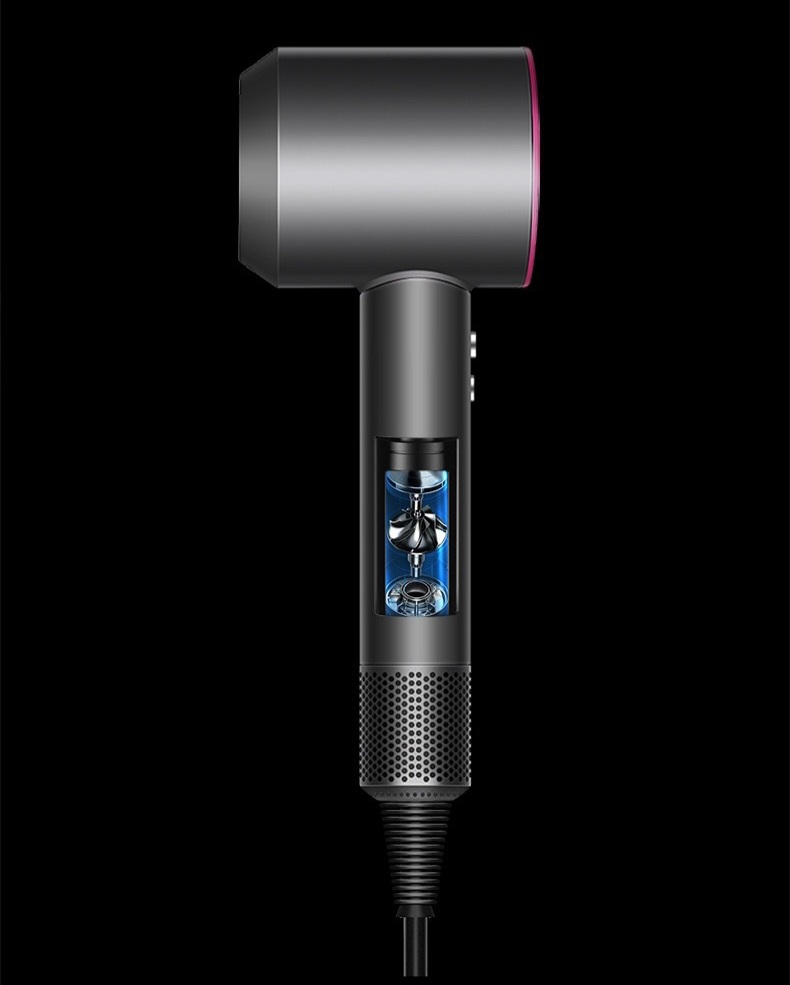
Actual performance depends on how different components work together, including the motor, fan, airflow path, heating system, temperature control, and overall internal design.
Two products can have similar power ratings but provide noticeably different user experiences.
When evaluating a model, consider:
- Motor type
- Airflow performance
- Air temperature
- Temperature stability
- Speed settings
- Heat settings
- Cool-air function
- Noise
- Product weight
- Operating comfort
- Expected service life
If you are evaluating higher-performance models, you can also compare specialized options such as high-speed hair dryers with brushless motors.
The important point is that a specification should be connected to an actual customer benefit.
Consider the Motor Carefully
The motor is one of the most important components inside a hair dryer.
It influences airflow, speed, noise, weight, energy consumption, durability, and product positioning.
However, buyers should avoid assuming that one motor specification is automatically suitable for every application.
A salon may value operating durability and stable performance. A lightweight consumer model may have different priorities. A premium product may emphasize high-speed airflow and compact design.
When discussing the motor with a supplier, ask:
- What type of motor is used?
- What is the expected operating life?
- What airflow performance does the complete system achieve?
- How does the motor affect noise?
- Is the motor suitable for the intended operating environment?
- Are replacement components available?
- Has the motor been tested under continuous operating conditions?
The motor should be evaluated as part of the complete airflow system rather than as an isolated number.
Look at the Heating System and Temperature Control
The heating system directly affects how the hair dryer performs during actual use.
A product needs enough heat to dry hair efficiently, but excessive or poorly controlled heat can create an uncomfortable user experience and place additional stress on internal components.
A business buyer should therefore consider:
- Heating element design
- Temperature settings
- Temperature stability
- Airflow balance
- Thermal protection
- Continuous operating performance
- Internal insulation
- Cooling function
The relationship between heat and airflow is particularly important.
If airflow is weak, simply increasing heat is not necessarily a good solution. The product needs a balanced system that delivers the intended drying performance while maintaining controlled operating temperatures.
Choose the Right Size and Weight
Product weight can have a direct impact on user satisfaction.
This becomes particularly important for professional users who may operate the dryer repeatedly throughout the day.
A heavier product is not automatically more durable, while an extremely lightweight product is not automatically better.
The right balance depends on the target application.
For professional users, consider:
- Grip comfort
- Handle design
- Weight distribution
- Button position
- Cable length
- Ease of movement
- Continuous operating comfort
For consumer products, compact dimensions and easy storage may be more important.
The best specification is therefore the one that matches the intended user rather than simply following a trend.
Check Voltage, Frequency, and Plug Requirements
Electrical specifications should be confirmed before production, especially when selling internationally.
Different markets can have different requirements for voltage, frequency, plugs, cables, labeling, and product documentation.
Before placing an order, confirm:
- Rated voltage
- Frequency
- Rated power
- Plug type
- Cable specification
- Product labeling
- Applicable market requirements
Do not assume that one configuration can be shipped to every country.
If you are purchasing for several markets, tell the manufacturer the destination countries before finalizing the product specification.
Changing electrical configurations after production has started can create unnecessary cost and delay.
Think About Accessories
Accessories can change both the perceived value of a hair dryer and the final purchasing cost.
Depending on the product, accessories may include:
- Concentrator nozzle
- Diffuser
- Comb attachment
- Storage bag
- Cleaning accessories
- Replacement parts
Not every customer needs the same accessories.
A professional salon may require particular styling attachments, while a travel product may benefit more from compact packaging.
Before requesting a quotation, define which accessories are included.
Otherwise, two suppliers may quote apparently similar products while actually offering very different packages.
Evaluate the Product for Your Price Position
A common purchasing mistake is choosing the cheapest model first and trying to build the business around it.
The better approach is to establish your intended retail or wholesale position.
For example, are you developing:
- An entry-level product?
- A mid-range consumer product?
- A professional salon product?
- A premium high-speed model?
- A private-label product for an established brand?
Each position requires a different combination of specifications, materials, functions, packaging, and manufacturing cost.
A low-cost product may be suitable for one market but completely wrong for another.
The objective is not to find the cheapest hair dryer.
The objective is to find a product whose cost, performance, appearance, and target selling price make commercial sense together.
Compare the Complete Product Specification
When requesting quotations from suppliers, avoid comparing only the unit price.
Create a specification sheet and ask each supplier to quote against the same requirements.
For example:
Product: Hair Dryer
Target Market: Country or region
Voltage: Required voltage
Frequency: Required frequency
Plug: Required plug
Power: Target power
Motor: Preferred motor type
Speed: Required speed settings
Temperature: Required heat settings
Functions: Cool air, ionization, display, etc.
Accessories: Required attachments
Logo: Required branding
Color: Required color
Packaging: Retail packaging requirements
Quantity: Expected order volume
Customization: OEM or ODM
Delivery: Required production schedule
This makes supplier comparisons much more meaningful.
A quotation for a basic standard product should not be compared directly with a quotation for a customized professional model.
Decide Whether You Need OEM or ODM
Your product development strategy also matters.
If you already have detailed specifications, branding requirements, packaging designs, or a product concept, OEM production may be appropriate.
If you want to start from an existing product platform and customize selected elements, ODM may be more practical.
Customization can involve:
- Logo
- Color
- Packaging
- Accessories
- Product labeling
- User manual
- Electrical configuration
- Product appearance
- Product functions
For buyers considering private-label production, an OEM and ODM hair dryer manufacturing solution can be a useful starting point for defining which elements should be customized.
The key is to decide how much customization your business actually needs.
There is little value in paying for a completely new design if your market can be served effectively by an existing product with customized branding and packaging.
Ask for a Sample Before a Large Order
A specification sheet cannot tell you everything about a product.
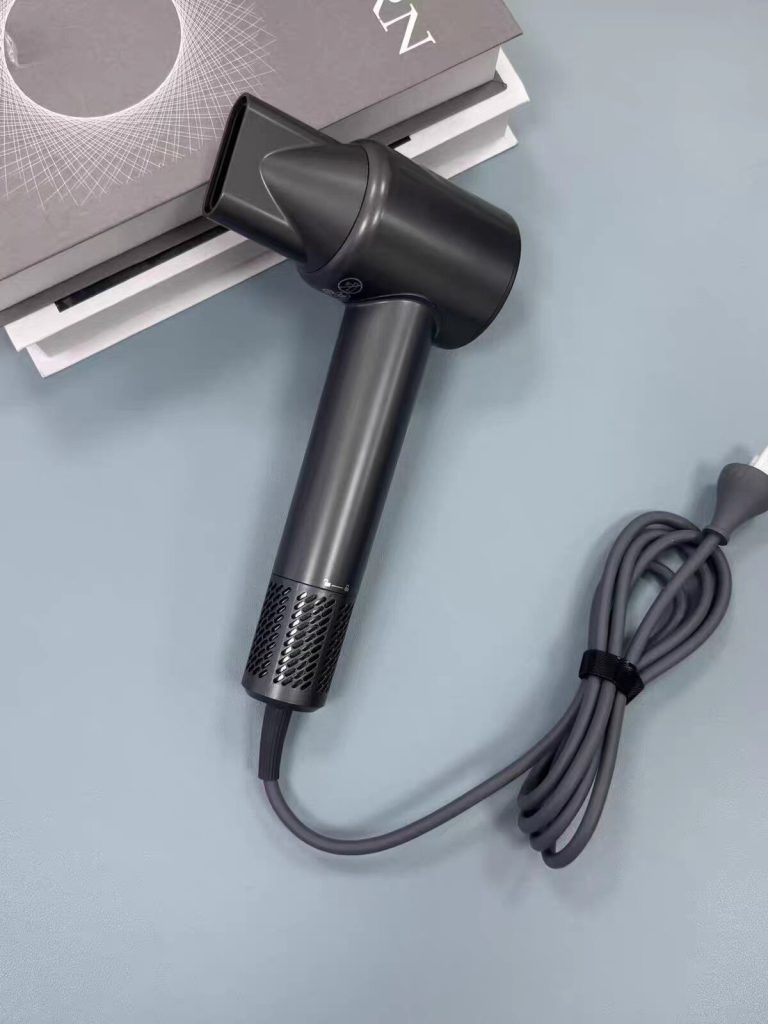
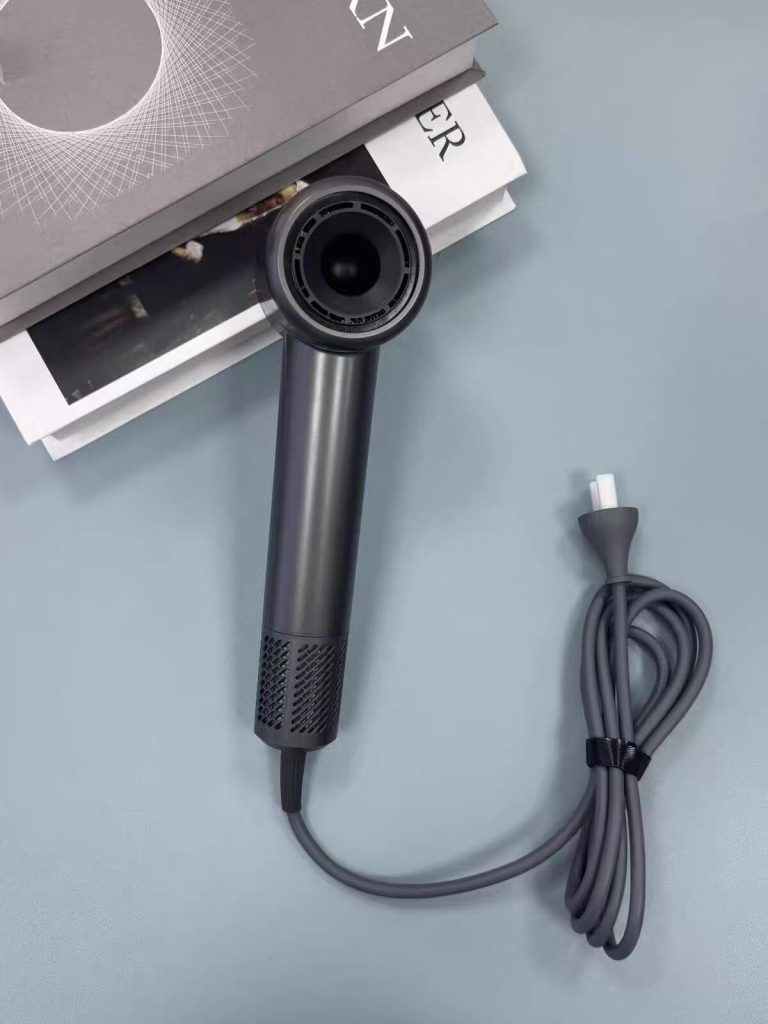
Before placing a large order, request a physical sample whenever possible.
Use the sample to evaluate:
- Actual airflow
- Temperature
- Noise
- Weight
- Grip
- Button operation
- Materials
- Housing quality
- Cable
- Plug
- Accessories
- Packaging
- Overall user experience
If the product is customized, make sure the final specifications are documented after sample approval.
This is especially important for private-label projects because the approved sample can become an important reference for later production.
Check Quality Control Before Choosing a Supplier
Quality control should not be treated as something that happens only at the end of production.
Ask the supplier how the product is controlled throughout manufacturing.
Depending on the product, relevant checks may include:
- Incoming component inspection
- Motor testing
- Heating-system testing
- Electrical testing
- Temperature testing
- Airflow testing
- Switch testing
- Cable and plug inspection
- Insulation testing
- Thermal protection
- Aging or endurance testing
- Appearance inspection
- Assembly inspection
- Packaging inspection
The exact testing requirements depend on the product design and destination market.
For a buyer, the important question is not simply whether a supplier says “quality is guaranteed.”
Ask how quality is actually checked.
Do Not Ignore Packaging
Packaging is often discussed too late in the purchasing process.
For e-commerce businesses, packaging can influence transportation damage, returns, customer perception, and shipping cost.
For retail businesses, packaging contributes to shelf presentation and brand recognition.
A packaging discussion should cover:
- Retail box
- Internal protection
- Product labels
- User manual
- Barcode
- Accessories
- Master carton
- Carton dimensions
- Shipping marks
Packaging should be considered together with the product rather than as an afterthought.
Consider MOQ and Future Demand
Minimum order quantity is another important factor.
The MOQ may depend on whether you are purchasing a standard model or developing a customized product.
A standard product may require less customization.
A new OEM project may involve additional requirements such as:
- Custom molds
- Special components
- Custom colors
- Custom packaging
- Logo printing
- New tooling
- Product development
Instead of discussing only your first order, explain your expected future purchasing volume to the supplier.
For example, a buyer planning to purchase several thousand units annually may have different options from a buyer testing a new product with a small initial order.
Look Beyond the Initial Price
The cheapest quotation may not produce the lowest total cost.
Suppose one supplier offers a lower unit price but has higher defect rates, weaker packaging, longer production times, or inconsistent specifications.
The apparent saving can disappear through:
- Returns
- Replacements
- Delayed shipments
- Customer complaints
- Rework
- Additional inspections
- Packaging damage
- Inventory problems
This is why experienced B2B buyers evaluate the complete purchasing cost rather than the factory price alone.
A professional hair dryer factory in China should be evaluated according to manufacturing capability, product consistency, customization ability, quality control, communication, and production stability—not simply the lowest quotation.
A Practical Hair Dryer Selection Checklist
Before choosing a model, make sure you can answer these questions:
- Who is the target customer?
- Where will the product be sold?
- What price position are you targeting?
- What motor configuration is appropriate?
- What airflow performance is required?
- What heating and temperature controls are needed?
- What weight and dimensions are acceptable?
- What voltage and plug are required?
- Which accessories should be included?
- Do you need OEM or ODM customization?
- What packaging is required?
- What is your expected order quantity?
- What quality tests are required?
- Have you tested a physical sample?
- Can the supplier maintain the same specification during mass production?
If these questions have clear answers, you are in a much stronger position when requesting quotations.
Final Thoughts
Choosing the right hair dryer for a business is ultimately a product-matching exercise.
The best model is not necessarily the most powerful, the most expensive, or the cheapest. It is the one that fits your customer, sales channel, market requirements, price position, expected order volume, and long-term business strategy.
For first-time buyers, the safest approach is to define the product requirements before comparing suppliers, request samples, compare complete specifications, confirm electrical requirements, and evaluate quality-control procedures before committing to a large order.
For private-label buyers, customization should also be approached carefully. A product does not become commercially stronger simply because it has more functions. Every additional feature should have a clear reason to exist and should support the customer or the brand.
When the product specification, manufacturing capability, quality requirements, packaging, and commercial expectations are aligned from the beginning, supplier discussions become more efficient and the risk of expensive changes later in the process becomes much lower.
FAQ
What is the most important factor when choosing a hair dryer for business?
There is no single factor. The right choice depends on the target customer, application, product positioning, performance requirements, electrical configuration, quality expectations, and total purchasing cost.
Is a higher-wattage hair dryer always better?
No. Wattage alone does not determine the overall performance of a hair dryer. Motor design, airflow, heating, temperature control, and internal structure also affect the user experience.
Should I choose OEM or ODM?
OEM may be more suitable when you have specific product requirements. ODM can be more practical when you want to customize an existing product platform. The better option depends on your development budget, desired uniqueness, and sales strategy.
Should I request a sample before placing a bulk order?
Yes. A physical sample allows you to evaluate performance, appearance, weight, noise, temperature, accessories, packaging, and other details that cannot be fully judged from a quotation.
How do I compare hair dryer suppliers?
Give suppliers the same product specification and compare motor, power, functions, materials, accessories, packaging, MOQ, testing, lead time, customization, and total cost rather than comparing unit prices alone.
Can I customize a hair dryer for my own brand?
Many manufacturers offer private-label customization such as logos, colors, packaging, labels, accessories, and product configurations. The available options depend on the manufacturer’s capabilities and the specific model.


No reply content