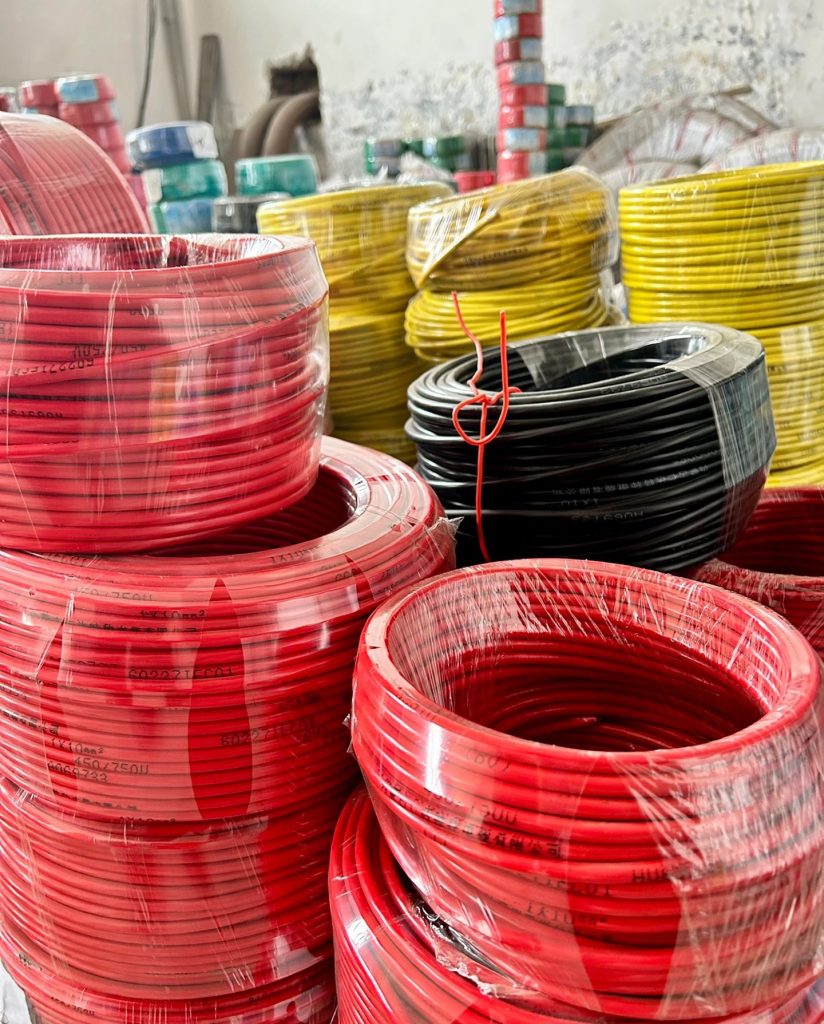
How to Compare Electrical Wire Suppliers in China: A Practical Buyer’s Guide
Finding several electrical wire suppliers in China is relatively easy.
The difficult part is deciding which supplier is actually the better choice.
A buyer may receive five quotations for the same-looking PVC insulated copper wire, with prices that differ significantly. One supplier may offer a very low price, another may have better documentation, while a third may have stronger production capability or more flexible packaging options.
Choosing only by price can therefore lead to the wrong decision.
For importers, distributors, wholesalers, electrical contractors, and project buyers, a better approach is to compare suppliers using the same technical and commercial criteria.
This guide explains how to compare electrical wire suppliers in China step by step, including product specifications, copper conductors, standards, quality control, MOQ, pricing, packaging, production capacity, certification, delivery time, and total landed cost.
1. Start With the Same Product Specification
The first rule is simple:
Never compare quotations for different specifications.
If Supplier A quotes a 2.5mm² PVC insulated copper wire and Supplier B quotes another product that only has a similar product name, the prices cannot be compared fairly.
Before contacting suppliers, prepare one standard RFQ.
Your specification should include:
- Product type
- Conductor material
- Conductor construction
- Cross-sectional area
- Conductor class
- Insulation material
- Voltage rating
- Applicable standard
- Color
- Coil or drum length
- Packaging
- Required quantity
- Destination market
- Certification requirements
- Delivery destination
For example:
Product: Single-core copper building wire
Conductor: Copper
Construction: Solid
Size: 2.5mm²
Insulation: PVC
Voltage: 450/750V
Standard: Required standard specified by buyer
Color: Blue
Packing: 100m coils
Quantity: 10,000m
Destination: Buyer’s country and port
Once every supplier receives the same specification, the comparison becomes much more meaningful.
For buyers who need a starting point for BV, H07V-U and 450/750V building wire, the existing PVC Insulated Building Wire Supplier China | BV, H07V-U, 450/750V page provides product-level information.
2. Compare the Supplier’s Actual Business Role
Not every company selling electrical wire is a manufacturer.
A supplier may be:
- A factory
- A manufacturer with its own production lines
- A trading company
- A distributor
- An export company
- A sourcing intermediary
This does not mean a trading company is automatically worse than a factory.
A trading company may provide useful export services, product selection, consolidation, and communication.
However, buyers should understand who is actually responsible for production.
Ask:
- Do you manufacture this product yourself?
- Which products are produced in-house?
- Where is the factory?
- Which wire sizes can you manufacture?
- Can you provide factory information?
- Can you provide production photos or videos?
- Can you support factory inspection?
The supplier profile for China Electrical Cable and Wire Manufacturing Co., Ltd. currently identifies the business as an electrical cable and wire manufacturer in China and lists products including BV, 60227 IEC 01 and H07V-U-related building wire.
That information can be used as part of the supplier comparison, but buyers should still independently verify important commercial and technical claims before ordering.
3. Compare the Product Range
A supplier’s product range can tell you something about its manufacturing capability.
One supplier may focus almost entirely on one type of wire.
Another may manufacture several sizes, colors, constructions, and packaging formats.
Compare:
- Wire types
- Available sizes
- Conductor constructions
- Voltage ratings
- Insulation materials
- Colors
- Standards
- Packaging options
- OEM capability
- Custom specifications
For example, a distributor may need several common sizes rather than one single product.
A supplier capable of producing multiple sizes consistently may be more useful for a long-term wholesale relationship.
The Wholesale Single Core Copper Wire Factory | BV H07V-U China page is another useful reference when comparing suppliers that focus on single-core copper building wire.
4. Compare the Conductor Specification
The copper conductor deserves more attention than the product name.
Two suppliers can both quote “2.5mm² copper wire,” but the buyer should still confirm the actual conductor specification.
Compare:
- Conductor material
- Solid or stranded construction
- Conductor class
- Nominal cross-sectional area
- Conductor diameter
- Maximum DC resistance
- Applicable standard
For large orders, resistance is particularly useful because it provides a measurable technical parameter.
Do not simply ask:
Is this pure copper?
Instead ask for the actual technical specification.
A professional supplier should be able to explain the conductor construction and applicable testing requirements.
5. Compare Insulation Specifications
The insulation is another important area where suppliers should be compared carefully.
Check:
- Insulation material
- Nominal thickness
- Minimum thickness
- Overall diameter
- Temperature requirements
- Voltage rating
- Color
- Applicable standard
If the supplier offers a very low price, but the product specification differs from the other quotations, the lower price may not represent a real saving.
The correct comparison is:
Same conductor + same insulation + same standard + same packaging + same quantity + same commercial terms.
Only then does the price comparison become useful.
6. Compare Applicable Standards
Electrical wire is sold according to different standards and designation systems.
A supplier may offer BV, 60227 IEC 01, H07V-U, or another specification.
Do not assume that similar-looking products are automatically identical.
For buyers comparing BV and H07V-U, the existing guide BV Wire vs H07V-U: What Is the Difference and Which One Should You Buy? can help clarify why product designation and applicable standards need to be considered.
For buyers specifically researching 60227 IEC 01, see What Is 60227 IEC 01 Cable? Specifications, Applications and Buying Guide.
The important point is not which designation sounds better.
The important point is whether the product meets the specification required by your destination market or project.
7. Compare Certification and Documentation
Certification should be evaluated carefully.
Do not give a supplier a higher score simply because its quotation contains a long list of certificates.
Instead, ask:
- What product is covered?
- Which sizes are covered?
- Which standard is covered?
- Which manufacturing site is covered?
- Is the certificate current?
- Does the documentation match the actual product?
- Can the supplier provide the relevant test report?
A certificate covering one product does not necessarily mean that every product made by the company has the same certification.
For electrical products, documentation should always be checked against the exact specification being purchased.
8. Compare Quality-Control Procedures
Quality control is one of the biggest differences between suppliers.
Ask each supplier to explain its production testing.
Relevant checkpoints may include:
- Copper conductor inspection
- Conductor diameter
- Cross-sectional area
- DC resistance
- Insulation thickness
- Insulation eccentricity
- Spark testing
- Finished wire inspection
- Length verification
- Printing inspection
- Packaging inspection
Do not ask only:
Is your product high quality?
Almost every supplier will answer yes.
Instead ask:
What tests are performed during production, and which test records can you provide?
The second question gives you information that can actually be compared.
9. Compare Samples
For a new supplier, samples can be extremely useful.
Ask every shortlisted supplier to provide the same specification.
Then compare the samples for:
- Wire diameter
- Surface finish
- Insulation quality
- Color
- Printing
- Flexibility
- Conductor construction
- Packaging
- Product documentation
For larger projects, buyers may also consider third-party testing.
A sample does not replace production inspection, but it provides a physical reference before a large order is manufactured.
10. Compare MOQ
MOQ can have a major effect on the real cost of purchasing.
Compare the MOQ for:
- Each wire size
- Each color
- Custom printing
- Custom packaging
- Special specifications
- Mixed-size orders
For example:
| Requirement | Supplier A | Supplier B | Supplier C |
|---|---|---|---|
| 1.5mm² MOQ | |||
| 2.5mm² MOQ | |||
| 4mm² MOQ | |||
| 6mm² MOQ | |||
| 10mm² MOQ | |||
| Custom color MOQ | |||
| OEM printing MOQ |
A supplier with a slightly higher unit price may still be more suitable if it accepts a much smaller trial order.
11. Compare Pricing on the Same Basis
Price is important.
But price should come after specification.
Ask each supplier for the price under exactly the same conditions.
For example:
- Same wire size
- Same conductor
- Same standard
- Same insulation
- Same color
- Same quantity
- Same packaging
- Same OEM requirements
- Same Incoterm
Then compare the quotations.
A useful table is:
| Item | Supplier A | Supplier B | Supplier C |
|---|---|---|---|
| Product price/m | |||
| Packaging | |||
| OEM printing | |||
| Certification | |||
| Testing | |||
| MOQ | |||
| Production time | |||
| Incoterm | |||
| Total quotation |
This prevents a common mistake: selecting the supplier with the lowest headline price without realizing that important costs are excluded.
12. Understand Why One Supplier Is Cheaper
If one supplier is 10%–20% cheaper than the others, do not immediately assume that you have found the best deal.
Ask why.
Possible differences include:
- Copper specification
- Wire construction
- Insulation thickness
- Packaging
- Printing
- Certification
- Quantity
- MOQ
- Production efficiency
- Incoterm
- Included services
The buyer’s job is not to find the lowest number.
The buyer’s job is to determine whether the lower number represents the same product and commercial conditions.
For buyers researching BV wire pricing, How Much Does BV Wire Cost in China? A Buyer’s Guide to Pricing provides a useful pricing reference.
13. Compare Copper-Price Policies
Copper is a major raw material for electrical wire, so suppliers may have different approaches to pricing.
Ask:
- How long is the quotation valid?
- Is the price fixed?
- Is the quotation linked to copper prices?
- Can the supplier hold the price until production?
- How are price adjustments calculated for long-term orders?
For a one-time small order, this may not be a major issue.
For repeated purchasing, however, the supplier’s pricing mechanism can have a significant impact on your annual purchasing cost.
14. Compare Packaging Options
Packaging can affect both purchasing cost and logistics.
Compare:
- Length per coil
- Plastic coil
- Wooden reel
- Carton
- Drum
- Pallet
- Retail packaging
- Project packaging
- Private-label packaging
For example, a hardware distributor may need 100m coils with retail labels.
A construction project may prefer longer lengths to reduce handling.
A buyer should therefore compare packaging based on the actual sales channel.
For a specific 10mm² building-wire reference, see PVC Building Wire for House Wiring | 10mm² BV Cable Supply.
15. Compare OEM and Private-Label Capability
If you intend to sell the wire under your own brand, compare suppliers based on their OEM capabilities.
Ask:
- Can the wire be printed with our brand?
- What is the MOQ?
- Can packaging be customized?
- Can labels be customized?
- Can barcodes be printed?
- What is the artwork approval process?
- Is there an additional setup cost?
- How long does custom production take?
Do not evaluate OEM capability only by asking whether the supplier can print a logo.
The more important question is whether the supplier can consistently reproduce the approved specification and packaging.
16. Compare Production Capacity
A supplier may offer an excellent price but have limited capacity.
Ask:
- What is your normal production lead time?
- What is your monthly production capacity?
- How many production lines are available?
- Which products share the same production lines?
- Can you handle seasonal demand?
- Can you support repeat orders?
This matters particularly for distributors and large projects.
A supplier that can produce 5,000 meters quickly may not be the right choice for a buyer who needs hundreds of thousands of meters every month.
17. Compare Delivery Time
Compare the complete production schedule rather than vague promises.
Ask each supplier for:
- Sample lead time
- Production lead time
- Inspection time
- Packaging time
- Ready date
- Estimated shipping date
Custom colors, custom printing, custom packaging, and special documentation can all affect production time.
For a project buyer, a supplier that can reliably deliver on schedule may be more valuable than one offering a slightly lower price.
18. Compare Export Experience
A good factory does not automatically have strong export operations.
For international buyers, compare whether the supplier can handle:
- Commercial invoices
- Packing lists
- Export documentation
- Shipping marks
- Certificate requirements
- Container loading
- Inspection coordination
- International communication
This is especially important for first-time importers.
A supplier may manufacture excellent wire but still require support from an experienced export partner.
19. Compare Communication Quality
Communication is an underrated supplier-selection factor.
During the quotation process, observe whether the supplier:
- Answers technical questions clearly
- Understands your specification
- Provides complete quotations
- Responds within a reasonable time
- Admits when something is unavailable
- Explains limitations honestly
- Keeps information consistent
Poor communication before an order can become a much bigger problem after payment.
If the supplier repeatedly ignores your technical questions and only responds with “best price,” that is a warning sign.
20. Compare the Supplier’s Ability to Handle Problems
No supply chain is completely free from problems.
A useful supplier should have a clear process for handling:
- Incorrect quantity
- Damaged packaging
- Specification deviations
- Production delays
- Shipping delays
- Documentation problems
- Customer complaints
Ask:
What is your procedure if the delivered wire does not match the approved specification?
The answer can reveal how professionally the supplier handles risk.
21. Calculate the Total Landed Cost
This is where many supplier comparisons fail.
The cheapest factory quotation is not necessarily the cheapest purchase.
Your real cost may include:
Product cost + packaging + China local charges + export costs + freight + insurance + destination charges + duties/taxes + inland delivery
For example:
| Cost | Supplier A | Supplier B | Supplier C |
|---|---|---|---|
| Product | $ | $ | $ |
| Packaging | $ | $ | $ |
| Export charges | $ | $ | $ |
| Freight | $ | $ | $ |
| Insurance | $ | $ | $ |
| Destination charges | $ | $ | $ |
| Duties/taxes | $ | $ | $ |
| Inland delivery | $ | $ | $ |
| Total landed cost | $ | $ | $ |
This comparison can completely change the ranking of suppliers.
22. Give Each Supplier a Score
Instead of choosing based on instinct, create a supplier scorecard.
For example:
| Category | Weight |
|---|---|
| Product specification | 20% |
| Quality control | 15% |
| Certification/documentation | 10% |
| Price | 15% |
| MOQ | 5% |
| Production capacity | 10% |
| Lead time | 10% |
| Packaging/OEM | 5% |
| Communication | 5% |
| Export capability | 5% |
Then give each supplier a score from 1 to 10.
This does not produce a perfect mathematical answer.
Its purpose is to prevent one attractive factor—usually a low price—from dominating the entire purchasing decision.
23. Example of a Supplier Comparison
Imagine three suppliers:
Supplier A
- Lowest price
- Large MOQ
- Limited packaging choices
- Average documentation
- Long production lead time
Supplier B
- Mid-range price
- Flexible MOQ
- Strong technical documentation
- Good OEM capability
- Stable lead time
Supplier C
- Highest price
- Excellent documentation
- Small trial MOQ
- Fast samples
- Strong customization
Which one is best?
There is no universal answer.
For a small distributor testing the market, Supplier C may be the most practical.
For a large wholesaler, Supplier B may provide the best balance.
For a highly price-sensitive commodity order with very large volume, Supplier A could become attractive if the specification and quality are equivalent.
This is why supplier selection should be based on the buyer’s actual requirements.
24. Do Not Compare Suppliers by Company Size Alone
A large-looking company is not automatically the best supplier.
Likewise, a smaller manufacturer is not automatically unreliable.
Instead, evaluate evidence:
- Product capability
- Manufacturing capability
- Quality control
- Technical documentation
- Samples
- Production consistency
- Delivery performance
- Communication
- Export experience
The goal is to find a supplier that fits your specific purchasing requirements.
25. Use Product Pages as Part of the Comparison
Product pages can help buyers understand what each supplier actually sells.
For example, the existing H07V-U Solid Copper Cable: Complete Technical and Pricing Guide from a China Manufacturer focuses specifically on H07V-U.
For buyers researching BV and 60227 IEC 01, the BV Wire 60227 IEC 01 Manufacturer China | 450/750V Single Core page provides another product-specific reference.
These product pages should not replace independent verification, samples, testing, or supplier due diligence.
Their value is helping the buyer understand the product before requesting a formal quotation.
26. A Practical Supplier Comparison Checklist
Before selecting an electrical wire supplier in China, check:
Company
- [ ] Manufacturer or trading company confirmed
- [ ] Factory information reviewed
- [ ] Main products identified
- [ ] Production capability understood
Technical
- [ ] Product type confirmed
- [ ] Conductor material confirmed
- [ ] Conductor construction confirmed
- [ ] Cross-sectional area confirmed
- [ ] DC resistance confirmed
- [ ] Insulation specification confirmed
- [ ] Voltage rating confirmed
- [ ] Standard confirmed
Quality
- [ ] Sample received
- [ ] Test report reviewed
- [ ] Quality-control process understood
- [ ] Inspection requirements agreed
Commercial
- [ ] MOQ confirmed
- [ ] Price confirmed
- [ ] Price validity confirmed
- [ ] Payment terms confirmed
- [ ] Incoterm confirmed
- [ ] Production lead time confirmed
Packaging
- [ ] Coil length confirmed
- [ ] Packaging confirmed
- [ ] Labels confirmed
- [ ] OEM printing confirmed if required
- [ ] Pallet/reel requirements confirmed
Logistics
- [ ] Gross weight confirmed
- [ ] Net weight confirmed
- [ ] Packing dimensions confirmed
- [ ] Shipping destination confirmed
- [ ] Total landed cost calculated
Frequently Asked Questions
How many electrical wire suppliers should I compare in China?
For a new purchase, comparing several qualified suppliers is generally more useful than relying on a single quotation. The exact number depends on the order size, product complexity, and market requirements.
Should I choose the supplier with the lowest price?
No. First confirm that the product specifications, standards, packaging, certification, MOQ, and Incoterms are equivalent.
What is the most important factor when comparing electrical wire suppliers?
There is no single factor for every buyer. Product specification and quality should normally be established first, followed by price, production capability, documentation, delivery, and total landed cost.
How can I compare quotations fairly?
Send every supplier exactly the same RFQ and require them to quote the same product specification, quantity, packaging, and Incoterm.
Should I compare factories and trading companies separately?
It can be useful. The important point is to understand who manufactures the product and who is responsible for quality, documentation, and export handling.
Should I request samples from every supplier?
For a serious first order, samples from the final shortlisted suppliers can make comparison much easier. For large projects, additional testing may be appropriate.
What should I do if one supplier is much cheaper?
Ask why. Compare the conductor, insulation, standard, packaging, certification, quantity, MOQ, Incoterm, and included services before deciding that the lower quotation is genuinely cheaper.
Final Thoughts
Comparing electrical wire suppliers in China should be treated as a procurement process, not a simple price search.
The strongest supplier is not necessarily the cheapest factory and not necessarily the largest company.
A better supplier is the one that can provide the required specification consistently, explain its quality-control process, provide appropriate documentation, meet your quantity and packaging requirements, communicate clearly, and deliver at a commercially acceptable total cost.
The most reliable approach is straightforward:
Define the specification → shortlist suppliers → send the same RFQ → compare technical data → compare samples → check documentation → compare commercial terms → calculate landed cost → select the supplier that offers the best overall fit.
For buyers sourcing BV, 60227 IEC 01, H07V-U, or other PVC-insulated building wires from China, this method provides a much stronger basis for supplier selection than simply choosing the lowest quotation.


No reply content