

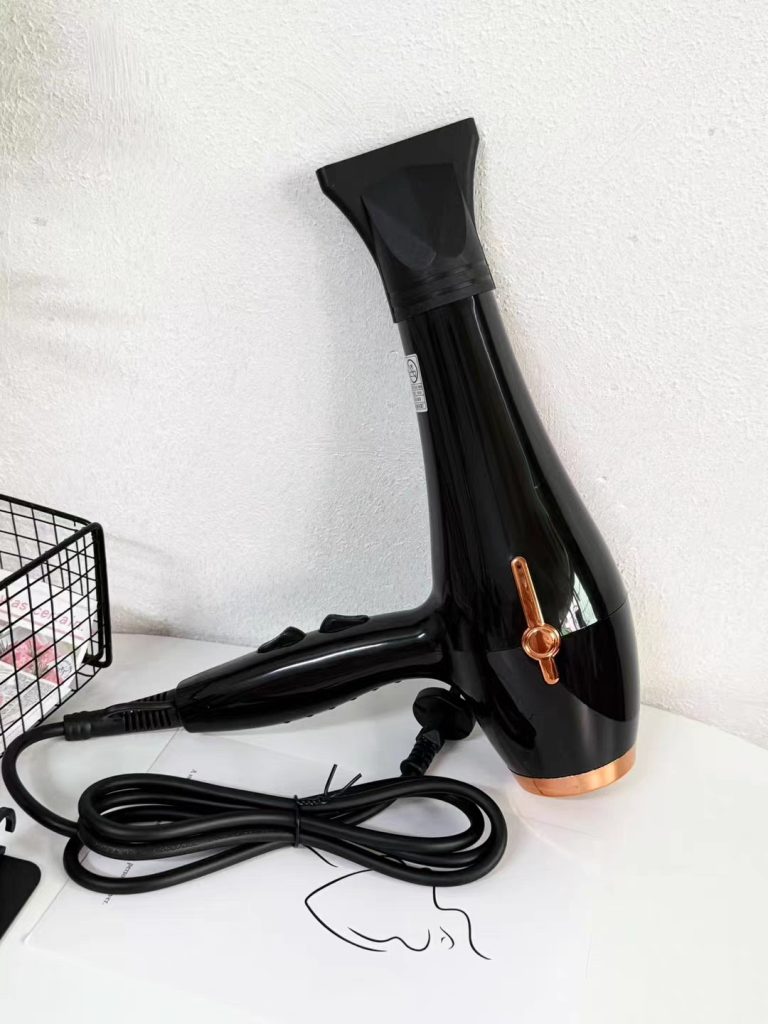
Receiving several hair dryer quotations from Chinese factories can seem like a good position to be in.
One factory offers a lower unit price. Another provides better packaging. A third supplier offers a more powerful motor, a higher specification, or more customization options.
The problem is that these quotations are often not based on exactly the same product.
A $15 hair dryer and a $22 hair dryer may look similar in product photos while having different motors, heating systems, electronics, accessories, packaging, quality-control requirements, and electrical configurations.
For importers, distributors, retailers, salons, hotels, e-commerce businesses, and private-label brands, the correct way to compare suppliers is therefore not simply to find the lowest unit price.
The goal is to determine:
Which supplier offers the best combination of product specification, quality, customization, production capability, delivery, and total cost?
This guide explains how to compare hair dryer factory quotations step by step.
1. Never Compare Prices Before Comparing Specifications
The first mistake buyers make is putting supplier quotations into a spreadsheet and sorting them from lowest to highest price.
That can produce the wrong result.
Before comparing prices, confirm whether every supplier is quoting the same product.
At minimum, compare:
-
Product model
-
Motor type
-
Motor speed
-
Rated power
-
Voltage
-
Frequency
-
Plug
-
Heating system
-
Speed settings
-
Temperature settings
-
Cool-shot function
-
Airflow
-
Noise level
-
Product material
-
Cable
-
Accessories
-
Packaging
-
Logo
-
Product labeling
If these specifications are different, the quotations are not directly comparable.
The existing China Hair Dryer Manufacturer profile can be used as the central internal resource for related hair dryer sourcing information.
2. Create One Standard RFQ for Every Factory
The easiest way to make quotations comparable is to send exactly the same requirements to every supplier.
For example:
Product: Hair Dryer
Quantity: 1,000 units
Target Market: [Country]
Voltage: [Required voltage]
Frequency: [Required frequency]
Plug: [Required plug]
Power: [Required wattage]
Motor: [Required specification]
Speed Settings: [Requirement]
Temperature Settings: [Requirement]
Cool Shot: Yes
Logo: Custom
Packaging: Custom retail box
Accessories: [Required accessories]
Sample: Required
OEM/ODM: Required
Delivery Destination: [Country/City]
Then ask each manufacturer to quote according to the same specification.
This creates a much more useful comparison.
3. Separate Product Price From Total Project Cost
A factory quotation may contain several different costs.
Do not assume that the number shown next to “Unit Price” represents your actual purchasing cost.
A project may include:
-
Product cost
-
Logo customization
-
Packaging
-
Accessories
-
Mold costs
-
Sample costs
-
Testing
-
Inspection
-
Local transportation
-
Export-related charges
-
International freight
-
Import duties
-
Taxes
-
Destination delivery
Your previous How Much Does It Cost to Import Hair Dryers from China? article already covers this total-cost concept in greater detail.
The key principle is:
Compare total purchasing cost, not only factory unit price.
4. Compare the Motor Specification
The motor is one of the most important parts of a hair dryer.
When comparing quotations, check:
-
Motor type
-
Motor speed
-
Rated power
-
Airflow
-
Noise
-
Expected operating characteristics
-
Motor protection
-
Supplier or brand, where relevant
Do not simply accept a statement such as “high-speed motor.”
Ask for the actual specification.
For buyers interested in high-speed products, the existing article about 110,000 RPM brushless hair dryer motors can be used as a related internal resource.
The important point is that motor performance should be compared together with the rest of the product specification.
5. Compare the Heating System
Two hair dryers can have similar motors but different heating performance.
Ask each supplier about:
-
Heating element
-
Heating power
-
Temperature control
-
Thermal protection
-
Temperature settings
-
Heat distribution
-
Cool-air function
If Supplier A offers a lower price because it uses a simpler heating system, the quotation should not be compared directly with Supplier B’s higher-specification model.
Always normalize the specifications first.
6. Compare Electrical Configuration
For international purchasing, electrical configuration is especially important.
Confirm:
-
Voltage
-
Frequency
-
Plug
-
Cable
-
Rated power
-
Product label
A hair dryer designed for one market may require a different electrical configuration for another market.
Make sure every supplier is quoting the configuration you actually need.
If one quotation uses a different voltage or plug, do not treat it as an equivalent offer.
7. Compare Functions and Accessories
A supplier may quote a higher price because more accessories or functions are included.
Compare:
-
Concentrator
-
Diffuser
-
Comb attachments
-
Storage bag
-
Replacement components
-
Other accessories
Also compare functions such as:
-
Multiple speed settings
-
Multiple temperature settings
-
Cool shot
-
Temperature control
-
Digital display
-
Memory function
-
Other product features
A $20 quotation with three accessories should not automatically be considered more expensive than a $17 quotation with only one accessory.
8. Compare Product Materials
Ask what materials are used for important components.
For example:
-
Housing
-
Handle
-
Buttons
-
Air inlet
-
Air outlet
-
Internal components
-
Cable
-
Packaging
You do not necessarily need the most expensive material.
The goal is to determine whether the material matches your product positioning and target selling price.
A budget retail hair dryer and a professional salon hair dryer may have very different material requirements.
9. Compare the Product Weight
Product weight can affect both the product experience and shipping cost.
Ask for:
-
Net product weight
-
Gross product weight
-
Packaging weight
-
Carton gross weight
If two suppliers quote similar prices but one product is significantly heavier, ask why.
The difference may come from:
-
Motor
-
Housing
-
Internal components
-
Cable
-
Accessories
-
Packaging
Weight alone does not determine quality, but it can help identify differences between two seemingly similar products.
10. Compare Packaging Separately
Packaging can significantly affect the quotation.
Ask whether the quoted price includes:
-
Retail box
-
Printed artwork
-
Logo
-
User manual
-
Product insert
-
Protective packaging
-
Inner carton
-
Master carton
-
Shipping marks
For private-label projects, provide the packaging requirements before requesting the final quotation.
Do not compare a factory’s standard packaging price with another factory’s fully customized retail packaging price.
11. Compare Logo Customization
Ask each manufacturer how the logo will be applied.
Possible methods may include:
-
Printing
-
Laser marking
-
Embossing
-
Other branding methods
Confirm:
-
Logo location
-
Logo size
-
Logo color
-
Branding method
-
MOQ
-
Setup cost
-
Unit cost
If the logo cost is excluded from the initial quotation, your final price may be higher than expected.
12. Compare MOQ
MOQ can have a major effect on the economics of your project.
For example, Supplier A may quote a low unit price but require a much larger order.
Supplier B may have a higher unit price but accept a smaller quantity.
Compare:
-
Standard product MOQ
-
Logo MOQ
-
Custom color MOQ
-
Custom packaging MOQ
-
OEM MOQ
-
ODM MOQ
Your existing What MOQ Should You Expect When Buying Hair Dryers from a Chinese Supplier? article provides a useful supporting resource for this part of the comparison.
The cheapest unit price is not always the best commercial option if the MOQ creates excessive inventory risk.
13. Compare Sample Costs
Ask every supplier for the complete sample cost.
This may include:
-
Sample product
-
Logo
-
Packaging
-
Shipping
-
Custom components
-
Engineering
-
Other sample preparation
Also ask whether the sample cost can be credited toward the bulk order.
More importantly, evaluate the actual sample.
A lower quotation is meaningless if the sample does not meet your requirements.
14. Compare Quality-Control Procedures
Price should always be compared together with quality control.
Ask each factory:
-
How are incoming components inspected?
-
How is production monitored?
-
Is every finished product tested?
-
How is electrical performance checked?
-
How is heating performance checked?
-
How are cosmetic defects handled?
-
How are defective products separated?
-
Is final inspection performed before shipment?
The supplier with the lowest price may not necessarily provide the same quality-control process as a higher-priced supplier.
If quality requirements differ, the quotations are not equivalent.
For additional product inspection considerations, see What Should You Check Before Importing Hair Dryers from China?.
15. Compare Production Lead Time
Ask each supplier for a realistic production schedule.
Compare:
-
Sample production time
-
Sample modification time
-
Packaging preparation
-
Production lead time
-
Inspection time
-
Shipment preparation
For OEM products, production can take longer because of:
-
Custom packaging
-
New colors
-
Custom components
-
Molds
-
Artwork approval
-
Testing
-
Engineering modifications
Do not compare “15 days after confirmation” from one supplier with “20 days after all materials are ready” from another without understanding what each timeline includes.
16. Compare OEM and ODM Capabilities
If you need customization, compare what each manufacturer can actually provide.
Possible customization includes:
-
Logo
-
Color
-
Packaging
-
Accessories
-
Cable
-
Plug
-
Product appearance
-
Product functions
-
Components
-
Molds
One supplier may offer basic OEM branding while another can modify the product itself.
These are different levels of service.
The existing China Hair Dryer OEM/ODM Sourcing Guide can support buyers evaluating these differences.
17. Compare Compliance and Documentation
If the product will be sold internationally, ask each supplier what product documentation is available.
Depending on your market and product configuration, this may include:
-
Product specifications
-
Test reports
-
Applicable certifications
-
Product labels
-
User manuals
-
Other technical documentation
Most importantly, verify that the documentation corresponds to the exact product configuration you are purchasing.
Do not simply compare suppliers based on how many certificates they claim to have.
Compare the relevance of the documentation to your product and destination market.
18. Compare Carton Dimensions and Shipping Information
A factory quotation should ideally include enough information for you to estimate logistics.
Ask for:
-
Units per carton
-
Carton dimensions
-
Net weight
-
Gross weight
-
Number of cartons
-
Total volume
Two factories can quote similar product prices but create different freight costs because of packaging dimensions.
This is particularly important for large-volume orders.
A compact carton configuration can sometimes reduce logistics costs even when the factory unit price is slightly higher.
19. Compare Incoterms
Make sure you understand what each quotation includes.
Ask whether the price is based on:
-
EXW
-
FOB
-
CIF
-
DDP
-
Another agreed trade term
The specific commercial arrangement matters because different terms place different responsibilities and costs on the buyer and seller.
Do not compare an EXW quotation directly with a quotation that includes transportation and other services.
First normalize the commercial terms.
20. Compare Payment Terms
Payment conditions can also affect your purchasing decision.
Ask each supplier to confirm:
-
Deposit requirement
-
Balance payment
-
Payment timing
-
Accepted payment method
-
Conditions for production
-
Conditions for shipment
For large OEM projects, payment terms should be reviewed together with production milestones and inspection arrangements.
21. Compare After-Sales Support
The purchasing relationship does not necessarily end when the goods leave the factory.
Ask about:
-
Spare parts
-
Warranty policy
-
Defective products
-
Replacement arrangements
-
Technical support
-
Repeat-order support
-
Product modifications
A supplier with slightly higher pricing may be more valuable if it provides better support when problems occur.
22. Build a Complete Supplier Comparison Table
A practical comparison table can look like this:
Item |
Supplier A |
Supplier B |
Supplier C |
|---|---|---|---|
Model |
|||
Motor |
|||
Power |
|||
Voltage |
|||
Frequency |
|||
Plug |
|||
Heating system |
|||
Speed settings |
|||
Temperature settings |
|||
Accessories |
|||
Product weight |
|||
Packaging |
|||
Logo |
|||
MOQ |
|||
Sample cost |
|||
Unit price |
|||
OEM/ODM |
|||
Quality control |
|||
Documentation |
|||
Production time |
|||
Carton size |
|||
Gross weight |
|||
Shipping terms |
|||
Payment terms |
|||
After-sales support |
|||
Estimated landed cost |
This makes it much easier to identify why one supplier is more expensive than another.
23. Calculate the Landed Cost
The most useful number for an importer is usually not the factory price.
It is the estimated landed cost.
A simplified calculation can be:
Landed Cost = Product Cost + Customization + Packaging + Inspection + Local Logistics + International Freight + Import Costs + Destination Delivery
For example, a supplier may offer a lower unit price but charge more for:
-
Packaging
-
Logo
-
Accessories
-
Shipping
-
Inspection
Another factory may offer a higher unit price but include more items.
Only after calculating the complete cost can you determine which quotation is actually more competitive.
24. Do Not Automatically Choose the Cheapest Factory
Suppose you receive three offers:
Supplier A
-
Lowest price
-
Basic motor
-
Standard packaging
-
Limited accessories
-
Basic customization
Supplier B
-
Medium price
-
Better motor
-
Custom packaging
-
More accessories
-
Stronger OEM capability
Supplier C
-
Highest price
-
Premium motor
-
More customization
-
Higher specification
-
More extensive documentation
There is no universal winner.
The correct choice depends on your business model.
If you are selling a low-cost retail product, Supplier A may be suitable.
If you are building a mid-range private-label brand, Supplier B may be more appropriate.
If you are developing a premium product, Supplier C may provide better value.
The best supplier is the one that matches your business requirements.
25. Ask Why a Supplier Is More Expensive
If one factory is significantly more expensive, do not immediately reject it.
Ask:
“What is included in your quotation that is different from the other suppliers?”
The price difference may come from:
-
Better motor
-
Better heating system
-
Higher-quality materials
-
More accessories
-
Better packaging
-
More testing
-
Higher quality control
-
Lower MOQ
-
More customization
-
Different trade terms
Understanding the price difference is much more useful than simply asking the supplier to reduce the price.
26. Ask Why a Supplier Is Much Cheaper
The same principle applies to unusually low quotations.
Ask:
-
Is the motor specification different?
-
Is the heating system different?
-
Is packaging excluded?
-
Are accessories excluded?
-
Is the quotation based on a different voltage?
-
Is logo customization excluded?
-
Is testing excluded?
-
Is inspection excluded?
-
Is the quotation based on EXW rather than another trade term?
A very low quotation deserves clarification before it becomes a reason to place an order.
27. Use the Sample to Confirm the Quotation
Once you have shortlisted suppliers, order samples.
Compare the physical products against the quotations.
Check:
-
Appearance
-
Motor
-
Airflow
-
Heating
-
Noise
-
Weight
-
Cable
-
Plug
-
Buttons
-
Accessories
-
Packaging
The sample should become the physical reference for your final purchasing decision.
A quotation is a commercial document.
A sample tells you what the actual product feels and performs like.
28. Reconfirm the Price After Sample Approval
Do not assume that the sample price and final production price automatically remain unchanged.
After approving the sample, confirm:
-
Final unit price
-
MOQ
-
Packaging
-
Logo
-
Accessories
-
Production quantity
-
Production time
-
Payment terms
-
Shipping terms
This prevents unexpected changes later.
29. Prepare a Final RFQ Comparison Before Ordering
Before selecting the supplier, reduce your shortlist to the most important factors.
A simple scoring system can be:
Category |
Suggested Weight |
|---|---|
Product specification |
20% |
Sample quality |
20% |
Factory capability |
15% |
Quality control |
15% |
Price / landed cost |
15% |
OEM/ODM capability |
5% |
Lead time |
5% |
Communication and support |
5% |
These percentages are only an example.
Your own business may place more importance on price, quality, customization, or delivery.
The purpose is to avoid making the decision based on one number.
30. What Information Should You Request in the Final Quotation?
Before placing the purchase order, ask the factory to confirm:
-
Product model
-
Product specification
-
Unit price
-
Quantity
-
MOQ
-
Logo cost
-
Packaging cost
-
Accessories
-
Sample cost
-
Testing cost
-
Inspection requirements
-
Production lead time
-
Carton dimensions
-
Gross weight
-
Net weight
-
Shipping terms
-
Payment terms
-
Warranty
-
Documentation
-
Any additional charges
The more complete the quotation, the easier it is to compare and negotiate.
Hair Dryer Factory Quotation Comparison Checklist
Before choosing a supplier, confirm:
Product
-
Same model
-
Same motor
-
Same power
-
Same voltage
-
Same frequency
-
Same plug
-
Same heating system
-
Same functions
-
Same accessories
Customization
-
Same logo requirements
-
Same color
-
Same packaging
-
Same manual
-
Same accessories
-
Same OEM/ODM requirements
Commercial
-
Same quantity
-
Same MOQ
-
Same payment terms
-
Same Incoterms
-
Same delivery conditions
Quality
-
Sample approved
-
Quality-control process understood
-
Inspection requirements confirmed
-
Documentation reviewed
Logistics
-
Carton dimensions confirmed
-
Gross weight confirmed
-
Total volume confirmed
-
Shipping cost estimated
-
Destination delivery considered
Final Cost
-
Unit price
-
Customization
-
Packaging
-
Inspection
-
Freight
-
Import costs
-
Destination delivery


No reply content