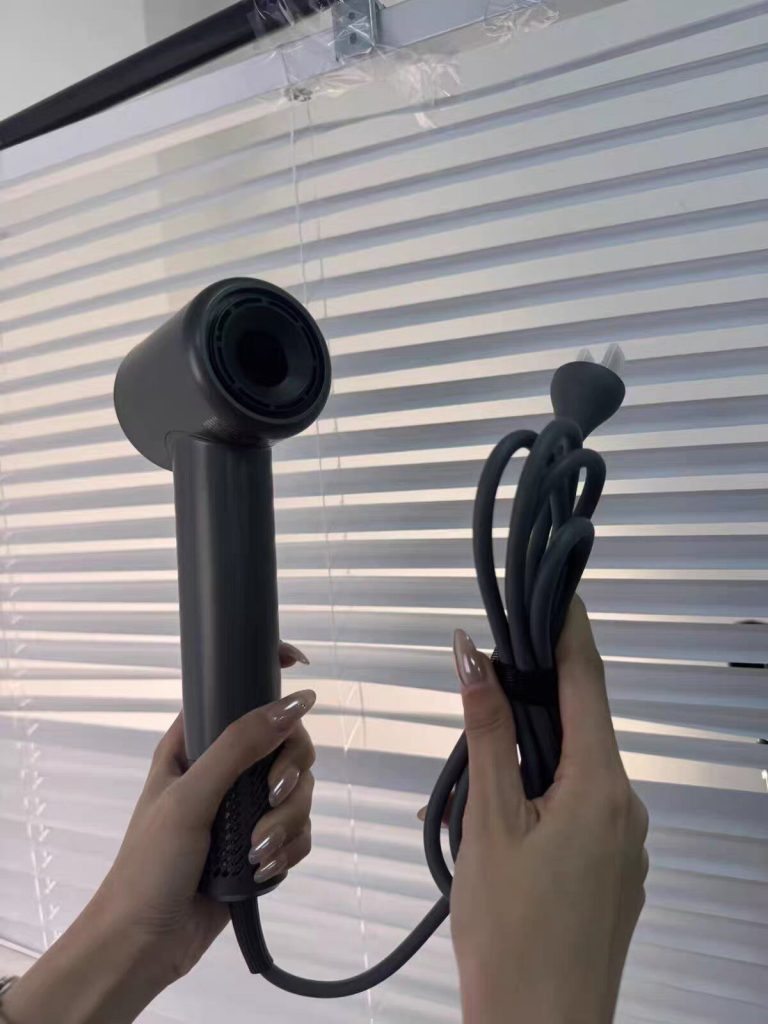
Finding a hair dryer manufacturer in China is easy.
Finding one that can consistently produce the right product for your market is much harder.
A search can quickly produce dozens or even hundreds of companies claiming to be hair dryer manufacturers, factories, OEM suppliers, or exporters. Their websites may show similar products, similar specifications, and similar promises about quality and competitive pricing.
The real purchasing decision begins after that.
For an importer, retailer, salon supplier, distributor, or private-label brand, the important question is not simply whether a company can sell a hair dryer. The important question is whether the manufacturer can produce the required specification consistently, communicate clearly, control quality, customize the product when necessary, and support repeat orders.
This guide explains how to evaluate a Chinese hair dryer manufacturer from a buyer’s perspective.
Start With Your Product Requirement, Not the Supplier
One of the most common sourcing mistakes is contacting manufacturers before deciding what you actually need.
If your inquiry simply says:
“Please send me your hair dryer price.”
the supplier has very little information to work with.
Different hair dryers can have very different costs and performance levels even when they look similar from the outside.
Before contacting a manufacturer, define as many of these requirements as possible:
- Product type
- Target customers
- Target market
- Voltage
- Frequency
- Plug type
- Power rating
- Motor type
- Airflow requirements
- Heat settings
- Speed settings
- Cool-air function
- Noise expectations
- Product weight
- Product color
- Logo
- Packaging
- Accessories
- Expected order quantity
- OEM or ODM requirements
A detailed requirement helps you compare manufacturers on the same basis.
It also prevents a common problem: receiving several quotations that appear different only because each supplier has quoted a different product configuration.
Manufacturer, Trading Company, or Both?
The word “manufacturer” should not automatically be treated as proof that a company owns every part of its production process.
Some businesses manufacture directly. Others combine in-house production with outside suppliers. Some trading companies coordinate production through partner factories.
None of these models is automatically suitable or unsuitable.
The important question is whether the business model matches your purchasing requirements.
If you need a highly customized product, engineering support and direct production control may be especially important.
If you are buying an existing standard model, a sourcing company with established factory relationships may also be able to meet your requirements.
Instead of asking only:
“Are you a factory?”
ask more useful questions:
- Which production processes are performed in-house?
- Which components are sourced externally?
- Who controls final assembly?
- Who performs product testing?
- Where is the product developed?
- Who handles quality inspection?
- Who is responsible if the specification changes?
- Can you provide a production-site video or factory information?
- Can the company support repeat production of the same model?
These questions reveal much more than a “factory” label.
Look at Manufacturing Capability
A hair dryer may appear to be a relatively simple consumer appliance, but several systems have to work together.
Depending on the design, production can involve:
- Plastic housing
- Injection molding
- Motor
- Fan
- Heating element
- PCB or control components
- Wiring
- Power cord
- Plug
- Switches
- Thermal protection
- Assembly
- Functional testing
- Packaging
A manufacturer handling professional or customized products should understand how these components interact.
For example, increasing motor speed may improve airflow but can also affect noise, power consumption, heat management, and product weight.
Increasing heating performance without properly managing airflow can create another set of problems.
A serious manufacturer should therefore be able to discuss the complete product rather than focusing on one specification such as wattage.
For buyers interested in customized production, a professional hair dryer factory in China can be evaluated according to its engineering, production, testing, and customization capabilities rather than price alone.
Ask About the Motor
The motor deserves special attention because it has a major influence on the final user experience.
Ask the manufacturer:
- What type of motor is used?
- What is the motor speed?
- What airflow does the complete dryer provide?
- What is the expected service life?
- How much noise does the product generate?
- What is the power consumption?
- Is the motor suitable for continuous professional use?
- Are replacement motors or related components available?
Do not judge the product only by RPM or wattage.
A motor operates as part of a complete airflow system. The fan, air inlet, internal air path, heating system, outlet, and control electronics all affect performance.
If you are specifically sourcing high-speed products, you can also compare the manufacturer’s capabilities with the requirements of high-speed hair dryers using brushless motors.
The goal is not to find the biggest number on a specification sheet.
The goal is to find a balanced product that performs well in the intended application.
Examine the Heating System
The heating system is another area where a buyer should ask technical questions.
A good hair dryer needs sufficient heat, but temperature must also be controlled.
Ask about:
- Heating element type
- Temperature settings
- Temperature stability
- Thermal protection
- Airflow balance
- Insulation
- Continuous operating performance
A manufacturer should be able to explain how the heating system works with the motor and airflow system.
For professional applications, this becomes even more important because the product may operate repeatedly throughout the day.
Check Electrical Configuration
International buyers should never treat voltage and plug configuration as minor details.
Before production, confirm:
- Rated voltage
- Frequency
- Power
- Plug type
- Cable specification
- Electrical configuration
- Product labeling
- Destination-market requirements
A product designed for one market may not be appropriate for another without changing its electrical configuration.
Tell the manufacturer the destination market before requesting a final quotation.
For example, a buyer targeting North America may have different electrical requirements from a buyer selling in Europe or another market.
Making these changes after mass production begins can create unnecessary cost and delay.
Do Not Choose a Supplier From Photos Alone
Professional product photographs can make two factories look almost identical.
That does not mean their manufacturing capabilities are identical.
A better evaluation uses several types of evidence:
Product evidence
Ask for detailed specifications, product photographs, videos, samples, and testing information.
Manufacturing evidence
Ask about production equipment, assembly processes, testing procedures, production capacity, and quality control.
Commercial evidence
Review MOQ, quotation structure, payment terms, production lead time, packaging, and repeat-order capability.
Communication evidence
Pay attention to how the supplier answers technical questions.
A reliable supplier does not necessarily answer every question immediately. What matters is whether the answers are specific, consistent, and useful.
If you ask about motor type and receive only:
“High quality motor.”
that answer does not help you evaluate the product.
If the supplier provides the actual motor configuration, operating characteristics, testing information, and applicable product models, you have something meaningful to compare.
Request a Sample Before Making a Large Order
A sample is one of the most useful tools in supplier evaluation.
You cannot fully evaluate a hair dryer from a PDF specification sheet.
When the sample arrives, test the product yourself.
Check:
- Airflow
- Temperature
- Noise
- Weight
- Handle comfort
- Button operation
- Cable
- Plug
- Housing quality
- Assembly quality
- Accessories
- Packaging
If the product is intended for professional use, operate it under realistic conditions.
If it is intended for e-commerce, also examine the packaging and product presentation.
If you are developing a private-label product, make sure the sample includes the actual logo, color, packaging, and accessories you expect to use in production.
Treat the Approved Sample as a Reference
For customized products, sample approval should not be treated as an informal step.
Once the buyer approves a sample, the final specifications should be documented.
Record important details such as:
- Product model
- Motor
- Power
- Voltage
- Plug
- Color
- Surface finish
- Logo position
- Accessories
- Packaging
- Product dimensions
- Product weight
This creates a reference point for mass production.
Without clear documentation, a buyer may approve a sample and later discover that the production version has slightly different components, colors, packaging, or accessories.
Evaluate Quality Control
A manufacturer’s quality-control system is more important than a general statement such as “we guarantee quality.”
Ask how quality is actually checked.
Depending on the product, quality control may include:
- Incoming component inspection
- Motor inspection
- Heating-element inspection
- Wiring inspection
- Assembly inspection
- Electrical testing
- Temperature testing
- Airflow testing
- Switch testing
- Thermal protection testing
- Aging testing
- Appearance inspection
- Packaging inspection
You do not necessarily need every possible test.
The testing program should correspond to the product design and destination market.
What matters is that the manufacturer has a defined process and can explain it clearly.
Compare Suppliers Using the Same Specification
Suppose you contact five manufacturers.
Supplier A quotes $18.
Supplier B quotes $21.
Supplier C quotes $24.
It may be tempting to choose Supplier A.
But what if Supplier A uses a different motor, fewer accessories, simpler packaging, or a different electrical configuration?
The prices are no longer directly comparable.
Create one specification sheet and send the same requirements to each manufacturer.
For example:
Product: Hair Dryer
Target Market: United States
Voltage: Required specification
Plug: Required plug
Power: Target range
Motor: Required type
Speed Settings: Required
Heat Settings: Required
Cool Shot: Yes/No
Accessories: Required attachments
Logo: Private label
Packaging: Custom retail box
Quantity: Expected order quantity
Sample: Required
Testing: Required market-specific testing
Then compare the quotations against the same product definition.
This is one of the easiest ways to avoid misleading price comparisons.
Understand OEM and ODM Before Negotiating
If you want your own brand, first determine how much customization you actually need.
OEM may be suitable when you have detailed product requirements or want a specific product configuration.
ODM can be more practical when you want to start from an existing product platform and customize selected elements.
Possible customization can include:
- Logo
- Product color
- Packaging
- Accessories
- Cable
- Plug
- Product functions
- Labels
- User manual
- Housing design
You can review an example of a China hair dryer OEM and ODM manufacturing solution to understand the types of customization that may be discussed during a private-label project.
The important thing is to avoid paying for unnecessary customization.
If an existing product already meets your market requirements, changing every component may increase cost and development time without creating enough commercial value.
Ask About MOQ Carefully
MOQ is not simply a number on a quotation.
The required quantity may change depending on the level of customization.
An existing product with standard packaging may be easier to purchase in a smaller quantity.
A customized product may involve:
- Custom packaging
- Special colors
- Logo printing
- Special components
- New molds
- Product development
- Dedicated production planning
Ask the manufacturer:
“What is the MOQ for your standard model?”
Then ask:
“What would the MOQ be if I customize the logo, color, packaging, and electrical configuration?”
These are two different questions.
Consider Production Capacity
A supplier may be able to produce your first order but struggle when your sales increase.
This matters if you are building a long-term brand.
Ask:
- What is the normal monthly production capacity?
- How many production lines are available?
- What happens during peak seasons?
- How long does mass production take?
- Can the manufacturer support repeat orders?
- How quickly can production scale?
Do not choose a supplier only because it can fulfill today’s order.
Consider whether it can support the business you want to build next year.
Pay Attention to Communication
Communication is often underestimated during supplier selection.
A hair dryer project can involve many details.
One missed detail about voltage, packaging, color, motor configuration, accessories, or logo placement can affect the finished product.
A useful supplier should be able to:
- Understand your requirements
- Ask appropriate questions
- Confirm specifications
- Explain limitations
- Provide a clear quotation
- Document revisions
- Confirm sample changes
- Communicate production status
Good communication does not mean the supplier always says “yes.”
In fact, a manufacturer that points out a technical problem before production may be more useful than one that accepts every request without explanation.
Check Whether the Supplier Understands Your Market
A product suitable for one country may not be suitable for another.
The manufacturer should know what market you are targeting and what electrical, labeling, packaging, and documentation requirements apply to your project.
Before placing an order, provide the destination market.
Do not simply say:
“This is for export.”
Tell the manufacturer where the product will actually be sold.
That gives the supplier a better basis for discussing product configuration and documentation.
Watch for These Warning Signs
No single warning sign automatically proves that a supplier is unreliable.
However, several problems together deserve closer attention.
Be cautious when a supplier:
- Avoids technical questions
- Cannot explain the product specification
- Changes the specification repeatedly
- Provides inconsistent information
- Refuses to provide samples
- Gives an unusually low quotation without explaining the configuration
- Cannot explain quality-control procedures
- Cannot clearly identify the product model
- Pressures you to place a large order immediately
- Changes payment or production terms unexpectedly
The objective is not to eliminate every supplier with one imperfect answer.
The objective is to identify suppliers whose information remains consistent when you examine the business from different angles.
A Simple Manufacturer Evaluation Scorecard
Before selecting a manufacturer, score each candidate on several categories.
Product capability
Can the manufacturer produce the product you actually need?
Engineering
Can it support customization and solve technical problems?
Quality control
Does it have a clear process for component and finished-product inspection?
Samples
Can it provide a representative sample before bulk production?
Customization
Can it support your actual OEM or ODM requirements?
Production
Can it meet your expected order quantity and future demand?
Communication
Can the supplier clearly document specifications and changes?
Commercial terms
Are the MOQ, pricing, lead time, packaging, and payment conditions practical for your business?
A manufacturer that scores well across all eight areas may be a better long-term partner than one that wins only on unit price.
The Lowest Price Is Not Always the Lowest Cost
Consider the total purchasing cost.
A cheaper product can become more expensive if it produces:
- Higher return rates
- More customer complaints
- More replacement requests
- Packaging damage
- Inconsistent production
- Delayed shipments
- Additional inspection costs
For a brand, poor product quality can also damage customer reviews and reputation.
This is why experienced buyers evaluate total cost and commercial risk, not just the factory quotation.
What Should You Put in Your First Inquiry?
A good first inquiry does not need to be extremely long.
It simply needs enough information for the manufacturer to understand your project.
For example:
Product: Hair Dryer
Target Market: United States
Estimated Quantity: 1,000 units for the first order
Annual Potential: 5,000–10,000 units
Voltage: Required market specification
Plug: US plug
Motor: Please recommend suitable options
Functions: Adjustable speed and temperature
Branding: Private label
Packaging: Custom retail packaging
Accessories: Concentrator and diffuser
Customization: Logo, color, packaging
Sample: Required before production
Then ask the supplier to provide:
- Product specification
- MOQ
- Sample cost
- Bulk unit price
- Production lead time
- Customization options
- Packaging information
- Available testing or compliance documentation
This gives both sides a much better starting point.
Final Decision: Choose a Manufacturing Partner, Not Just a Product
The right hair dryer manufacturer should fit your business model.
If you only need a small quantity of a standard product, flexibility and MOQ may be more important than extensive engineering capability.
If you are building a private-label brand, product development, quality control, customization, and repeat-production stability become much more important.
If you are supplying salons or professional users, durability, airflow, motor performance, ergonomics, and continuous operating capability deserve greater attention.
There is no universal “best” hair dryer manufacturer.
There is only a manufacturer that is more or less suitable for a particular purchasing requirement.
The safest sourcing process is therefore straightforward:
Define the product → shortlist manufacturers → verify capabilities → request samples → test the product → compare complete quotations → confirm specifications → approve the sample → start mass production.
That process takes more effort than choosing the lowest quotation, but it can prevent much more expensive problems later.
FAQ
How can I tell whether a hair dryer supplier in China is a real manufacturer?
Ask about its production processes, factory capabilities, engineering support, quality-control procedures, product testing, samples, and manufacturing responsibilities. Do not rely only on the word “factory” in a company profile.
What should I ask a hair dryer manufacturer before ordering?
Ask about the motor, power, voltage, plug, heating system, airflow, functions, MOQ, sample process, customization, packaging, testing, production lead time, and quality-control procedures.
Should I choose the cheapest Chinese hair dryer supplier?
Not necessarily. Compare suppliers using the same product specification. A lower quotation may represent a different motor, material, packaging configuration, accessories, or testing requirement.
Is OEM or ODM better for a private-label hair dryer?
It depends on your project. OEM can be suitable for specific product requirements, while ODM can be more efficient when you want to customize an existing product platform.
Do I need a sample before placing a bulk order?
Yes. A sample allows you to evaluate actual airflow, temperature, noise, weight, materials, assembly, accessories, packaging, and overall usability before committing to mass production.
How do I compare quotations from Chinese hair dryer manufacturers?
Use one standardized specification sheet. Compare the same motor, power, voltage, functions, accessories, packaging, quantity, customization, testing, and delivery requirements.
Can a hair dryer manufacturer customize my logo and packaging?
Many manufacturers offer private-label customization, but the available options depend on the product and factory. Confirm logo placement, printing method, packaging design, minimum quantities, and additional costs before production.
What makes a good long-term hair dryer manufacturing partner?
Consistent product quality, transparent communication, realistic production capability, appropriate engineering support, reliable quality control, reasonable commercial terms, and the ability to maintain the same specification across repeat orders are more important than simply offering the lowest initial price.


No reply content