
How to Import Copper Building Wire from China: A Practical Guide for Buyers
Buying copper building wire from China can be straightforward when the product specification, supplier qualification, packaging, shipping terms, and import requirements are defined before the order is placed.
For importers, electrical wholesalers, contractors, distributors, and project buyers, the biggest mistake is to compare suppliers only by the price per meter or per kilogram. A lower quotation can become more expensive if the conductor size, insulation material, packaging, certification, quantity, or shipping terms are different.
This guide explains the practical process of importing copper building wire from China and the information buyers should prepare before requesting quotations.
1. Define the Wire Specification Before Contacting a Manufacturer
The first step is to define exactly what type of wire you need.
For building electrical applications, buyers may encounter products such as BV, BVR, H07V-U, and H07V-K. These products can look similar but have different construction and application characteristics.
Before requesting a quotation, specify:
- Conductor material
- Copper purity or conductor requirements
- Nominal cross-sectional area
- Number of cores
- Insulation material
- Rated voltage
- Temperature requirement
- Standard
- Color
- Cable marking or printing
- Packaging
- Required quantity
If you are unsure which wire construction is appropriate, see this practical comparison of BV, BVR, H07V-U and H07V-K wire.
A manufacturer can quote accurately only when the technical specification is clear.
2. Choose the Correct Copper Wire Size
Wire size is one of the most important factors affecting both price and electrical performance.
Common building-wire sizes may include:
- 1.5 mm²
- 2.5 mm²
- 4 mm²
- 6 mm²
- 10 mm²
- 16 mm²
However, the correct size should not be selected simply because it is commonly used in another country.
The required conductor size depends on the electrical load, installation method, allowable current, voltage drop, ambient conditions, applicable regulations, and project design.
For buyers who are still comparing sizes, this guide explains how to choose the right copper wire size for building electrical projects.
3. Confirm the Standard Required in Your Market
Do not simply tell a Chinese supplier that you need “standard electrical wire.”
Tell the supplier which standard or technical requirement your market requires.
Depending on the destination and application, buyers may request products manufactured according to IEC or another applicable national or regional standard.
Ask the manufacturer to provide:
- Product standard
- Technical datasheet
- Conductor specifications
- Insulation specifications
- Electrical performance data
- Test report
- Certificate documents where applicable
Certification requirements can vary according to the destination market. A certificate that is useful in one market may not satisfy the requirements of another.
Therefore, confirm the import requirements before production rather than after the goods have been manufactured.
4. Check the Copper Conductor
Copper is one of the largest cost components in copper building wire.
A supplier quotation should therefore be evaluated together with the conductor specification.
Important points include:
- Copper conductor material
- Conductor construction
- Cross-sectional area
- Electrical resistance
- Stranding configuration where applicable
- Conductor diameter
- Weight per kilometer
Buyers should avoid judging copper quality only by appearance.
For a more practical inspection approach, read how to check copper purity and conductor quality before buying copper wire.
For large orders, buyers can also consider third-party inspection or pre-shipment testing.
5. Request a Detailed China Wire Quotation
A useful quotation should contain enough information for you to compare it with other suppliers.
Instead of asking:
“What is your best price for copper wire?”
provide a complete RFQ.
For example:
Product: Copper building wire
Type: BV
Conductor: Copper
Size: 2.5 mm²
Color: Blue
Standard: Required market standard
Quantity: 20,000 meters
Packaging: Coil or carton
Destination: Dubai, UAE
Trade term: FOB or CIF
Required delivery: 30 days
You can also use this guide when preparing your request: What information should buyers provide when requesting a cable quotation?
A complete RFQ generally produces a much more useful quotation than a short price request.
6. Understand How Copper Wire Pricing Works
Chinese copper wire prices can change according to copper market conditions, exchange rates, product specifications, order quantity, and manufacturing costs.
The quotation may also be presented in different units.
For example, a supplier may quote:
- USD/kg
- USD/meter
- USD/coil
- USD/carton
- USD/drum
Do not compare these numbers directly without converting them to the same basis.
A quotation of USD/kg from one supplier cannot be fairly compared with USD/100 meters from another supplier unless the actual product weight and specifications are known.
Buyers can also read how much copper wire costs in China before comparing offers.
7. Ask About MOQ
Minimum order quantity varies between manufacturers and products.
A standard stock item may have a relatively flexible quantity, while customized products can require a larger production run.
MOQ can depend on:
- Wire size
- Color
- Packaging
- Printing
- Custom specification
- Production schedule
- Raw material purchasing
- Factory production efficiency
If you are testing the market, tell the manufacturer that the first order is a trial order and provide your expected repeat-order quantity.
For example:
Trial order: 5,000 meters
Expected monthly demand after approval: 30,000–50,000 meters
This gives the manufacturer more useful information than simply asking for the lowest MOQ.
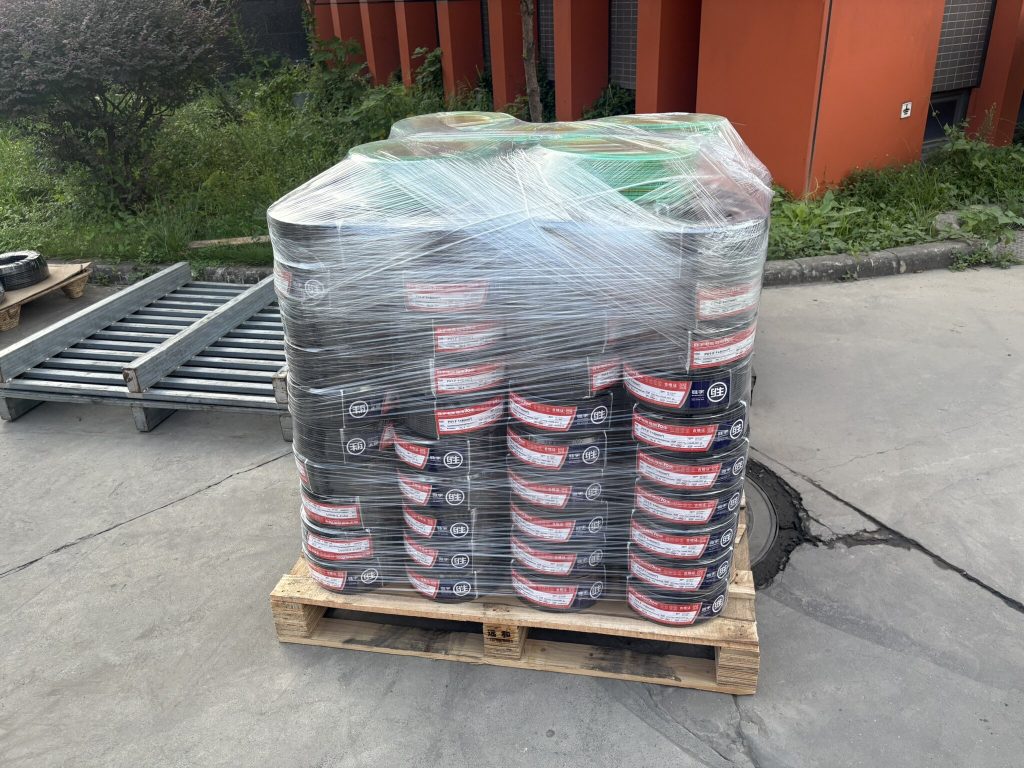
8. Confirm Packaging Before Production
Packaging is often overlooked when importing electrical wire.
Depending on the product, copper building wire may be packed in:
- Coils
- Plastic bags
- Cartons
- Reels
- Wooden drums
- Customized packaging
Ask the supplier for the package dimensions and gross weight.
This information is important because packaging affects:
- Container loading
- Freight cost
- Warehouse handling
- Damage risk
- Local transportation
If you are buying a large quantity, ask for estimated CBM and gross weight before confirming the shipping method.
9. Decide Between FOB, CIF and Other Trade Terms
Your quotation should clearly state the trade term.
For example:
EXW: Buyer arranges transportation from the factory.
FOB: Supplier delivers the goods to the agreed Chinese export port according to the agreed FOB terms.
CIF: Supplier arranges the international freight and insurance to the named destination port according to the agreed CIF terms.
The exact responsibilities should always be confirmed in the commercial quotation and sales contract.
Do not compare a factory’s EXW price directly with another supplier’s CIF price.
The numbers represent different cost structures.
10. Calculate the Landed Cost
The product price is only one part of the import cost.
Your estimated landed cost may include:
Product cost + China inland transportation + export-related charges + international freight + insurance where applicable + destination customs charges + import duties/taxes + local delivery + other handling charges
For this reason, the cheapest factory quotation does not necessarily produce the lowest final cost.
Before ordering, estimate the complete logistics route from the Chinese factory to your warehouse.
11. Confirm Production Lead Time
Ask the manufacturer to confirm:
- Production lead time
- Packaging time
- Inspection time
- Estimated shipping date
- Whether the quoted lead time starts after payment or order confirmation
- Whether raw materials need to be purchased before production
For customized wire, lead time can be different from standard products.
If the order is connected to a construction project, provide the required delivery date in advance.
12. Order Samples Before a Large Purchase
A sample can help you check the actual product before committing to a large order.
Depending on the product, you can inspect:
- Printing
- Color
- Outer diameter
- Flexibility
- Conductor construction
- Insulation appearance
- Packaging
- Product marking
For a serious project, sample approval should ideally be linked to the final production specification.
Do not approve a sample based only on appearance. The technical specification should also be documented.
13. Compare Chinese Manufacturers on More Than Price
When comparing suppliers, create a simple comparison sheet.
| Item | Supplier A | Supplier B | Supplier C |
|---|---|---|---|
| Wire type | |||
| Conductor | |||
| Size | |||
| Standard | |||
| Price | |||
| MOQ | |||
| Packaging | |||
| Lead time | |||
| Certification | |||
| Test report | |||
| Trade term | |||
| Payment term |
This makes it easier to identify whether a lower quotation is actually based on a different specification.
You can also read how to compare copper wire quotations from different manufacturers.
14. Verify the Supplier Before Paying
Before making a substantial payment, buyers should verify the supplier’s business information and production capability.
Useful checks include:
- Company information
- Business license information where available
- Factory location
- Product range
- Production capability
- Export experience
- Technical documents
- Samples
- Inspection arrangements
- Bank account information
The supplier’s company name and payment account should be consistent with the commercial documents, unless there is a clearly documented reason for another arrangement.
For buyers looking for China cable suppliers, Vlefooena’s supplier and manufacturer platform can also be used to review available supplier information and product content.
15. Prepare a Clear Purchase Specification
Before production begins, put the agreed requirements into one document.
A practical specification can include:
Product: Copper building wire
Type: BV/BVR/etc.
Conductor: Copper
Size: ___ mm²
Color: ___
Standard: ___
Voltage: ___
Quantity: ___ meters
Packaging: ___
Printing: ___
Destination: ___
Trade term: ___
Inspection: ___
Lead time: ___
This reduces misunderstandings between the buyer, salesperson, production team, and inspection company.
16. What Should You Ask a Chinese Copper Wire Manufacturer?
A professional inquiry can be short but specific.
For example:
We are looking for copper building wire for distribution in our local market.
Product: BV copper wire
Sizes: 1.5 mm², 2.5 mm², 4 mm² and 6 mm²
Total quantity: 50,000 meters
Required standard: IEC
Colors: Blue, brown, black and green/yellow
Packaging: Please recommend standard export packaging
Destination: [City, Country]Please quote FOB and CIF prices, MOQ, production lead time, packaging details, product datasheet, available certificates and sample availability.
This type of inquiry gives the manufacturer enough information to prepare a useful quotation.
Frequently Asked Questions
Can I buy copper building wire directly from China?
Yes. Importers can purchase directly from Chinese manufacturers or suppliers. However, the buyer should first confirm product specifications, applicable standards, supplier information, payment terms, shipping arrangements, and import requirements.
What is the usual MOQ for copper building wire?
There is no universal MOQ. It depends on the wire size, color, packaging, customization, production schedule, and manufacturer.
Should I request a sample before ordering?
For a new supplier, requesting a sample can be useful, especially when the order is large or the product has specific technical requirements.
Is the cheapest copper wire quotation the best option?
Not necessarily. Buyers should compare the conductor specification, insulation, standard, weight, packaging, MOQ, trade term, lead time, certification, and total landed cost.
How can I reduce the cost of importing copper wire?
Start by defining the specification accurately. Then compare suppliers using the same specification and trade term. Consolidating quantities, optimizing packaging, and choosing an appropriate shipping method can also affect the final landed cost.
What information should I send when asking for a quotation?
At minimum, provide the wire type, conductor material, cross-sectional area, quantity, standard, color, packaging requirement, destination, and preferred trade term.
Final Checklist Before Placing a China Copper Wire Order
Before confirming your purchase, check:
- [ ] Product type confirmed
- [ ] Copper conductor specification confirmed
- [ ] Wire size confirmed
- [ ] Applicable standard confirmed
- [ ] Color confirmed
- [ ] Quantity confirmed
- [ ] MOQ confirmed
- [ ] Packaging confirmed
- [ ] Product marking confirmed
- [ ] Certification requirements confirmed
- [ ] Sample approved if required
- [ ] Price and currency confirmed
- [ ] Trade term confirmed
- [ ] Lead time confirmed
- [ ] Shipping cost estimated
- [ ] Destination import requirements checked
- [ ] Inspection requirements confirmed
- [ ] Commercial invoice details confirmed
Request a Copper Wire Quotation
If you are sourcing copper building wire from China, provide your required wire type, size, quantity, standard, destination country, packaging requirement, and preferred trade term.
A detailed inquiry allows the supplier to calculate a more accurate quotation and helps both sides avoid specification misunderstandings before production.
You can also review more practical copper-wire sourcing information through the Vlefooena China supplier platform, including guides covering copper conductor quality, wire specifications, quotations, certifications, MOQ, and manufacturer selection.


No reply content