
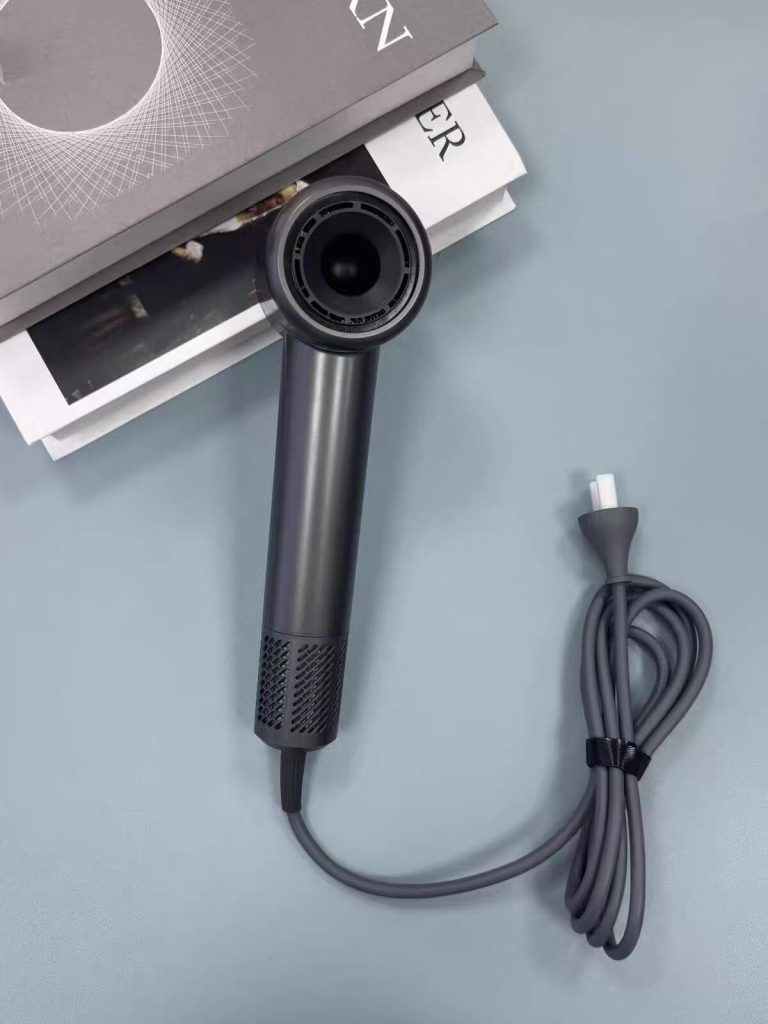
Finding a Chinese hair dryer supplier is relatively easy.
Finding one that can reliably manufacture the exact product you want is a different task.
A supplier may have a professional website, a large product catalogue, attractive factory photographs and a fast sales response. None of these alone proves that the supplier can consistently produce your hair dryer to the required specification.
For an overseas buyer, supplier verification should answer a more practical question:
Can this company actually deliver the product, quality, documentation and production consistency that my order requires?
This is particularly important when purchasing private-label hair dryers, professional salon models, hotel hair dryers, customized products or large quantities.
Verification does not need to become an unnecessarily complicated investigation. A structured process can reveal most of the important information before money is committed to mass production.
1. Start With the Exact Product, Not the Company Name
Before verifying a manufacturer, define the product you are actually buying.
For example:
- Hair dryer type
- Power
- Voltage
- Frequency
- Plug
- Motor configuration
- Heating system
- Speed settings
- Temperature settings
- Cool-shot function
- Ionic function
- Accessories
- Color
- Logo
- Packaging
Why start here?
Because a company may be capable of manufacturing one type of hair dryer but not another.
A supplier may have a large catalogue but outsource certain models.
Therefore, verification should focus on the specific model and configuration you are considering.
For the initial supplier-selection process, see How to Choose a Hair Dryer Manufacturer in China for Your Brand.
2. Confirm the Legal Company Information
Ask the supplier for its official company information.
At minimum, record:
- Legal company name
- Business address
- Factory address
- Main business
- Contact person
- Company website
- Export contact information
The name appearing on the quotation should be clear.
If the supplier uses a different company for payment, invoicing or manufacturing, ask why.
Different companies can legitimately be involved in one transaction, but the relationship should be understandable.
The goal is simple:
You should know exactly which entity you are buying from.
3. Separate the Sales Office From the Factory
Some Chinese manufacturers have a sales office in one city and production facilities elsewhere.
This is not automatically a problem.
But you should know the difference.
Ask:
Is this address your sales office or your production facility?
Then ask:
Where is the hair dryer actually manufactured?
This becomes particularly important when a supplier describes itself as a manufacturer but the address provided appears to be a commercial office.
An office does not prove that a supplier is a trading company, but it does mean you should investigate the production arrangement further.
4. Ask Which Factory Makes Your Exact Model
This is one of the most important verification questions.
Do not ask only:
Do you manufacture hair dryers?
Ask:
Which factory manufactures the exact model you are quoting to us?
Then ask:
Is the quoted model manufactured internally or by a partner factory?
This prevents a common sourcing problem.
A supplier may have access to many products without directly manufacturing all of them.
If your order is customized, ask who will perform the customization.
5. Request a Live Factory Video Call
A live video call is often more informative than a polished factory video.
Ask the supplier to show:
- Production area
- Assembly line
- Testing area
- Warehouse
- Packaging area
- Hair dryer models
- Production equipment
If possible, ask them to show the actual product you are discussing.
For example:
Please show us the production area where the model in our quotation is assembled.
A live video call cannot replace a professional factory audit, but it can provide useful evidence and allow you to ask questions in real time.
6. Ask Specific Questions During the Factory Tour
Do not simply watch while the salesperson walks around.
Prepare questions.
For example:
Production
Where are the hair dryers assembled?
Motor
Where are the motors installed?
Heating system
Where is the heating element assembled?
Testing
Where are finished products tested?
Packaging
Where are the final products packed?
Quality
Who performs the final inspection?
Specific questions make the factory tour much more useful.
7. Ask to See the Testing Area
A manufacturer’s testing capability can tell you more than the appearance of its factory.
Ask what the factory tests before shipment.
Depending on the product, testing may cover:
- Power
- Current
- Heating
- Airflow
- Temperature
- Switch operation
- Electrical safety
- Thermal protection
- Functional operation
- Appearance
Then ask:
Are these tests performed on every finished unit, by sampling, or at another frequency?
The answer gives you a better understanding of the actual QC process.
8. Ask How Incoming Components Are Controlled
A finished hair dryer is only as reliable as the components going into it.
Ask how the factory checks incoming:
- Motors
- Heating elements
- Switches
- Cables
- Plugs
- PCBs
- Plastic components
- Packaging materials
You do not necessarily need the supplier to manufacture every component.
What matters is whether the manufacturer has a system for controlling incoming materials.
For example, if a motor supplier changes a component, how does the hair dryer manufacturer discover and manage that change?
9. Verify the Sample Before Verifying the Bulk Order
The physical sample is one of your most useful verification tools.
Do not evaluate only:
Does it look good?
Instead compare the sample with the quotation.
Check:
- Model
- Power
- Voltage
- Frequency
- Plug
- Motor
- Heating system
- Functions
- Cable
- Housing
- Color
- Logo
- Accessories
- Packaging
If something differs from the quotation, ask the supplier to explain it.
For a detailed sample evaluation process, see How to Inspect Hair Dryer Samples Before Placing a Bulk Order.
10. Ask Whether the Sample Represents Mass Production
This question deserves its own section because it is often overlooked.
Ask the supplier:
Is this sample made using the same configuration and materials intended for mass production?
If the answer is no, ask exactly what will change.
For example:
The sample uses Motor A, but mass production will use Motor B.
That is not necessarily unacceptable.
But it means you should evaluate the final production configuration rather than approving the first sample blindly.
11. Verify the Manufacturer’s OEM Capability
If you want private-label production, ask what the factory actually customizes.
Possible areas include:
- Logo
- Housing color
- Housing design
- Packaging
- User manual
- Labels
- Accessories
- Motor
- Heating system
- Control configuration
Do not accept a general statement such as:
“We can do OEM.”
Ask for examples of what the factory has actually customized.
For more background, see Hair Dryer OEM vs ODM: What Is the Difference for Buyers?.
12. Ask for Previous OEM Examples
If the manufacturer claims extensive OEM experience, ask for examples.
You do not need confidential customer information.
Instead ask to see examples of:
- Different packaging
- Different colors
- Different logos
- Different product configurations
- Different accessories
The purpose is to understand the factory’s actual customization capability.
A factory that regularly handles private-label products should normally be able to explain its process clearly.
13. Check Whether the Factory Can Handle Your Target Market
Tell the supplier where you intend to sell the product.
For example:
- United States
- European Union
- United Kingdom
- Australia
- Middle East
- Latin America
- Africa
Then ask what configuration and documentation are required for that market.
The electrical configuration may differ between markets.
So can:
- Voltage
- Frequency
- Plug
- Marking
- Documentation
- Packaging
A factory experienced with one market is not automatically experienced with every market.
14. Do Not Accept Generic Certification Statements
A supplier might say:
“Our products are certified.”
That statement is too broad.
Ask:
- Which product?
- Which model?
- Which configuration?
- Which market?
- Which standard?
- Which test?
- When was it tested?
- Does the document correspond to the current product?
This is especially important if your brand will sell the product under its own name.
Documentation should correspond to the product you are actually purchasing.
For a deeper discussion, see What Certifications Should a Hair Dryer Manufacturer Provide?.
15. Check Whether the Documentation Matches the Product
Imagine the manufacturer sends you a test document.
Now compare it with the sample.
Does it identify the same:
- Model
- Electrical configuration
- Product type
- Manufacturer
- Relevant specification
If the document relates to a different model, do not automatically assume it covers your product.
Ask the supplier to explain the relationship.
This simple check can prevent considerable confusion later.
16. Check the Quotation Carefully
A quotation should tell you what you are actually buying.
Look for:
- Product model
- Unit price
- MOQ
- Sample cost
- Packaging
- Logo
- Accessories
- Payment terms
- Production lead time
- Shipping terms
Then compare the quotation with the sample.
For example:
Quotation: 2,000W
Sample label: 1,800W
That discrepancy should be resolved before an order is placed.
17. Ask About MOQ for Your Exact Configuration
Do not ask only:
What is your MOQ?
Ask:
What is the MOQ for this exact customized configuration?
MOQ can change when you add:
- Custom color
- Custom packaging
- Custom logo
- Special motor
- Special accessories
- New mold
- Modified design
You can continue this evaluation using What MOQ Should You Expect When Buying Hair Dryers From a Chinese Supplier?.
18. Ask How Component Substitutions Are Managed
This is an excellent question for evaluating a manufacturer’s internal management.
Ask:
If a component becomes unavailable, will you replace it automatically or ask for our approval?
For a private-label product, this distinction matters.
A motor, switch, PCB or heating component can affect the final product.
You want a clear process for significant component changes.
19. Ask How Production Records Are Maintained
For repeat orders, production records can be extremely useful.
Ask whether the factory maintains information about:
- Product version
- Components
- Production batches
- Inspection results
- Packaging
- Production dates
You do not necessarily need every internal factory record.
The important question is whether the manufacturer has a system for controlling product consistency.
20. Check the Factory’s Capacity Against Your Order
Capacity should be evaluated relative to your actual purchasing plan.
Suppose you need:
1,000 units initially
and potentially:
10,000 units annually.
A factory claiming enormous monthly capacity may not necessarily be the best match.
More useful questions include:
- How many units can you produce for this model?
- What is the normal production lead time?
- Can production increase during peak season?
- What happens if the order quantity doubles?
- How far in advance should repeat orders be placed?
The goal is to understand realistic capacity, not simply a large number from a sales presentation.
21. Ask About Peak-Season Production
Production conditions can change during busy periods.
Ask the manufacturer:
What is your normal lead time during peak season?
Also ask:
How early should we place repeat orders?
This matters if your business depends on seasonal sales.
For example, a factory may normally need 15–20 days but require considerably more planning during periods of high demand.
Build that information into your purchasing schedule.
22. Review the Packaging Process
Packaging is easy to overlook during factory verification.
Ask:
- Who produces the retail box?
- Where is packaging completed?
- Is the logo printed locally?
- Are accessories checked before packing?
- Are cartons inspected?
- How many units are packed per carton?
For private-label brands, packaging mistakes can be just as visible to customers as product defects.
23. Ask How Defective Products Are Handled
This question is often more revealing than asking:
Do you have good quality control?
Ask:
What happens when a finished hair dryer fails inspection?
Then ask:
Is it repaired, reworked, rejected, or shipped after approval?
A manufacturer should have a defined approach to non-conforming products.
For large orders, buyers may also establish their own inspection criteria before production.
24. Verify the Payment Entity
Before making a significant payment, check:
Quotation company
Contract company
Invoice company
Bank-account company
If the names are different, ask the supplier to explain the structure.
Do not rely solely on a salesperson’s verbal explanation if the transaction involves a substantial amount of money.
Keep the relevant documentation with your purchasing records.
25. Be Careful With Extremely Low Prices
A very low quotation deserves investigation.
It may be legitimate.
Perhaps the factory:
- Has large production volume
- Uses a standard model
- Has lower component costs
- Has efficient production
- Is offering an introductory price
But the low price could also reflect differences in:
- Motor
- Heating system
- Components
- Packaging
- Accessories
- Testing
- Product configuration
Ask:
What is included in this price?
Then compare the answer with competing quotations.
Do not evaluate price until the product specification is aligned.
26. Request a Pre-Production Confirmation
Before mass production begins, confirm the final configuration.
A useful confirmation can include:
- Model
- Voltage
- Frequency
- Power
- Plug
- Motor
- Heating system
- Functions
- Color
- Logo
- Packaging
- Accessories
- Quantity
- Production lead time
This gives both sides a common reference.
27. Consider a Pre-Shipment Inspection for Larger Orders
For a significant shipment, consider independent inspection before the goods leave the factory.
The inspection scope can be based on your order requirements.
Possible checks include:
- Quantity
- Appearance
- Product dimensions
- Functions
- Packaging
- Labels
- Accessories
- Electrical characteristics
- Carton condition
The inspection company should use criteria that match your purchase order and agreed specifications.
28. Keep a Complete Supplier File
After verifying the supplier, keep the information organized.
A useful supplier file can contain:
Company
- Legal company name
- Factory address
- Contact information
Product
- Model
- Specification
- Approved sample
- Product photographs
Compliance
- Test documents
- Relevant certification information
- Market requirements
Commercial
- Quotation
- MOQ
- Payment terms
- Lead time
- Packaging
Production
- Purchase order
- Inspection records
- Approved artwork
- Change confirmations
This file becomes particularly useful when the same supplier is used for multiple orders.
29. A Practical Hair Dryer Manufacturer Verification Checklist
Before placing a major order, check the following.
Company verification
- [ ] Legal company name confirmed
- [ ] Factory address confirmed
- [ ] Sales office separated from factory
- [ ] Payment entity confirmed
Factory verification
- [ ] Production facility identified
- [ ] Exact product production location identified
- [ ] Live factory video completed
- [ ] Production equipment observed
- [ ] Testing area observed
Product verification
- [ ] Sample received
- [ ] Sample compared with quotation
- [ ] Specifications confirmed
- [ ] Mass-production configuration confirmed
OEM verification
- [ ] Logo confirmed
- [ ] Packaging confirmed
- [ ] Customization capability confirmed
- [ ] Artwork process confirmed
Quality verification
- [ ] Incoming inspection understood
- [ ] Production QC understood
- [ ] Finished-product testing understood
- [ ] Defective-product procedure understood
Commercial verification
- [ ] MOQ confirmed
- [ ] Unit price confirmed
- [ ] Sample cost confirmed
- [ ] Lead time confirmed
- [ ] Payment terms confirmed
Pre-shipment
- [ ] Inspection requirements agreed
- [ ] Packaging confirmed
- [ ] Quantity confirmed
- [ ] Shipping information confirmed
30. Red Flags That Deserve More Questions
No single warning sign automatically proves that a supplier is unreliable.
However, the following situations deserve clarification:
The factory address keeps changing
Ask which location actually manufactures your product.
The supplier avoids showing production
Ask whether you can arrange a live video tour.
The quotation is vague
Request a detailed specification.
The sample differs from the quotation
Ask for a written explanation.
Certification documents do not match the model
Request clarification before proceeding.
The payment company is different
Ask for the legal relationship and supporting commercial documentation.
The supplier refuses to explain component changes
Establish a formal change-approval process.
The price is dramatically lower than comparable quotations
Find out what specification or service difference explains the price.
These situations do not automatically mean you should reject the supplier. They mean you need more information.
31. The Most Important Verification Question
After reviewing everything, ask yourself:
If I place the same order six months from now, can this supplier reproduce the same product?
That question combines several important factors:
- Manufacturing capability
- Quality control
- Component management
- Specification control
- Documentation
- Production records
- Communication
- Supply-chain stability
A supplier that can demonstrate control over these areas is easier to evaluate for a long-term brand relationship.
Frequently Asked Questions
How can I verify a hair dryer manufacturer in China?
Start by confirming the legal company information and actual production location. Then verify the exact product, request a representative sample, inspect the factory or arrange a live video tour, review quality-control procedures, and confirm documentation and commercial terms.
Is a factory visit necessary?
It depends on the order size and complexity. For a major OEM project, a factory visit or professional audit can provide useful information. For smaller orders, a live video tour, sample evaluation and documentation review may be practical initial steps.
How do I know if a supplier is really a factory?
Look at the complete evidence rather than relying on the word “factory.” Verify the production location, manufacturing process, equipment, employees or production activities, product-specific capabilities and who actually manufactures your model.
Can I trust a factory video?
A factory video can provide useful information but should not be treated as conclusive evidence by itself. A live video call, physical sample and independent verification provide stronger evidence.
Should I ask for a business license?
For significant commercial relationships, obtaining and verifying the supplier’s legal company information can be a sensible part of due diligence.
What should I do if the sample and quotation are different?
Ask the supplier to explain the difference and provide a corrected specification if necessary. Do not approve mass production until the final configuration is clear.
How can I verify a hair dryer manufacturer’s certifications?
Ask for the actual documentation and check the model, configuration, manufacturer, applicable requirements and testing scope. Avoid relying on a general statement that the factory has “certificates.”
Should I use a third-party inspection company?
For higher-value orders or products with important technical requirements, independent inspection can provide an additional layer of verification before shipment.
Final Thoughts
Supplier verification is not about proving that a company is a “real factory” and then stopping the investigation.
The more useful process is to verify the entire supply chain surrounding your product.
You need to understand:
Who sells the product.
Who manufactures it.
Who controls the specification.
Who controls the components.
Who performs quality inspection.
Who handles changes.
Who provides the documentation.
Who is responsible when something goes wrong.
For a brand buying hair dryers from China, these questions matter far more than a polished factory introduction.
Once the manufacturer has passed the initial verification, the next step should be a controlled sample evaluation, followed by a clear production specification and purchase order.
That is how supplier research becomes a practical purchasing system rather than simply a search for a company with a convincing website.


No reply content